
Philadelphia schools celebrate Computer Science Education Week with an hour of coding
The district has been dedicated to increasing digital literacy, upgrading and installing new computer labs and curricula.
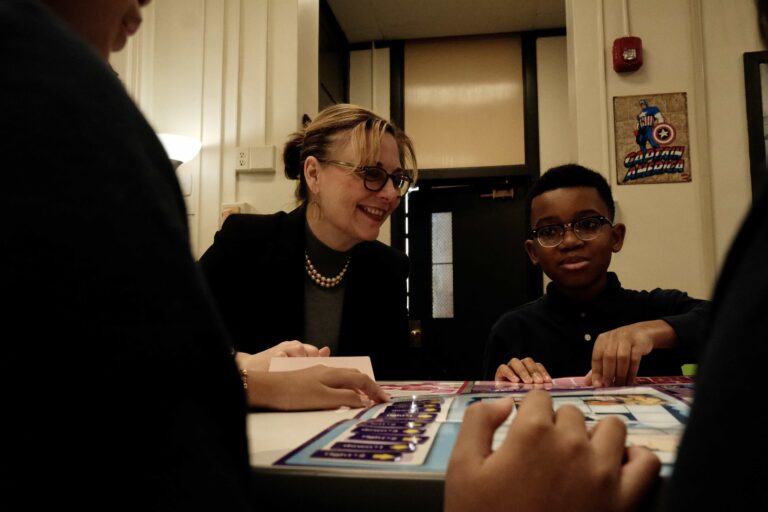
Melanie Harris, Chief Information Officer of the School District of Philadelphia, helps students with a table top coding game. (Ben Bennett/WHYY)
From Philly and the Pa. suburbs to South Jersey and Delaware, what would you like WHYY News to cover? Let us know!
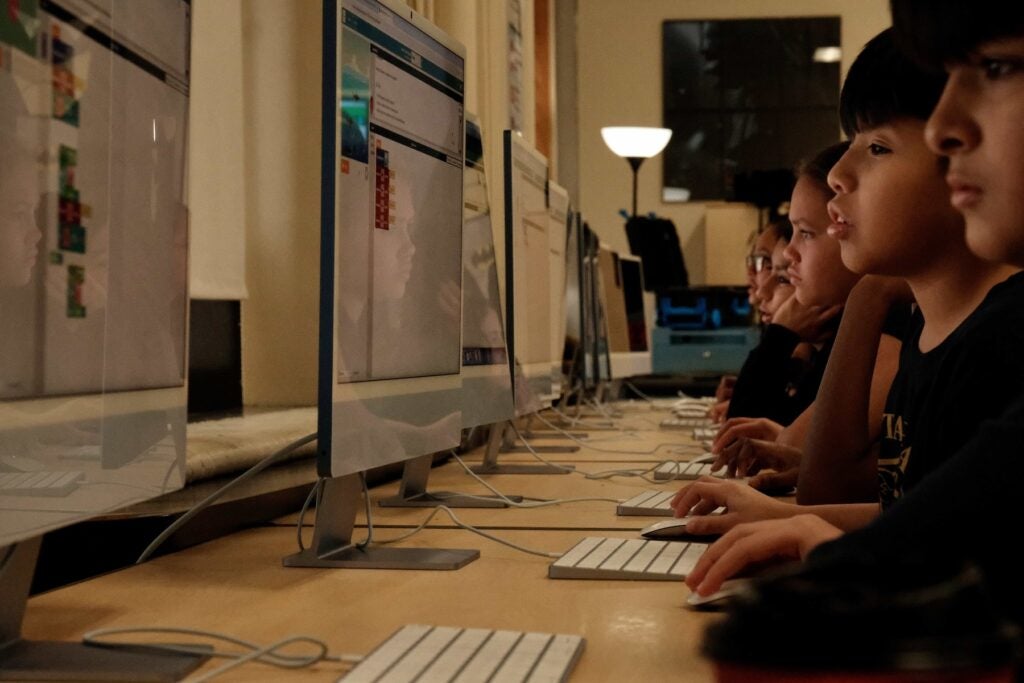
The 15th annual Computer Science Education Week kicked off with an hour-long coding session at John H. Taggart School in South Philly, where students gathered to play coding puzzles and control robots.
Over the past 15 years, the School District of Philadelphia has increased computer access, creating digital literacy labs in 132 schools. This year, more than 3,000 students participated in this tech-based curriculum.
“We want to make sure that all students have the opportunity to learn how to program, code, and more importantly, learn skills and collaboration through that,” said Melanie Harris, Chief Information Officer for the School District of Philadelphia.
Over the past 15 years, the district has invested in its digital literacy program, expanding access to over 48,000 students across 132 schools. Earlier this summer, 45 schools received upgrades to their computer labs, part of a $3.1 million investment.

John H. Taggart’s digital literacy lab was updated this year, outfitted with 12 desktop computers and 22 MacBooks, to ensure that students can be mobile when coding. Harris says in addition to technology upgrades, the spaces have been created to be modular, incentivizing collaboration.
“You want the kids working together,” Harris said. “It’s about creating very flexible learning spaces as well.
The lab has individual tables for students that can be brought together to form larger units when working in a group. Some are topped with whiteboards, allowing a tactile approach to solving coding problems.
Related Content

Principals, safety supervisors and other administrators will receive 3% annual raises as a part of their new contract.
4 months ago
Jessica Ross-White, the district’s director of special projects, says that these whiteboards also give students an opportunity for “unplugged activities.” The goal of the digital literacy curriculum is for students to be responsible users, producers and creators of technology, not just consumers.
“We do want to make sure that kids are not inundated by screen time, but also when they are on the screen, how are they using it responsibly,” Ross-White said. “Do they understand what cyberbullying looks like and sounds like?”
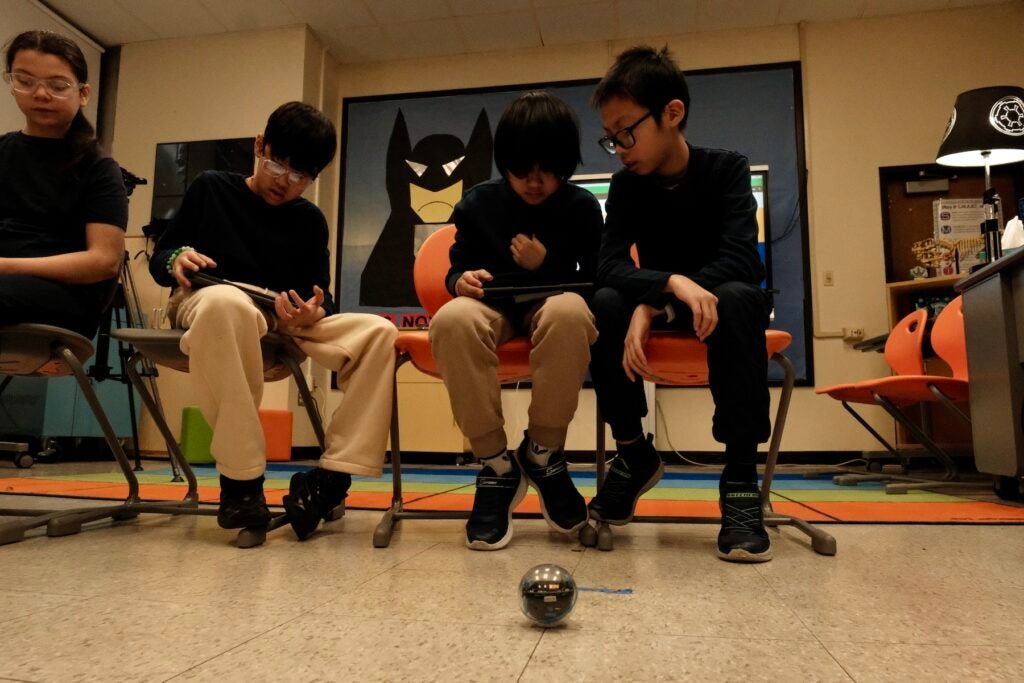
The hour of coding featured three different stations. Students rotated through these activities throughout the event, coding on desktops, playing board games and controlling Sphero BOLTs, robot balls that are controlled through code.
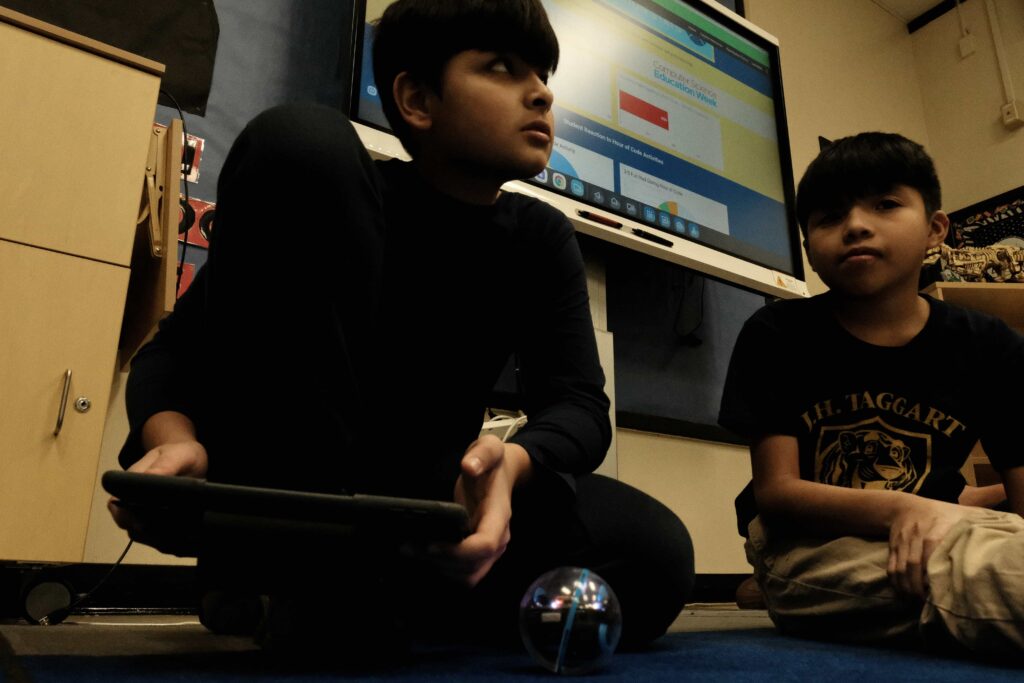
Thomas Goldsmith is the digital literacy teacher at John H. Taggart School. One of the things he likes about computer science is that it teaches a lifelong skill of computational thinking—the ability to break down complex problems into comprehensible parts.
Addressing the students, Goldsmith spoke to the importance of learning computer skills at a young age, preparing them for their future careers.
“Early exposure to coding and computer science concepts increases equity by broadening access to high-demand opportunities and helping close the digital divide,” Goldsmith said. “Integrating computer science across the curriculum fosters creativity and collaboration, allowing students to design solutions and work effectively.”

Get daily updates from WHYY News!
WHYY is your source for fact-based, in-depth journalism and information. As a nonprofit organization, we rely on financial support from readers like you. Please give today.
Part of the series

Philadelphia School District proposes $225 million in budget cuts. Here’s what it means
The cuts, proposed to go into effect 2026-27 school year, begin the process of eliminating a $300 million deficit.
3 weeks ago
Students and community advocates told the school board Thursday that shuttering schools affects more than numbers.
4 weeks ago
Listen 1:10
Philadelphia School District revises facilities plan, sparing 2 schools from closure
Community support led to Russell Conwell Middle School and Motivation High School being removed from the proposed closures.
1 month ago