
Philadelphia teens learn screen printing at The Fabric Workshop and Museum, continuing a legacy of arts apprenticeship
As the workshop and museum nears its 50th anniversary, its paid high school program continues teaching teens teamwork and creative expression.
Listen 1:11
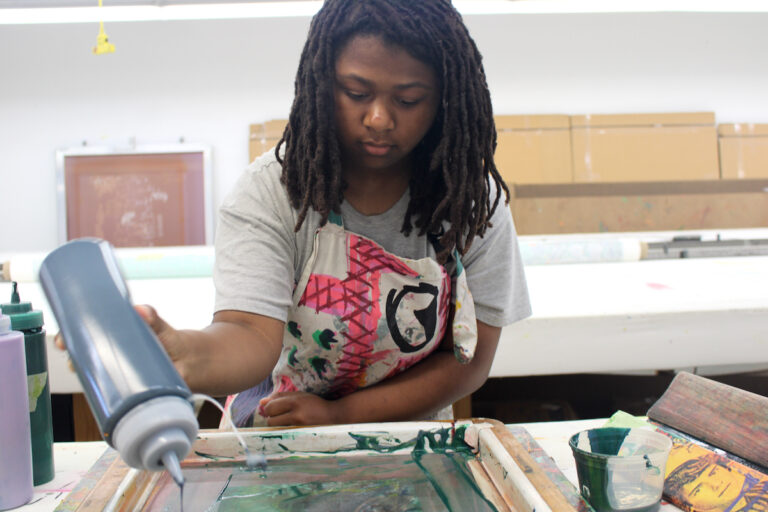
Liya Grace Davis Jones, a member of the summer cohort of The Fabric Workshop and Museum's high school apprenticeship program, prepares materials for hand screen printing on Thursday, July 23, 2026. (Emily Neil/WHYY)
From Philly and the Pa. suburbs to South Jersey and Delaware, what would you like WHYY News to cover? Let us know!
Philadelphia teenagers are learning the centuries-old craft of hand screen printing at the Fabric Workshop and Museum, continuing a focus on arts education for young people that dates to the institution’s founding in 1977.
Marion “Kippy” Bolton Stroud, a Philadelphian and philanthropist, started the organization with the mission and purpose of educating young workers and artists in an apprenticeship model, said Christina Roberts, director of education at the museum.
“Students could come here and learn about screen printing on fabric, and [then] those skills would translate, and youth could go on to work in the factories in Philadelphia,” she said.
Although the cultural and industrial sector has changed, youth education and professional development remains a core piece of the museum’s work, Roberts said, and its high school apprenticeship program is a key part of that legacy.
The museum is preparing to celebrate its 50th anniversary next year, and teen engagement coordinator Anthony Folks said the high school apprenticeship program exemplifies the organization’s commitment to the “direct connection between making and looking.”
“The studio was kind of built off of the high school program and getting young artists into the print studio with master printers,” said Folks, a multimedia teaching artist. “And so we’re still doing it, and you know we’re still here, we’re still striving and the program is still doing what it was meant to do.”
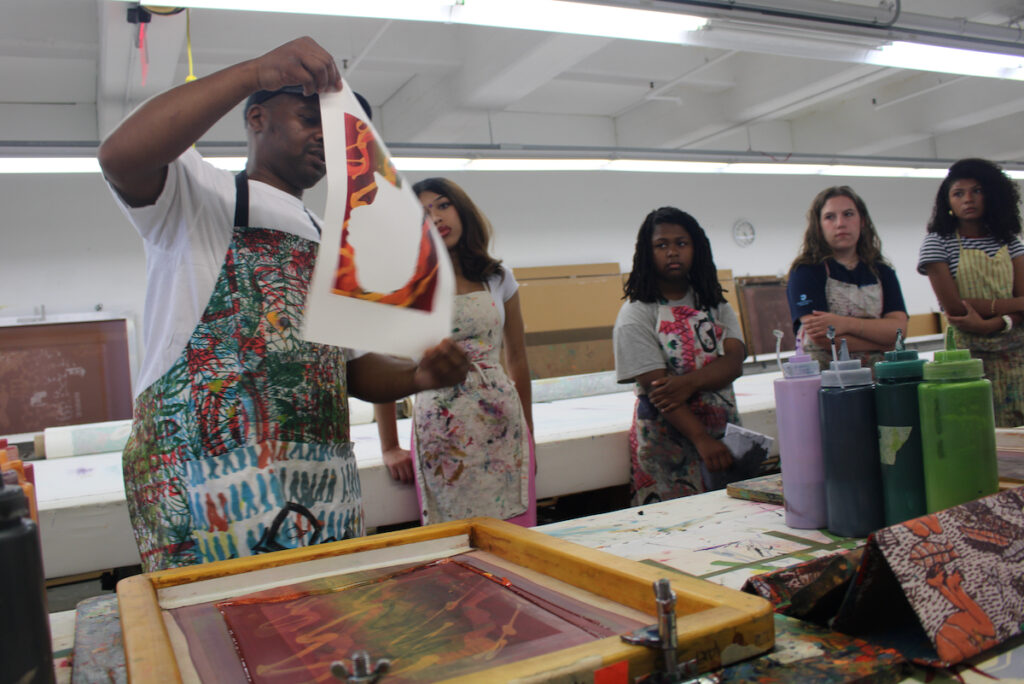
In three yearly cohorts, groups of four or five Philadelphia teenagers receive a stipend to learn the art of hand screen printing on fabric.
“It introduces them to museum spaces in a live studio, as well as gives them some professional development and teaches them a hard skill, which is screen printing,” Folks said.
The process requires teamwork and promotes creativity and professional development skills, Roberts said.
“It’s very critical at this age for the students to come in and learn how to work together and how to collaborate and how to be in a professional setting,” she said. “Those are really valuable skills, and those are skills that transfer to any walk of life.”
Printing as practice for life and work
On a recent Thursday, one of two summer cohorts gathered in the studio at the museum, looking on as Folks explained how they would start to make prints of patterns that each student had designed.
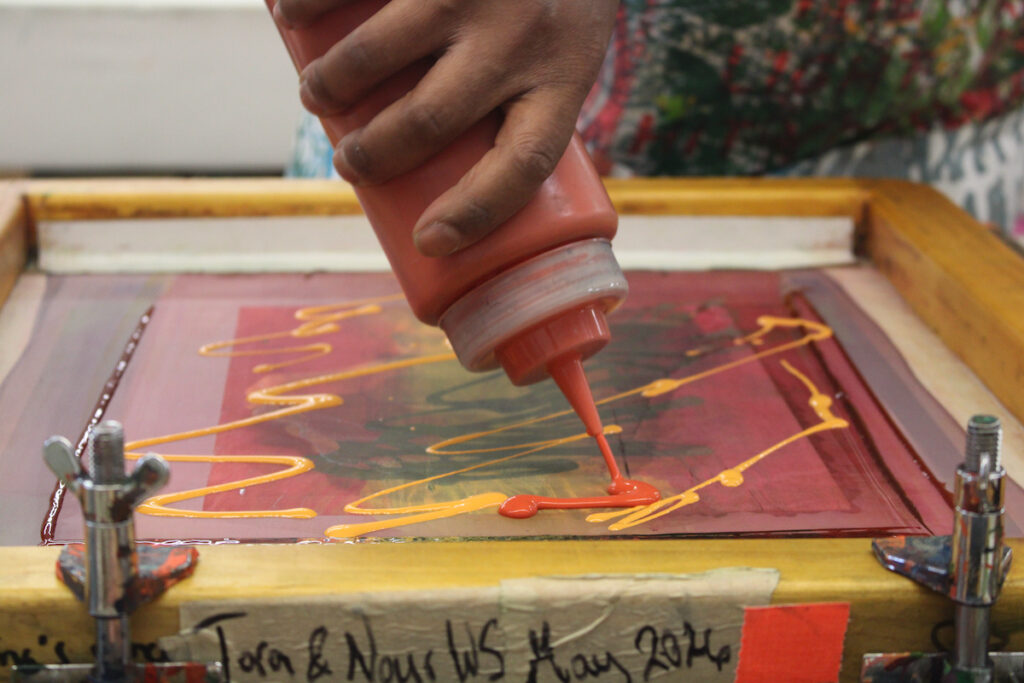
In hand screen printing, a design is photographically exposed onto a woven mesh screen to create a stencil. The artist then uses a squeegee to push ink through the stencil so that the image appears on fabric or paper placed beneath the screen.
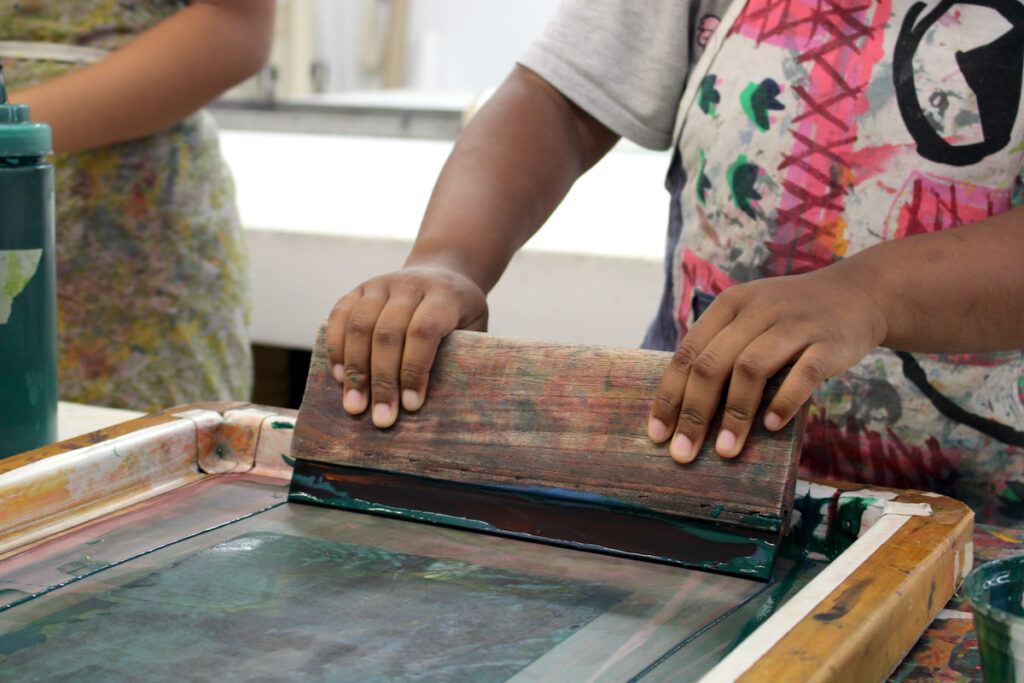
Folks said students will often be “shy” and “a little quiet” when they first start the program. Over the subsequent three months, though, they gain confidence quickly, in part thanks to the tangible result of their artistic efforts, he said.
“It can be a little scary, and then, you know, they’re basically helping run the place,” he said with a laugh.
By the end of the course, each student will create an 8-foot banner with a repeating design screen printed the length of the fabric.
Related Content

Philadelphia Cultural Fund releases record-high arts and culture grants
The Cultural Fund is in the midst of a strategic planning process to find a more equitable funding model.
3 months ago
Listen 1:22Breaking down a complex process like screen printing into “quick and easy steps,” Folks said, helps students see the art form as approachable.
“I think that basically just shows them that they can accomplish larger goals,” he said.
Patterns become personal narratives
Joey Szpilczak, 17, a rising senior at Germantown Friends School, sat in the back during class, already at work on her final design. The summer session is Szpilczak’s second time doing the program.
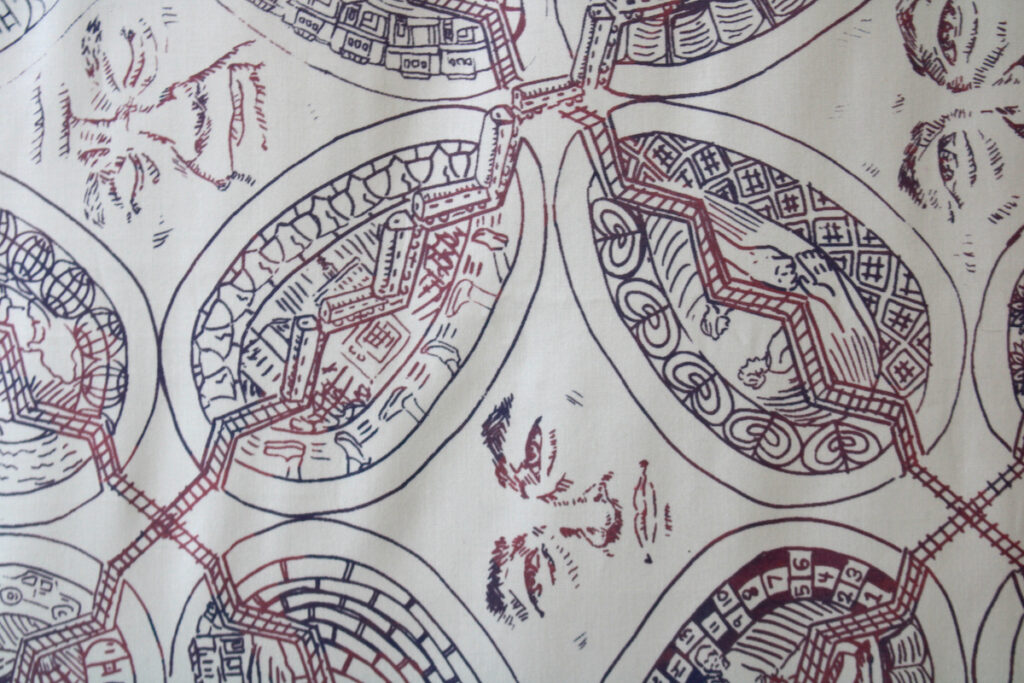
In the previous semester, her final project focused on her family history. Her grandfather was born in Ukraine, Szpilczak said, and he was sent to a forced labor camp in Siberia. Her design shows train tracks crisscrossing, representing her grandfather’s story, and the fracturing of her, her father’s and her grandfather’s Ukrainian identities.
“I wanted to show my face, my grandfather’s face and my father’s face in sort of a repeating pattern, trying to show a generational trauma, but also a generational endurance, and just unpacking our history,” she said.
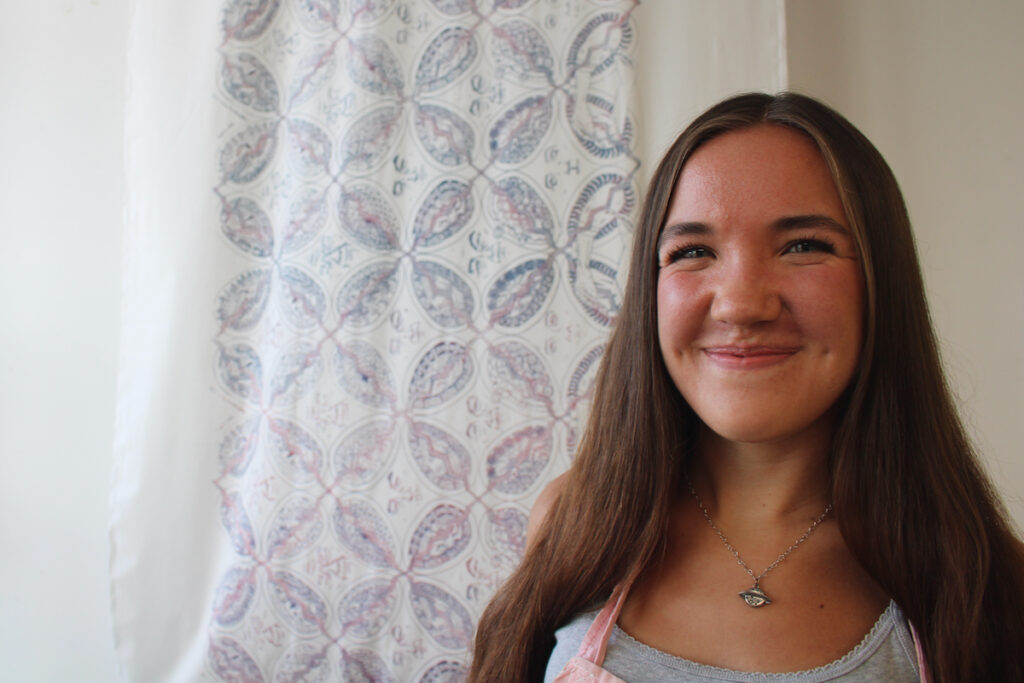
The use of patterns in screenprinting is a powerful medium of expression, Szpilczak said, and one which she is reflecting on in her own work.
As an art therapy volunteer at a radiation oncology practice and through helping lead a mural project, Szpilczak said, she has applied the “practice of creating, of finding a way in which you can create individual narratives within a larger system or larger structure, and also find a larger message within those individual patterns.”
“I definitely want to consider sort of how I work within a system or how I work with others who have different perspectives, creating a larger … pattern or creating a larger story, and how important it is to both be able to find your own voice and the collective’s,” she said.
For Szpilczak, collaborating with Folks, her fellow cohort members and other professionals in the studio has been an important part of her experience in the program.
“Coming out of the Fabric Workshop Museum, it makes me appreciate better how to work with people who are using the same sort of tools and how to create connection within your job or within your passion and how important that is to be able to create larger change or larger projects,” she said.
Related Content
Pennsylvania state budget increases arts funding for the first time since 2009
An unprecedented statewide effort by arts advocates pushed elected officials to give the sector a small bump.
3 months ago
Listen 1:17How touch can reinforce learning
Screenprinting, as a multistep, analog process, allows students to practice a variety of skills, said Roberts, the director of education at the museum.
“It’s a very traditional art,” she said. “The students come in and they’re drawing with their hand without the computer, and I think emphasizing that kind of learning and using your mind in that way, your mind and your hand working together, reinforces learning.”
Executing repeat screenprinting patterns requires fine motor skills, precise measurements, applied math and teamwork, she added.
“That kind of learning, it really sits with you because it’s storytelling,” Roberts said. “You’re physically doing it and it’s tangible and and you’re using your hands and your mind and working with others. And you remember.”
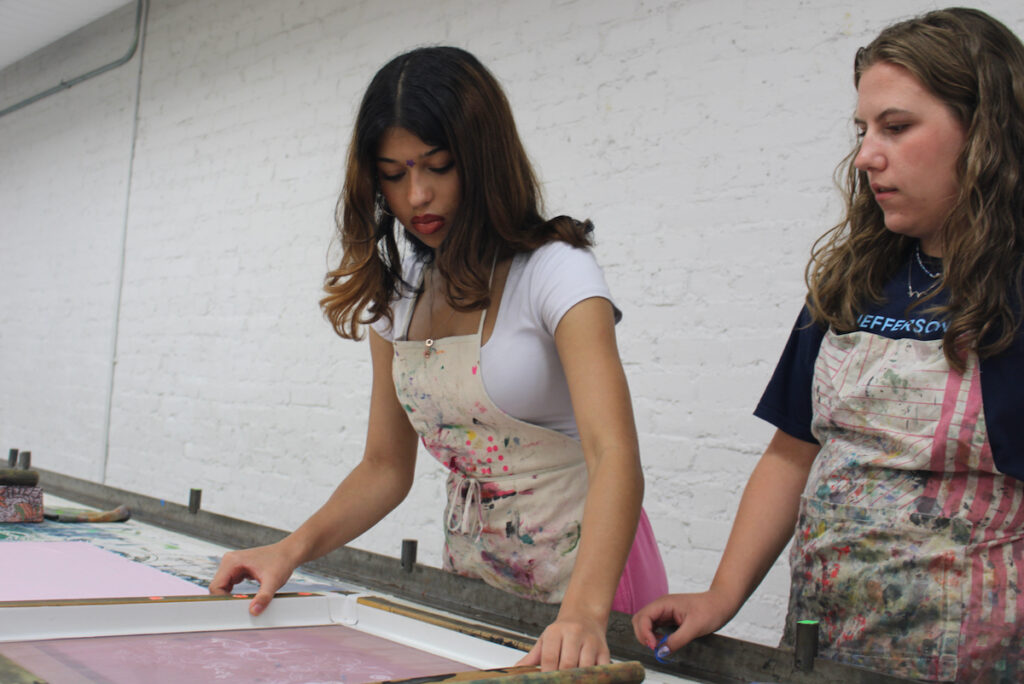
Research from universities around the world suggests children can remember more information from a lesson when it stimulates multiple senses, particularly touch.
Textile crafts, such as screen printing, can also promote an “overall sense of well-being,” per a March research report.
For Jada Wells, 17, also a rising senior at Germantown Friends School, the physicality of the art form is appealing. She used to do more digital art, she said, but now she likes the feeling of the materials in her hand.
“I think printing on fabric is really special because you can see the different textures in the work,” she said. “You can see the texture and it just feels more alive.
She said the program’s impact on her life has been simple: “It brings joy … It just brings up my mood to be here.”
Editor’s Note: This story is part of a series that explores the impact of creativity on student learning and success. WHYY and this series are supported by the Marrazzo Family Foundation, a foundation focused on fostering creativity in Philadelphia youth, which is led by Ellie and Jeffrey Marrazzo. WHYY News produces independent, fact-based news content for audiences in Greater Philadelphia, Delaware and South Jersey.

Never miss a moment with the WHYY Listen App!


WHYY is your source for fact-based, in-depth journalism and information. As a nonprofit organization, we rely on financial support from readers like you. Please give today.
Part of the series
Creativity Sparks Success
WHYY News explores the impact that creativity and arts programming has on the development on school-aged children.
New Jersey community arts programs fill gaps in kids education and spark creativity
When arts programs are limited in programming and time in the traditional classroom, community arts programs step up to round out exposure.
6 days ago
Listen 2:41
Mural Arts’ after-school programming prepares students, heals communities
Founded in 1984, Mural Arts Philadelphia has created more than 4,000 murals. The nonprofit organization also helps kids hone their artistic and social skills after school.
1 year ago
Listen 1:03
5 quilts from Cut & Sew PHL in Mt. Airy chosen for QuiltCon national convention in Phoenix
The Philly-based quilt shop and sewing studio will be represented in February at the national quilting event.
2 years ago
Listen 0:48