

Thousands of Bucks and Montco residents live in flood zones. A new study suggests ways to lower the risk
The remnants of Hurricane Ida caused millions of dollars in damage to homes and led to the deaths of four people in Bucks and Montgomery counties.
Listen 1:17
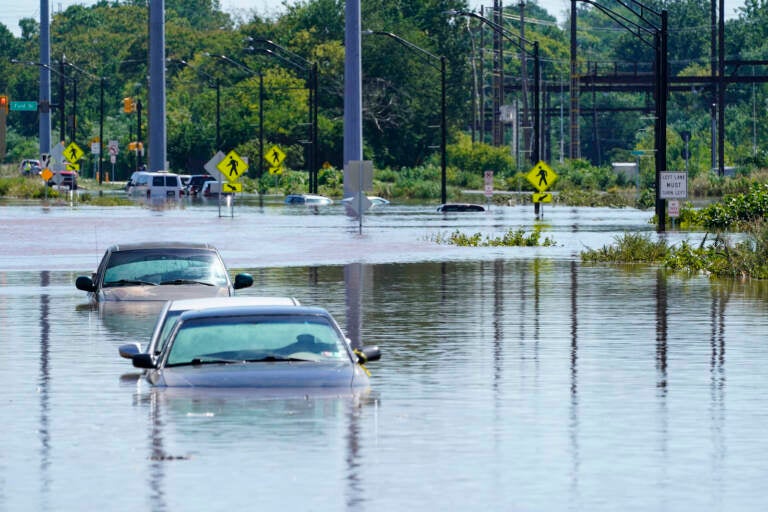
File photo: Vehicles are under water during flooding in Norristown, Pa. Thursday, Sept. 2, 2021 in the aftermath of downpours and high winds from the remnants of Hurricane Ida that hit the area. (AP Photo/Matt Rourke)
This story is part of the WHYY News Climate Desk, bringing you news and solutions for our changing region.
From the Poconos to the Jersey Shore to the mouth of the Delaware Bay, what do you want to know about climate change? What would you like us to cover? Get in touch.
During the aftermath of Hurricane Ida in 2021, as much as 8 to 10 inches of rain fell over Montgomery County and its neighbors in as little as six hours, raising the Perkiomen Creek to 26 feet.
The storm destroyed an estimated 70 homes across the Perkiomen watershed and caused millions of dollars in damage to buildings and infrastructure.
As the storm raged, four people were killed in Montgomery and Bucks counties. Two died within the Perkiomen watershed, including a man who drowned in his car after he and his wife were caught in the floodwaters.
“Weather events that were once rare are becoming far too common. The human cost of these storms is heartbreaking,” said Montgomery County Commissioner Jamila Winder, who spoke at an event Thursday announcing a comprehensive study of flooding issues in the watershed.
The Perkiomen Mapping & Flood Study has identified more than 130 flood sites and prioritized 20 areas in greatest need of emergency planning, environmental restoration and infrastructure projects.
Lawmakers and environmental organizations are calling the study a “roadmap” that aims to protect people and their homes from the next big storm.
“Now, when we experience heavy rainfall, we can identify the areas most at risk of flooding, and our municipalities can take the next steps to plan and implement preventative measures,” Winder said.
An estimated 85,000 people live in flood zones along waterways within the Perkiomen watershed, including in parts of Montgomery and Bucks counties. The watershed encompasses 362 square miles and spans Montgomery, Bucks, Berks and Lehigh counties, while the Perkiomen Creek is the largest tributary of the Schuylkill River.
Related Content
As flood risks grow, New Jersey promotes awareness and mitigation plans
New Jersey has launched a flood awareness campaign to prepare residents for rising risks, and is highlighting initiatives that protect ecosystems and boost coastal resilience.
7 months ago
Dozens of families along the Perkiomen corridor in Montgomery County have given up their homes as part of a Federal Emergency Management Agency buyout program in the years since Ida.
The new flood study points to key issues contributing to severe flooding within the watershed, including poor stormwater management and increased development that causes more water to run off hard surfaces like roadways and parking lots.
“It’s a beautiful area and people want to live here and I get it, I live here. But along with that come some of the impacts, like the impervious surfaces,” said Ryan Beltz, executive director of the Perkiomen Watershed Conservancy. “The answer is trying to slow the water from getting to the creeks. If we can build in a sustainable way, then there’s room for everybody.”
Some of the solutions include installing rain gardens, restoring stream banks and clearing out swales that have been filled with debris over time. Some projects have been approved but await funding, including a plan that will convert a FEMA buyout area into a stormwater park to provide flood storage and water treatment.
The study also recommends mitigating the effects of development by strengthening land use regulations, as well as implementing major infrastructure projects, such as improving stormwater systems and replacing bridges and culverts that trap and raise floodwaters.
State Rep. Joe Webster, D-Montgomery, said he’s committed to lobbying for funding to support the proposals. He calls the projects an investment, saying that they will prevent future costs required to repair infrastructure each time a major storm hits the Perkiomen watershed.
“It’s costs that we keep repeating that we can do away with. We can save that funding and do other things,” Webster said, adding that the investment will also have environmental and recreational benefits.
“People who come out to enjoy the creek, that maybe do trout fishing in the spring, are Boy Scouts or Girl Scouts that come out and kayak on the creek — all of that becomes more native, more natural, and more of an experience goes along with the nature of Pennsylvania.”

Get daily updates from WHYY News!
WHYY is your source for fact-based, in-depth journalism and information. As a nonprofit organization, we rely on financial support from readers like you. Please give today.
Part of the series
Part of the series
Watershed
Preserving Our Water: How we use our Delaware Watershed.
The project is funded by The William Penn Foundation.
It’s the first time a Pennsylvania utility agreed to shield average ratepayers from data center costs. Data centers will pay $11 million for low-income rate relief.
4 days ago
Listen 1:24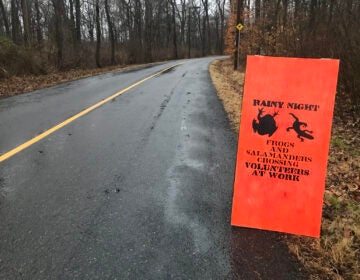
Pa. wants to reduce vehicle collisions with animals using wildlife corridors
Across the U.S. between 1 and 2 million large animals are involved in vehicle collisions each year, according to the Federal Highway Administration.
2 weeks ago
Listen 1:06
Upper Makefield residents call for answers on Energy Transfer pipeline leak
Some residents in Bucks County reported smells of gasoline in their water as far back as September 2023.
1 year ago
Listen 1:17