
120,000 Pennsylvanians have dropped ACA health insurance since the loss of federal subsidies
High monthly premium payments without enhanced tax credits, coupled with high costs of daily living, have caused some to cut insurance.
Listen 1:15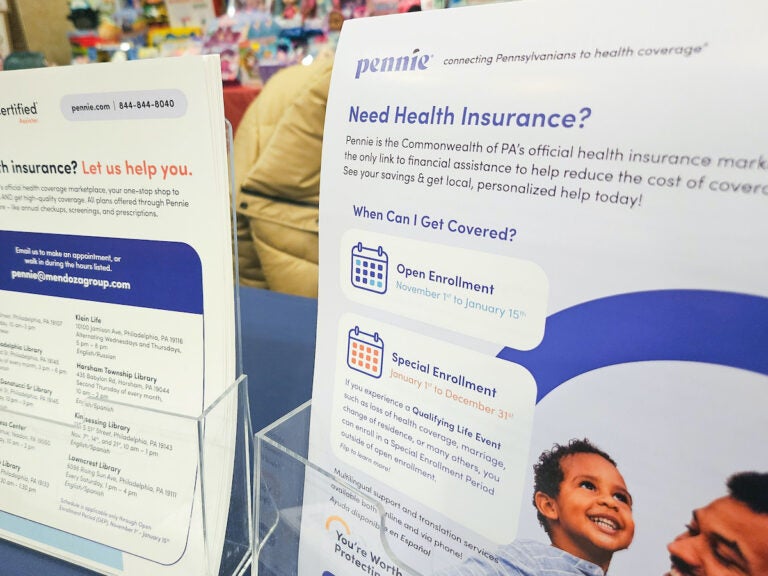
Pennie enrollment assisters help answer questions about health insurance and provide free open enrollment support over the phone or in person at community events. Assisters with the Mendoza Group handed out flyers and pamphlets at a recent community holiday fair in West Philadelphia on Sat., Dec. 20, 2025. (Nicole Leonard/WHYY)
From Philly and the Pa. suburbs to South Jersey and Delaware, what would you like WHYY News to cover? Let us know!
Lacey Cassidy usually wouldn’t think twice about running around with her kids, trying a new activity or rushing through errands.
But she’s a lot more cautious these days to avoid any possible injuries, even a badly sprained ankle, that might require a doctor’s visit and medical care.
“Recently, we’ve been invited to a bunch of birthday parties and they’re all at a bounce park, right? Which is great. But I’ve been like, okay, I’m not jumping right now,” she said. “I do feel a little more exposed.”
That’s because Cassidy, who lives just outside Reading, Pennsylvania, with her husband and two young children, is newly uninsured. She’s among 120,000 Pennsylvanians – and counting – who have cancelled their 2026 health insurance through the state’s Affordable Care Act marketplace since November.
Insurance experts say it’s part of the ongoing fallout from monthly premiums skyrocketing as a result of insurer rate increases and the loss of COVID-era federal subsidies, which had once helped lower costs before they expired.
Facing mortgage payments, rising costs of utilities, groceries, child care and other daily expenses, Cassidy said dropping her health insurance was the only option her family had left, even if it makes them vulnerable to unexpected medical bills or debt.
“I’m hoping that I can get through the year and we might find something, you know, a light at the end of the tunnel next year,” she said.
Patient advocacy organizations and insurance leaders in Pennsylvania say they’re still urging Congress to restore enhanced premium tax credits so that people may see some relief, despite negotiations coming to a standstill after the new year.
“The story isn’t over,” said Joanna Rosenhein, director of campaigns at the Pennsylvania Health Access Network. “We’re going to continue seeing people drop coverage and it’s really important for us to understand why that’s happening.”
Premiums spike as daily costs of living rise
A record number of people were enrolled in health insurance through Pennie, Pennsylvania’s ACA marketplace, in 2025. State officials largely credit the federal enhanced premium tax credits, which Congress passed in 2021 along with pandemic relief funds.
The tax credits allowed more people to become eligible for financial assistance.
Cassidy, a stay-at-home mom, and her husband benefitted from the tax credits, which kept their monthly payments low.
“I felt that we had decent and fair coverage for the price that we were paying,” she said.
However, Congress did not renew the additional subsidies before Dec. 31, causing sticker shock during annual open enrollment this winter.
Related Content

Philadelphia Planned Parenthood centers say services are at risk following Medicaid cuts
The federal “One Big Beautiful Bill Act,” signed into law last July, blocks Medicaid funding to facilities that perform abortions.
6 months ago
Cassidy and her husband paid about $80 a month for insurance last year. With the premium rate hikes and loss of some federal subsidies, she was looking at a $450 monthly bill this year.
Cassidy’s husband, who is a plumber, recently got a job that offers employer-sponsored insurance. But she said the monthly premium costs are about on par with plans on Pennie, and they couldn’t afford coverage for the two of them at either price point.
Rosenhein said that many families are stuck between a rock and a hard place.
“They’re in an impossible situation either way,” she said. “They’re either paying a really high monthly premium for a high-deductible plan or they might choose to go without coverage and they feel like those situations are pretty equal.”
Getting a part-time or full-time job would mean expensive child care for their youngest, and before- and after-school care for their oldest, Cassidy said, which would likely eat up most of her new income.
She said she found empathy among other mothers and women who’ve shared similar stories and circumstances on social media.
“We’re trying to balance out that family life and still, you know, have it affordable, but we’re all struggling when it comes to the health care,” she said.
A growing uninsured population
The number of insurance cancellations are significant among people ages 26 through 44, according to Pennie data. Residents between the ages of 55 to 64 account for the highest number of cancellations, which includes people who are almost eligible for Medicare insurance.
More people becoming uninsured should be a concern for everyone, Rosenhein said. When people seek treatment at hospitals without insurance, the care often goes unpaid and hospitals absorb the costs, which she said could be challenging for facilities that are already struggling to provide emergency care and other services.
Health care affordability issues are also affecting people who are still enrolled in insurance, she said.
“Not only are people dropping coverage overall, we’re also seeing a lot of folks drop down to higher deductible catastrophic plans or bronze plans with really high deductibles,” Rosenhein said. “And we’re very concerned those people will be at risk of medical debt if they have an emergency situation or if they get diagnosed with cancer or another health condition.”
In addition to the federal subsidies, Rosenhein said advocacy organizations are pushing Pennsylvania to fund, at least in part, a new program that could provide some Pennie customers with premium subsidies funded by state dollars.
In the meantime, organizations like Pennsylvania Health Access Network can help people consider all their insurance options, Rosenhein said, especially as they face difficult decisions.

Get daily updates from WHYY News!
WHYY is your source for fact-based, in-depth journalism and information. As a nonprofit organization, we rely on financial support from readers like you. Please give today.
Pennsylvania ACA health insurers propose double-digit premium increases for 2027
The total average premium rate increase request in the individual market is 17%. Some insurers like Ambetter are requesting an average increase of 40%.
4 weeks ago
Listen 1:05
Across the U.S., an estimated 5 million people ages 50 to 64 face greater health insurance costs without federal premium tax credits.
6 months ago
Listen 1:49
Fewer Americans sign up for Affordable Care Act health insurance as costs spike
The 3.5% decline in enrollment is linked to expiring subsidies and rising health expenses.
7 months ago