
Opera Philadelphia’s upcoming season will feature a comedy about a president who defies electoral defeat to become a dictator
George and Ira Gershwin’s “Let ‘Em Eat Cake” flopped on Broadway in 1933. Opera Philadelphia will revive it for the midterm election season.
Listen 1:21

Anthony Roth Costanzo stands on the stage at the Academy of Music. (Opera Philadelphia)
From Philly and the Pa. suburbs to South Jersey and Delaware, what would you like WHYY News to cover? Let us know!
In George and Ira Gershwin’s “Let ‘Em Eat Cake”, a fictional U.S. president denies his lost re-election, reclaims the presidency in a fascist coup and capitalizes on his own dictatorship. Along the way, he launched a business selling blue shirts, turns the Supreme Court into a baseball team and redesigns the White House.
The plot of the Ira and George Gershwin comic musical “Let ‘Em Eat Cake” was written 93 years ago and has not been seen onstage in America in almost as long. Now, Opera Philadelphia is bringing it back in its upcoming 2026-2027 season.
“It’s amazing to think about what these great artists were writing about in 1933 and how it still rings resonant,” said Anthony Roth Costanzo, the company’s general director and president. ”The music itself, when you sing it with operatic voices — just like ‘Porgy and Bess’ — it takes on a really operatic quality.”

“Let ‘Em Eat Cake” flopped when it opened on Broadway to poor reviews, with critics at the time saying the story about a farcical dictatorship “wanders dreamily away into demented unreality.”
It has not been fully staged in America since the original production closed after 90 performances. Costanzo has programmed it for January.
“As we go into the midterm elections, we can be really responsive to the moment we’re in,” he said. “To have an opera that feels so pertinent to what’s going on and what people are thinking about and talking about on both sides, it feels like a cathartic, hilarious, terrifying reflection. Opera’s goal is to make you feel things, and I think this is going to make people feel a lot of things.”
“Let ‘Em Eat Cake” was written as the sequel to the Gershwins’ wildly popular “Of Thee I Sing,” a satire poking fun at American politics featuring a presidential candidate, who runs on a love platform. “Of Thee I Sing” became the first musical to win the Pulitzer Prize.

Its sequel was distinctively darker and more cynical. A New York Times reviewer called it “merciless and mirthless.” The musical did not resonate with Depression-era audiences who, presumedly, were not interested in stories about dictatorships for entertainment, although one song from “Let ‘Em Eat Cake” called “Mine” eventually entered the American songbook.
In 1978, co-writer of the book for “Let ‘Em Eat Cake,” Morrie Ryskind, told The New York Times that “we went for a Marx Brothers kind of lunacy.”
Costanzo said it’s a cartoonish farce, yet also a musical masterpiece.
“When you see that the Supreme Court is made into a baseball team, for example, they do a ‘Sis boom bah!’ cheer, except they replace some of those syllables with ‘Habeas corpus! Ra! Ra! Ra!’” he said. “It is in a way very, very silly and ridiculous. But also, Gershwin writes in all these familiar American tunes that descend into minor key. It’s fascinating musical writing from Gershwin where he’s really telling a story in his music.”
Related Content

For 30 years Pig Iron has created original theater that has delighted and disoriented audiences. Critics sometimes didn’t get it.
6 months ago
Listen 3:14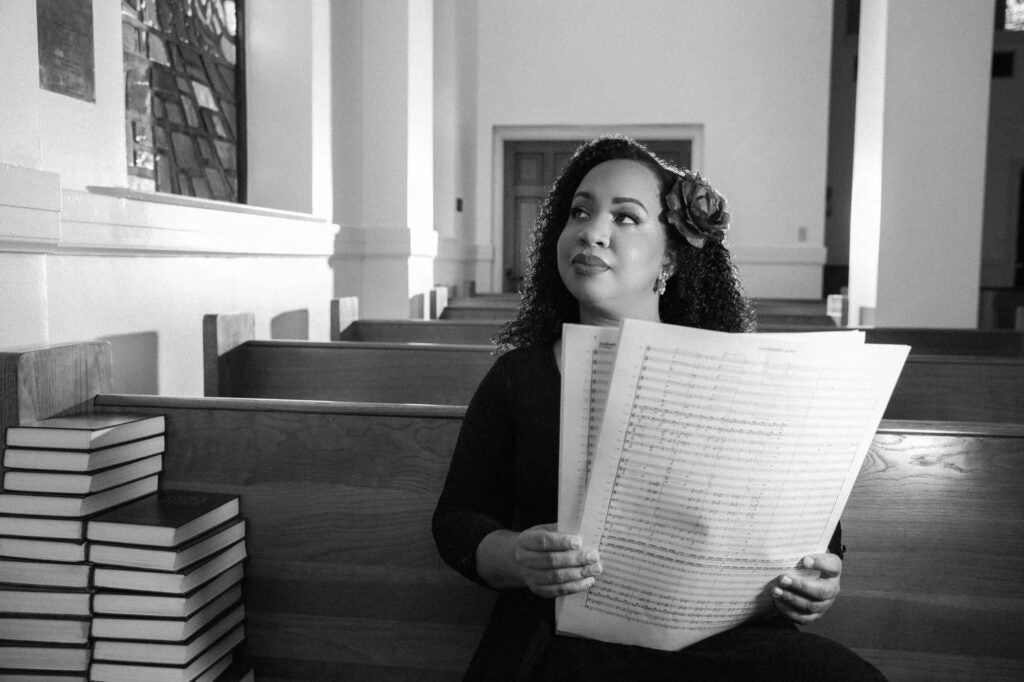
New season includes operas that are funny and ‘fiendishly difficult’
The new season will also include the premiere of the first opera by Opera Philadelphia’s resident composer, Courtney Bryan, “Suddenly Last Summer,” based on the Tennessee Williams play. The season also includes the world premiere of “Sitcom” by composer Luke Styles and librettist Alan McKendrick, an opera structured as episodes of a television comedy series; a new production of Giuseppe Verdi’s “Aida”; and the company premiere of Mozart’s “Mitridate, re di Ponto,” written when he was just 14 years old.
Costanzo, who is also a countertenor opera singer, will perform in the Mozart production, about an ancient king, played by tenor Lawrence Brownlee, who is believed to be dead in a battle with the Romans, creating a power vacuum. He returns to find both of his sons have fallen in love with his fiancé.
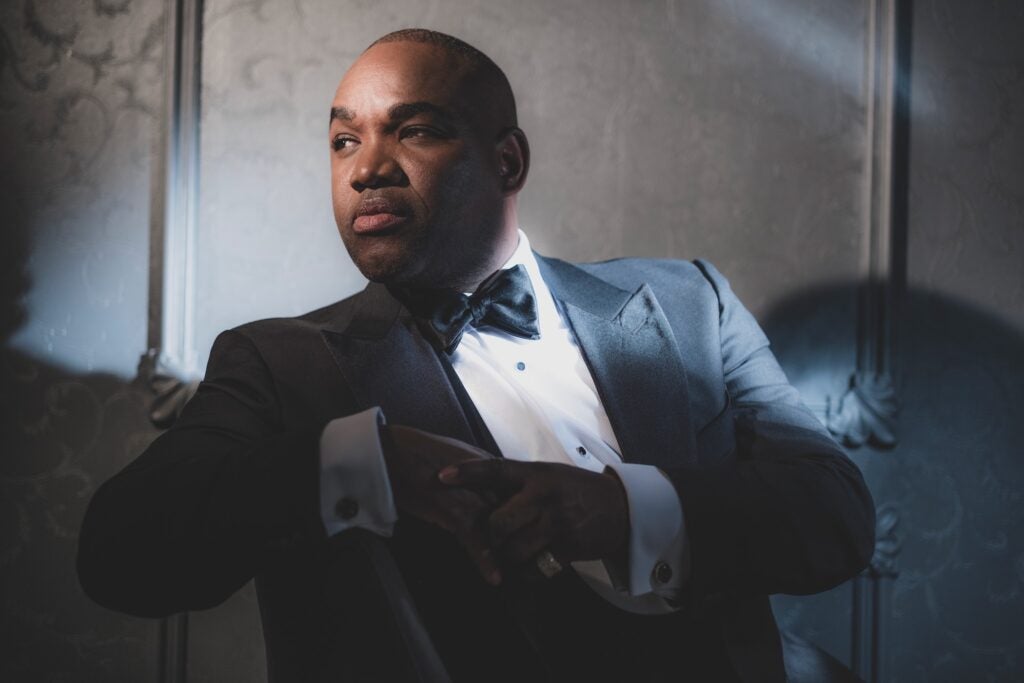
Costanzo said the 14-year-old composer was still steeped in a Baroque style, not yet maturing in his better-known classical work, and may have been more invested in the music than the singers who had to perform it.
“It’s fiendishly difficult. That’s why there’s only a few people who can sing the lead role of Mitridate,” he said. “I would say the 14-year-old Mozart either had no mercy or he hadn’t quite figured out how to write as comfortably for the voice.”
Opera Philadelphia has helped develop the opera “Sitcom” for 10 years. Each of its episodic scenes take its characters on a transformative journey, only to have the next scene begin as though nothing had happened.
“It’s the same characters but, just like on ‘The Simpsons,’ when the episode restarts all of a sudden, everything they went through in the last episode has disappeared and they’re back to square one,” Costanzo said. “It is really, really fun.”
Subscription packages go on sale Tuesday, April 28. Opera Philadelphia’s “Pick Your Price” tickets — the buyer can determine any amount over $11 — will become available June 30 for Opera Pass holders, Aug. 4 for the general public for fall performances, and Nov. 23 for the general public for winter and spring performances.
WHYY is your source for fact-based, in-depth journalism and information. As a nonprofit organization, we rely on financial support from readers like you. Please give today.
Despite setbacks, Opera Philadelphia to press on with Wanamaker building performances
Overdue inspections threw a wrench in Opera Philadelphia’s plans to activate the vacant Macy’s building.
10 months ago
Listen 1:18
Opera Philadelphia lifts voices at Broad Street Love
The Harmonious Communities program formed a choir at the service and resource center for people experiencing homelessness.
2 years ago
Listen 3:00
An opera about a maddening hum, ‘The Listeners,’ premieres in Philly
Starting with a mysterious noise of no discernible source, the opera explores political cultism.
2 years ago
Listen 2:33