
As ACA costs climb, more Philly-area residents are dropping coverage entirely. Older adults are especially hard-hit
Across the U.S., an estimated 5 million people ages 50 to 64 face greater health insurance costs without federal premium tax credits.
Listen 1:49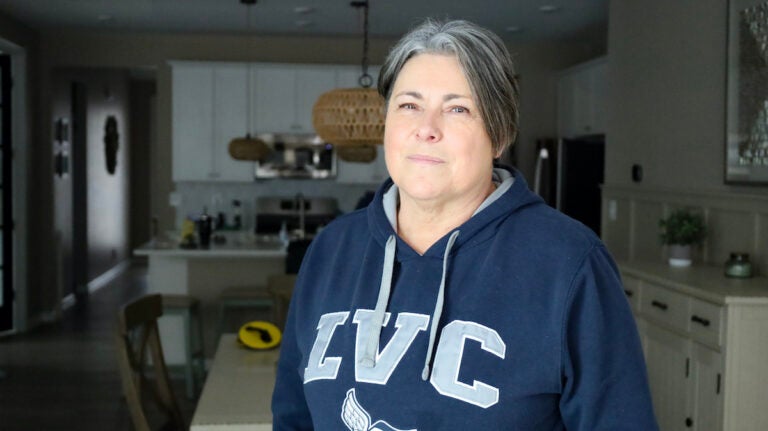
Kathryn Buchovecky, 64, lives with her husband in Delaware. After raising four children and over two decades of teaching, the couple decided to retire early and get their health insurance through ACA marketplaces. (Nicole Leonard/WHYY)
From Philly and the Pa. suburbs to South Jersey and Delaware, what would you like WHYY News to cover? Let us know!
Kathryn Buchovecky is counting down the days ‘til her birthday this year. The 64-year-old Delaware resident and retired schoolteacher said at this stage in her life, getting older is not usually something she’s excited about.
“Who says, ‘I can’t wait to be 65?’” she asked. “But I am having a big ‘ole party on June 1.”
June marks the month when she’ll be eligible for Medicare, a federal health insurance program for seniors. It’ll still cost money, but far less than the $2,500 a month she and her husband now pay in premiums for a bronze plan on the Affordable Care Act marketplace.
This is seven times more than she and her husband paid previously, before insurance companies raised rates and federal subsidies expired at the end of 2025.
Premium costs for the average person buying plans on ACA marketplaces have nearly doubled, but older residents are paying some of the highest prices in the market. An estimated 5 million people nationally aged 50 to 64 are facing greater insurance costs this year, according to an AARP report.
Thousands of people in Delaware, New Jersey and Pennsylvania have dropped their ACA health insurance during the most recent annual open enrollment period, which ended Jan. 15 in most states, federal data shows.
Others like Buchovecky are just trying to stretch their money to hang onto coverage until they enroll in Medicare.
“We are lucky enough to have accounts where we can pull that money from,” she said, but knows many others won’t be able to cover the increased costs and have no choice but to drop their insurance altogether.
“There’s no way. Where are they going to get that money?” she asked. “I just, my heart breaks.”
There are efforts in Congress to revive the federal enhanced premium tax credits, but negotiations have come to a standstill, leaving residents to foot the bill.
Related Content
Subsidies that helped Delawareans who earn above 400% of the federal poverty level expired last year, and Congress has yet to renew them.
7 months ago
Listen 0:57‘Something’s wrong’: Older residents face premium spikes
Buchovecky grew up in Chester County, Pennsylvania, which is where she and her husband also raised their four children.
After more than two decades teaching high school English while her husband worked at a local company as a systems analyst, the couple determined they had saved enough to retire just before 60.
A big factor in that decision was knowing they could get health insurance through Pennie, Pennsylvania’s ACA marketplace. A silver plan cost about $150 a month in premiums in early 2023, Buchovecky said.
“Then we thought, well, where do we want to retire to? OK, Delaware,” she said. “Never gave insurance a second thought.”
But moving to a new state in the fall of 2023 came with growing pains, she said, especially when it came to health insurance.
Buchovecky and her husband found that the plan options in Delaware were pricier and had smaller networks of health providers in general compared to the coverage they had in Chester County.
They ended up dropping down to a less comprehensive plan that cost them about $350 a month — “still totally doable,” Buchovecky said.
Their monthly premium remained affordable even on a limited income, she said, because they qualified for some enhanced premium tax credits, which Congress passed in 2021 during the pandemic.
However, that changed this past fall when the couple had to shop for 2026 coverage without the federal tax credits, which had an expiration date of Dec. 31. To keep their current plan, Buchovecky told her husband it would cost them nearly $3,000 a month.
“And he kept saying, ‘You’re doing something wrong.’ I’m like, believe me, I wish I was doing something wrong,” she said laughing. “He’s like, ‘You’re gonna have to show me.’ So, I showed him and he’s like, ‘Something’s wrong with the system, this can’t be right.’”
They eventually found a different plan “for the low, low price” of $2,500 a month, Buchovecky said sarcastically.
There was no question her husband needed health insurance, as he had suffered a stroke several years ago and has ongoing medical needs. But Buchovecky told him she was seriously considering going uninsured to save money.
“We went back and forth and back and forth and I just didn’t want to do it. I’m like, screw it,” she said. “But he was getting so worked up about, ‘If something happens to you, like, what am I supposed to do?’ I think I signed up at 11:58 p.m. the last day, because I was just so angry.”
Related Content

Medicaid cuts ahead: ‘It’s going to affect everyone,’ Philly health care workers warn
PASNAP unions and 10 partner organizations have introduced a “Healthcare Bill of Rights” and are urging lawmakers to pledge support for safety net programs.
7 months ago
Listen 1:13ACA marketplaces see ‘thousands’ drop coverage
The added costs this year means they’ll have to use money they had saved for living in retirement and had planned to contribute to college funds for their grandchildren, Buchovecky said.
But she knows that others are in far worse situations, she said, which has left her feeling distressed and enraged. “I’ve lost sleep. A lot of sleep.”
State insurance officials expect even more people to drop health insurance coverage over the next few weeks and months as they struggle to pay the premiums.
In Pennsylvania, more than 85,000 people who had health insurance coverage through Pennie last year have cancelled their plans for 2026, according to Gov. Josh Shapiro’s administration.
“We’ve seen almost four times as many people drop coverage this open enrollment than we did last year,” said Devon Trolley, Pennie executive director, at a recent press conference in Lancaster. “In years before the enhanced tax credits, we used to see quite a drop-off in February, March and April of people who were trying to make it work and just couldn’t. And so, we are anticipating that it’ll continue.”
National advocacy organizations representing older Americans like AARP continue to urge Congress to bring back the federal health subsidies, but the latest $1.2 billion government funding bill signed by President Donald Trump on Feb. 3 does not include money for the boosted tax credits.
It’s left people like Buchovecky feeling helpless, but she’s not staying silent.
“I’ve always had a very strong sense of justice, and this is so unjust,” she said. “I don’t know how it’s all going to end or what the solution is.”

Get daily updates from WHYY News!
WHYY is your source for fact-based, in-depth journalism and information. As a nonprofit organization, we rely on financial support from readers like you. Please give today.
Pennsylvania ACA health insurers propose double-digit premium increases for 2027
The total average premium rate increase request in the individual market is 17%. Some insurers like Ambetter are requesting an average increase of 40%.
3 weeks ago
Listen 1:05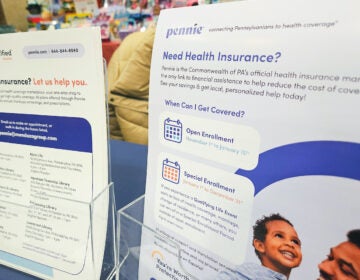
120,000 Pennsylvanians have dropped ACA health insurance since the loss of federal subsidies
High monthly premium payments without enhanced tax credits, coupled with high costs of daily living, have caused some to cut insurance.
4 months ago
Listen 1:15
Pa. Democrats, doctors push preservation of Affordable Care Act in face of Trump’s promise to repeal
Although initially highly partisan, Republicans appear to have largely given up the fight over the 2010 law. However, the presumed party nominee still has it in his sights.
2 years ago
Listen 1:11