

Gone too soon: A posthumous retrospective of the late Noah Davis at the Philadelphia Art Museum
Davis painted large-scale scenes of Black life in an abstract style. His quick rise in the art world only lasted six years before he died at 32.
From Philly and the Pa. suburbs to South Jersey and Delaware, what would you like WHYY News to cover? Let us know!
The Philadelphia Art Museum has been roiled by internal friction involving its board, its former CEO and the departures of its executive staff. Nevertheless, the PAM is still functioning as a museum by launching a new exhibition.
“Noah Davis” is the first solo retrospective of the artist whose career was remarkably short and bright. The Los Angeles–based painter had his first solo show in 2009 at age 25, at the Tilton Gallery in New York. Six years later, he died from a rare form of cancer at 32.
“Noah Davis” is an internationally touring exhibition that originated at the Barbican in London. The Philadelphia Art Museum is its fourth and final stop, and the exhibit’s only North American venue.
“Most of these paintings manage to do two things at the same time,” said curator Eleanor Nairne. “They have this charge of familiarity, as if there’s something in them that you recognize. But overall, you’ve never seen anything quite like it before. So you both know it, and yet it feels uncanny to you at the same time.”
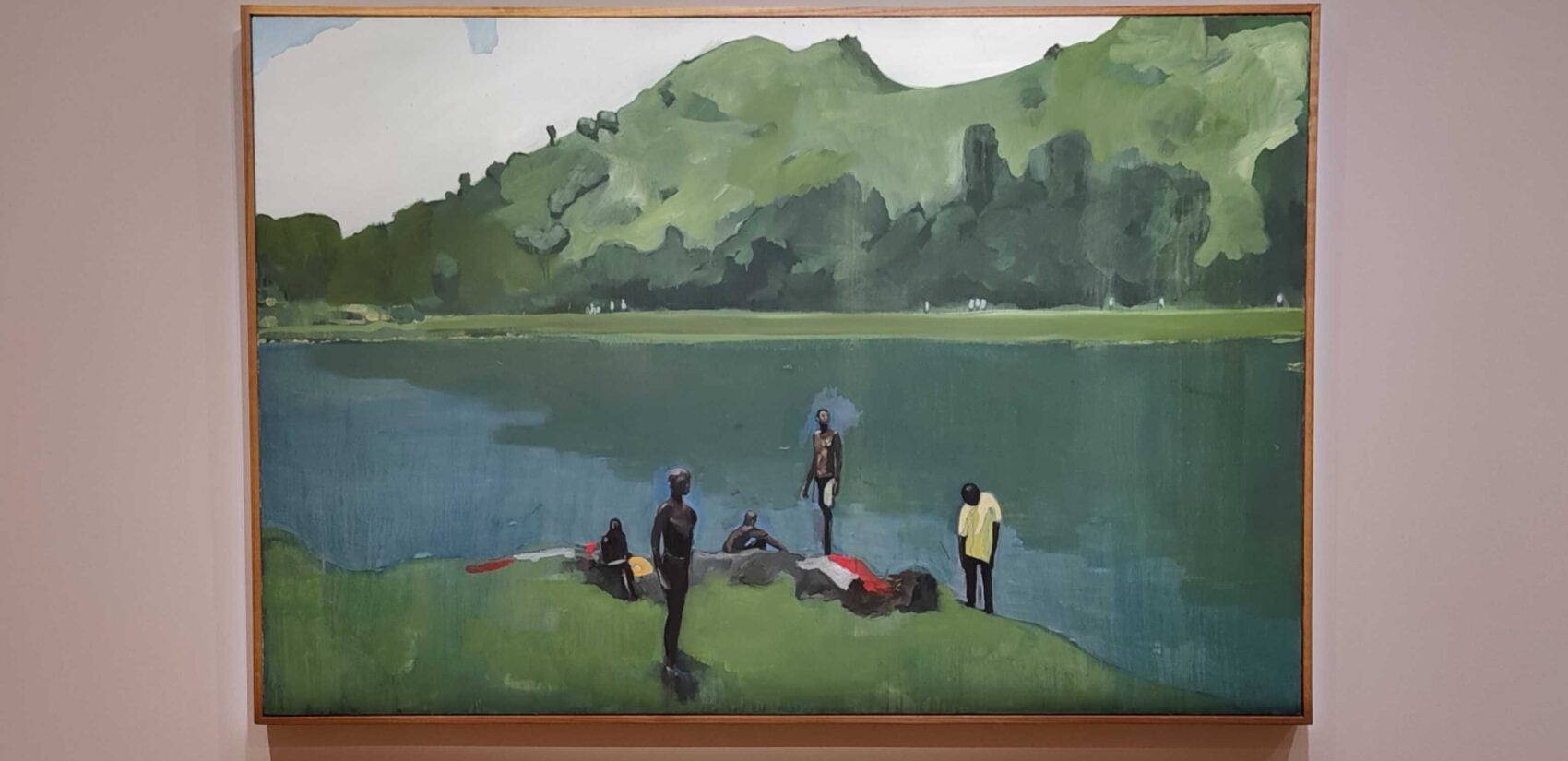
Noah Davis painted in a mostly figurative style with drips and smears that made his images of Black figures appear dreamy and, in the words of a New York Times critic, “magical.” He created textures by applying caustic chemical solvents on the surface to degrade the paint, in some cases creating burn effects.
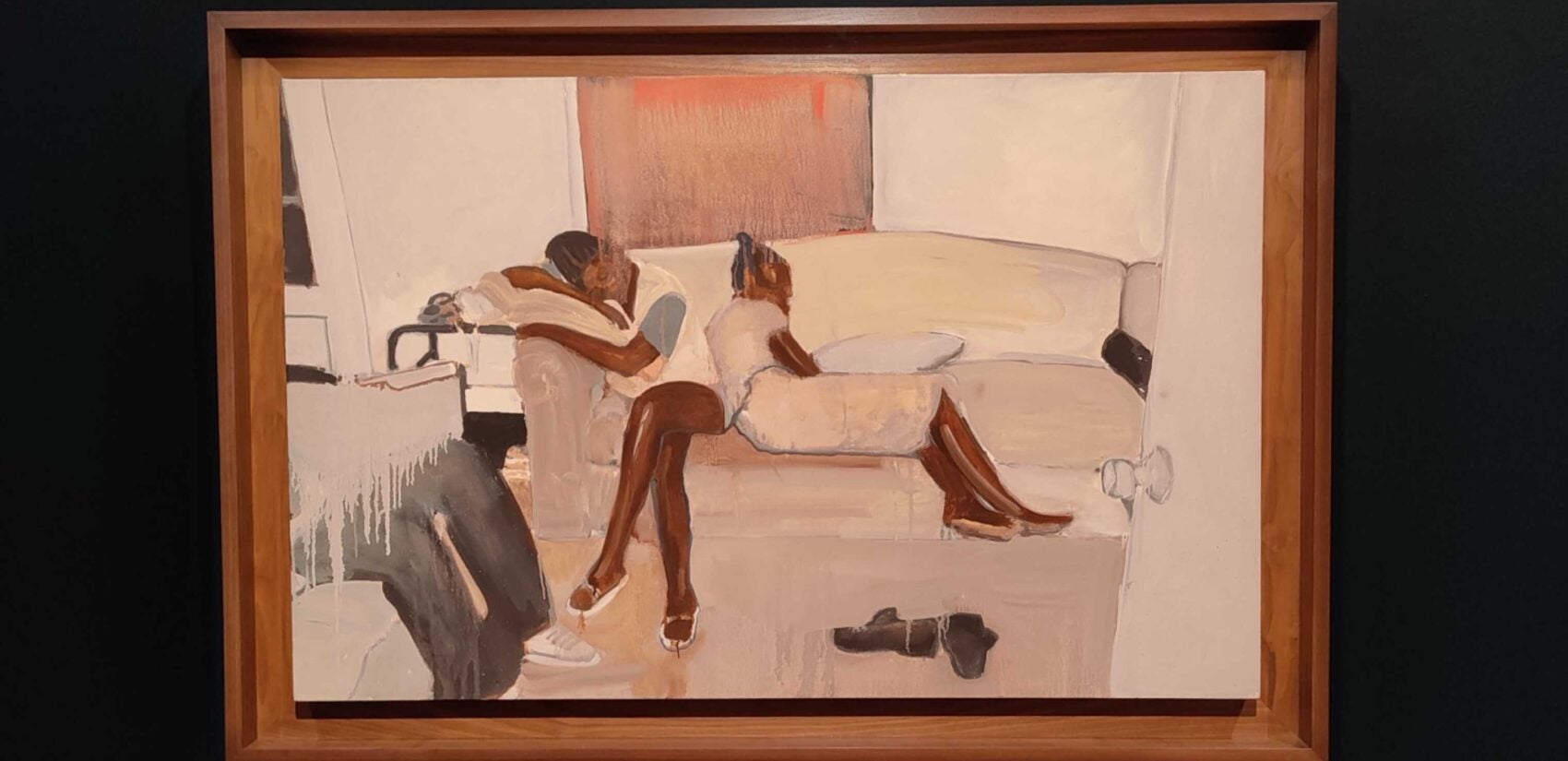
He preferred to obscure figures in his paintings by showing them from behind, warping their features, and in the case of Paul Revere Williams, the Black midcentury architect who helped shape the design of Los Angeles with thousands of buildings, scribbling slashes of paint across his face.
Despite defacing him in portraiture, Davis deeply admired Williams, at one point living in one of the houses the architect had designed.
“It’s not trying to create a photorealistic likeness of the person known as Paul Revere Williams,” Nairne said. “It’s trying to get at something bigger and more cultural than that, which is: What was it like to be the architect Paul Revere Williams?”
During his lifetime, Davis became known for the small but important Underground Museum in a storefront in Arlington Heights. The museum was a platform for both Davis’ serious intention to make world-class art accessible to people in the predominately low-income Black and Latino neighborhood of Los Angeles, and as a site for pranks. When Davis was unable to secure loans of artworks from major institutions, he made fakes and displayed them as “Imitations of Wealth.”
Nairne said a guiding principle of the exhibition is something Davis once told an interviewer who asked what motivates him to be a painter: “I just couldn’t do anything else. I’d rather fail at being a painter than be successful at anything else,” he said.
“It’s wonderfully candid as a statement — ‘I just couldn’t do anything else’ — but it also speaks to this one man’s absolute conviction and commitment to what a painting can do,” Nairne said. “We have this quote from him: ‘Painting can do something to your soul that nothing else can. It is visceral and immediate.’”
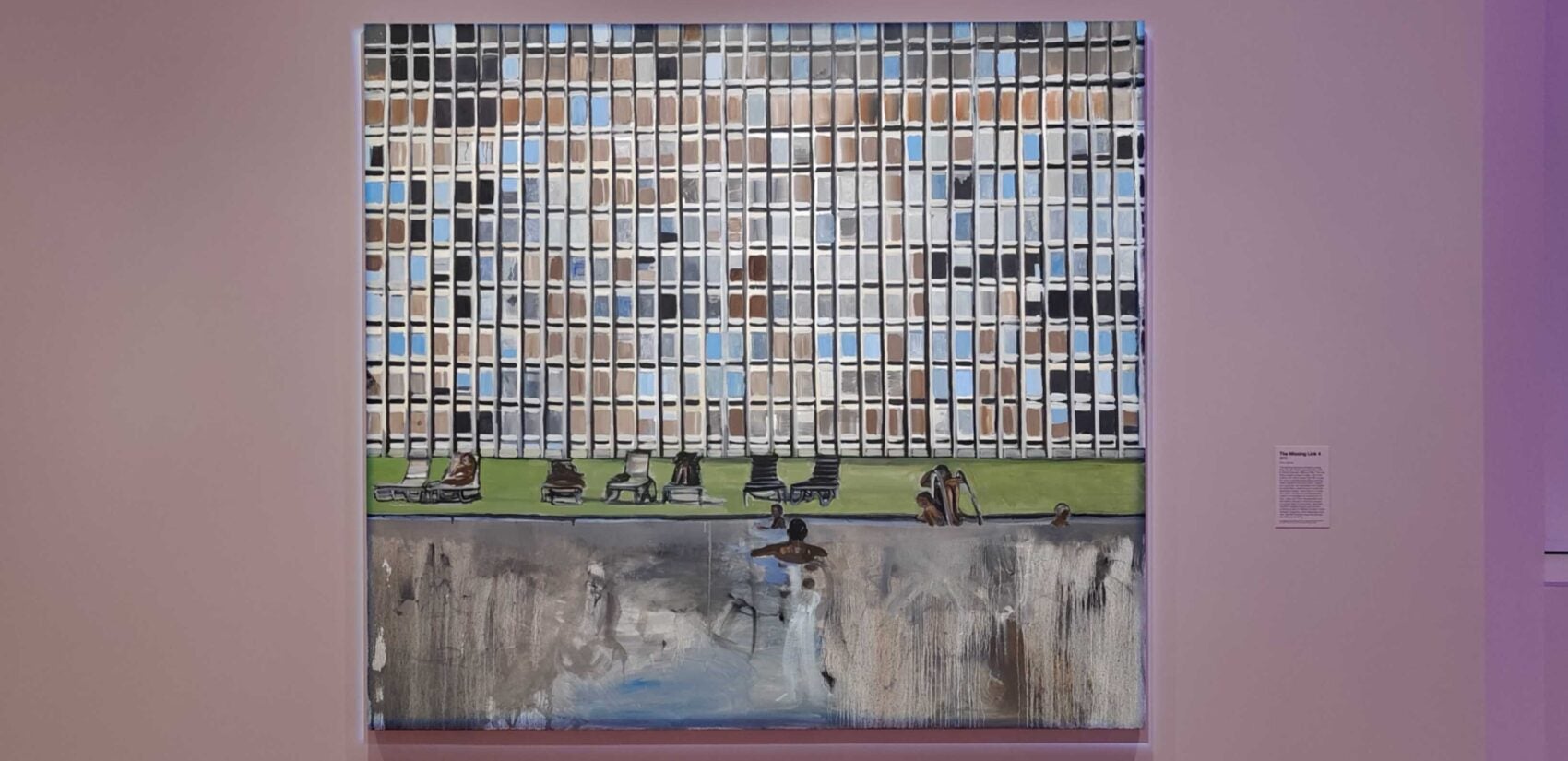
“Noah Davis” takes samples from the artist’s various phases, including the “1975” series of paintings based on photographs taken by his mother, the “Savage Wilds” series based on stills of Black participants in sensationalist television talk shows like Maury Povich and Jerry Springer, and his “The Missing Link” paintings showing Black figures in urban settings that reference art-historical precedents like impressionism and Mark Rothko’s color fields.
A retrospective exhibition for an artist whose career lasted less than a decade may be presumed to be limited, but Davis was determined and prolific up until the end of his life. The final gallery, called “Elegy,” has three large-scale paintings Davis made in his final month alive.
Nairne said the scope of an artist’s work is not determined by its volume.
Related Content
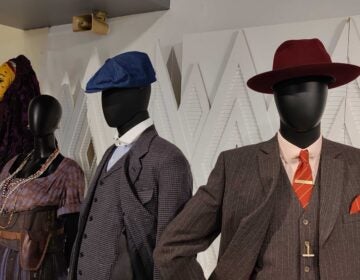
Ruth E. Carter is the most-nominated Black woman in Academy Award history.
2 months ago
“I’ve worked on a retrospective of Jean-Michel Basquiat, who dies at 27, and I’ve worked on a retrospective of Jean Dubuffet who personally publishes 27 volumes of his own catalogue raisonné,” she said. “The quantity of the output that an artist produces isn’t necessarily indicative of the rate at which they mature. It’s tempting to think that we know what a Noah Davis painting looks like. One of the reasons why you stage an institutional show like this is because it shows you that there’s actually much more diversity in range than you realize.”
“Noah Davis” will be on view at the Philadelphia Art Museum through April 26.
-
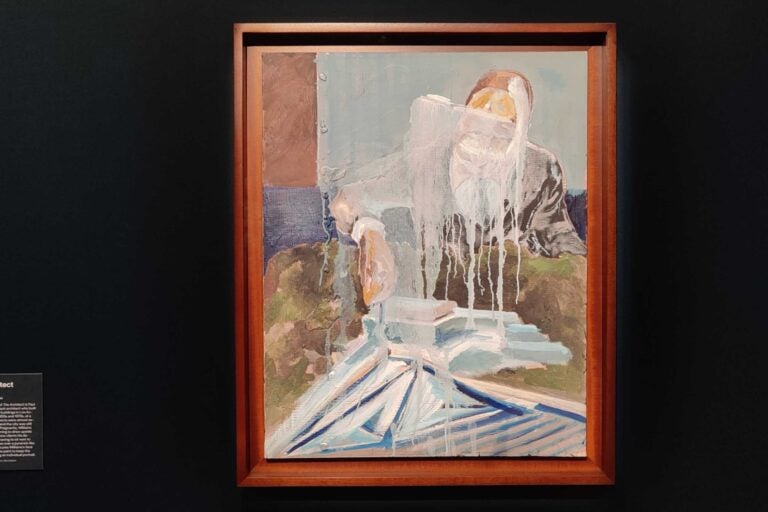
Noah Davis' "The Architect" (2009) depicts Paul Revere Williams, the first Black man on the west coast to be licensed as an architect. (Peter Crimmins/WHYY) -
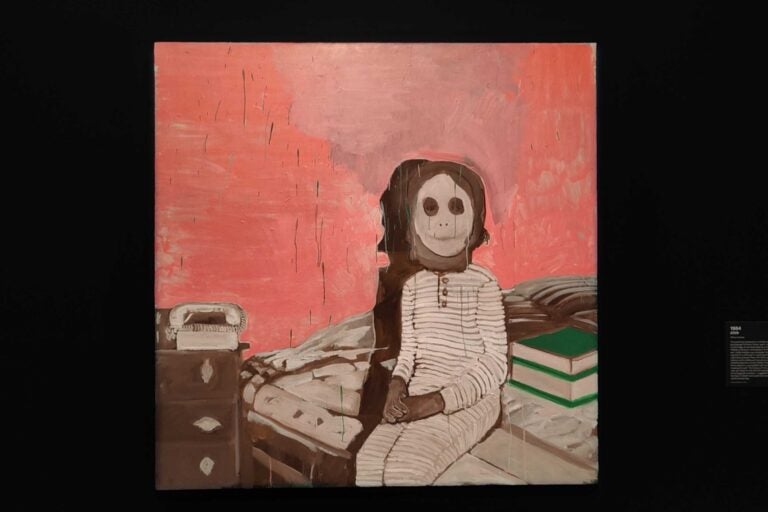
Noah Davis' "1984" (2009) is based on a photograph of his wife Karon Davis as a girl wearing a Halloween mask. (Peter Crimmins/WHYY) -
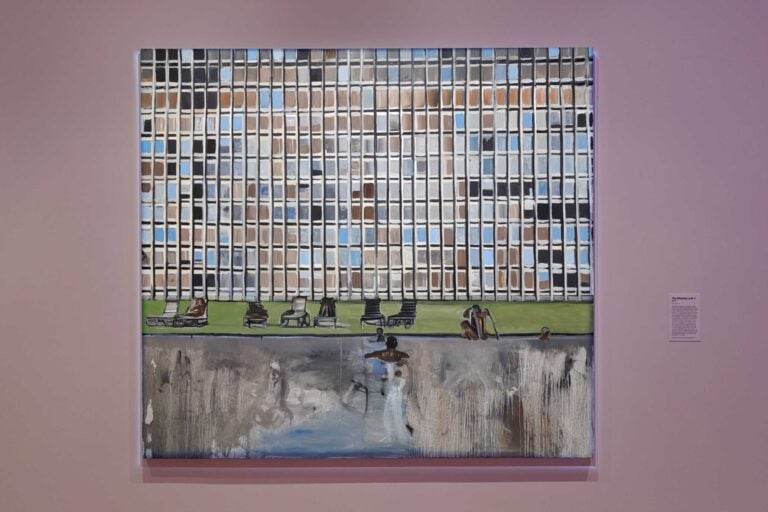
Noah Davis' "The Missing Link 4" (2013) depicts Lafeyette Park in Detroit, an urban revitalization housing development designed by Mies van der Rohe. A predominately Black neighborhood was razed for its construction in the 1960s. (Peter Crimmins/WHYY)

Get daily updates from WHYY News!
WHYY is your source for fact-based, in-depth journalism and information. As a nonprofit organization, we rely on financial support from readers like you. Please give today.
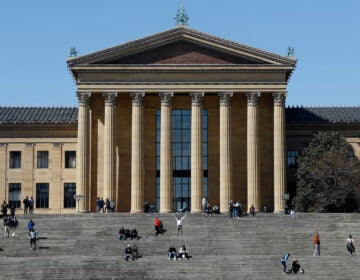
Philadelphia Museum of Art to experiment with pay-what-you-wish tickets on Friday nights
An earlier trial run proved to the museum that paying what you wish can actually generate more ticket revenue than standard pricing.
2 weeks ago
Listen 1:08
The Philadelphia Museum of Art is 150 years old. Here’s how it has evolved
What started as a showcase of industrial ingenuity at the 1876 Centennial Exposition has shape-shifted many times.
2 weeks ago
Listen 1:36
Philadelphia Museum of Art’s CFO, chief of staff resign amid months of staffing turmoil
The PMA faces more leadership turnover months after the CEO’s firing and as the museum moves past a disputed rebrand.
1 month ago
Listen 0:54