

These Newark, Delaware 4th graders are lobbying for wetland protections
The EPA last year proposed changes to the definition of “waters of the United States,” leaving some Delaware wetlands vulnerable to development.
Listen 3:26
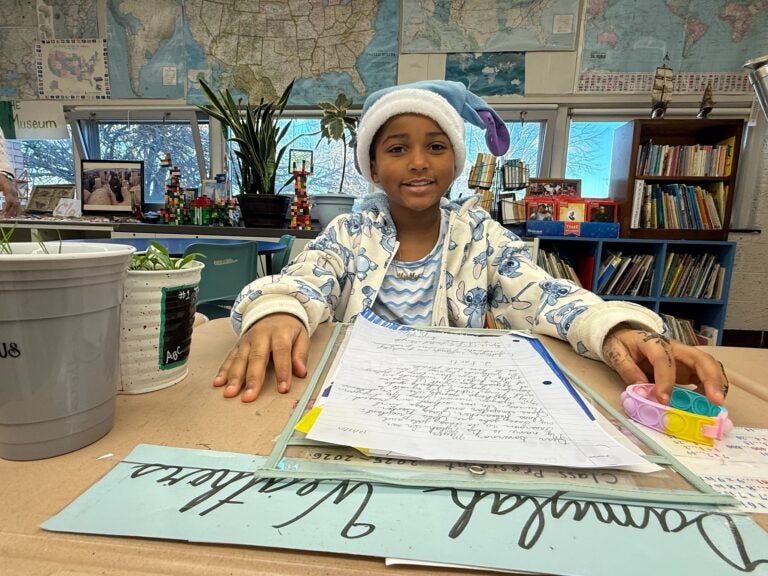
Fourth-grade students from Joseph M. McVey Elementary School in Newark, Delaware, were invited to speak at Legislative Hall about wetlands. (Zoë Read/WHYY)
From Philly and the Pa. suburbs to South Jersey and Delaware, what would you like WHYY News to cover? Let us know!
When Paul Sedacca’s fourth grade students walk into his classroom at Joseph M. McVey Elementary School in Newark, Delaware, they know they’re in for a creative and fun lesson.
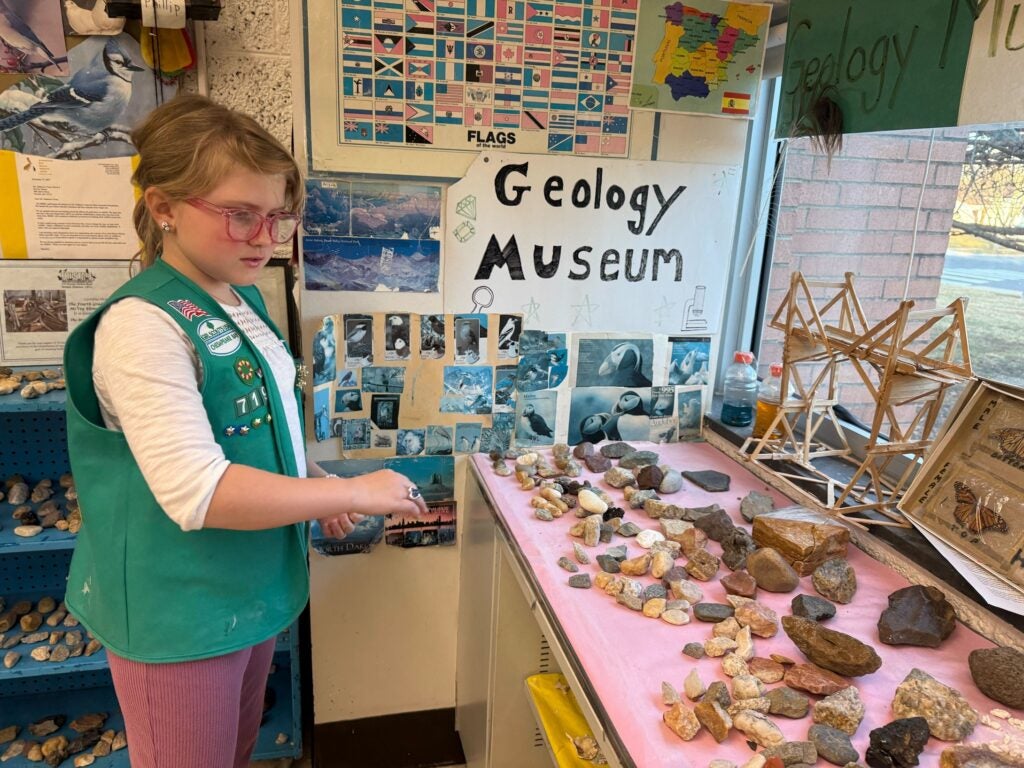
On any given week, the students sing songs about geography and grammar as “Mr. Sedacca” strums his guitar. The classroom is decorated with positive affirmations, pictures of birds and boasts a “geology museum” of rocks.
Sedacca’s assignments have taken the students outside the classroom — cleaning up trash, and even speaking up about various environmental issues.
Last month, a handful of students were selected to visit Legislative Hall in Dover, where they urged decision makers to protect the state’s freshwater wetlands.
Sedacca said he was inspired to teach his students about wetlands after the Trump administration proposed rescinding Clean Water Act protections for certain waterways in favor of landowner rights.
Handmade posters in tow, the students read speeches they had been working on for a week, and explained the important roles of wetlands.
“These wetlands are home to many endangered species that can’t just relocate somewhere else. Wetlands also protect people, they soak up flood waters and help keep our communities safe from storms,” said 9-year-old Rose Hartman, who wore her green Girl Scouts jacket. “With good laws, we can save the wetlands before it’s too late.”

EPA change leaves some Delaware wetlands vulnerable
The U.S. Environmental Protection Agency last year proposed changes to the definition of “waters of the United States,” or WOTUS, that would limit the types of waterways protected under the landmark law.
The change would codify a 2023 U.S. Supreme Court decision that removed federal protections for wetlands that are either seasonal or aren’t connected to streams, lakes, rivers and oceans.
Builders, developers and farming organizations have praised the move, arguing it would alleviate permitting and construction delays, and make the definition of WOTUS more clear and predictable.
However, environmentalists say the decision could impact critical habitats, and increase the risk of flooding in areas like coastal Delaware, which are vulnerable to sea level rise and increasingly intense storms caused by climate change.
The move would be a significant blow to Delaware, where more than half of wetlands are nontidal, meaning freshwater is found inland.
Related Content
Delaware’s wetlands at risk as Trump administration seeks to remove protections
Delaware is the only state in the mid-Atlantic that does not have a nontidal wetland protection program that exceeds federal baseline standards.
4 months ago
A lesson in the environment and civics
Sedacca said he first taught his students about the functions of wetlands and the species that rely on them. He presented arguments for and against protections, and allowed the kids to present their own opinions to the class.
“They understand about frogs, they understand about salamanders. They understand about grass, water and trees,” Sedacca said.
The students were invited to speak at a stakeholders meeting hosted by state Sen. Stephanie Hansen, D-Middletown. The lawmaker is working on legislation that would create a tiered permitting system for development in and around nontidal wetlands.
Delaware law protects saltwater wetlands, as well as freshwater wetlands that are larger than 400 acres. However, the state has relied on federal regulations to manage freshwater wetlands of fewer acreage.
Ka’syon Cooper, 9, said speaking up at Legislative Hall helped to build up his confidence.
“It was actually kind of nerve-racking. My heart was beating really fast,” he said. “I did not know what to do at that point in time, but I persevered, and I got through. Now, I’m not as nervous as I would be if I didn’t do the speech.”
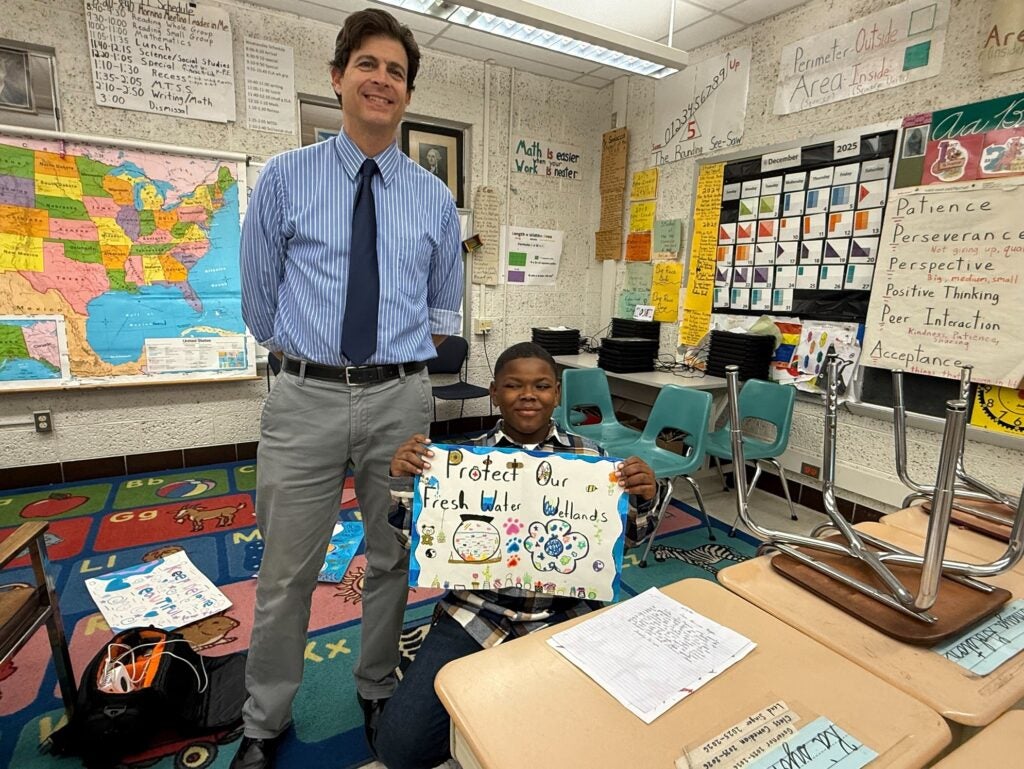
Nicole Pritchett, a fourth grade special education teacher who works with Sedacca, said she saw firsthand how meaningful the assignment was for the kids.
“We had one student who was able to speak at Legislative Hall and she mentioned, ‘I can’t believe I’m doing this because I feel nervous, but I feel like it’s something I have to do,’” Pritchett said. “That’s such powerful teaching for our students because they’ll never forget this.”
Sedacca’s students, including 10-year-old DaMylah Weathers, also wrote to Gov. Matt Meyer in support of greater wetland protections in the state:
“Dear Governor Meyer,
My name is DaMylah … the wetlands are pretty, I love them, don’t destroy the wetlands because I don’t want us to have bad floods.”
Located near inland areas without tidal influxes of saltwater, nontidal wetlands can be found in several forms, like depressions, rivers and swamps.
They provide homes for rare and endangered frogs, salamanders, plants and birds. Often called “nature’s kidneys,” wetlands help to filter water, and also mitigate against flood waters.
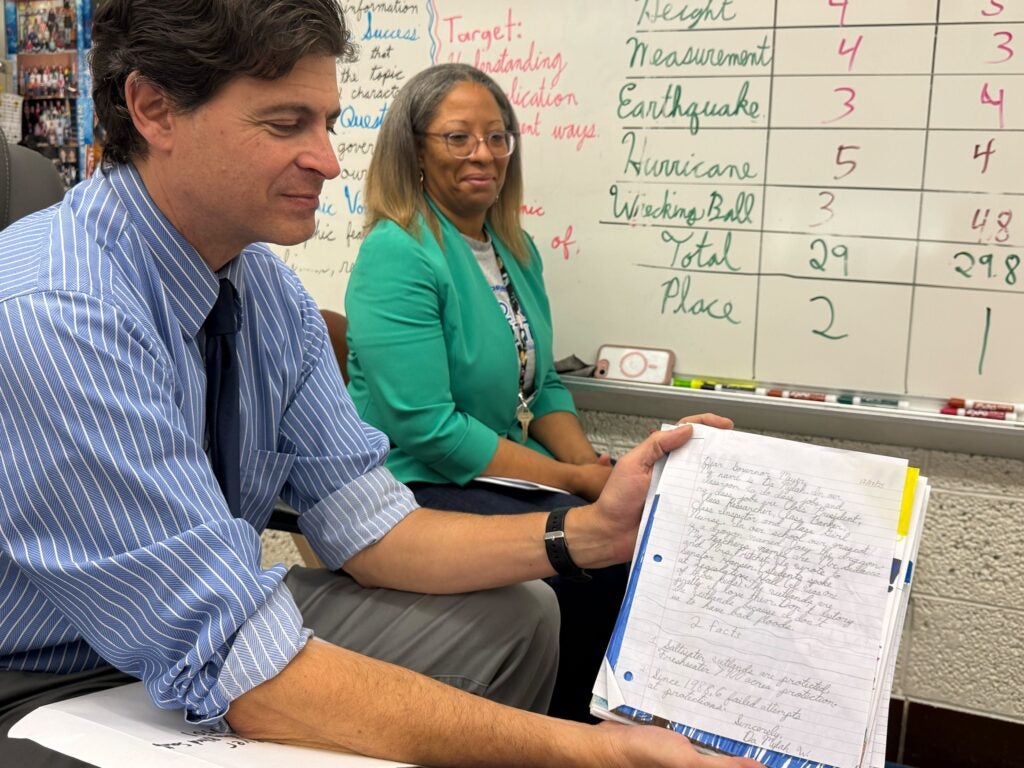
DaMylah, who serves as class president, said she enjoyed learning about the environment and civics.
“It was very interesting to have this opportunity to do something like this,” she said. “Most teachers don’t teach kids stuff like this.”
Sedacca is known for his out-of-the-box classroom projects. His students once collected piles of plastic waste from the school, which a company upcycled into a bench for the school’s playground.
“He’s a great teacher,” Ka’syon said. “He is a great role model on and off school grounds.”
In 2010, Sedacca’s students compelled lawmakers to designate the grey fox as the state’s official wildlife animal. Five years later, his class spoke at Legislative Hall in favor of legislation that would allow the state to regulate grey fox hunting and trapping.
So, when Sedacca brought this latest idea to Principal Asia Ali-Hawkins, she wasn’t surprised.
“I probably get more students coming back to visit Mr. Sedacca more than any other teacher since we’ve been here, because he builds those connections and he really supports those students that struggle the most and builds up their confidence — and that’s a special kind of teacher,” she said.
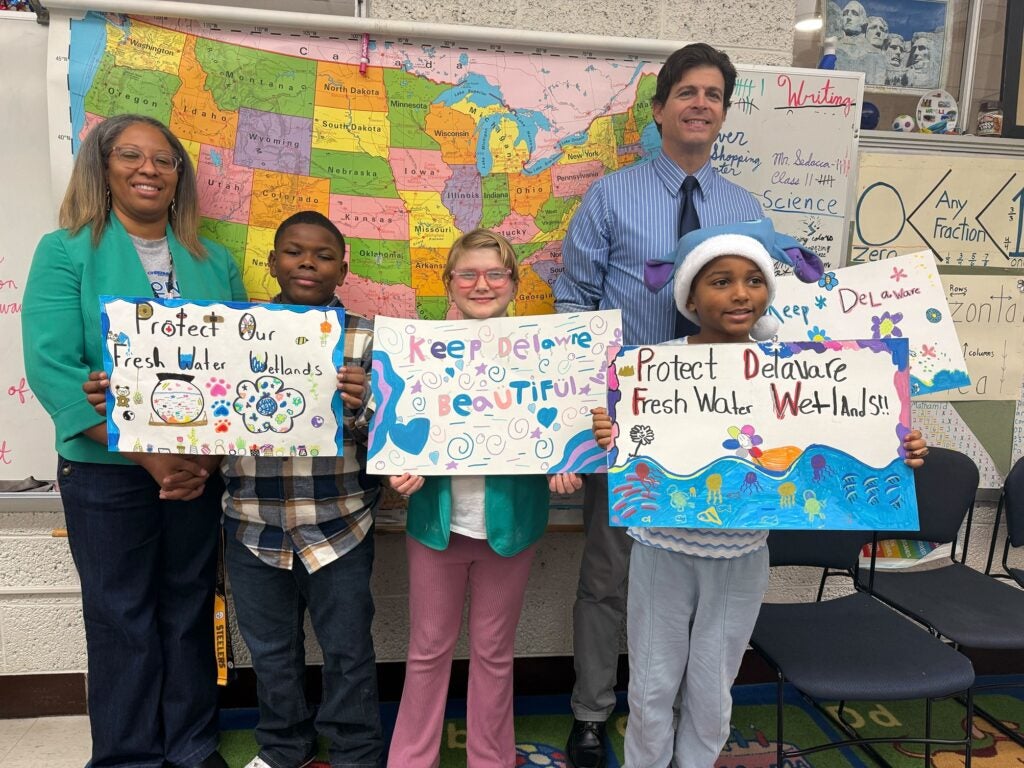
Sedacca said he believes kids should learn about civic engagement, and have a voice.
“These kids will be voting in approximately nine, 10 years,” he said. “The kids are the ones that are going to live another 70, 80 years here. The kids are the ones that are going to be drinking the water, breathing the air.”
However, their visit to Legislative Hall was not lauded by everyone in attendance. Some developers at the meeting said they felt “vilified,” and said Sedacca was “oversimplifying” the issue.
Sedacca said he isn’t deterred, and believes his class is doing right by the environment.
Gov. Meyer, who has worked as a school teacher, said he was thrilled by the students’ letters.
“Governor Meyer was delighted to see the students’ passion for protecting Delaware’s wetlands, which are vital to our environment and our communities,” a spokesperson said in an email. “Governor Meyer strongly believes that encouraging civic engagement at a young age helps set Delaware’s students on a path to becoming informed, engaged, and responsible citizens.”
The governor’s office said Meyer is open to working with Sen. Hansen to address any concerns with her legislation and move it forward.
Sedacca said he would encourage more teachers to get their students engaged in the environment.
“I would like more teachers to encourage their students to write letters or even just make a poster that says, ‘Keep Delaware Beautiful,’” he said. “Draw a grey fox on it — it is our state wildlife animal after all.”

Get daily updates from WHYY News!
WHYY is your source for fact-based, in-depth journalism and information. As a nonprofit organization, we rely on financial support from readers like you. Please give today.
Part of the series
Watershed
Preserving Our Water: How we use our Delaware Watershed.
The project is funded by The William Penn Foundation.
How much water do data centers use? One in Delaware City could use up to 20 million gallons a year
A proposed data center in New Castle County would use tens of millions of gallons of water every year.
1 month ago
Listen 1:03
Proposed Delaware City data center hits major setback from environmental regulators
Environmental regulators in Delaware say the proposed data center, known as Project Washington, would be one of the state’s top polluters.
1 month ago
Listen 1:13
Temple researchers hope to remove PFAS, microplastics with sustainable treatment method
Water providers are removing toxic PFAS chemicals from drinking water, but current methods are energy intensive. Temple researchers are looking at alternative technologies.
2 months ago
Listen 1:12