
A South Jersey woman is not giving up her eminent domain fight with Middle Twp.
Efforts to settle in mediation failed, but Dawn Robinson is garnering new online support to make her case in court.
Listen 0:56

South Jersey resident Dawn Robinson is fighting an eminent domain complaint filed by Middle Township. (Courtesy Janice Roots)
From Camden and Cherry Hill to Trenton and the Jersey Shore, what about life in New Jersey do you want WHYY News to cover? Let us know.
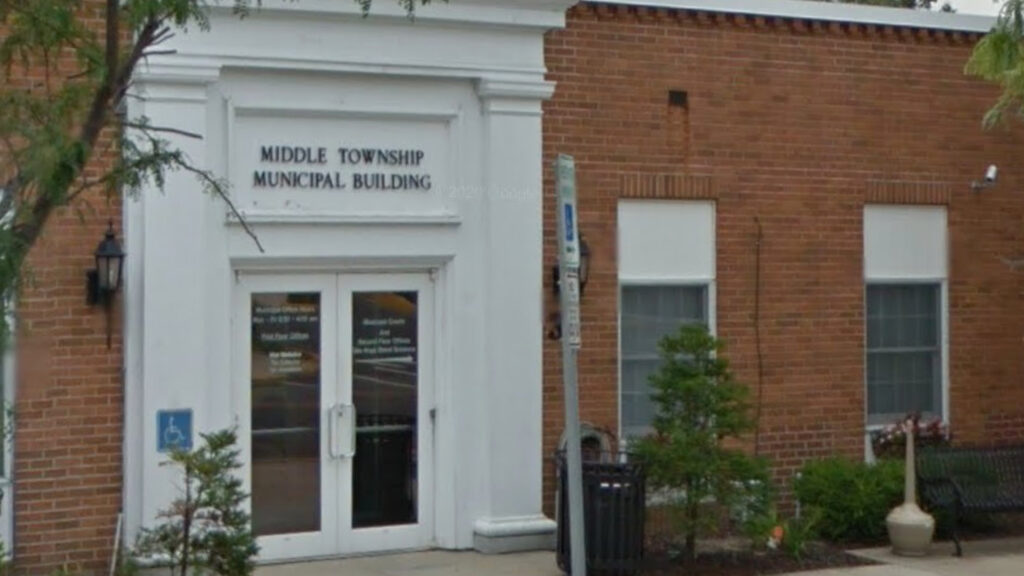
South Jersey resident Dawn Robinson continues to fight efforts to force her to sell a parcel of land she has owned for the past 20 years. Middle Township wants to take her 2.4 acres in order to move forward with a multi-million-dollar housing development plan, known as the Indian Trail Redevelopment project, to be built by NVR Inc., the parent company of Ryan Homes.
During an initial appearance in Cape May Superior Court in May, Robinson told the judge she wanted to keep her property for her family, and the case was put on hold for several weeks to give her more time to seek legal representation.
At a second court appearance in July, Robinson agreed to attend a mediation session to try to negotiate a land-swap settlement, but no deal was reached during the closed-door session, so the case could soon head back to court.
What happens next?
“I just want to keep my land, I’m hoping I can walk away and I get to keep my land,” Robinson said. “The township can use the other, whatever hundred acres they have, to do whatever they need to do and not include mine.”
Middle Township Mayor Christopher Leusner has strongly supported efforts to move the project forward, calling it “a transformative initiative” that will bolster township services. He said in a statement that the 340-home project “will deliver much-needed housing, help fulfill the township’s affordable housing obligations, generate millions in new revenue for the township and convert long-vacant, fragmented land into a vibrant residential community.”
James Maley Jr. is a partner at Maley Givens in Collingswood, the law firm representing Middle Township in the condemnation proceeding.
He said that while an agreement was not reached during the mediation session a few weeks ago, talks are continuing.
“We’re still in discussions,” he said. “I’ve spoken to her attorney and the mediator, even though we’re not in the same room, we’re still having discussions.”
Robinson’s attorney, Jeffrey Brennan, declined a request to be interviewed by WHYY News.
The front-burner issue
Robinson said a central issue in the case is whether eminent domain can be used to seize private property and then hand it over to a private entity.
“Eminent domain is supposed to be for public use,” she said. “Everyone knows that is not happening in this case.”
She pointed out that last month the New Jersey Supreme Court issued a unanimous decision in Jackson Township v. Getzel Bee. In that case, the court ruled that local governments cannot use eminent domain to condemn private land and then transfer it to a developer.
Related Content
South Jersey woman contesting eminent domain seizure of her property: ‘They could build around me’
The law firm representing Middle Township claims a planned housing development will help community members.
5 months ago
Listen 1:00Help from strangers
Robinson’s friend, Janice Roots, helped convince the co-founders of Truth and Record, an online platform that advocates for social justice and accountability, to help spread the word about Robinson’s case and collect donations for her legal defense.
“They work on behalf of the descendants of those sold as enslaved people,” Roots said. “They have a strong network throughout the country, and I felt they would be a good resource.”
Roots said she felt compelled to help Robinson for personal reasons.
“My family has been through the exact same situation,” she said. “My great-great-grandfather received 40 acres after emancipation around 1870. Subsequently, the land was seized from him, and I didn’t want to see history repeat itself with Dawn.”
Rachel Davis is a co-founder of Truth and Record.
“We decided to do this because we felt this is an unjust case,” she said. “Eminent domain is often used by the government to displace predominantly Black and Brown people and poor people, and our stories that we tell come from that historical perspective.”
Truth and Record’s other co-founder Chelsea Nicolas said the case raises several red flags.
“This case is located in a historically Black neighborhood, and eminent domain is being used to seize land for a private developer, she said. “The significance of this on economic security, inheritance, community continuity, all of those things are impacted.”
She said a website has been established to help collect donations for Robinson’s legal costs and to tell her story.
Robinson said she feels honored that people in her community and others she doesn’t even know are helping her.
“I think my neighbors believe that if it happens to me it can happen to them, with eminent domain, that they can just take your ownership from you if they want your land,” she said.
Related Content
Division of Taxation officials urge residents to make sure they fill out the correct application to be enrolled in the program.
2 months ago
What is the property worth?
Robinson purchased the property about 20 years ago for $40,000. Before the case first went to court in May, Robinson was offered $47,000 for her land. A South Jersey real estate agent who requested anonymity called that offer “an insult,” noting the market value of land in the area “has gone through the roof.”
The real estate agent said that because the area where the housing development is planned has been rezoned as residential, it’s worth about $100,000 per acre or more.
The real estate agent also expressed doubt about whether any affordable housing units would be built as part of the housing development project, although Mayor Leusner announced on Facebook that the project will include 80 affordable rental units.
“That would need to be clarified,” the real estate agent said. “They may simply put a certain amount of money into what would be considered an affordable housing fund.”
The real estate agent did not want to be identified because they said they frequently work with Middle Township, and they feared discrimination for speaking about Robinson’s case.
A sad situation
Robinson expressed sadness that Whitesboro, which was historically a Black community, is disappearing.
“Ordinances were changed to make the area unbuildable for everyone but them,” she said. “And guess who is footing the bill? My fellow taxpayers.”
She stressed that her property is on the outer edge of where the developer wants to build the housing project.
If an agreement is not reached, the case will head back to Superior Court at an unspecified date for a final judgment on whether the township has the authority to take Robinson’s property. If the eminent domain complaint is upheld, a three-person commission would then decide the value of her 2.4 acres.
“I’m not in the way,” she said. “I really can’t say they need [my property], I feel it’s more that they just want it.”

Get daily updates from WHYY News!
WHYY is your source for fact-based, in-depth journalism and information. As a nonprofit organization, we rely on financial support from readers like you. Please give today.
Camden officials tout $16M collaboration to provide affordable housing
The Camden Community Housing Collaborative aims to provide options for residents and people who want to move to the city.
12 months ago
Listen 0:53
Trenton receives a $4M grant to redevelop and reopen old downtown hotel
Trenton gets a $4 million grant to buy the former Trenton Marriott building. The plan is to redevelop the property and open a new hotel.
2 years ago
Listen 1:10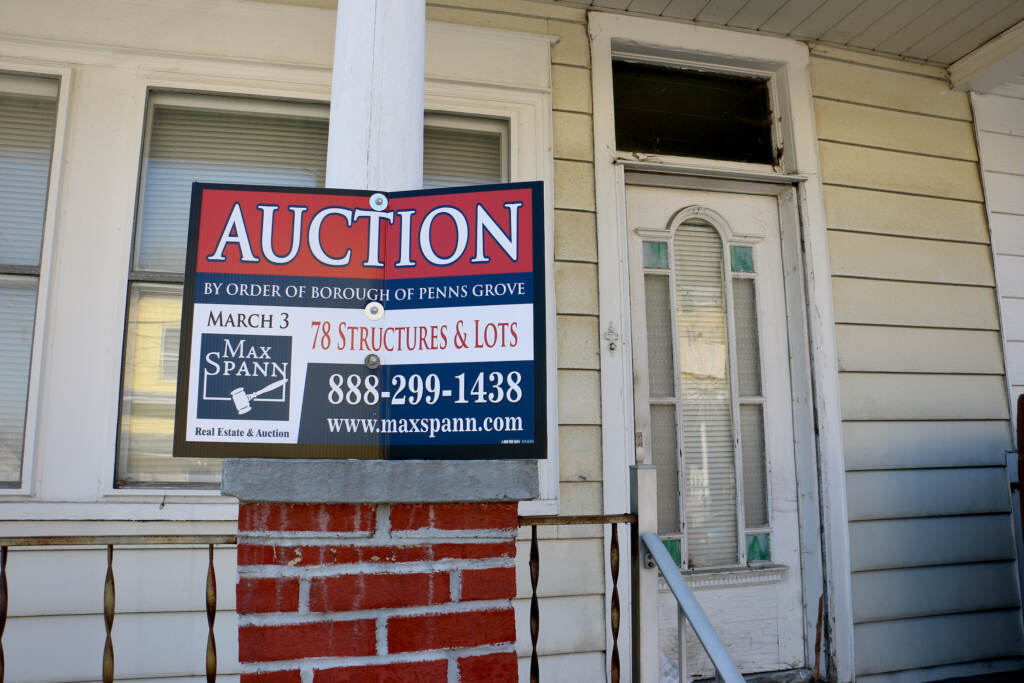
Penns Grove hopes to turn vacants into value by auctioning borough-owned properties
The small borough in Salem County, N.J. hopes properties sold at auction will be added back to the tax rolls while generating some money to plan future projects.
5 years ago