

Consumer Reports drops e-scooter recommendation over safety concerns, but some say they still have a place in Philadelphia
Children account for 45% of e-scooter-related injuries, according to a Johns Hopkins study.
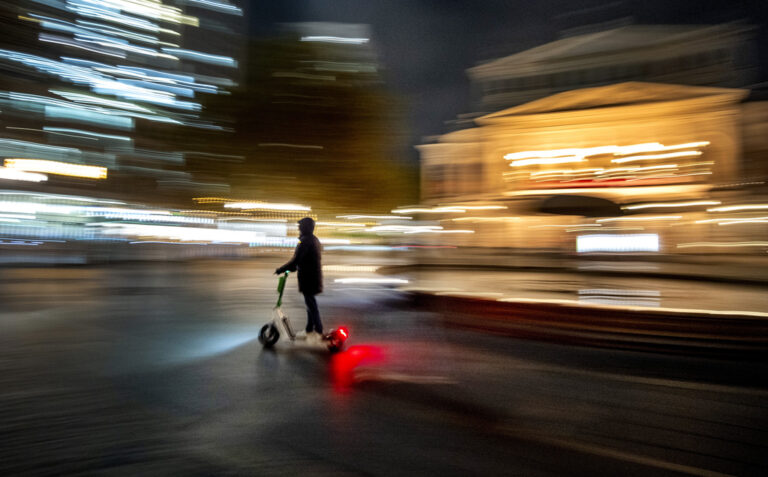
A man drives an E-scooter past the Old Opera in Frankfurt, Germany, Thursday, Nov. 7, 2024. (AP Photo/Michael Probst)
From Philly and the Pa. suburbs to South Jersey and Delaware, what would you like WHYY News to cover? Let us know!
Consumer Reports said it no longer recommends electric scooters after testing 13 models, citing safety concerns about higher speeds and rising injuries.
Data from the U.S. Consumer Product Safety Commission shows e-scooter injuries increased from 10,600 in 2017 to nearly 80,000 in 2024. Children account for 45% of e-scooter-related injuries, according to a recent Johns Hopkins Medicine study. Still, micromobility devices like e-bikes and e-scooters are becoming increasingly popular as cheaper, greener and quicker forms of transportation.
Consumer Reports first tested e-scooters in 2022, when most had a top speed of about 15.5 mph. Now, most go up to 20 mph, and one model Consumer Reports tested reached 28 mph. A Consumer Reports engineer said he considers this speed dangerous.
Some e-scooter models, known as hyperscooters, can reach speeds up to 75 mph.
Even at lower speeds, e-scooter riders stand, making headfirst falls more likely than in vehicles, where riders sit. Consumer Reports said e-scooters’ small wheels also make them more difficult to use on irregular or wet terrain. The report also noted that two Consumer Reports employees were involved in accidents while testing the e-scooters.
Because e-scooters are not currently defined under Pennsylvania law, it is illegal to operate them on public roads and highways, although they are legal to purchase. State Rep. Joe McAndrew, D-Allegheny County, has proposed legislation that would define e-scooters, making them street legal, while regulating speed, age of driver and where the vehicles can be driven.
E-bikes are legal to ride in Pennsylvania if they do not exceed 20 mph and have motors smaller than 750 watts.
Related Content

Speed up Philadelphia port expansion plan to keep pace with East Coast rivals, City Controller says
The report points to deeper shipping channels, expanded terminals and better road and rail connections as key to PhilaPort’s long-term growth.
2 weeks ago
Listen 1:06John Boyle, research director at the Bicycle Coalition of Greater Philadelphia, said e-scooter speeds can be difficult to regulate, as there is little to no visible difference between e-scooters with different speed capacities.
But Boyle said Philadelphians already traverse the city on e-scooters, and the legislation would bring the law up to date with how they are currently used. To prevent injury, Boyle says the focus should be on making bike lanes safer and more connected throughout the city.
Xiaoxia Summer Dong, an assistant professor in the Department of City and Regional Planning at the University of Pennsylvania, agrees e-scooters can be a viable means of transportation because they are affordable, portable and environmentally friendly. He said it is important to challenge the car-centric approach to road design.
“The growth of e-scooters and bikes adds more urgency to making our roads safe, especially for vulnerable road users,” Dong said in an email. “I think their growth also reminds planners to think about who our streets are, or should be, for.”
Dong said it’s important to explore ways to make e-scooters safer, particularly by limiting their speed. He also said everyone can play a role in discouraging inconsiderate and dangerous riding.
“Let’s start with public shaming,” Dong said. “Next time you see an e-scooter rocket down the sidewalk, give the rider the stink eye.”

Never miss a moment with the WHYY Listen App!


WHYY is your source for fact-based, in-depth journalism and information. As a nonprofit organization, we rely on financial support from readers like you. Please give today.
Haverford Township passes new helmet requirement for kids on e-bikes, electric scooters
Starting in January, parents of children under 16 not wearing a helmet could face $25 fines.
1 year ago
Listen 0:54
Philly e-scooter startup Verve S is getting into the bike business
The Philadelphia startup that tried to bring e-scooters to its hometown is rolling into the bikeshare business.
5 years ago
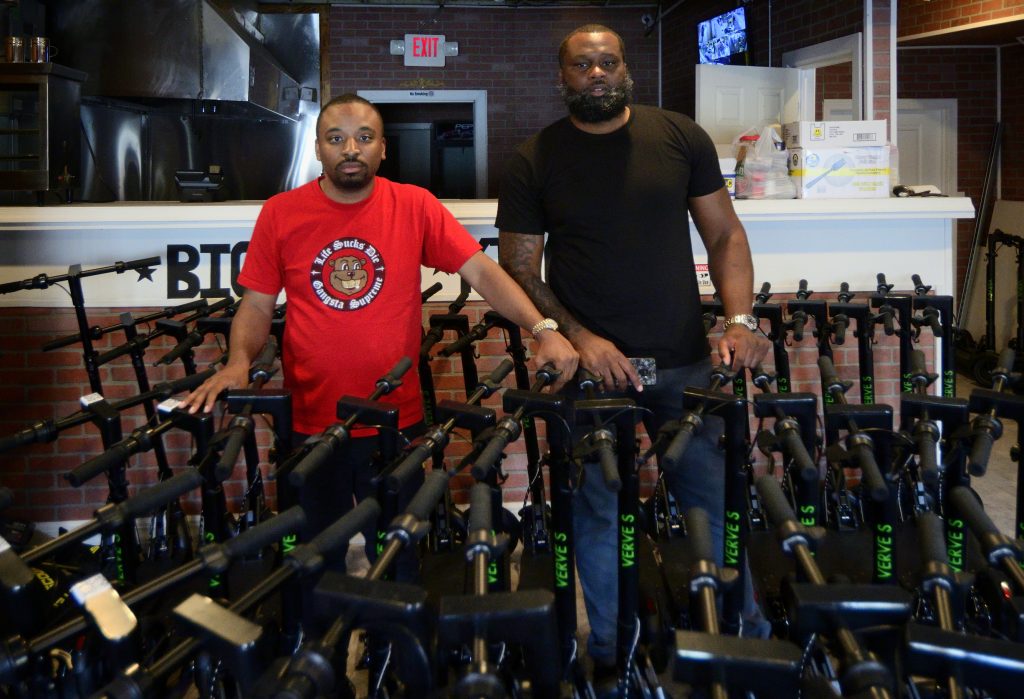
Philly natives enter the e-scooter wars with $100k homegrown startup, Verve S
Two Philly natives have invested $100,000 in dockless e-scooters. Now they just need their hometown and state to legalize them.
7 years ago
Listen 2:05