
As U.S. measles case counts rise, here’s what to know about infections and prevention in Pennsylvania
Pennsylvania has reported 12 confirmed cases of measles so far in 2026 and is on track to surpass last year’s total of 16 infections.
Listen 1:15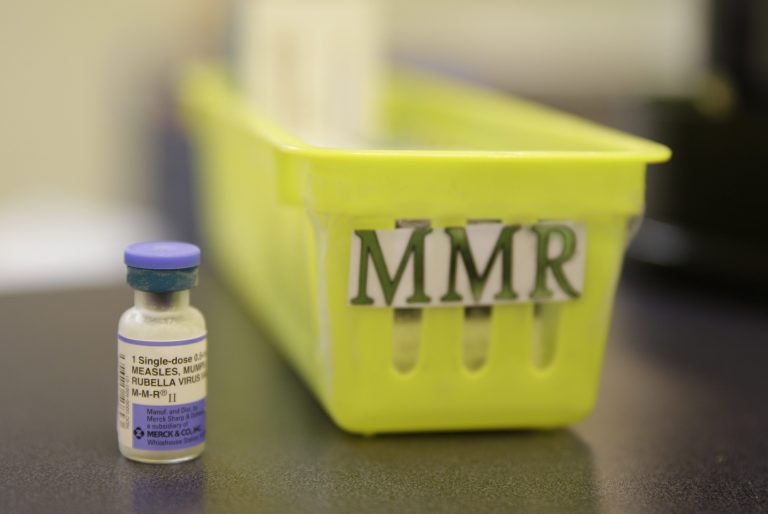
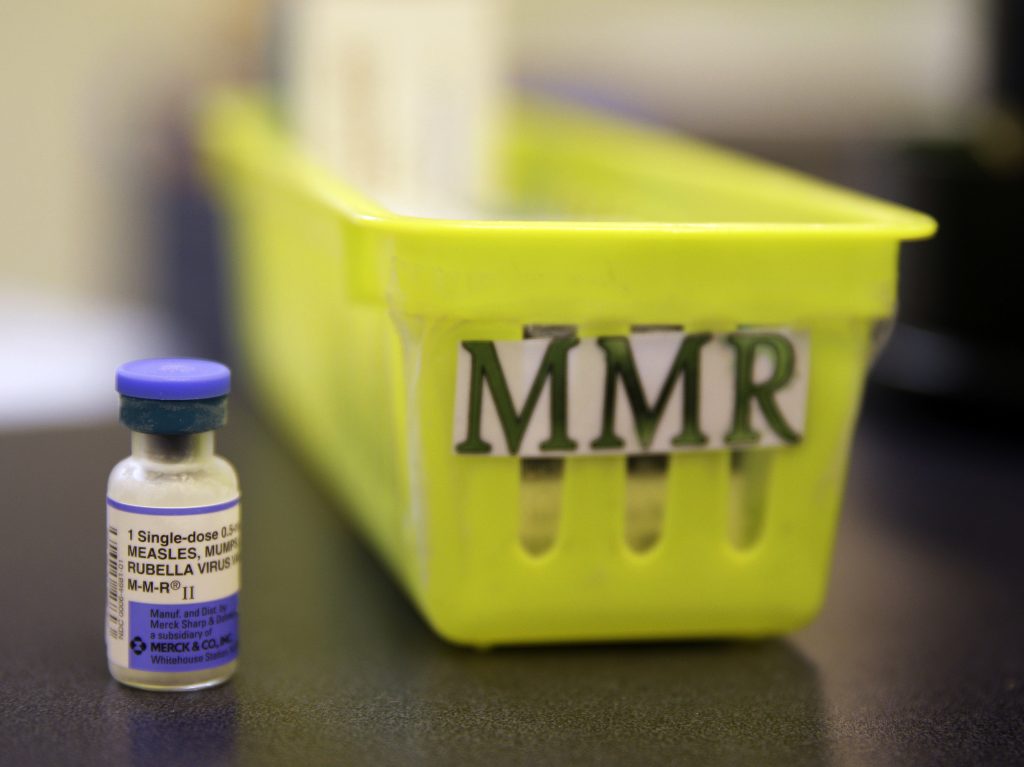
This Feb. 6, 2015, file photo shows a measles, mumps and rubella vaccine on a countertop. (Eric Risberg/AP Photo)
From Philly and the Pa. suburbs to South Jersey and Delaware, what would you like WHYY News to cover? Let us know!
Measles infections are sharply rising across the United States with 1,136 confirmed cases in the first two months of the year. That’s four times the number recorded at this point last year, federal data shows.
Pennsylvania has yet to see any large-scale outbreaks, but the state has reported 12 confirmed cases among residents, all of which have taken place in Lancaster, Montgomery and Chester counties.
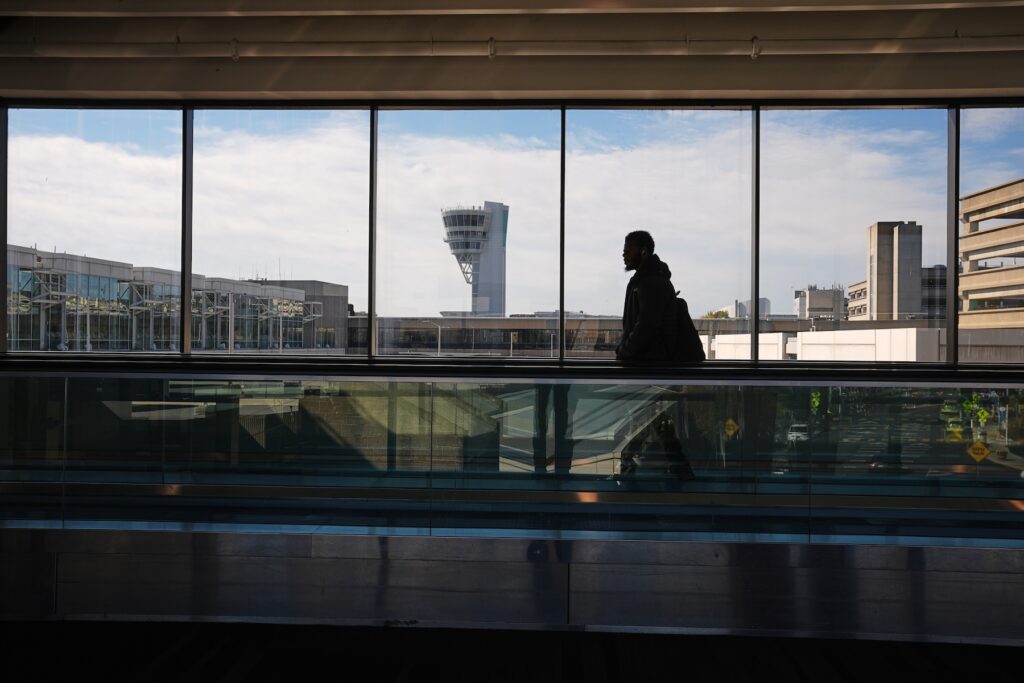
Public health experts say people should get used to more frequent alerts and notices of measles exposures in their communities, especially at high-trafficked areas like airports and train stations, but also at medical offices.
Here’s everything to know about measles infections, how cases are tracked and traced in Pennsylvania, and what people can do to protect themselves and others.
Measles contagiousness is in a league of its own
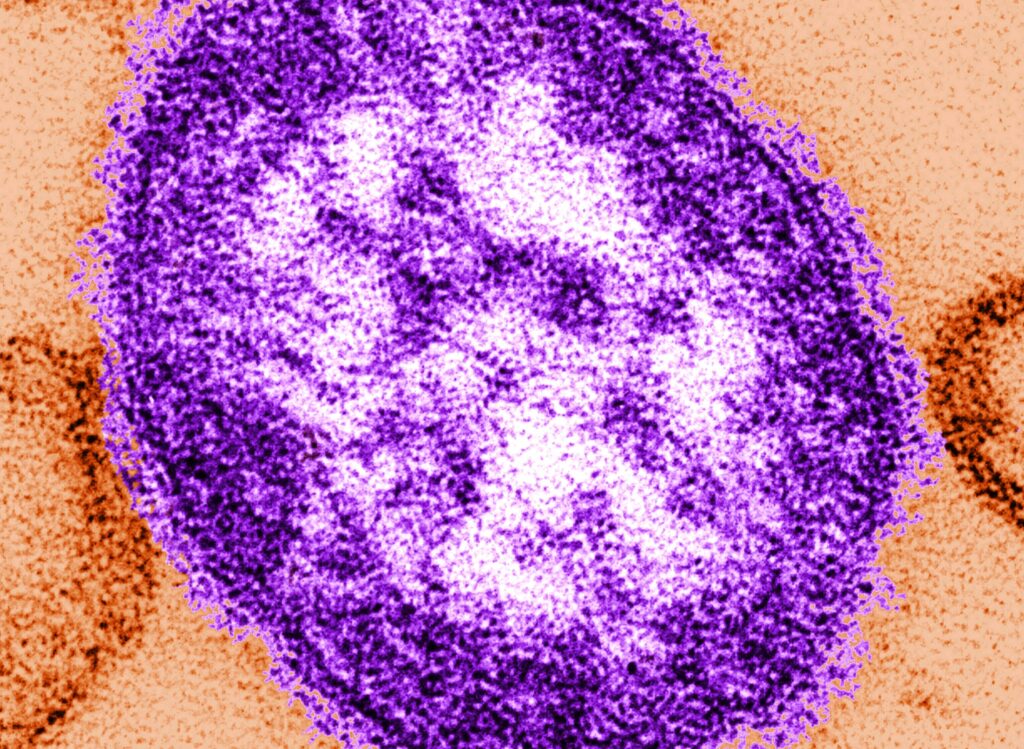
Measles is one of the most contagious viral diseases in the world. One person with the virus can infect as many as 18 other people if they are unvaccinated, according to the World Health Organization.
It’s more infectious than influenza, COVID-19 and other common respiratory diseases, said Minal Mulye, an associate professor at the Philadelphia College of Osteopathic Medicine, who holds a doctorate in immunology and microbiology.
She said one reason is because measles lingers in the air and on surfaces for about two hours after someone with an infection has coughed, sneezed or breathed in that area.
“It is there even when the patient isn’t,” Mulye said.
That’s why measles exposure alerts from state and county health authorities will include specific locations and two-hour timeframes during which others were at risk of contracting the virus.
Another reason why measles is so contagious is because of its broad timeline of progression and symptoms, she said.
The earliest symptoms of a measles infection typically appear 10-12 days after exposure and can include high fever, cough, runny nose and conjunctivitis, or “pink eye,” according to the U.S. Centers for Disease Control and Prevention.
About two to three days later, people may see Koplik spots, which are bluish-white dots surrounded by red, inside the mouth, Mulye said.
A skin rash typically occurs about three to five days after onset of early symptoms. It can present as flat red spots or raised bumps that appear on the face and near the hairline before spreading down to other parts of the body.
A person with measles is capable of transmitting the virus to others four days before and four days after the appearance of the skin rash, CDC guidelines say.
People may not know they have measles in the days right before developing a rash, Mulye said, so they may not be isolating or quarantining just yet.
And since the red rash is an immune response to the infection, Mulye said people who are immunocompromised may not develop a rash at all but still have the virus.
Anyone who suspects they have a measles infection is encouraged to call ahead to their pediatrician, health center or primary care doctor before visiting in person, local health officials said.
Related Content
Recent measles cases and possible exposures have been linked to ongoing outbreaks in the U.S. and internationally.
9 months ago
Listen 0:56Measles can be dangerous and lead to complications
Most people survive a measles infection. After they do, they are considered to have lifelong immunity from subsequent exposures.
But infection puts people at a higher risk of complications, including pneumonia, ear infections, neurological symptoms and encephalitis, or swelling of the brain. In rare cases, measles is deadly. Three people in the U.S. died last year from the disease, CDC data shows.
The people who are most vulnerable to serious illness include those who are unvaccinated, young children, pregnant women and people with immune systems that are weakened because of genetic disorders, chronic diseases or cancer treatment.
The measles virus attacks healthy immune cells, Mulye explained. It causes immunological amnesia, “which is basically making your immune cells forget what they know.”
“And what they know is what they have been exposed to so far. Or whatever vaccines they have had, they store it as a memory in the body,” she said. “Measles virus infects those cells and starts killing them.”
That leaves people exposed to all sorts of other common viruses, bacteria and diseases that their body can no longer fight off, Mulye said.
Related Content
Health officials warn of possible measles exposure in Montgomery County
While contagious, a person visited Patient First Primary and Urgent Care on South Collegeville Road in Collegeville on January 29, between 1:15 p.m. and 4:15 p.m.
9 months ago
Effectiveness of vaccinations, past and present
The American Academy of Pediatrics, as well as other national medical societies and organizations, upholds measles vaccination as the gold standard in protecting people from infection and preventing outbreaks.
One shot of the measles, mumps and rubella vaccine is recommended for all children at 12-15 months, and a second shot is recommended between ages 4 and 6, or when a child enters kindergarten.
The two-dose series prevents measles infection in about 97% of people, according to federal data compiled over six decades.
Adults born prior to 1957 are generally considered immune as they likely had already been infected before mass vaccination efforts. Other adults who may have received an inactivated measles vaccine used from 1963 through 1967 may need to be revaccinated to achieve immunity, according to the Pennsylvania Department of Health.
Families can also get an earlier shot for children 6 to 12 months old if they are traveling to areas with known measles outbreaks and exposures.
Philadelphia pediatrician Dr. Toni Richards-Rowley, vice president of the Pennsylvania chapter of the American Academy of Pediatrics, said providers are spending more time discussing options with families traveling with infants or other at-risk children and adults.
It might mean delaying a visit to busy vacation destinations or to see relatives in places where measles outbreaks have occurred.
“I have a lot of patients in this area who go down to Hilton Head [Island] and other places in the Carolinas and they’re having a massive outbreak down there. Come summertime, they’re gonna be like, ‘Should I go or should I not go?’” Richards-Rowley said. “And our recommendation is going to be, if they’re over 6 months, definitely get the MMR. If they are under 6 months, delay your trip, just because it’s not worth the risk.”
Related Content
The Philadelphia Department of Public Health has identified at least one local case of measles, unrelated to the recent case in Montgomery County.
2 years ago
Listen 1:05Tracking and tracing measles infection in Pennsylvania
Doctors, nurses and other health care offices have screening protocols to identify possible cases of measles exposures and infections among their patients.
It’s important that families be as accurate as possible when reporting any recent illness, fevers, rashes, said Richards-Rowley. Providers must also take a detailed history of their patients’ travel histories.
“And it changes almost weekly when there are more and more outbreaks,” she said. “You know, ‘Have you been to X, Y, and Z place where there could have been a possible exposure?’”
Medical providers are required to notify state or county health authorities as soon as they suspect that a patient is infected with measles. Information is shared at all levels of public health in real time, state officials said.
“Providers are advised not to wait for lab confirmation to notify public health officials if measles is suspected,” Pennsylvania Department of Health leaders told WHYY News in an email.
Throat swabs, urine and blood are collected for testing at the Pennsylvania Bureau of Laboratories to confirm cases officially.
The state shares confirmed cases and any information collected through contact tracing with the CDC, and vice versa. This becomes important in tracking cases involving people who live elsewhere, but who visit or pass through Pennsylvania in any capacity, including at major hubs like Philadelphia International Airport, while infectious with measles.
“Local, state, and federal public health officials work closely together to ensure that measles cases are identified, reported and confirmed as quickly as possible,” the health department stated.

Get daily updates from WHYY News!
WHYY is your source for fact-based, in-depth journalism and information. As a nonprofit organization, we rely on financial support from readers like you. Please give today.
Measles cases are rising in the Philly region. Here’s what you need to know
Measles is a highly contagious viral disease that spreads through the air. Experts say vaccination is the greatest tool in preventing an outbreak’s spread.
3 years ago
Listen 1:14
9th case of measles confirmed in Philadelphia as city organizes vaccination opportunities
Measles symptoms include fever, runny nose, cough, and puffy eyes, followed by a rash.
3 years ago
The Philadelphia Department of Public Health has identified eight confirmed cases of measles and nine locations where people may have been exposed.
3 years ago