

Lankenau students, staff and parents continue to fight proposed school closure
A school district leader told Lankenau students and staff that no final decisions have been made about closures during a press conference Wednesday.

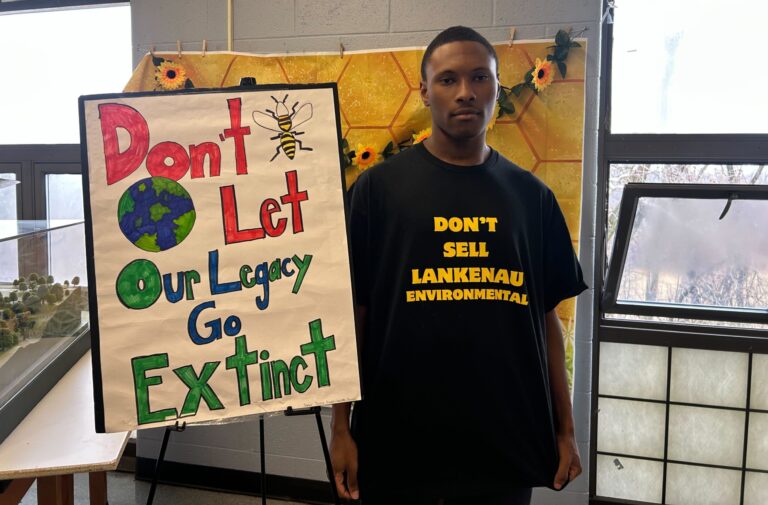
Junior Messiah Stokes urged attendees of Wednesday’s press conference to advocate for more funding for schools like Lankenau. (Sophia Schmidt/WHYY)
This story is part of the WHYY News Climate Desk, bringing you news and solutions for our changing region.
From the Poconos to the Jersey Shore to the mouth of the Delaware Bay, what do you want to know about climate change? What would you like us to cover? Get in touch.
No final decisions on Philadelphia school closures have been made, Jermaine Dawson, the school district’s deputy superintendent of academic services, told a room packed with students, teachers and parents at Lankenau Environmental Science Magnet High School on Wednesday.
The school is one of 18 slated to close as early as 2027 as part of the School District of Philadelphia’s facilities planning process, which aims to right-size the underenrolled district’s building stock. The plan still needs to be approved by the city’s Board of Education.
The district plans to convert Lankenau into an honors program within the nearby Walter B. Saul High School of Agricultural Sciences. A prior district proposal announced in January would have merged Lankenau with Roxborough High School. District officials said the new plan better aligns with Lankenau’s curriculum.
But students, parents and teachers continue to fight for the environmental science magnet school in Upper Roxborough to stay open.
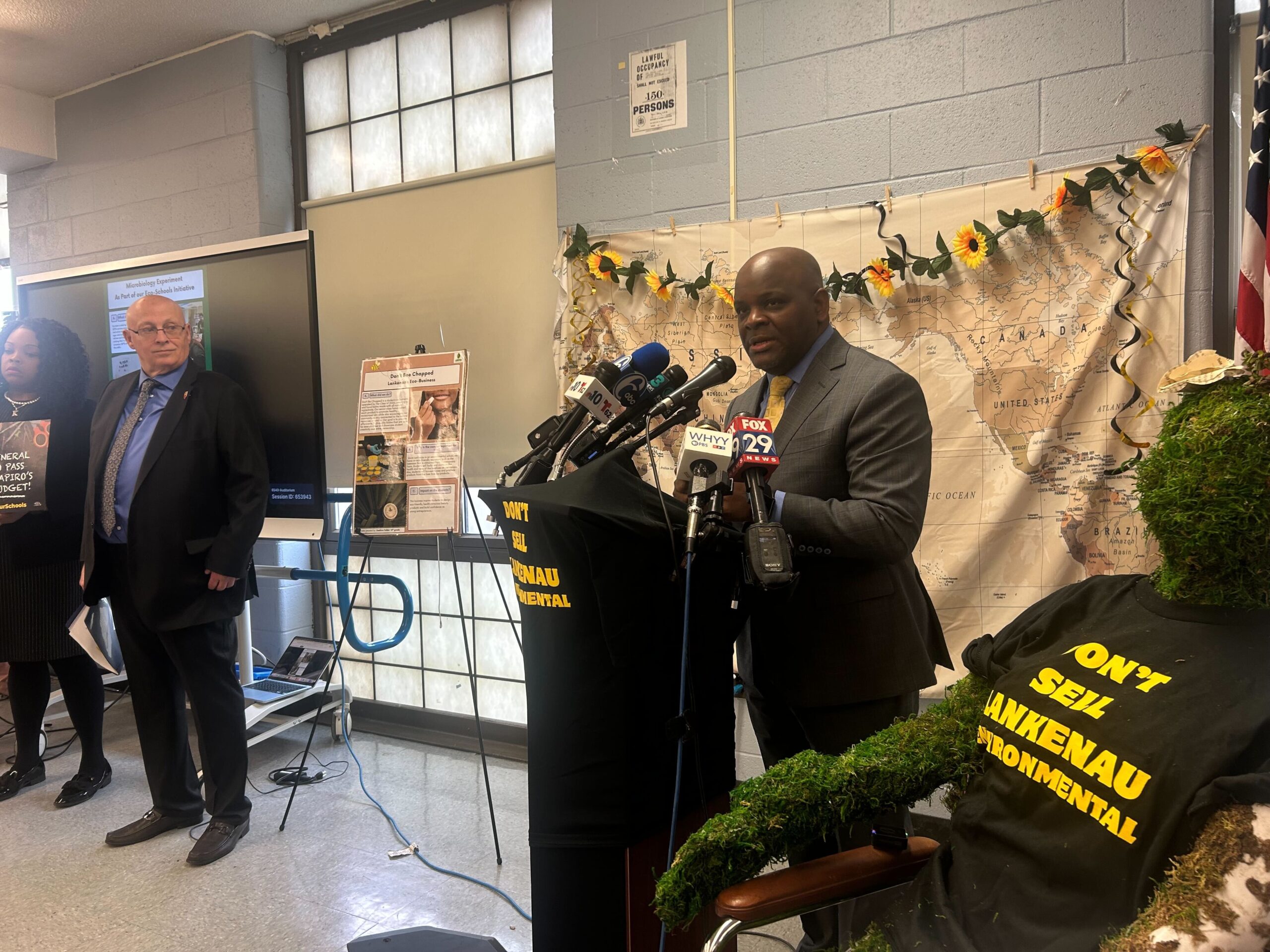
Amy Szymanski, special education compliance monitor and assessment coordinator at Lankenau, said the new plan shows the district listened to some of the community’s pleas, but has not changed their stance.
“There’s nothing wrong with Roxborough [High School]. There’s nothing wrong with Saul,” Szymanski said. “We want to continue to have our Lankenau family on Lankenau’s land.”
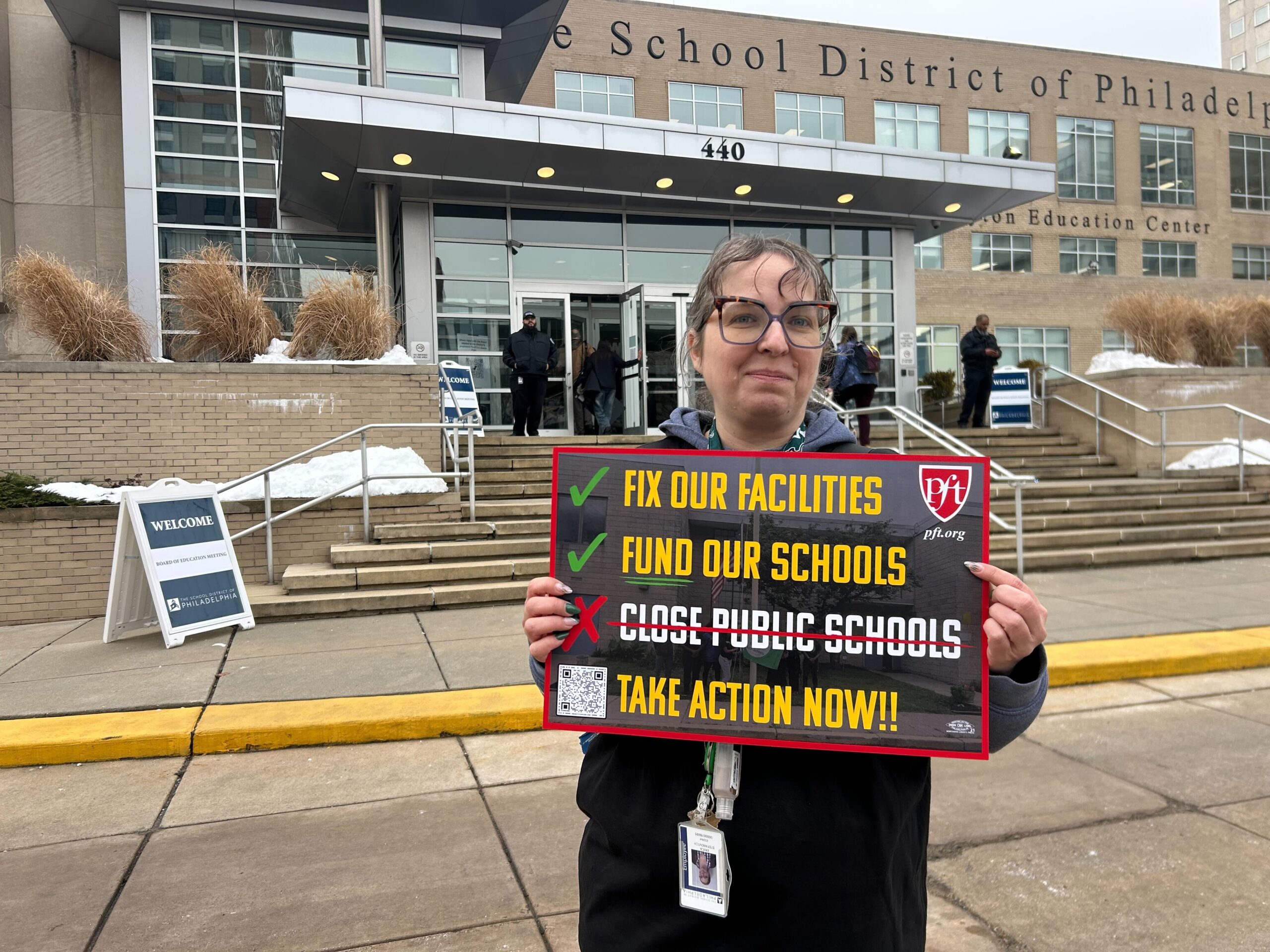
Dawson represented the district at a press conference Wednesday alongside the Philadelphia Federation of Teachers and Lankenau community to demand state lawmakers pass Pennsylvania Gov. Josh Shapiro‘s proposed education budget, which would increase state funding for pre-K through 12th-grade public schools across Pennsylvania by nearly $900 million, including a bump of $151 million for schools in Philadelphia.
“With adequate and equitable state funding, we can move beyond difficult conversations about scarcity, and then we can focus squarely on accelerating academic achievement,” Dawson said.
The district received $2.5 billion in state funding last fiscal year.

Why the School District of Philadelphia says it needs to close Lankenau
The proposed closure of Lankenau is part of the district’s yearslong facilities planning process, which aims to reorganize resources across the district to deal with under- and over-enrollment in different schools and aging facilities. Superintendent Tony Watlington presented a $2.8 billion plan to the school board last week that would modernize 159 school facilities, co-locate school programs in six facilities and close 18 schools.
Even if Shapiro’s requested increase in state funding passes, the School District of Philadelphia would need more government and grant funding to pay for its facilities master plan, Chalkbeat Philadelphia reported.
-
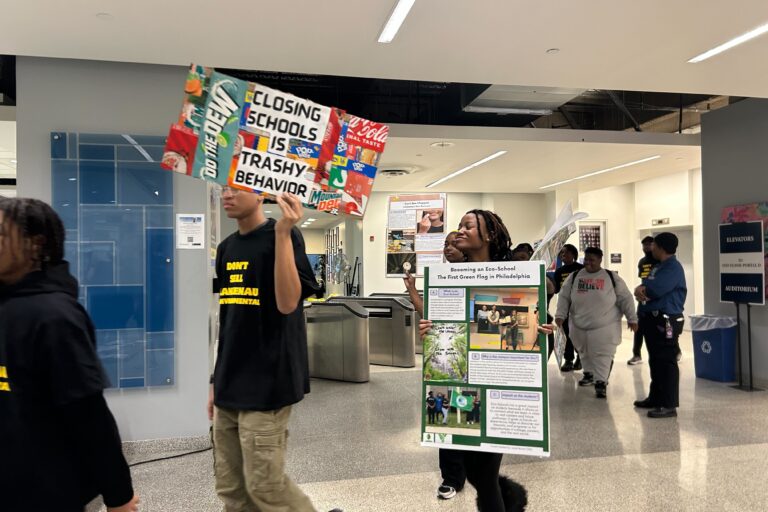
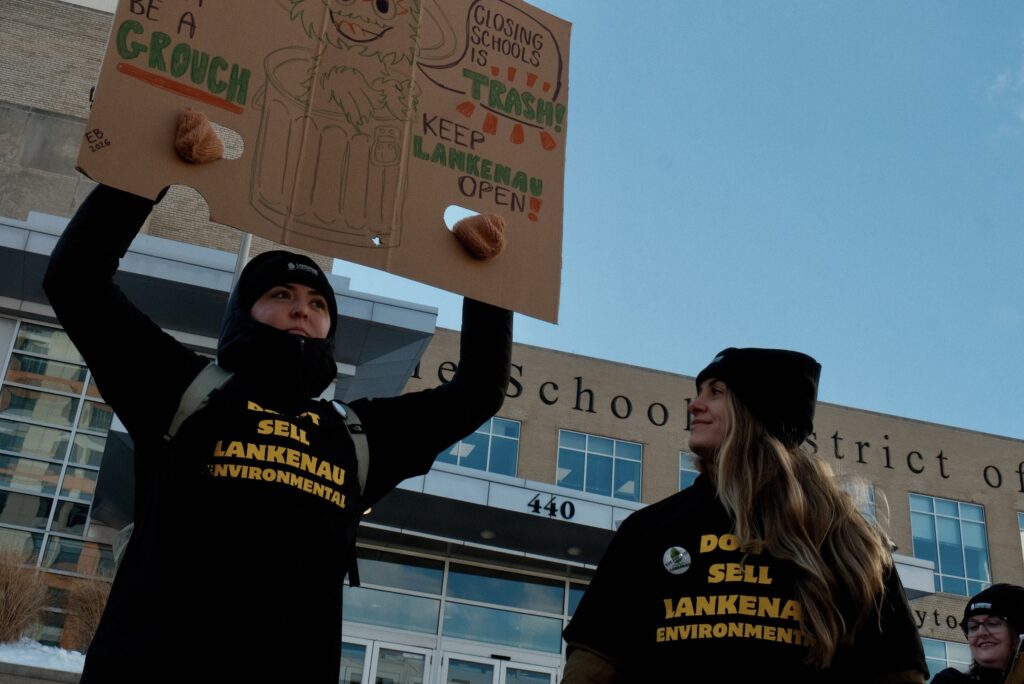
Lankenau students and staff protested the proposed closure of their school during a school board meeting Thursday, Feb. 26, 2026. (Sophia Schmidt/WHYY) -
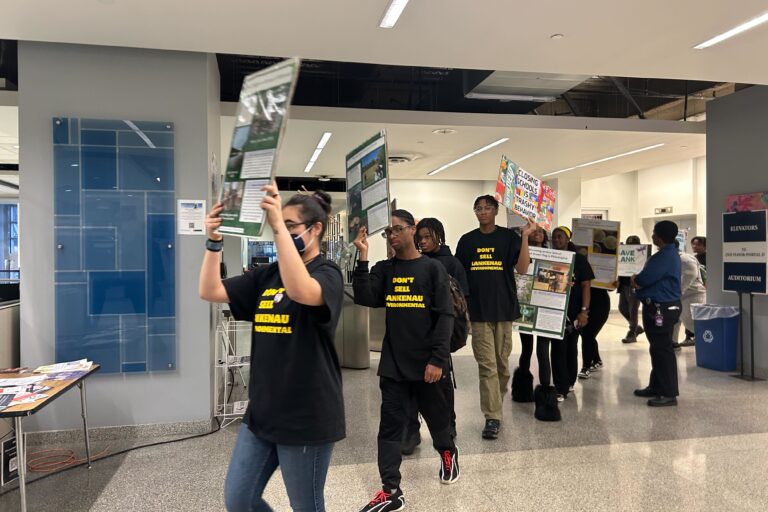
Lankenau students and staff protested the proposed closure of their school during a school board meeting Thursday, Feb. 26, 2026. (Sophia Schmidt/WHYY) -

Lankenau students and staff protested the proposed closure of their school during a school board meeting Thursday, Feb. 26, 2026. (Sophia Schmidt/WHYY)
The district has said its plan aims to strengthen programming for pre-K through eighth grades through better use of space, reinvest in neighborhood high schools as “community anchors,” reduce unnecessary school transitions for students and expand access to criteria-based and career and technical education schools for middle and high school students. Lankenau offers a career and technical education program and has criteria-based admissions, admitting only students who meet certain grade, standardized test and attendance standards.
District spokesperson Monique Braxton said in a statement that several factors contribute to the school district’s proposal to close Lankenau.
With an enrollment of just 225 students, the building is “severely underutilized,” Braxton said. The school has seen “persistently low” application numbers, and enrollment has declined by about 100 students over the past four years, she said.
The district also spends significant resources transporting students to Lankenau, due to its “remote location” in Upper Roxborough, Braxton said. She said that moving Lankenau’s program to Saul would make it more accessible to students throughout Philadelphia and expose Lankenau students to Saul’s broader array of academic, career and technical education and extracurricular offerings.
“The intent is not to dilute the Lankenau experience, but to preserve its core strengths while expanding opportunity and long-term sustainability,” Braxton wrote.
After closing the school, the district would convey the Lankenau property to the city for “affordable workforce housing and/or job creation,” according to the plan.
Related Content
Philadelphia School District revises facilities plan, sparing 2 schools from closure
Community support led to Russell Conwell Middle School and Motivation High School being removed from the proposed closures.
8 months ago
Elected officials pan district’s plan
Teachers union members, students and local elected officials berated the district’s plan for Lankenau at Wednesday’s press conference.
Some pointed to Lankenau’s 100% graduation rate, much higher than the district’s average.
City Councilmember Nina Ahmad said many of the issues the district cited when defending the proposed closure are of the district‘s own making and could be fixed.
The Philadelphia Inquirer found that enrollment dropped at Lankenau and several other schools following a 2021 change to the district’s special enrollment process, in which the district centralized the enrollment lottery and prevented schools from admitting students who did not meet the academic requirements but came close and could demonstrate they’d be a good fit for the school, as they’d done before.
“Why are we trying to fix a problem that doesn’t exist?” Ahmad said. “We have a school that is performing. … There are solutions for everything that has been noted about this school.”
City Councilmember Isaiah Thomas pointed to the racial demographics of Lankenau’s student body as he questioned the district’s plan for the school. Roughly 84% of Lankenau’s students are Black.
“I wonder, if Lankenau was 98% white, would we be closing Lankenau?” he asked.
Dawson declined to comment.
Related Content
Philadelphia school officials defend proposed school closures at a crowded City Council meeting
City Council members raised concerns that the proposed closures will disproportionately affect Black students.
8 months ago
Fears for the future of Lankenau’s unique curriculum and campus
Students, parents and teachers say Lankenau offers unique, hands-on academic experiences made possible by the roughly 400 acres of natural land surrounding its 17-acre campus, located next to the Schuylkill Center for Environmental Education.
Rob Bird, who teaches earth science, environmental science and biology at Lankenau, said these experiences include water testing in a nearby tributary of the Schuylkill a walk or short bus ride away.
“It’s really cool to be able to flip through the textbook and be able to say, ‘I can do that right here,’” Bird said. “I don’t need to do it on a computer simulation, I don’t need to do it in a packet. We can grab our clipboards and we can go walk outside and experience it hands-on.”
Lankenau offers a three-year Agriculture, Food and Natural Resources Career and Technical Education Program, where students learn about topics including agribusiness, natural resource management and food products.
Erica Stefanovich teaches a Geographic Information System, or GIS, mapping class at Lankenau, which she said is the only one like it in the state. She said while Saul’s focus is similar to Lankenau’s, it is not the same — and the agricultural land at Saul would not be conducive to some of the hands-on environmental science projects that students do at Lankenau.
Braxton noted that Saul is also located on a large tract of land and is an eight-minute drive away from the Schuylkill Center. She said the district expects a seamless transition for Lankenau’s Career and Technical Education program over to Saul and will work to ensure that Lankenau’s distinctive hands-on learning experiences, partnerships, dual enrollment and internship opportunities continue.
“Preserving these signature elements is a priority,” she said.
Barring any “unusual circumstances,” Lankenau’s Career and Technical Education Program should transfer uninterrupted over to Saul after the district notifies the state about the change, Pennsylvania Department of Education spokesperson Erin James said in a statement.
Related Content
At Thursday night’s Board of Education meeting, community members and advocates gathered to voice their critiques and defend their schools from closures.
9 months ago
Lankenau students go from ‘survival’ to ‘belonging’
Lankenau parents describe a small, tight-knit community where students are able to form relationships with teachers and school leaders.
“The principal knows every student by name and every parent by name,” said Andrea Hester, whose son, Jesse Hall, is a junior at Lankenau. “They don’t have to wait in line to talk to a teacher. Everyone is extremely accessible to all of them.”
Sa’Niyah Bailey, a ninth-grade student, said during Wednesday’s press conference that she did not feel safe at the charter school she previously attended.
“Here at Lankenau, I’ve moved from a place of survival to a place of belonging,” Bailey said. “It’s much calmer and safer. Can you imagine if you fully funded schools like Lankenau, instead of closing and merging schools that seem alike?”

Sophomore Alana Rothman said after transferring to Lankenau, she quickly contributed to an exhibit at the Philadelphia Flower Show, participated in a research project on freshwater mussels and water quality, and joined an herbal tea club.
“I was so confused,” she said. “I’m like, ‘Why are they letting high school kids do this, like, college work?’”
Rothman said if Lankenau closes her senior year of high school, she does not want to attend another school.
“Everything around us is concrete,” she said. “And Lankenau, it’s not concrete there. There’s nature around you, and it’s just like calming.”

Junior Messiah Stokes urged the adults in the room to advocate for more funding to invest in schools like Lankenau.
“Closing schools is not the solution,” he said.
Facilities planning town hall scheduled for March 12
Dawson urged students, parents and teachers to attend a town hall about the facilities plan hosted by the school board on March 12.
“No final decision has been made on any closures,” Dawson said. “[I] encourage our parents and students really, really to advocate for their schools. The board, the superintendent, wants to hear from all of our community.”

Get daily updates from WHYY News!
WHYY is your source for fact-based, in-depth journalism and information. As a nonprofit organization, we rely on financial support from readers like you. Please give today.
Part of the series
Part of the series
In 2025, international student enrollment declined for the first time in years, leading to an estimated $50 million loss for Pennsylvania.
1 week ago
Listen 1:50
Parents sue Central Bucks School District, allege ‘concerted cover-up’ of abuse
A former school board member and his wife say that their 10-year-old son endured “horrific abuses” at the hands of instructors in an autistic support classroom.
2 weeks ago
Pennsylvania Gov. Shapiro signs legislation guaranteeing 30 minutes of recess to elementary students
The governor signed a bill Wednesday that was approved by the state legislature as part of the 2026-27 budget.
1 month ago