

Puberty field trip? Philly-area students get a front-row seat to health education
Lankenau Medical Center’s health education center provides free interactive programs on nutrition, exercise, drugs and alcohol, puberty and more.
Listen 2:08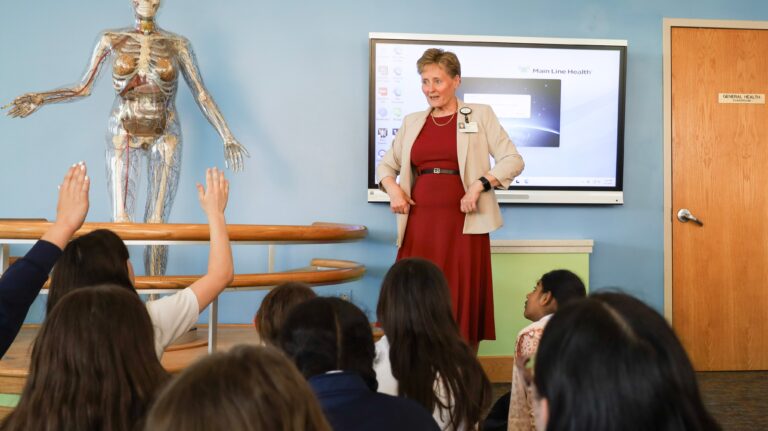
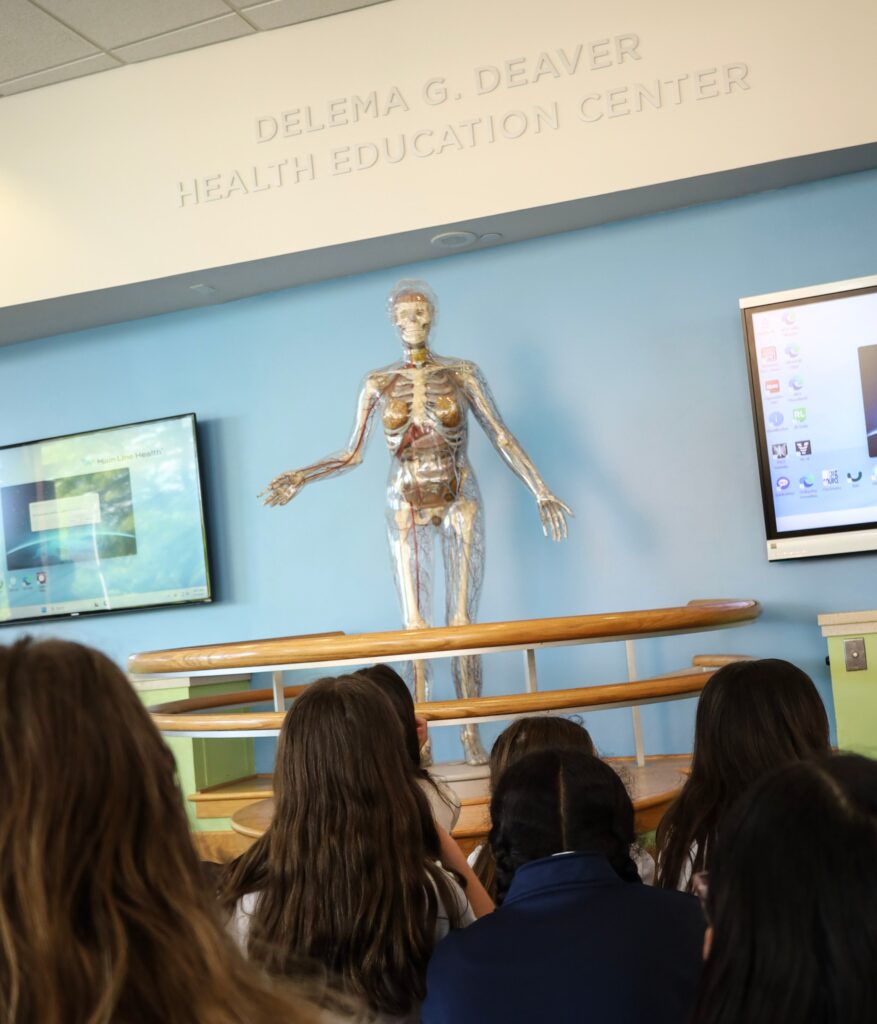
Maureen Krouse, manager of community health and outreach at Lankenau Medical Center, gives an anatomy lesson to sixth-grade students during their field trip to the hospital’s Delema G. Deaver Health Education Center on Tuesday, May 5, 2026.
From Philly and the Pa. suburbs to South Jersey and Delaware, what would you like WHYY News to cover? Let us know!
More than a dozen nervous sixth-grade girls sat in a small classroom, wearing matching monogrammed polo shirts and plaid skirts.
Directly across from them on the wall, they faced a massive, three-dimensional uterus made of plexiglass and LED lights. A spiral of small circles that got progressively bigger took up another part of the wall, with each sphere holding the accurate sizes of a growing and developing fetus.
Maureen Krouse stood at the center of the room and addressed the group — and their visible nervousness.
“Take a deep breath, leave it out. Relax,” said Krouse, who is a master certified health education specialist and manager of community health and outreach at Lankenau Medical Center in Wynnewood, Pennsylvania.
The girls should think of the program as their science class for the day, Krouse told them.
“Because that’s what it is. We’re going to be talking about health science. What is health science? The science of your … ?” she asked her audience.
“Bodies,” the students responded in unison.
“And what your body has to do,” she continued. “And your body has to grow up. You’ve seen it, it’s been growing. So, we need to talk about how that changes and why it changes, alright?”
Lessons about anatomy, hygiene, nutrition, exercise, substance use, the brain and bullying are just some of the topics covered at Lankenau’s Delema G. Deaver Health Education Center, which sees up to 10,000 students from the region every year.
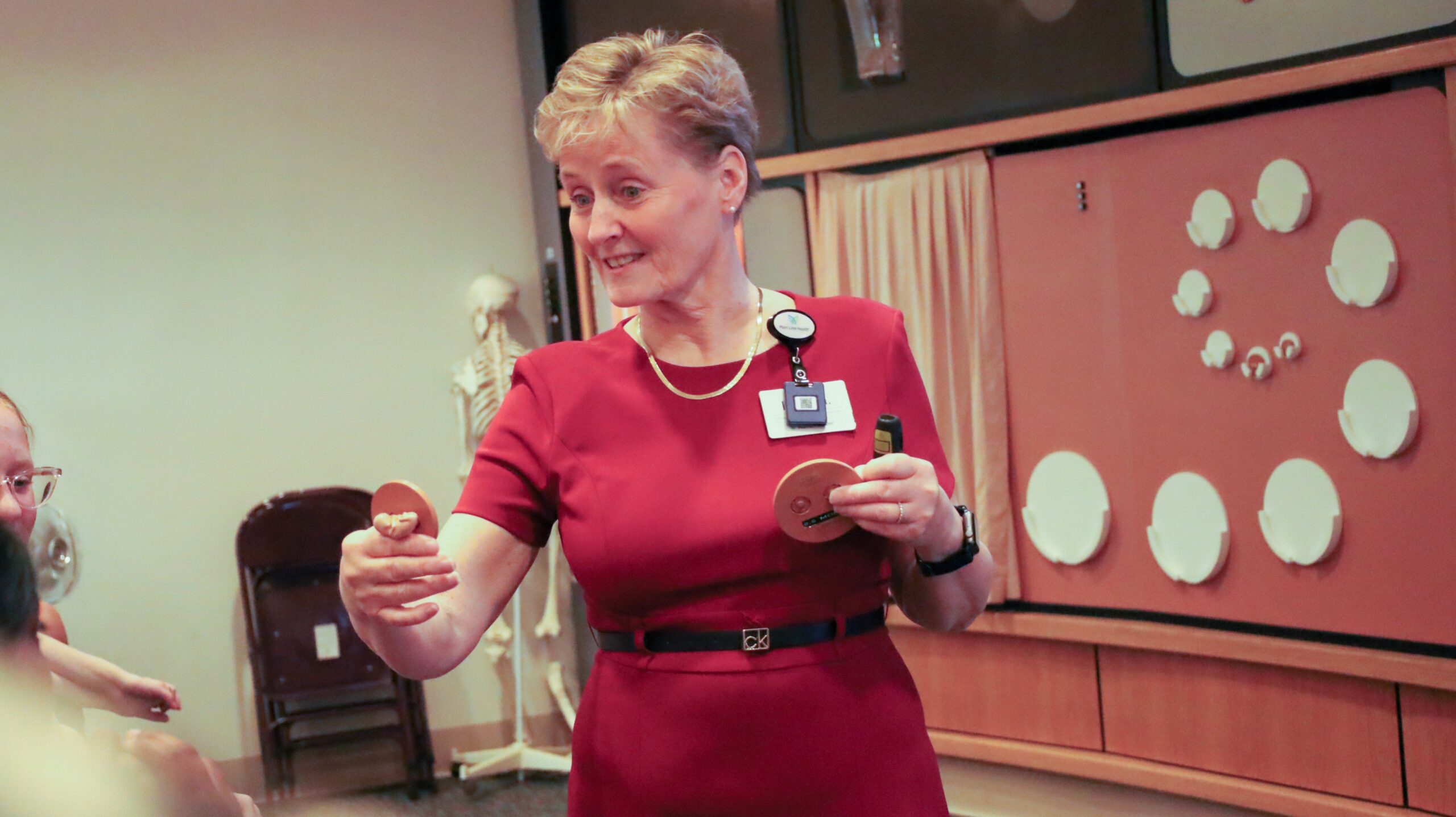
On a recent Tuesday morning, students from Saint Elizabeth Parish School in Chester Springs were the latest group to learn more about puberty, reproductive systems and how substances like alcohol, nicotine and drugs can affect their minds and bodies.
Providing free programs, informed by public health and medical specialists, to school-aged kids has always been the cornerstone of the center, Krouse said. It also serves as an additional resource for schools to expand or supplement their health education curriculum.
“With the cuts in education, we don’t know,” she said, referring broadly to proposals on cutting funding to primary schools across the country and uncertainty about future resources for students. “But they need health education.”
Related Content
American kids have become increasingly unhealthy over nearly 20 years, new study finds
Kids' health "reflects what’s happening in society at large,” said Christopher Forrest, a pediatrician at the Children’s Hospital of Philadelphia and a co-author of the study.
1 year ago
Puberty, drugs and everything in between
The Delema G. Deaver Health Education Center opened in 1995, and it became known for using technology that was considered ahead of its time.
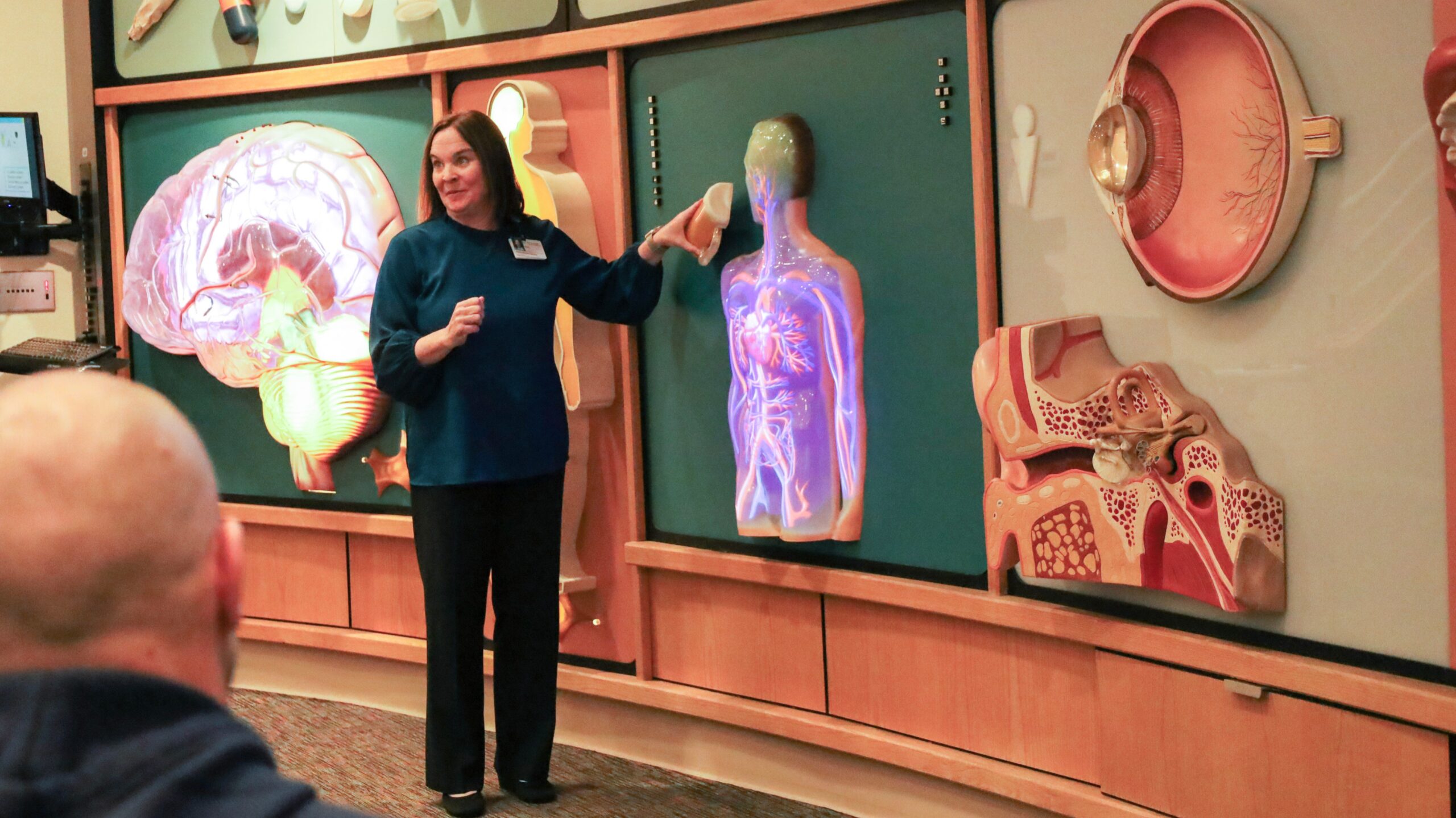
The center’s classrooms are no ordinary spaces. Instead of dry-erase boards or static posters, three-dimensional interactive anatomical models decorate the room.
A sliced-open model of an artery shows students how blood flows through the body — and how fatty buildup from an unhealthy diet can block the passageways.
A giant clear brain on the wall made with plexiglass, lasers and sensors is used to show the different parts of the brain. Health educators make different sections light up as they talk about the cerebrum, hypothalamus and cerebellum, and how thinking, mood and balance could be impaired by alcohol.
And an enlarged model of a uterus shows the stages of menstruation and fertilization as light sensors highlight the ovaries, fallopian tubes and how eggs travel.
It only took about 20 minutes for the girls in Krouse’s class to shed their shyness and start asking questions — a lot of questions. A sea of hands shot in the air as Krouse called on them one at a time.
“Why do some people’s periods last longer?” one girl asked.
“What are the normal ages that you can get your period?” another student wondered.
“How do cramps happen?” a third quickly added.
Their homeroom teacher and field trip leader, Maria Fraser, who teaches math and science at Saint Elizabeth, said it was exciting to see her students so interested and engaged.
“Because they’re all going through these changes themselves, I think there’s a sense of relief, almost, to be provided with a forum that they could ask these questions … and get the right answers,” she said.
Learning about the stages of pregnancy and how a baby develops in a detailed, but age-appropriate way, was also a highlight, Fraser said, especially for a Catholic school like Saint Elizabeth.
In another classroom next door, sixth-grade boys learned about the functions of the brain and nervous system. Wellness education specialist Kara Chivalette explained how a person could become increasingly impaired the more alcohol they drink.
“You had more to drink, it’s in your brain, it’s going to the next level,” Chivalette said as she walked them through a scenario. “Now you’re falling over, you fell down the steps. More beer, it goes to your brain stem. You actually could be killed, so this is pretty serious.”
Chivalette pointed to a picture on a TV screen showing one glass of wine, a pitcher of beer and a single shot of hard alcohol, and asked the boys which one they thought had the most alcohol content.
“So, raise your hand if you think it is the glass of wine,” she said, and a couple kids put their hands in the air. “Raise your hand if you think the 12 ounces of beer,” she said, and several more students raised their hands. “Raise your hand if you think it’s the whisky,” she said, and only a few boys had their hands up.
“What do you think?” Chivalette asked one student who hadn’t raised his hand to any of the options.
“I think it’s all the same,” he told her.
“You think it’s all the same?” Chivalette responded with a smile. “You’re right. It is all the same.”
The field trip and the lessons create an opportunity for kids to go home and have more in-depth discussions with their parents and guardians, Fraser said.
“It gives them an opportunity now, I think, with some confidence to go home and have those conversations,” Fraser said. “It kind of gives them an excuse to say, ‘Hey Mom, we did this today. You know, what exactly does this mean?’”
Related Content
Fixing the children’s health crisis
A recent CHOP study shows mortality rates and chronic conditions have increased for young kids - obesity, sleep disturbances, pain, mental health issues, even early puberty.
Air Date: July 14, 2025 12:00 pm
Listen 51:11Tackling health education in an age of misinformation
After a lunch break, the Saint Elizabeth’s students swapped classrooms, and the boys learned about puberty while the girls learned about the brain and the effects of alcohol, tobacco and drugs.
Krouse has been a health educator for about 36 years. In that time, she’s seen the field evolve to cover new topics, as well as address the new ways that kids and teens are consuming information.
These days, that includes a lot of content on social media, YouTube and other digital platforms — not all of which have reliable, factual details, Krouse said.
“I worry about what they hear out there from other kids,” she said. “That’s why I was like, ‘Please talk to the trusted adults.’”
The center has also worked closely with educators to modify each field trip according to what schools and parents are comfortable with. For example, Krouse said some schools have requested that health educators incorporate gender-neutral terms and phrases in their reproductive health lessons and references to parentage.
“And we have to be very aware that different cultures, different ethnic backgrounds have different beliefs and different ways of handling things,” Krouse said. “So it’s a challenge, but I love it.”
The programs at the health education center can’t, and shouldn’t, replace school-based health education classes, Krouse said. But the team at Lankenau tries to make a lasting impression in the brief time they have with students.
“When I’m teaching younger kids about eating, even if they can pull up the carrot and say, ‘Oh, I know this is going I’m going to help my eyes, this is going to give me vitamins,’ I did my job,” Krouse said. “That’s the way I look at it.”

Saturdays just got more interesting.
WHYY is your source for fact-based, in-depth journalism and information. As a nonprofit organization, we rely on financial support from readers like you. Please give today.
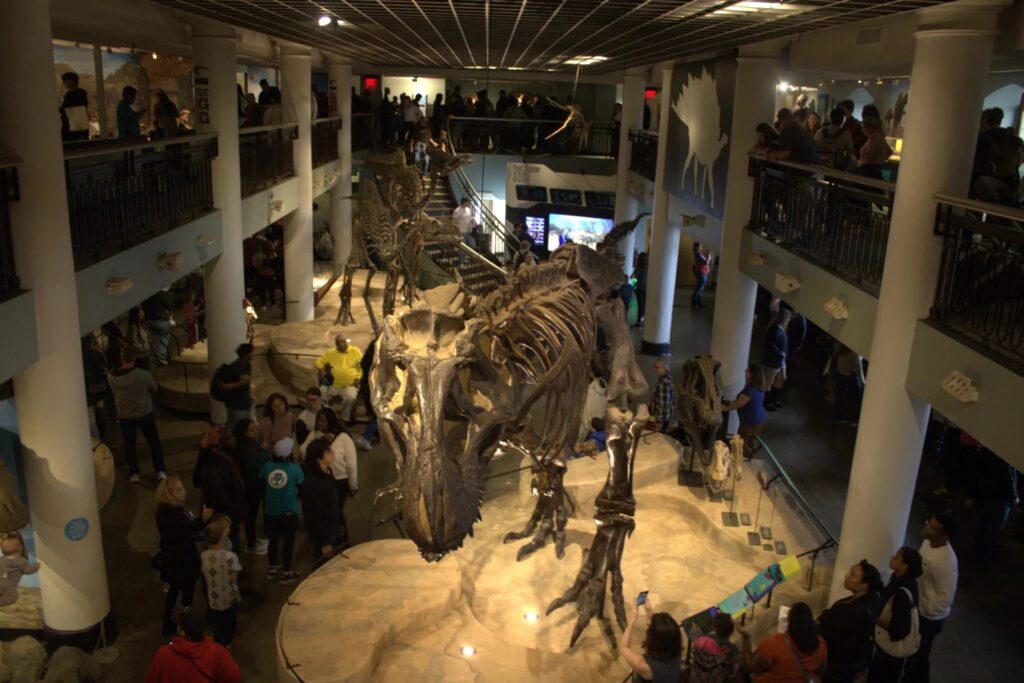
“There was a big push to not be known as the dinosaur museum,” said one laid-off worker. That shift came with a cost, ex-staffers say.
3 days ago
Listen 6:45
Philadelphia-area schools are tapping the sun’s energy and saving money on utilities
Unionville High School in Kennett Square and Universal Audenried Charter School in Philadelphia are building solar arrays that will slash their energy bills.
1 week ago
Listen 1:04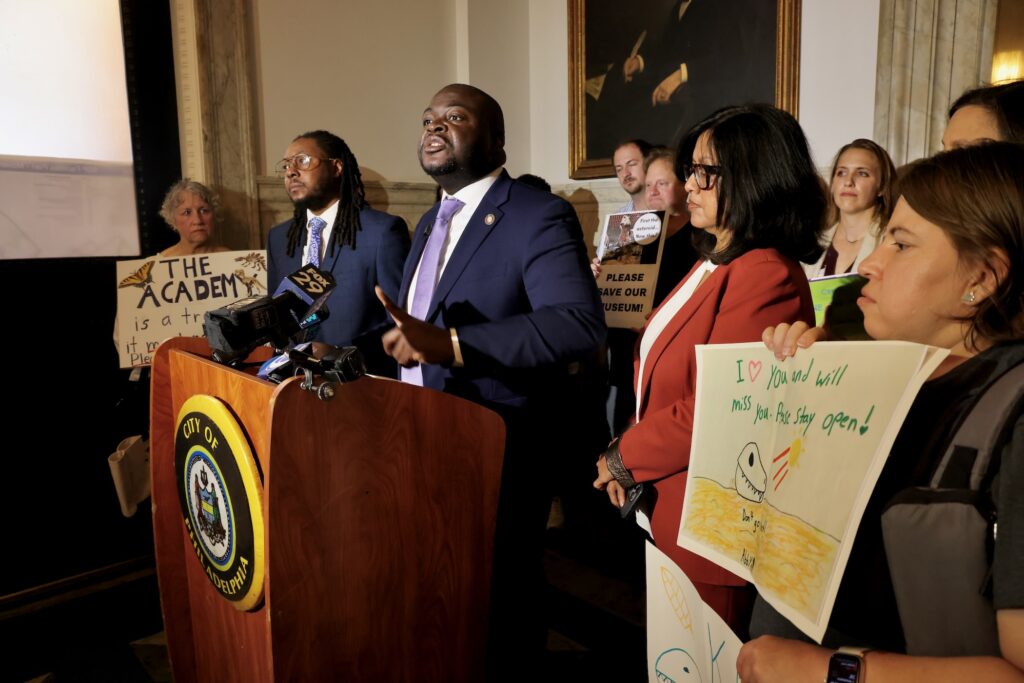
City Council members are planning public hearings to find out how the museum got to the point of closing, as well as explore solutions.
3 weeks ago
Listen 1:07