
Groups founded by billionaire Koch brothers sue Delaware over campaign finance law requiring donor disclosure
The federal lawsuit charges that the 2012 law serves to “chill free speech," but a state official says the plaintiffs are “trying to keep dark money dark.”
Listen 2:12

Two groups founded by billionaires Charles Koch (left) and David Koch, who died in 2019, are suing Delaware over a campaign donor disclosure law. (PBS News)
What are journalists missing from the state of Delaware? What would you most like WHYY News to cover? Let us know.
Two political advocacy groups founded by the billionaire Koch brothers of Kansas want to produce ads naming candidates in Delaware elections this year without disclosing their donors.
Americans for Prosperity and the Americans for Prosperity Foundation, groups that support limited government and conservative causes, say they want to produce mailers and television, radio or social media ads focused on issues such as private school vouchers and a proposed income tax increase on high earners, among other matters, top officials told WHYY News.
But Delaware’s campaign finance law requires the two groups to disclose their vast network of donors, a mandate the Virginia-based nonprofits are fighting in court.
Last month the two groups filed a federal lawsuit challenging the law, which aims to provide voters with more information about who is behind groups producing ads that aren’t from candidates or political committees.
In Delaware, unlike candidate and political action committees, so-called “third-party advertisers” — as state law defines groups such as Americans for Prosperity — can name a candidate but can’t coordinate with campaigns or suggest who people should vote for or against.
Americans for Prosperity has gobs of money and spends lavish amounts in campaigns across the United States, records reviewed by WHYY News show.
In 2024 alone, contributors gave the two groups more than $183 million, according to its Internal Revenue Service filings. Americans for Prosperity spent $21.7 million on political campaigns that year, but its namesake foundation didn’t list any spending on campaigns, the filings show.
And with the September primary and November general election looming, the groups say they are ready and willing to spend plenty of cash in the First State, where the amount spent on “third-party advertising” is not limited.
But not unless their donors’ identities are protected.
To that end, Americans for Prosperity wants the law declared unconstitutional. More immediately, they’re seeking an injunction to prevent the state from enforcing it while the case moves through U.S. District Court in Wilmington.
“Delaware’s disclosure requirements violate the right to private association, chill free speech and association, and overstep the government’s legitimate disclosure interests, all in violation of the First Amendment,” the lawsuit charges.
Related Content

Bill would force Delaware lawmakers to disclose free trips to Taiwan, other places
A lawmaker who traveled on a third party’s dime wants to clarify a “weird, gray area” of law but some insist such “gifts” already must be reported.
3 months ago
Listen 1:55‘Some call us conservative, some call us libertarian’
Beyond free speech arguments, the lawsuit also claims donors are also entitled to privacy for their own protection from harassment or worse for their ties to the Koch brothers and their political causes.
Charles Koch and his late brother David, who died in 2019, derived their fortunes from the family’s privately held energy and industrial conglomerate.
Through their personal contributions and groups they founded and the donors those groups attracted, the so-called Koch network has poured hundreds of millions of dollars into political campaigns, with a focus on helping to elect free-market Republicans or to oust Democrats, according the Associated Press.
But because of that advocacy work and ties to Americans for Prosperity, the brothers sometimes “faced the threat of violence,” the lawsuit said.
In addition, donors with ties to the Kochs “have received threats of physical harm and/or public harassment” and had “their business boycotted” after media outlets published a list of potential donors to Americans for Prosperity, the lawsuit said.
Americans for Prosperity said Charles Koch played no role in the lawsuit, noting in a written statement that the groups “each receive support from a variety of business leaders, organizations, and philanthropists.”
Related Content
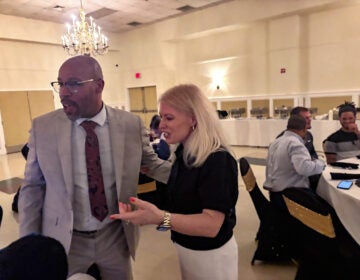
Jobs for Delaware Graduates hired Nicole Poore in 2014. Watchdog groups say lawmakers shouldn’t run agencies that get taxpayer money.
4 months ago
Listen 4:36Ross Connolly, the groups’ northeast director, added that Koch doesn’t dictate how the groups operate.
In its IRS filings, Americans for Prosperity says its mission is to “educate and mobilize Americans to advocate for solutions that expand freedom and opportunity.”
They aim to achieve those goals, the filings say, by “addressing unsustainable government spending and debt, reforming the health care, immigration and criminal justice systems, protecting civil liberties, and building an economy where everyone has an opportunity to find success.”
Asked about the political ideology guiding those goals, Connolly instead described how others view the group.
“Everyone tries to put a label on us. Some call us conservative, some call us libertarian, conservatarian,” Connolly said. “What we are focused on is removing barriers in government that are standing in the way from an everyday American being able to realize their American dream.”

Should the group win an injunction or prevail in the case, Connolly said, “we are immediately prepared to engage on these issues and to roll out campaigns in Delaware. But right now we have no plans to do so until this is clarified.”
Related Content

New Jersey’s governor race is projected to be the most expensive in state history
The total amount of money spent during the primary and general election will top $200 million by Election Day.
9 months ago
‘It’s just a black-and-white moral question. It’s just wrong’
The lawsuit names Delaware Elections Commissioner Anthony Albence and Attorney General Kathy Jennings as defendants.
Albence and his office would not comment on the pending litigation.

Jennings also would not comment, but spokesman Mat Marshall defended the law. He also charged that the groups merely want to prevent Delawareans from knowing the identity of the wealthy donors footing the bill for the political ads they get in the mail, hear on the radio, or see on social media or television.
“The Koch networks’ lawsuit is trying to keep dark money dark,” Marshall said. “We require really the bare minimum, which is that you ought to be disclosing who’s funding these interests. I don’t think if you ask most people in Delaware, Democrat or Republican, they would say that our campaign finance laws are too transparent.”
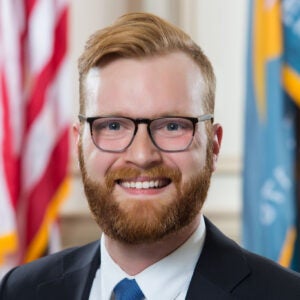
Marshall said the lawsuit seeks to make Delaware’s campaign finance disclosure system more opaque, and that Jennings’ office is preparing an official response to file in court.
“At some point, it’s just a black-and-white moral question. It’s just wrong,” Marshall said. “And it puts our elections in even greater jeopardy than they currently stand of malign influence by corporate interests.”
Related Content

Gov. Matt Meyer has vowed to “fight federal overreach.” Now he wants the appeals court in Philadelphia to pause, and then overturn, the order.
3 months ago
Listen 1:10‘Likely that potential donors will refuse to contribute’
Delaware enacted the law in question in 2012 in the wake of the U.S. Supreme Court’s ruling in Citizens United v. Federal Election Commission in 2010, which permitted corporations and other outside groups to spend unlimited money on elections.
The lawsuit targets the provision in the Delaware code that requires third-party advertisers who engage in so-called “electioneering communications” — which name a candidate but don’t explicitly say who to vote for or against — to file reports if they spend more than $500 in an election cycle.
The groups must first register as a political committee and list names and addresses of each officer, as well “a concise statement of the committee’s purposes or goals,” and the name, office sought and party affiliation of candidates they are supporting or opposing, “to the extent such information is known as of the date of filing.”
During the campaign season, the groups also need to file reports listing the name and mailing address of anyone contributing more than $100, regardless of whether the person earmarked their money for a Delaware race or even knows about the campaign ads in Delaware. The report must contain the total amount that every donor made during the relevant election cycle.
The law has a $1,200 minimum threshold for reporting donations by any contributor that is not an individual.
While the lawsuit centers on disclosing individual donors, the roughly 60 third-party advertisers now registered in Delaware report contributions from affiliated organizations rather than naming individual people, a WHYY News review of filings found.
For example, the American Civil Liberties Union of Delaware Action Fund listed $70,000 in donations from the American Civil Liberties Union, listing a New York address for the donors.
Another group, the National Resources Defense Council lists one donation — $100,000 in 2024 from the NRDC Action Votes Federal PAC in New York. During that race, the group advocated for unsuccessful Democratic gubernatorial candidate Collin O’Mara.
Regardless of whether third-party advertisers are naming individual people as donors, Americans for Prosperity argues in the lawsuit that the names of “thousands of donors” who have given its two groups more than $100 since 2022 would have to be disclosed.
Citing the law, the lawsuit said that failing to comply comes with a possible “penalty of perjury” and fines of $50 a day and perhaps referral to prosecutors for not filing the reports, which is a misdemeanor criminal offense.
Such disclosures would harm Americans for Prosperity, the lawsuit argues, because “the vast majority of donors require confidentiality as a condition of their giving.”
Unless the law changes or is overturned in court, the lawsuit claims that Americans for Prosperity could jeopardize its funding stream if it engages in third-party advertising in Delaware.
“It is likely that potential donors will refuse to contribute, and current donors will cease to contribute, because they are too fearful of the reprisal they will face if their names and addresses are disclosed,” the lawsuit said.
Connolly elaborated.
“This is a fundamental, foundational American principle that you should be able to give to causes without fear, whether you give $100 or $1,000 or more,’’ he said. “Everybody should be treated equally and protected equally to engage in the political process as they see fit and not not fear attacks on their families and their businesses.”
Marshall countered that third-party advertisers don’t deserve special privileges.
“The idea is that our elections are sacrosanct and that we ought to be able to at least see who is influencing them,” Marshall said. “The idea that we should have special rules when it’s a third party that’s really set up in practice to funnel extremely wealthy people’s resources in one or a few massive bundles of money, that we should treat that more gingerly than we treat the donation of an accountant who lives in Newark to their local state rep candidate, just feels outrageous.”

Get daily updates from WHYY News!
WHYY is your source for fact-based, in-depth journalism and information. As a nonprofit organization, we rely on financial support from readers like you. Please give today.
Part of the series

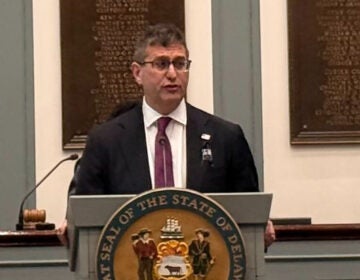
House Speaker Melissa Minor-Brown said she has not had a single conversation with Meyer about his creation of a state surgeon general.
4 hours ago

El líder de la mayoría del Senado, Bryan Townsend, afirma que su legislación implementa gradualmente topes de precios para los hospitales y refuerza el acceso a la atención.
3 days ago
Delaware Gov. Matt Meyer’s executive order raises questions about whether members of other task forces could meet the standards.
4 days ago
Listen 0:50