

Pet goats face eviction in Franconia Township — and the owner is fighting back
Ken Schumann says officials inspected his property for years without raising concerns before ruling this year that his lot is too small to legally keep goats.
Listen :57
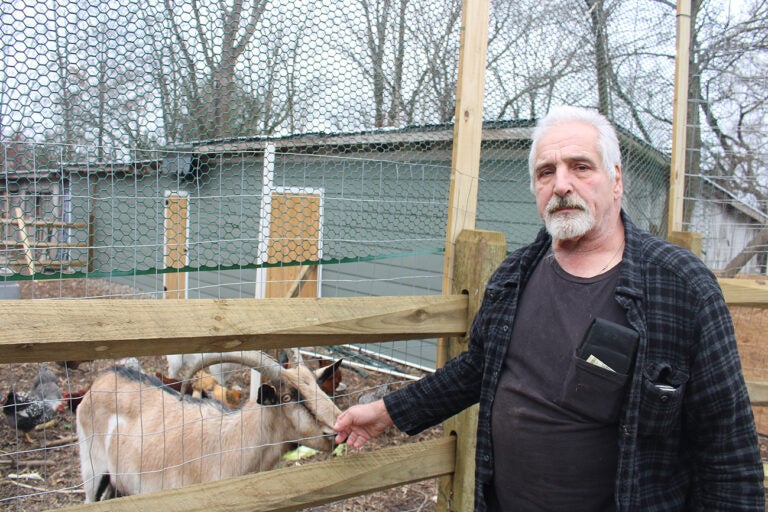
Ken Schumann with his goat, Bam-Bam. Schumann requested a zoning variance to keep Bam-Bam, 10, and his other goat Tommy, 15, until they pass away. The zoning board rejected that request in December. (Emily Neil/WHYY)
From Delco to Chesco and Montco to Bucks, what about life in Philly’s suburbs do you want WHYY News to cover? Let us know!
Tommy and Bam-Bam, a pair of elderly goats, have been Franconia Township residents for more than 10 years, but in early December, the township’s zoning board ruled to evict them.
Ken Schumann has kept goats on his property since 2000. In May, officials found him in violation of the township’s zoning code, which prohibits keeping livestock animals on any property smaller than three acres.
Schumann argues township officials had visited his one-third-acre property on more than 10 occasions since he got his first pair of goats, Mindy and Molly, more than 20 years ago, including inspections to review construction of a deck and garage, during which the goats were visible. Schumann said he never received a complaint or warning from the township until this spring.
Franconia Township did not respond to multiple requests for comment.
The township’s letter citing Schumann’s code violation stems from complaints it received about the goats. Schumann acknowledged that the goats have broken out of his yard multiple times and defecated on a neighbor’s property while he was repairing the fence around their enclosure.
He paid $1,800 to appeal the zoning board’s decision, asking them to grant a one-time variance until Tommy and Bam-Bam die of old age. At 15 and 10 years old, respectively, the goats are near the end of their life expectancy.
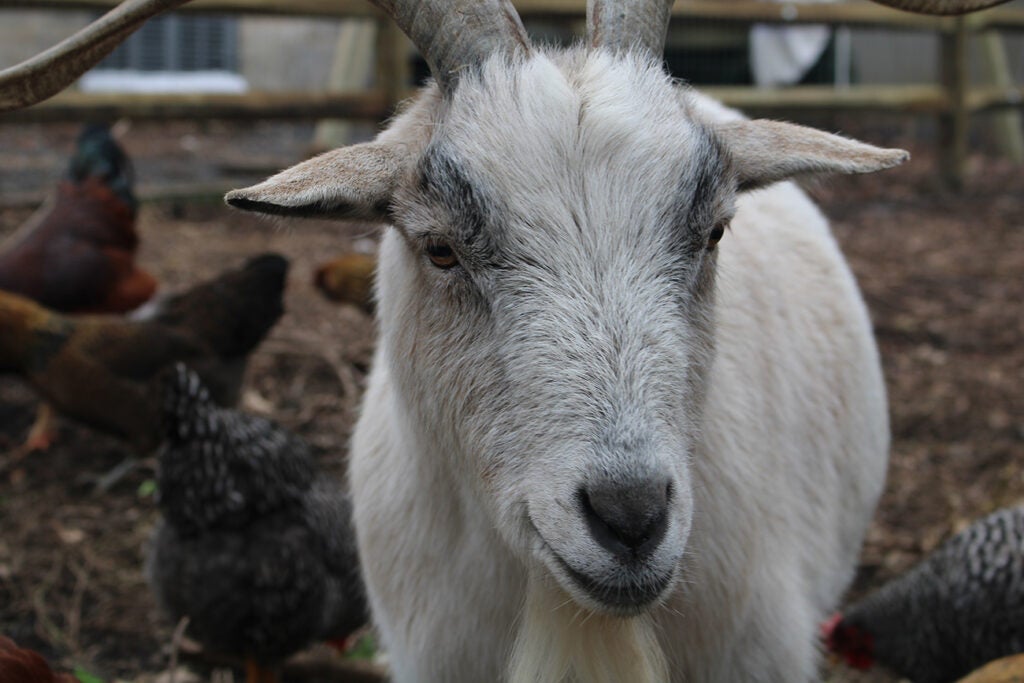
At a hearing on Dec. 4, the board denied the request.
Schumann’s options now, he said, are to rehome the goats or keep up the fight in court. He and his wife, Kathleen Schumann, are both retired and on a fixed income. The two are considering setting up a GoFundMe to pay for legal expenses.
“It’s not like I’m asking to change the zoning and let me have more goats,” he said. “I’m simply asking for a variance to let them live their life out here. That’s all I’m asking — and, more importantly, an explanation why they never said a word, never. So that only led me to believe, knowing they were here, physically, seeing these goats all these years, that wasn’t an issue.”
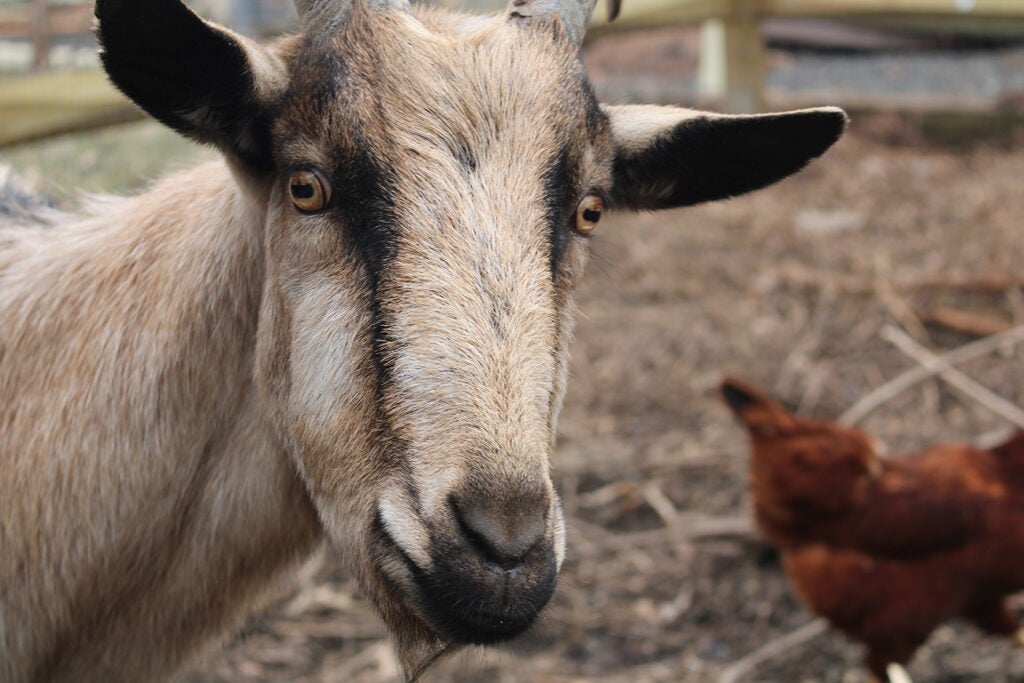
If he had known he wasn’t allowed to have goats, Schumann said, he wouldn’t have acquired Cupcake and Peaches after Mindy and Molly died. He wouldn’t have gotten Bam-Bam as a young goat or adopted Tommy, a retired therapy animal, in 2015.
Related Content
School let the dogs out: Philadelphia’s String Theory has a staff of 4-legged therapists
Every day, trained therapy dogs roam the halls of the Center City charter school, and they’re having a positive impact on student performances.
4 months ago
Listen 1:21As of Saturday, more than 1,600 people have signed an online petition calling on the township to let Tommy and Bam-Bam live out the rest of their lives on Schumann’s property.
“I live directly next door to Tommy and Bam-Bam,” wrote one person, who identified themselves as Erin on the petition. “They make our day. They are harmless. I bear witness to these goats making the day of the school children next door.”
Throughout the years, Schumann has taken his goats to visit a neighboring daycare so that the kids can pet them through a fence, he said.
Both goats are attached to him and his wife, he said, and he considers them as domestic pets since they aren’t used for any agricultural purpose.
“A lot of people would say, ‘Ken, they’re just two goats,’ you know, ‘Just rehome them,’” he said.
“I could do that, but … they’ve lived there their entire life … We’re already attached to them, as are they to us. I just think they would die of a broken heart.”
More people across Pennsylvania are keeping goats, either as pets or for agricultural purposes, according to Austin Brown, a small ruminant extension associate at Penn State University. In his role, Brown works to translate scientific research into on-the-ground best practices for managing sheep and goats throughout the state.
“In comparison to a cow, it takes a whole lot less barriers for entry with these small ruminants,” he said. “So it’s definitely an increasing trend to own them.”
Brown said goats need to forage and have accessible feed, and they must have good ventilation in their enclosures. Whether a goat is kept as a pet or for agricultural use, he said that goat owners should have a management plan for manure, odor and disease.
In his work, Brown said that he doesn’t define when goats are or aren’t pets. However, as with dogs, goats can be “serving a different purpose,” depending on their role, he said.
“Obviously, a goat is maybe a little bit more untraditional, but it’s still an animal that’s serving within a different capacity,” Brown added.

Never miss a moment with the WHYY Listen App!


WHYY is your source for fact-based, in-depth journalism and information. As a nonprofit organization, we rely on financial support from readers like you. Please give today.
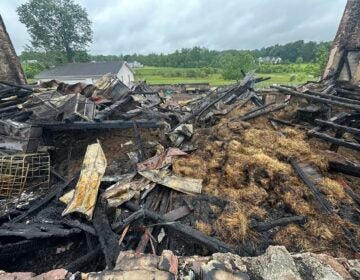
Dozens of animals unaccounted for after barn fire at Montgomery County animal sanctuary
The blaze broke out around 3:13 a.m. Wednesday at the House of Wiggle Goats, a rescue and sanctuary that provides lifelong care for goats and other farm animals.
9 months ago
‘Everybody’s Hometown’ is rewriting its zoning laws. Should other communities take note?
The Delaware County seat wants to incorporate form-based code into its zoning laws. This planning method organizes communities based on their physical form rather than use.
3 years ago
National retailer CBD Kratom sues Radnor Township over ordinance
As enacted, the ordinance bans kratom and Delta-8 sales within 1,000 feet of a school, playground, or daycare center, preventing a new shop from opening.
4 years ago