
For 25 years, Philly’s Fire Museum Presents has made a home for ‘all music for everybody’
The DIY concert series, founded by Steven Tobin, pairs global folk traditions with underground local artists — and keeps shows accessible to everyone.
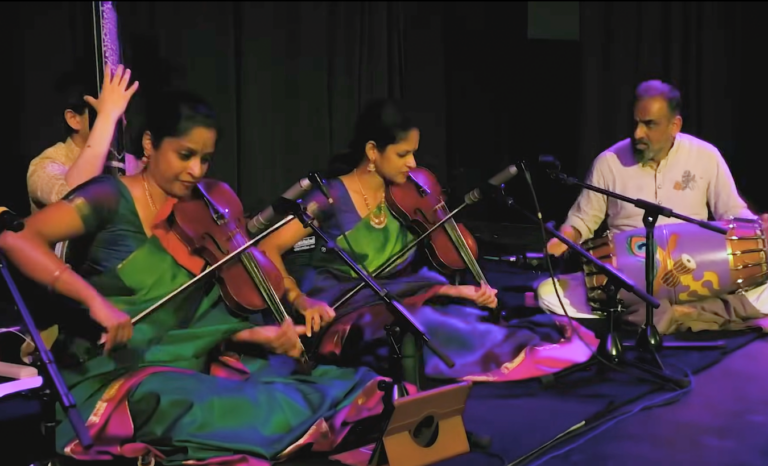
The Akkarai Sisters performed at The Rotunda in April 2025 as part of a Fire Museum Presents concert. (Richard Stankiewicz)
After presenting a genre-defying array of concerts for 25 years, Fire Museum Presents has established itself as a vital part of Philadelphia’s DIY music community and shows no signs of slowing down.
“All music for everybody,” founder and director Steven Tobin said.
Fire Museum concerts highlight all styles of folk music from around the world, while simultaneously elevating innovative underground artists based in Philly. A show is just as likely to feature a legendary jazz elder as it is a brand-new local experimental band, just as likely to book South American bolero musicians as it is Moroccan Gnawa masters
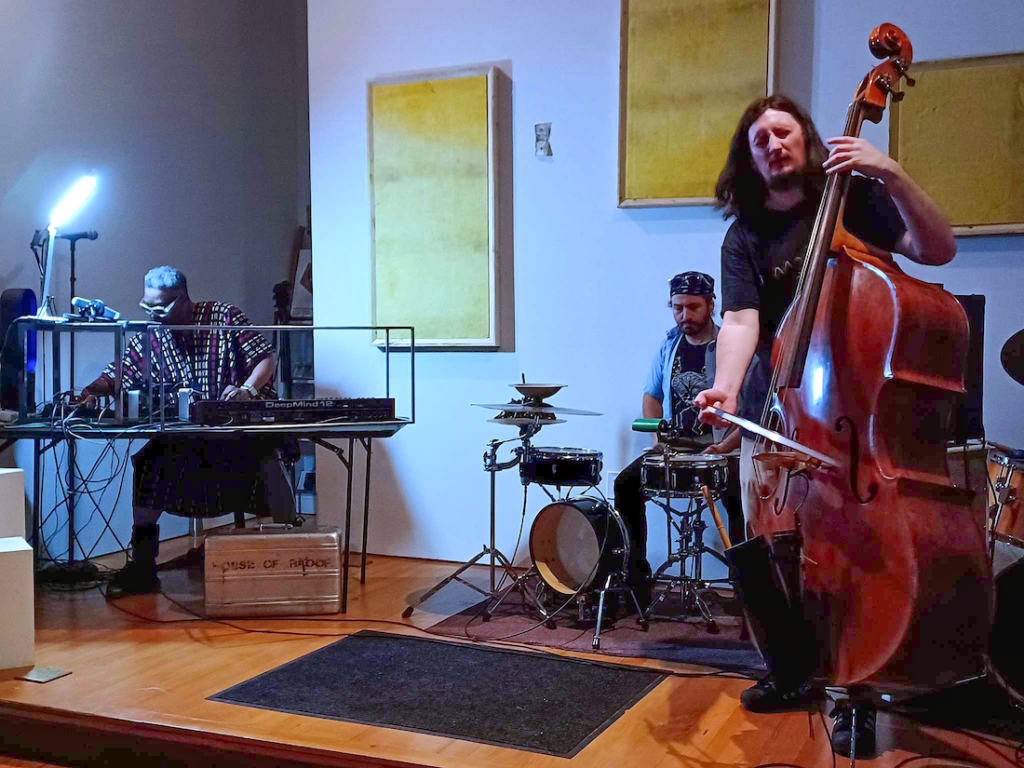
Not tied to any one venue, Fire Museum, which became a nonprofit organization in 2023, presents concerts all over the city — most often in spaces that are not traditional music venues, true to the organization’s DIY nature, including churches, galleries, storefronts, community centers and the Rotunda on the University of Pennsylvania’s campus.
Community, collaboration and solidarity are baked into Fire Museum’s DNA. The most important goal is to share great music and expose people to artists they would otherwise never have seen perform, Tobin said. And nobody is ever turned away from a Fire Museum concert for lack of funds.
“It’s more important that somebody experiences the music than whether they can pay,” Tobin said.
That ethos extends beyond ticket prices. Tobin bristled at the academic sheen that can sometimes cling to avant-garde music.
“Let’s democratize the whole thing,” he said. “We’re not interested in letting anything rot in academia.”
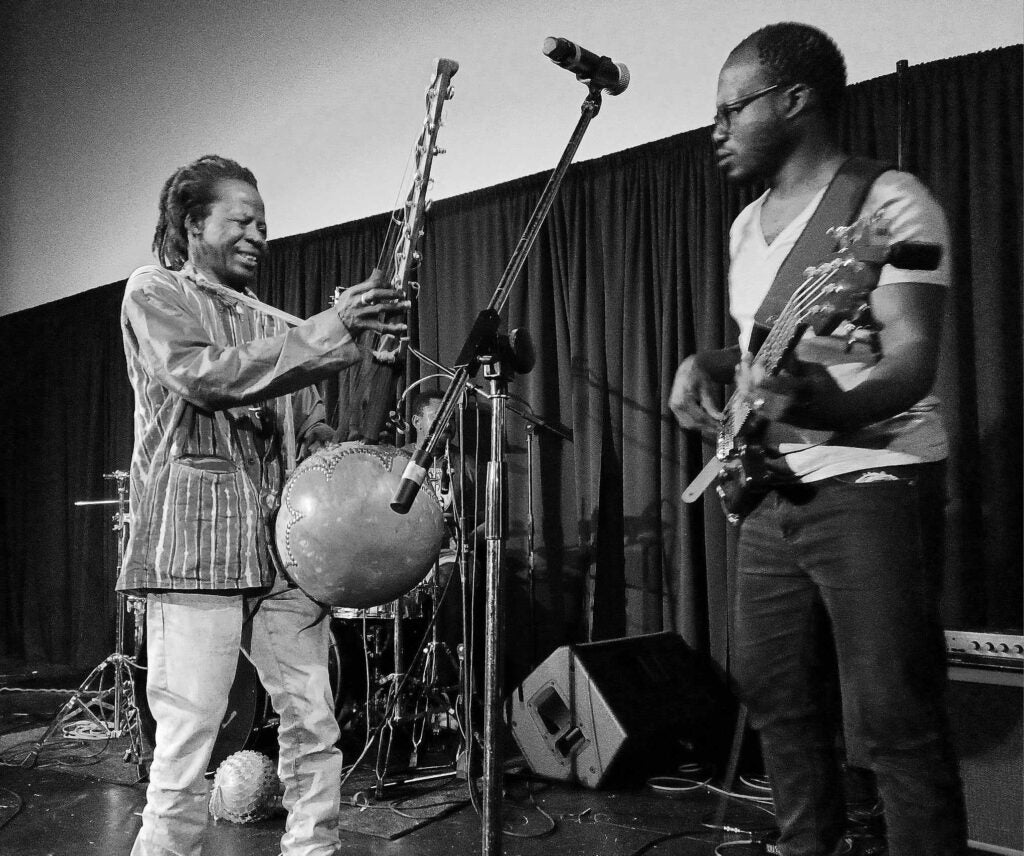
25th anniversary shows capture Fire Museum’s full range
Fire Museum celebrated its 25th anniversary in January with a trio of concerts that perfectly represented the extraordinary range of music it has presented. Hindustani musicians Indrajit Roy-Chowdhury and Naren Budhakar showcased their mastery of the sitar and tabla. Czech violinist, singer and composer Iva Bittová blended Eastern European folk traditions with experimental noise, with opener Other Side of a Dream giving a peek into Philly’s rich ambient and experimental music community percolating under the radar. The pairing of a local artist with an established international act exemplifies the intention behind Tobin’s curation.
The third show featured a solo piano set from the legendary Philly jazz musician Dave Burrell at the community arts space The Perch. Going back to the mid-1960s, the prolific pianist has been a key player in the boundary-pushing world of free jazz, working with luminaries such as Archie Shepp, Pharoah Sanders and David Murray.
For over an hour, the 85-year-old Burrell traveled from free jazz abstraction to some of the most recognizable melodies in popular music. He steered the familiar song “Somewhere Over the Rainbow” into uncharted territory, stretching out phrases and transforming the melody with bursts of improvisation.
Related Content
The scorched guitar fuzz and reverb that define Robb's experimental sound anchor Jessica Kourkounis' surreal film.
2 months ago
From Southern California punk to global folk traditions
Tobin has spent his life obsessed with music, and his interests are uncommonly varied. His quest for new and interesting sounds has led him to discover traditional, underground and innovative music across the globe. His roots, however, stretch back to the Southern California punk scene of the 1980s.
“The first show that I ever put on … was in 1985. That was a punk and hardcore show. And that was a fundraiser for indigenous Native American political prisoners like Leonard Peltier,” Tobin said. “And of course, like a punk show, there were 90 bands that played at this all-day thing.”
Tobin still listens to punk rock, naming the Minutemen as a personal favorite, but he said he doesn’t let his tastes get bogged down by genres, and he doesn’t see significant boundaries between musical styles.
“[John] Coltrane was talking about how ragas and Hindustani music in particular were a big influence on his more out-there free stuff,” Tobin said. “I started to investigate things like that, and it just all became intertwined for me. It always seemed natural to try to get people to listen to all these different things with me.”
Tobin’s first show under the Fire Museum Presents banner was Jan. 20, 2001, when he was living in the Bay Area. The concert was a fundraiser for the Revolutionary Association of the Women of Afghanistan. Upon moving to Philadelphia in 2007, Tobin initially started a relationship with Highwire Gallery in Fishtown and began presenting shows there. When the gallery shut its doors, Fire Museum began its nomadic journey, finding unconventional venues around the entire city.
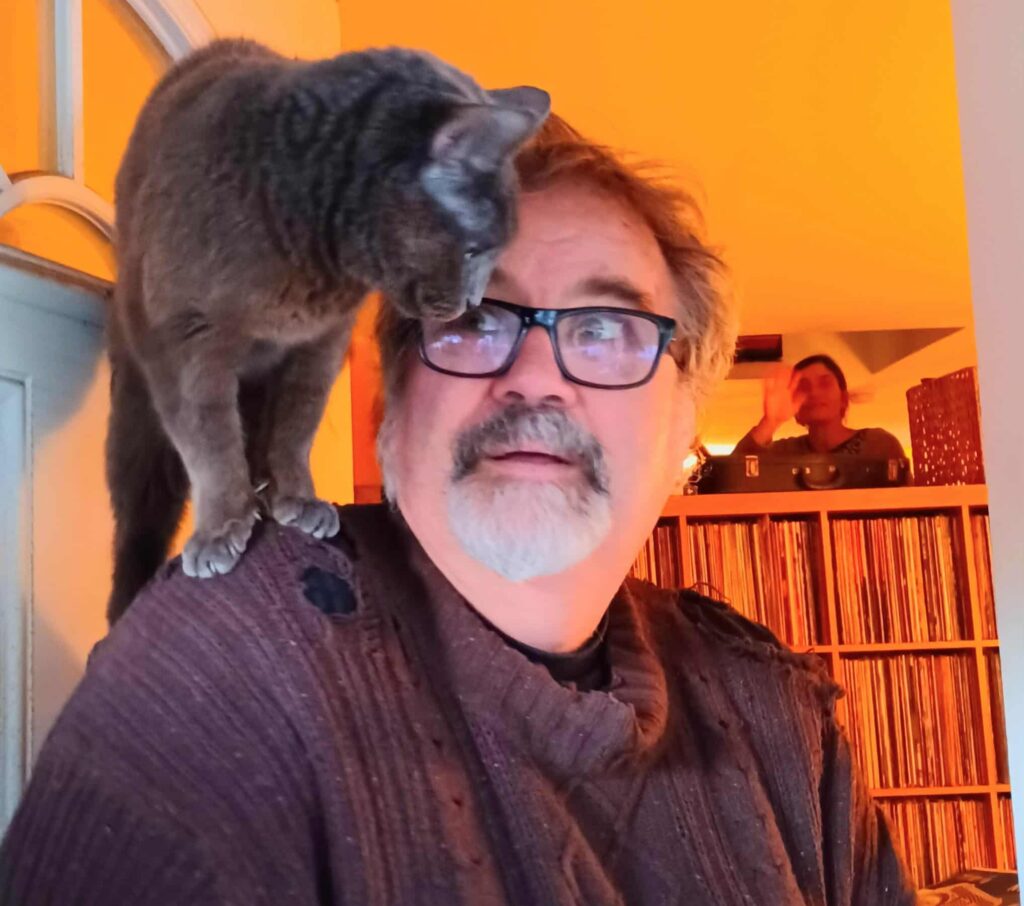
A community built by showing up
Philadelphia musician Jack Braunstein has been coming to Fire Museum shows since he was a teenager. Tobin’s embrace of venues that aren’t bars means that the shows are open to all ages, which Braunstein credits with playing a major role in exposing him to so much great music.
“When you’re underage, it can really show you new worlds,” he said.
Braunstein has now performed in Fire Museum shows several times, including a special record-release concert for his project Shande.
“[Tobin] brings people here from all over the world, but he also really supports the community,” Braunstein said.
Fire Museum allows local musicians to “have a space to really present their work in a way which honors the art, which is really special.”
Fellow frequent audience member and occasional Fire Museum volunteer Kimya Imani Jackson echoed that sentiment. Jackson praised the organization’s commitment to bridging different worlds, highlighting past concerts that paired experimental music with avant-garde dance and movement.
When the world seems bleak, she sees the Fire Museum’s strong communal spirit as a glimmer of hope. “Hearing these pairings and what the artists come up with gives me hope in terms of what creativity exists,” Jackson said.
Related Content
Steve Heise and Alina Josan make music together by instinct and improvisation, one string at a time.
3 months ago
Ingredients: a folding table, a sliding scale, a long view
In an entertainment landscape driven by metrics and monetization, Fire Museum’s unyielding eclectic ethos sets it apart. With nothing more than a folding table at the door, a sliding-scale admission policy, and a handoff between musicians who may never have shared a bill before, that commitment to creating something democratic and communal feels radical.
Given how precarious public funding for the arts has become and how frequently larger institutions struggle with equity and access issues, Tobin’s vision is also refreshingly direct — don’t let the music fossilize or be siloed, and don’t let price or prestige determine who gets to listen.
Over the years, Tobin has barely taken home any money for his efforts, preferring instead to give the artists their due. Although he gets help from his wife, Leah, and a deep bench of volunteers, Tobin does most of the work himself.
When asked how he has managed to keep Fire Museum going for so long, Tobin laughed.
“Anybody who sticks around for more than a year gets my congratulations,” he said. “It’s fun. But it’s a lot.”
Looking to the future, Tobin says he wants to expand video content collaboration with People Powered Sounds on public access television network PhillyCAM. And looking to expand his target audience, he plans to present a series of workshops for children that present global and experimental music in an accessible way, he said, with the goal of igniting “a spark for them to investigate a variety of music.”

Get daily updates from WHYY News!
WHYY is your source for fact-based, in-depth journalism and information. As a nonprofit organization, we rely on financial support from readers like you. Please give today.
The scorched guitar fuzz and reverb that define Robb's experimental sound anchor Jessica Kourkounis' surreal film.
2 months ago
Steve Heise and Alina Josan make music together by instinct and improvisation, one string at a time.
3 months ago
For Philly’s Low Cut Connie, protest songs and American dissent are ‘patriotic’
Singer-songwriter Adam Weiner talks protest songs, fear, and American identity ahead of nationwide “No Kings” protests.
9 months ago
Listen 9:16