
An eye out for vision loss: New Philly mobile van brings free eye disease screening directly to patients
The Scheie Eye Institute in MOTION van can screen for glaucoma, diabetic retinopathy and other conditions linked to chronic disease.
Listen 2:14
From Philly and the Pa. suburbs to South Jersey and Delaware, what would you like WHYY News to cover? Let us know!
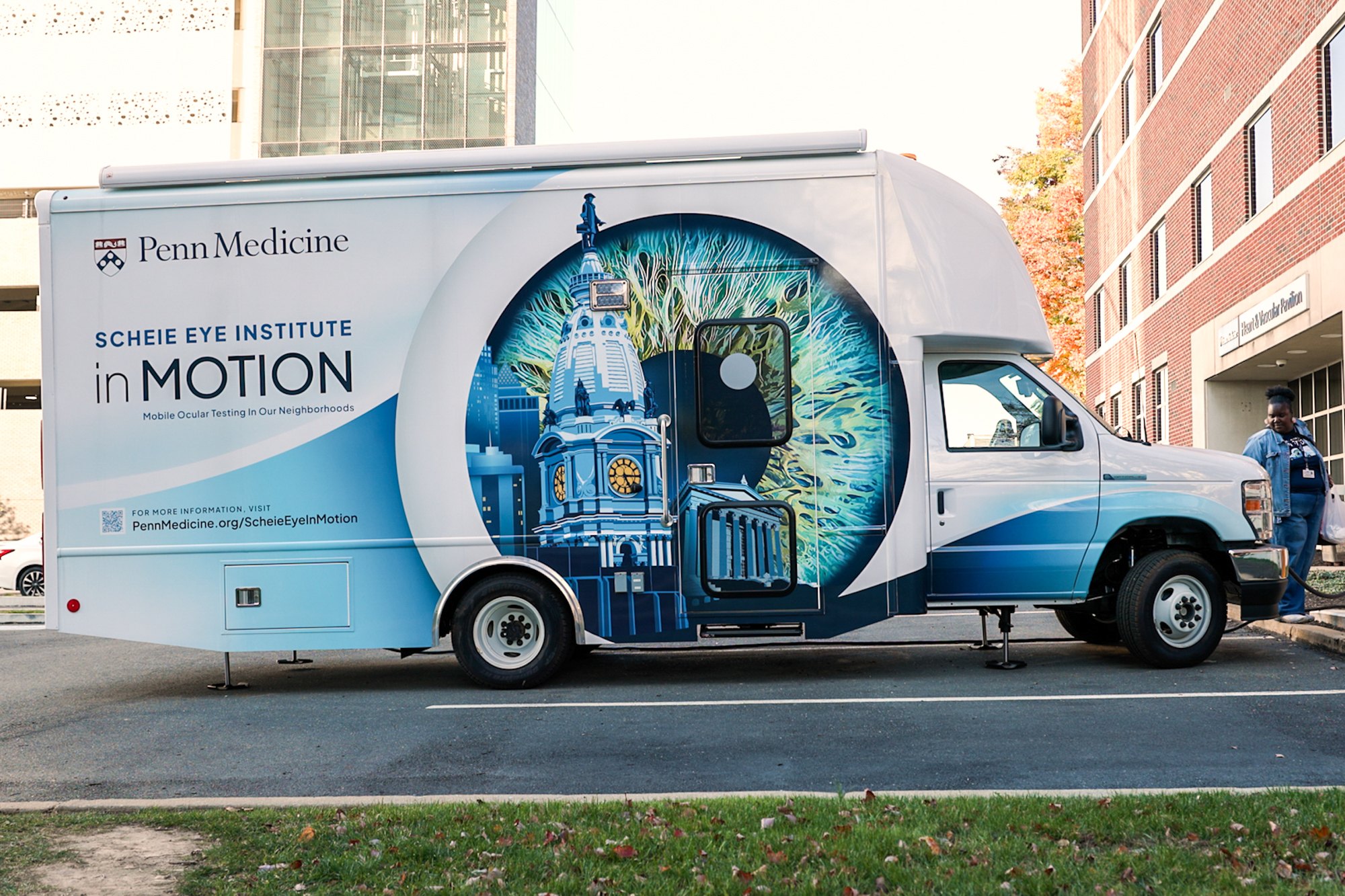
A large white van pulled up alongside the curb at a busy intersection in West Philadelphia on a recent Monday night. A 10-foot-tall image of an eye, with blues, greens and yellows coloring the iris, decorated the side of the vehicle.
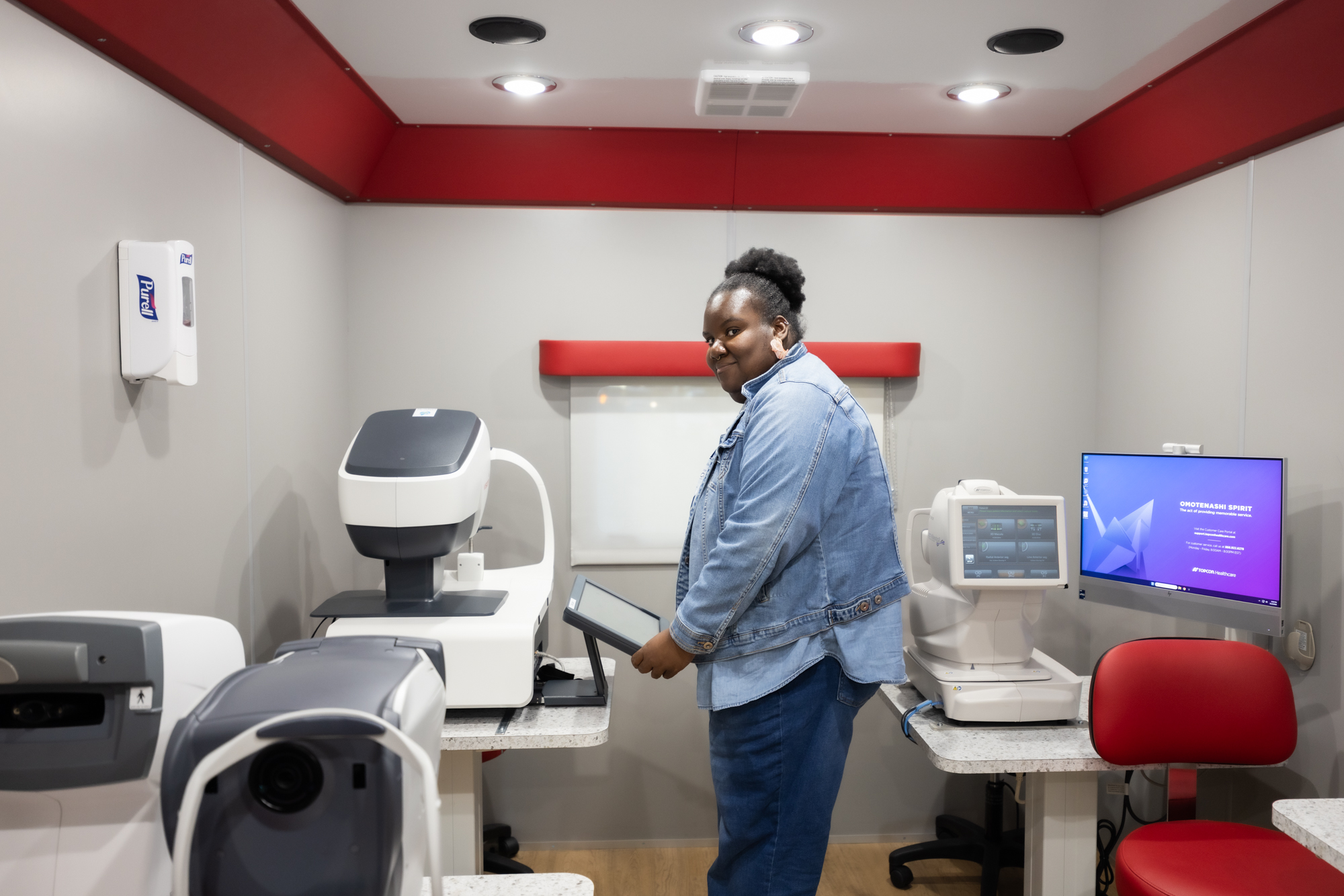
Inside Penn Medicine’s Scheie Eye Institute in MOTION van, mobile unit manager Andrea McCord removed cloth covers from several high-tech-looking machines, each of which are used by Penn student technicians and clinicians to examine patients’ eyes. These machines are more sophisticated than what people might see at a routine eye exam for glasses.
“We take intraocular pressure of the eye, and then they come over here to these two cameras, where they get some more advanced imaging, such as corneal topography, pachymetry,” McCord explained.
The testing and imaging can detect serious eye diseases like glaucoma, diabetic retinopathy, macular degeneration and cataracts.
If untreated, all these conditions can lead to blindness, and in many cases, they are linked to chronic diseases like diabetes and hypertension.
The founders and crew of the Scheie Eye Institute in MOTION, which launched in late September, now hope to increase access to eye screenings in Philadelphia by bringing services closer to where people live, boosting early detection of disease, and connecting people to treatment before they develop permanent vision loss.
“We’re trying to address this burden of eye disease by not only reaching out to patients, going where they are, providing care for the people who need it, but in addition, providing education,” said Dr. Lama Al-Aswad, an ophthalmologist, professor and the mobile program’s lead physician.
Increasing access to eye disease screening and care
Serious eye diseases like cataracts and macular degeneration affect millions of Americans, according to the National Eye Institute. About 1 in 4 people with diabetes develop diabetic retinopathy, which is when there is damage to tiny blood vessels in the retina.
In nearly half of all people globally with a visual impairment, their conditions could have been prevented or addressed early, including in cases caused by uncontrolled or poorly managed chronic diseases, according to the World Health Organization.
The new mobile unit at Penn Medicine is designed to tackle barriers and challenges that people in underserved communities face when seeking specialty services, Al-Aswad said. It can be easier for some people to get to a mobile location site closer to where they live, work or receive social services, rather than traveling to a medical office elsewhere in the city, she said. And making the screenings free for people who are uninsured or underinsured also addresses cost concerns.
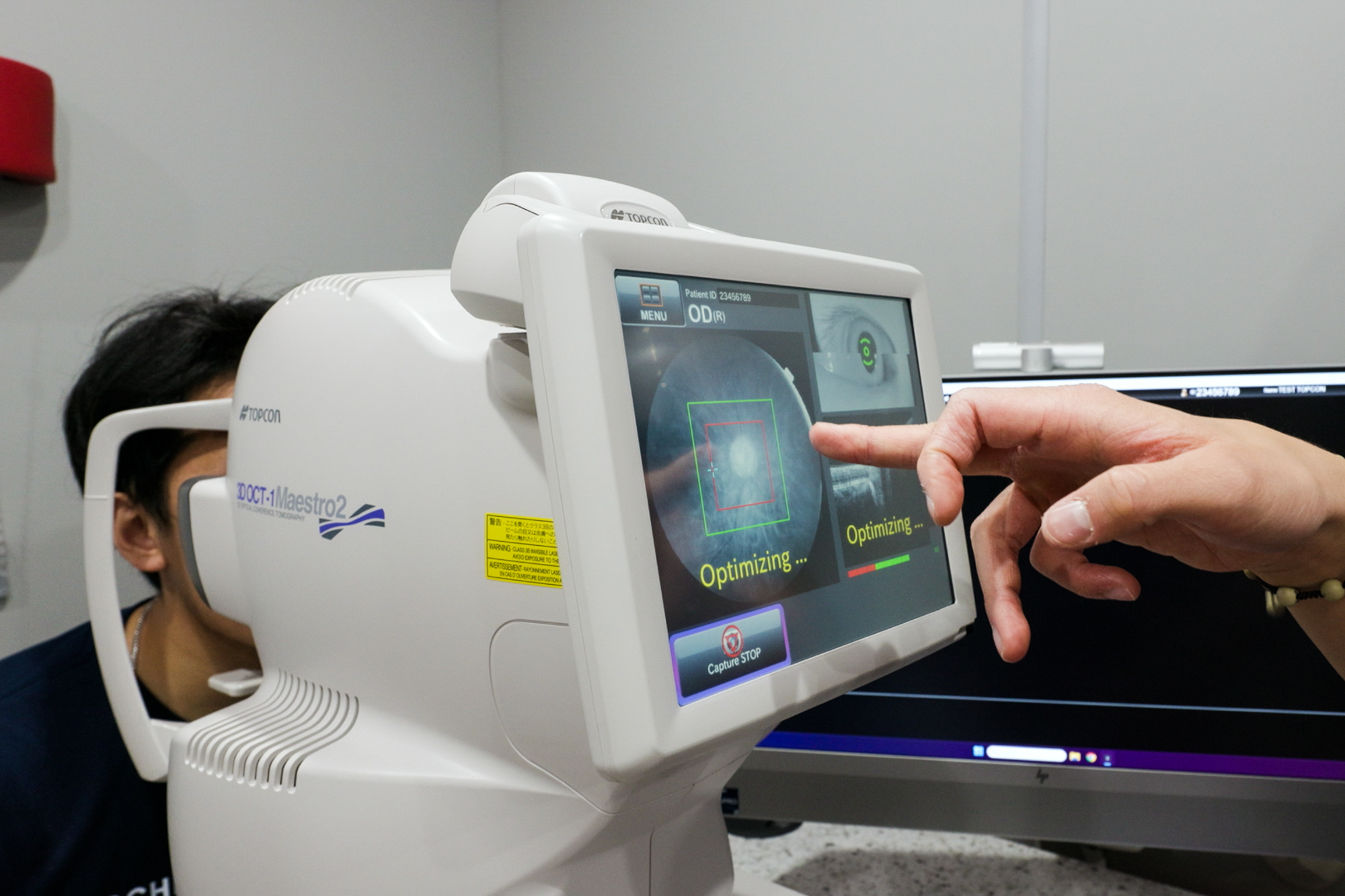
On that recent Monday night in West Philadelphia, the van was parked outside of Chosen 300 Ministries, a faith-based organization that supports people facing homelessness and food insecurity.
“There’s so many barriers,” Brian Jenkins, the organization’s founder, said of his clients. “So, when mobile units come here to the center to be able to provide access to health care to the community, it’s so worthwhile.”
Many of the people he sees are faced with tough choices on what to prioritize, including opportunities to make money and the necessities they need to spend it on, Jenkins said. Health care doesn’t always rise to the top of that list.
“When you have a choice of, ‘Do I get $10 or $12 from a side job or do I go to the doctor?’ I’m going to get $10 or $12 from the side job,” he said. “So, if the health unit comes to them, they’re more likely to be able to accept the services.”
Related Content
Philadelphia’s first mobile methadone van brings addiction treatment directly to Kensington
The program has connected more than 500 people to methadone since launch, offering support for patients who may struggle to reach traditional clinics.
2 months ago
Listen 1:41Treating eye disease alongside underlying chronic disease
At each mobile site, Penn Medicine staff check people in and, one by one, bring them into the van, where student technicians examine their eyes at the different machines.
Patients then move into a small, semi-secluded room at the front of the vehicle, where they get on a telehealth call with an ophthalmologist, who remotely analyzes the exams and eye images to make a diagnosis and formulate a treatment plan.
Diagnosing an eye disease can also lead to the discovery of a previously unknown health condition, Al-Aswad said.
“We sometimes identify diabetic retinopathy in patients who didn’t know they had diabetes,” she said. “And you need, on average, about 10 years of uncontrolled diabetes to develop diabetic retinopathy. So, that’s a testament that his whole care is not being addressed.”
In these cases, Al-Aswad said she and her colleagues work to connect people to other medical specialists within the health system to help treat these underlying chronic health conditions.
Funding donated to the institute by Rick Campbell and his family helps cover the cost of eye disease treatment for patients who lack insurance or need more assistance.
Related Content
Gateway Playhouse’s rehearsals and performances offer distracting environments for dogs learning to guide the blind.
2 months ago
Listen 1:48Expanding eye health literacy in Philadelphia
Increasing access to eye disease screening with a mobile unit is just the first step, Al-Aswad said. Making sure people complete follow-up care in order to successfully treat and manage their condition is the goal, but that’s easier said than done, she said.
“Some patients followed up, other patients didn’t follow up,” she said. “If we identify disease and nothing happens, I think that’s a waste of resources. You need to close the loop.”
Researchers found three main reasons why people don’t make it to follow-up eye care appointments, Al-Aswad said. For many, it is simply because they forget, she said. Others have cited challenges with transportation to medical offices.
The third reason, she said, is that many people don’t feel that their condition is urgent enough to seek immediate follow-up care. This speaks to a widespread lack of eye health literacy in the general population, Al-Aswad said.
Explaining to patients how eye diseases, and other chronic conditions like diabetes, gradually progress over time and why preventative treatment is critical can be difficult, she said.
“You treat the person for the promise of not getting worse in 10, 15 or 20 years,” Al-Aswad said. “In diabetes, I’m promising that if we treat you well for diabetes, you’re not going to have cardiac disease, you’re not going to have neuropathy, you’re not going to have amputations. These are distant concepts to patients that sometimes they don’t grasp.”
Eye health literacy is a core component of the new mobile screening van. Students and public health managers have more time to walk people through the tests and explain the short- and long-term consequences of their visual impairments.
“We can sit with you from 30 to 45 minutes and then give you more in-depth information about what is happening,” McCord said.
The mobile team at Scheie Eye Institute in MOTION hopes to bring the van into neighborhoods throughout Philadelphia and gradually increase the number of people they can screen on the unit.
They plan to do this by implementing artificial intelligence programs that can quickly and accurately detect eye diseases based on patient data and imaging, and support doctors as they identify treatment options.
This story is part of a series on managing chronic diseases supported by The National Institute for Health Care Management (NIHCM) Foundation.
WHYY News produces independent, fact-based news content for audiences in Greater Philadelphia, Delaware and South Jersey.

Get daily updates from WHYY News!
WHYY is your source for fact-based, in-depth journalism and information. As a nonprofit organization, we rely on financial support from readers like you. Please give today.
Women in the study who were obese and taking GLP-1 weight loss medications were 30% less likely to develop breast cancer than other women.
5 months ago
Listen 1:23
Penn PCOS Center to undergo name change in effort to improve care
The name change, which was 10 years in the making, reflects growing research showing that the effects of PCOS go far beyond reproductive health.
6 months ago
Listen 1:00
Dennis Massimo’s genetic diagnosis and cancer treatment plan was coordinated at the new King Center for Lynch Syndrome at Penn Medicine.
9 months ago
Listen 1:44