Philadelphia’s first mobile methadone van brings addiction treatment directly to Kensington
The program has connected more than 500 people to methadone since launch, offering support for patients who may struggle to reach traditional clinics.
Listen 1:41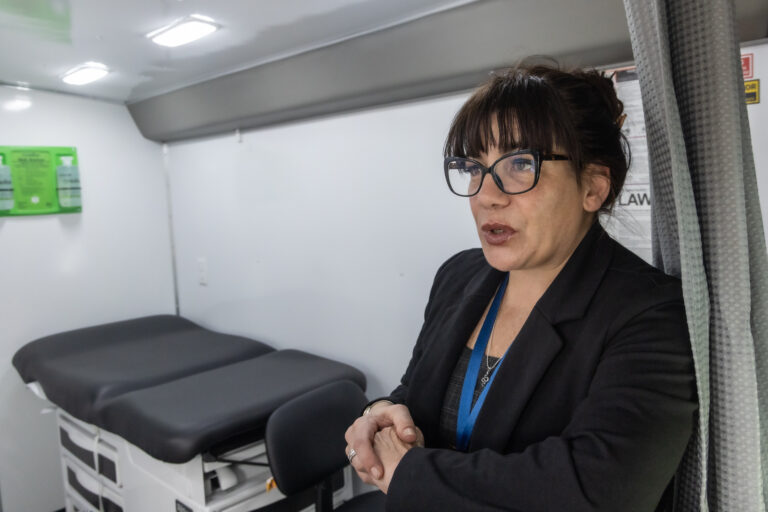
Cristina Marino, program director of Merakey’s Mobile Methadone Program, explains the flow of patients at the ceremonial ribbon cutting of their van on Sept. 25, 2026. (Kimberly Paynter/WHYY)
From Philly and the Pa. suburbs to South Jersey and Delaware, what would you like WHYY News to cover? Let us know!
Philadelphia leaders and addiction treatment providers hope that a new clinic on wheels will expand access to medication for opioid use disorder among the city’s most vulnerable residents.
The city’s first mobile methadone van is stationed at an outdoor location in Kensington and operated by Merakey. People can walk up and get a health exam, a consultation for addiction treatment and their first dose of methadone in less than an hour.
The goal is to stabilize people by offering a low-barrier form of treatment while addressing their other needs, including housing, food and wound care, before transitioning them into long-term outpatient counseling and treatment programs.
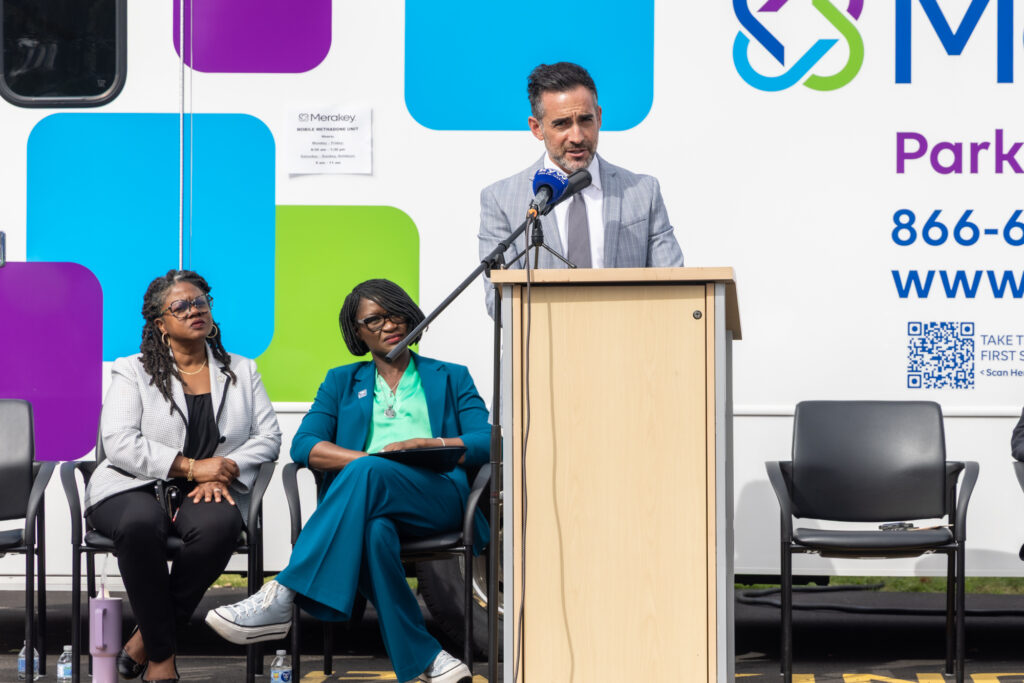
“Treatment is not a one-size-fits-all,” Josh Vigderman, senior executive director for substance use disorder services at Merakey, said Friday at an unveiling event. “This program allows us to provide more personalized care, respond to the needs of the community and connect people to the services they so desperately need and deserve.”
Methadone is one type of medication for opioid use disorder, and it’s the most tightly regulated because of its status as a Schedule II controlled substance under the U.S. Drug Enforcement Administration, which means it can potentially be abused.
The liquid medication is traditionally offered at licensed narcotic treatment programs at brick-and-mortar clinics, where patients may have to travel daily to get a single dose.
But in 2021, the DEA expanded federal rules to allow treatment providers to dispense methadone from mobile vans at remote locations. The Merakey program in Philadelphia is among the first in Pennsylvania to do so.
Two other mobile treatment programs licensed to dispense methadone serve Allegheny County and a group of six rural counties in Central Pennsylvania, respectively.
“This is an important step forward, not only for Pennsylvania, but for the entire treatment system,” said Latika Davis-Jones, secretary of the state Department of Drug and Alcohol Programs. “By expanding mobile treatment, we are reducing barriers, bringing care closer to people and helping to position Pennsylvania as a leader in this innovative approach to delivery substance use disorder services.”
Methadone treatment at a mobile van in Kensington
Merakey’s white recreational vehicle sits in the parking lot of the Kensington Wellness Support Center. It’s a short walk from SEPTA’s Huntingdon station on the Market-Frankford line and several bus stops.
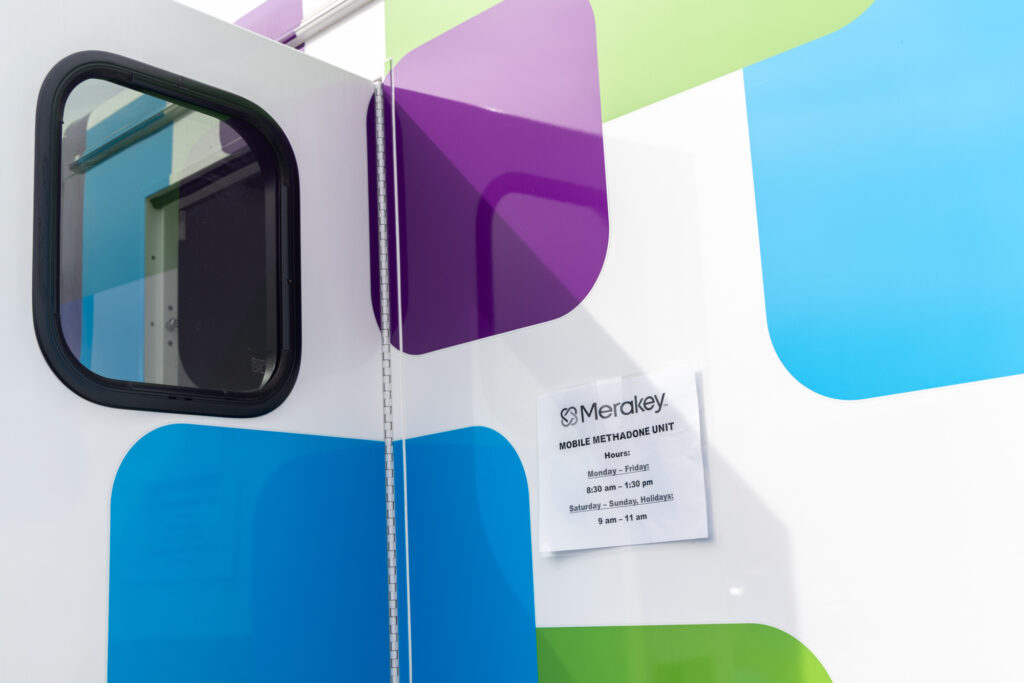
“Most of our patients, a large majority, are walkups,” said Cristina Marino, Merakey’s program director.
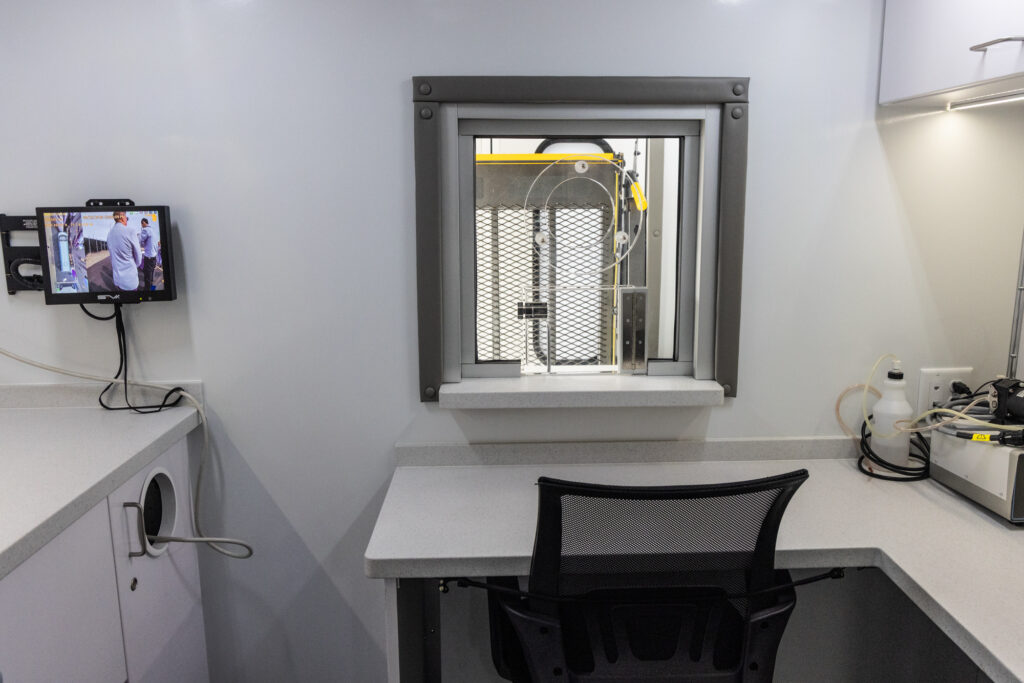
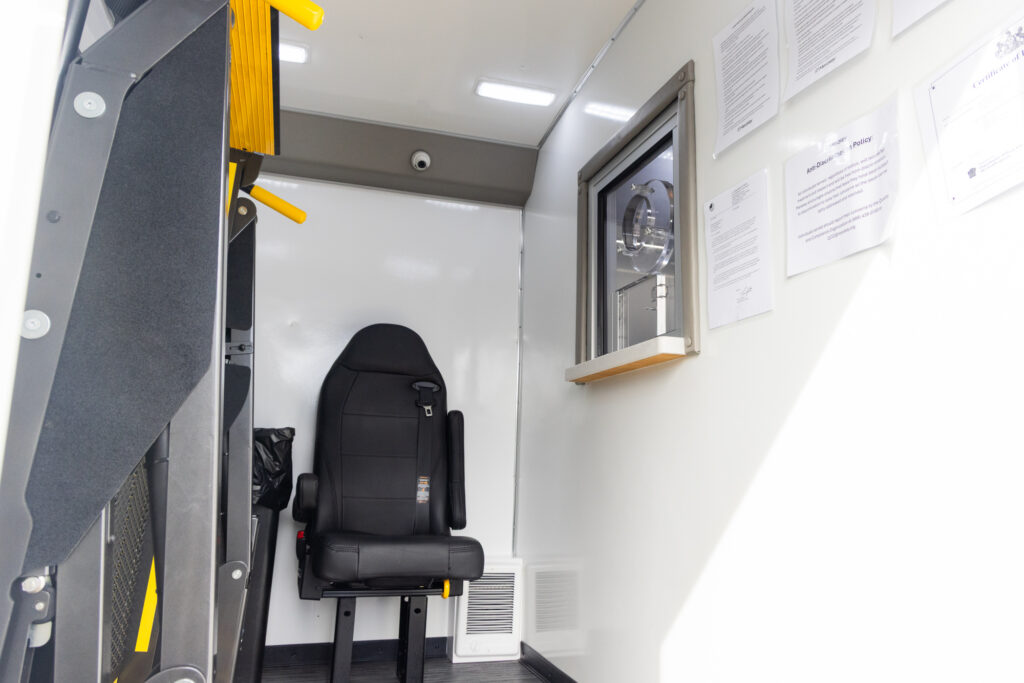
The front area of the van has been converted into a miniature doctor’s office, with an exam table and some medical and harm-reduction supplies. This is where a doctor can evaluate someone’s health care needs and set them up with methadone.
A patient can then go to the back of the van to the dispensing room, where a nurse will measure out the liquid methadone and give them their first dose through a partitioned window.
Related Content
Pennsylvanians buying 2027 health insurance on Pennie will face 16% average premium increase
Loss of pandemic-era tax credits and high use of medical care are driving up costs on Pennie, the state’s Affordable Care Act marketplace, insurance officials say.
2 weeks ago
Listen 1:03The exams and treatment intake process is thorough but done as quickly as possible, Marino said, because people with opioid use disorder can go into withdrawal rapidly.
It addresses one of the most common challenges people in active addiction have when seeking treatment at brick-and-mortar clinics, which can be located far away from the local street drug supply and have long wait times.
This can trigger painful withdrawal symptoms, especially in people who are frequently using street drugs containing fentanyl, a highly potent synthetic opioid, and medetomidine, a powerful veterinary sedative.
“And it depends on the patient, but a lot of them are sick,” Marino said. “So, we’re getting them on the methadone quickly. We’re not having them sit for hours and things that a lot of people will associate with methadone intake.”
Meanwhile, a team of clinicians, counselors and peer recovery support specialists are working to address a person’s other concerns and needs.
“We’re meeting their housing needs, their hygiene needs, finding them shelters, some light wound care, things like that,” she said.
After about a two-week period of someone coming to the mobile methadone van in Kensington, Merakey staff work to transition people to long-term outpatient programs and brick-and-mortar methadone clinics, but only when they’re ready, Marino said.
“If a person is medicating consistently, their head starts to clear a little, right? And they start to use [street drugs] less. It’s just what naturally starts to happen. They’re getting here a little quicker, more regularly,” she said. “Getting them to the point where they can leave the area for longer periods. Typically, we’re not transferring somebody till we see those types of changes.”
Methadone isn’t for everyone, Marino said. But she’s seen it help many people move away from street drugs and enter addiction recovery. The mobile van just provides an easier way for more people to get that opportunity.
“I think this pathway is super important for high-risk patients when they’re not ready to be overwhelmed with treatment or therapy,” she said. “And when we’re transitioning them later, we’re putting them in an environment that they’re more prepared for.”
Early success with mobile methadone delivery
Startup funding for the mobile methadone van came from Philadelphia’s share of settlement money from national lawsuits against drug distributors and manufacturers accused of fueling the opioid addiction epidemic.
Merakey soft-launched the van at the Kensington Wellness Support Center location in October 2025. Between then and this past August, the mobile program has connected 567 people to methadone medication, program leaders said. About 90% of mobile patients were homeless at the time of treatment, they added.
While the van is currently located in Kensington to meet a high demand for services there, Vigderman said the unit is intended to serve the whole city and may add other locations in the future.
A mobile treatment delivery method for methadone was a long time coming in Philadelphia, he said, and greatly needed in a city where hundreds of people continue to die from drug overdoses every year.
“What we’re also excited to show is how we envision ourselves continuing to grow. I think that what we’ve been able to do is really just the beginning,” he said. “I really believe that these mobile services we do are necessary in the continuum of Philadelphia’s treatment system as you look at addressing opioid addiction and the epidemic.”

Get daily updates from WHYY News!
WHYY is your source for fact-based, in-depth journalism and information. As a nonprofit organization, we rely on financial support from readers like you. Please give today.
Drug-related seizures in Philadelphia ERs doubled in recent years, city data show
Hospital workers and public health officials say new combinations of street drugs, traumatic brain injuries and other health issues could be driving the uptick in seizures.
12 months ago
Listen 1:09
OTC Narcan hits Philly store shelves — but with early cost and access barriers
Narcan is a well-known brand of naloxone, a medication that can reverse drug overdoses if someone has taken opioid pills, heroin, or fentanyl.
3 years ago
Listen 3:43
Many new first-year Penn Medicine students had never administered or carried Narcan nasal spray before attending the school’s third consecutive naloxone “boot camp.”
3 years ago