

As utility rates continue to rise in Pa., a coalition is pushing for renewables to rein in costs
About 1 in 4 Pennsylvania families report difficulty paying their energy costs. One in 20 are carrying an average of $1,200 in utility debt.
Listen 1:13
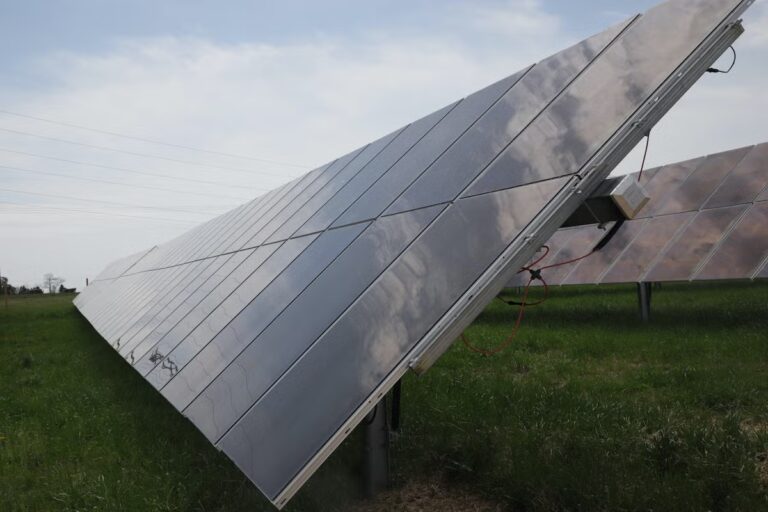
File - The Adams Solar Farm near Gettysburg, Pa. (Courtesy of Energix Renewables)
This story is part of the WHYY News Climate Desk, bringing you news and solutions for our changing region.
From the Poconos to the Jersey Shore to the mouth of the Delaware Bay, what do you want to know about climate change? What would you like us to cover? Get in touch.
A coalition of consumer and environmental advocacy groups is launching a “six-figure” digital ad campaign in Pennsylvania ahead of the 2026 gubernatorial race to focus attention on reforming the utility ratemaking process and to promote clean energy.
“Over the last 18 months, the Pennsylvania Public Utility Commission has approved over $1.2 billion in distribution rate increases for gas and electric utilities, which has added between two and 10% to residential distribution costs across the state,” said Elizabeth Marx, executive director of the Pennsylvania Utility Law Project.
Marx spoke at a press conference announcing the “Building a Brighter PA” campaign, which in addition to the Utility Law Project, includes the League of Conservation Voters PA and the Ohio River Valley Institute, among others.
Utility bills are divided between distribution rates, which cover the costs of transporting the electricity to the consumer, and supply costs that cover the amount of energy consumed. The Utility Law Project participates in rate-making cases and provides legal assistance to those struggling to pay their bills. Marx said in addition to distribution costs, supply costs have risen between 18% and 52% in the past year and a half, depending on where a ratepayer lives in Pennsylvania.
“And the combined impact is severe, with roughly 1 in 4 Pennsylvania families reporting difficulty paying their energy costs,” Marx said. “One in 20 are carrying substantial utility debt, with average balances exceeding $1,200, much higher than the national average.”
In 2025, involuntary shutoffs jumped 27% compared to 2022, amounting to more than 387,000 households losing access to electricity or gas.
“And the consequences of these energy insecurity impacts are rippling through our entire communities,” Marx said. “They’re triggering housing insecurity, family separation, negative health consequences and higher health costs.”
Related Content
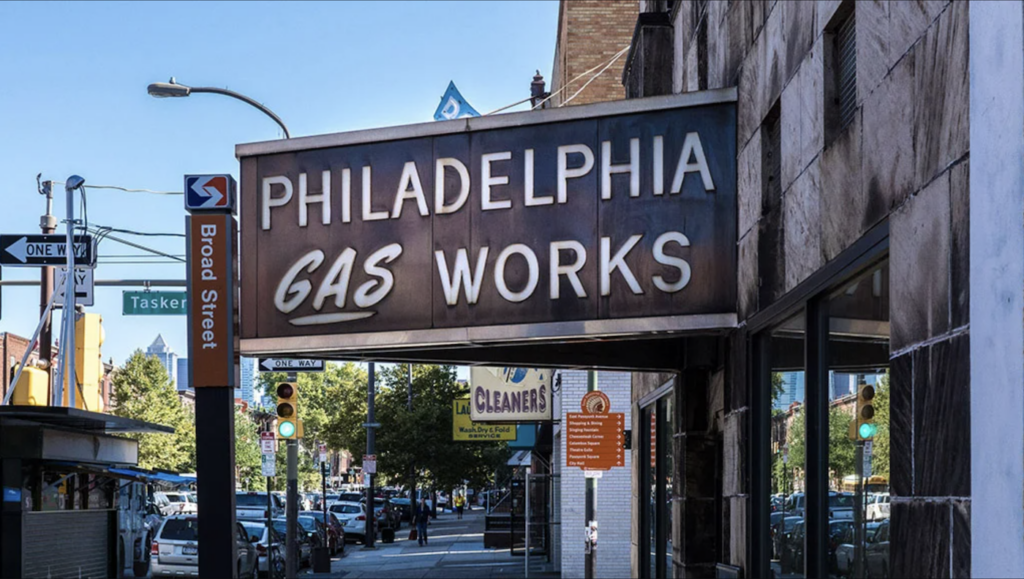
PGW agreed to hold public meetings on reducing its carbon footprint. At the first meeting, there were lots of questions from the public but no answers from the utility.
4 months ago
Listen 1:23One reason for rising rates is the increased demand from data centers, which are rushing to keep up with the expansion of artificial intelligence. That squeeze between supply and demand for electricity has increased costs for ratepayers. Critics have pointed to a backlog of new clean energy projects that are slow to come online. PJM Interconnection, operator of the largest grid in the nation that covers Pennsylvania, New Jersey and Delaware, has said it has instituted reforms to unclog the queue.
PJM officials last week said data center demand continues to push up electricity prices in the region. The grid operator conducted an auction to secure electricity supply for 2028 to 2029, which it said resulted in a shortfall and would put ratepayers on the hook for an additional $16.4 billion dollars in electricity costs.
“These auction results show that demand for electricity continues to grow faster than electricity supply,” said David Mills, PJM president and CEO, in a statement. “At the same time, PJM recognizes how this supply-and-demand imbalance impacts the reliability of the system and costs for consumers. We are working with government and industry leaders on multiple fronts to restore that balance by bringing on new generation as fast as possible and managing the growth of new load on the grid.”
The increase in energy supply for this recent auction was less than 1% and the bulk of the new generation will come from natural gas.
The coalition said it wants to see reforms at the Public Utility Commission and at PJM Interconnection. The groups support House Bill 1834, introduced by state Rep. Robert Matzie, D-Beaver, which would require data centers to provide their own energy and mandate a portion be from new clean energy sources.
“We want to remove barriers to clean energy generation,” said Katie Blume, legislative director of Conservation Voters of PA, which is spearheading the campaign. “We want to have people be able to adopt low-cost energy technologies, whether that is battery storage, solar, wind, geothermal. These are increasingly the cheapest sources of new power.”
Despite the loss of federal subsidies, a recent report from the investment bank Lazard found that utility scale solar and onshore wind remain cheaper than fossil fuel generation.
In addition to costs, Blume is optimistic that advances in technology will allow energy-hungry data centers to use solar, wind or geothermal.
“It might not be 100% of what data centers ultimately use, but we can get a significant amount of renewable energy there and get data centers or other large load users to use renewable energy, and we can keep increasing that,” she said.
Blume said the goal is to have Pennsylvania reach a target of 35% clean energy by 2035, while also creating jobs and economic development.
“It really is an affordability-first agenda,” Blume said.
The key to that, said Marx, is reforming how the Pennsylvania Public Utility Commission regulates utilities.
Related Content
What you can do about your rising electric bills in Pennsylvania
The National Consumer Law center said that about a quarter of all U.S. households sacrificed food and medicine to pay for their energy bills in 2024.
6 months ago
Listen 6:08Marx pointed to a bill that recently passed the state House that would rein in utility profits. House Bill 2224, introduced by state Rep. Elizabeth Fiedler, D-Philadelphia and state Rep. Danilo Burgos, D-Philadelphia, would amend the state’s Public Utility Code by establishing a cap on investor-owned utilities’ return on equity. In addition to data centers, another reason bills have risen is the approval of increased rates by the PUC, which has drawn a backlash due to soaring profits. In the past seven years, utilities’ returns on equity have reached double-digit figures of 10% to 15%, according to the PUC.
Marx said the coalition would push for regulatory reforms that would protect ordinary ratepayers from covering the costs of new data center infrastructure, billing reforms to prevent customers from falling behind and expansion of weatherization and energy efficiency programs.
“So we do know the solutions, but what we need now is political will to finish the job,” Marx said.

Never miss a moment with the WHYY Listen App!


WHYY is your source for fact-based, in-depth journalism and information. As a nonprofit organization, we rely on financial support from readers like you. Please give today.
Part of the series
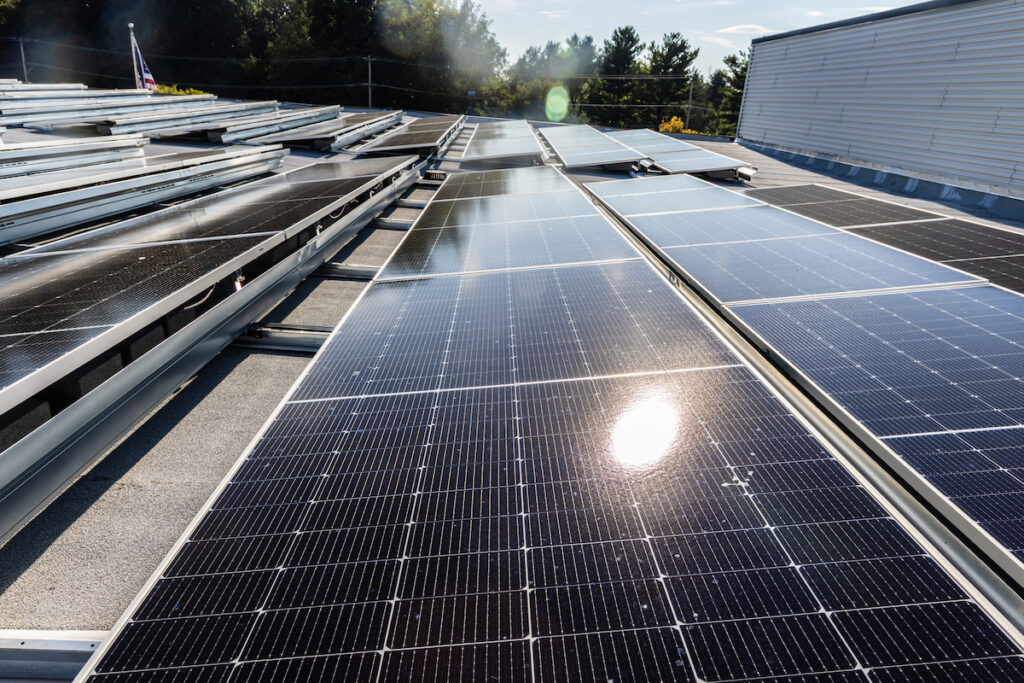
Philadelphia-area schools are tapping the sun’s energy and saving money on utilities
Unionville High School in Kennett Square and Universal Audenried Charter School in Philadelphia are building solar arrays that will slash their energy bills.
6 days ago
Listen 1:04
Data center growth could mean blackouts in coming years, Pa. utility regulators say
A report predicts electricity demand on the regional grid will nearly double by 2040, due almost entirely to data centers.
2 weeks ago
Listen 1:08
Delaware at-home solar initiative aims to reduce energy bills while reducing emissions
The plan aims to expand access to grants and rebates that help people install solar at home.
4 weeks ago