
Delaware lawmakers advance measure to protect state’s wetlands
After several failed attempts to protect nontidal wetlands, Delaware lawmakers have introduced legislation that developers say they can get behind.
Listen 1:19
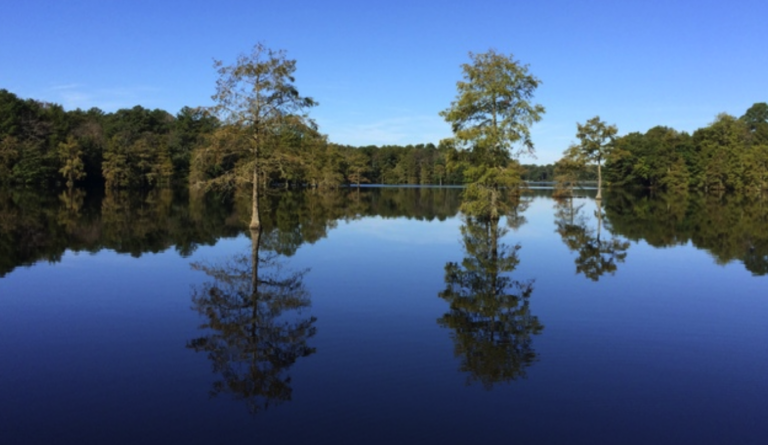
Nontidal wetlands in Delaware. (Courtesy of DNREC)
This story is part of the WHYY News Climate Desk, bringing you news and solutions for our changing region.
From the Poconos to the Jersey Shore to the mouth of the Delaware Bay, what do you want to know about climate change? What would you like us to cover? Get in touch.
Delaware lawmakers have advanced legislation that aims to protect nontidal wetlands, also referred to as freshwater wetlands, in the state.
The move, more than three decades in the making, comes after President Donald Trump’s administration last year proposed to rescind Clean Water Act protections for certain waterways in favor of landowner rights.
The legislation, sponsored by state Sen. Stephanie Hansen, D-Middletown, would create a tiered permitting system for development based on how critical a nontidal wetland is.
Members of the General Assembly’s Environment, Energy & Transportation committee on Wednesday unanimously advanced the measure. The legislation, which has bipartisan support, now awaits a vote in the Senate.
There have been six failed legislative attempts to protect nontidal wetlands in Delaware since the late ‘80s. The latest move, previously met with skepticism from developers and farmers, now has support from both environmentalists and landowners.
“This is the first step to completing a journey that was started back in 1988, that has been tried many times and has never succeeded. But we are going to succeed this time,” Hansen said.
Hansen introduced similar legislation in 2024, after a U.S. Supreme Court decision in 2023 removed federal protections for wetlands that are either seasonal or aren’t connected to streams, lakes, rivers and oceans.
The U.S. Environmental Protection Agency has since proposed changes to the definition of “waters of the United States,” or WOTUS, which would codify the Supreme Court decision.
The move was a blow to Delaware, where more than half of wetlands are nontidal, meaning freshwater is found inland. Located near inland areas without tidal influxes of saltwater, nontidal wetlands can be found in several forms, like depressions, rivers and swamps.
Related Content
Delaware proposes plan to eliminate carbon emissions by 2050
Delaware environmental regulators are calling for increased access to electric vehicles, and the protection of natural resources.
9 months ago
Listen 1:12Builders, developers and farming organizations said the federal decision would alleviate permitting and construction delays, and make the definition of WOTUS more clear and predictable.
However, environmentalists argued it would impact critical habitats that endangered species rely on, and increase the risk of flooding in areas like coastal Delaware, which are vulnerable to sea level rise and storms worsened by climate change.
Hansen’s original effort to protect nontidal wetlands hit pushback from farmers who feared the bill would prevent them from draining their fields, and developers who voiced concerns that the permitting process would be unfair and bureaucratic.
Hansen has since led stakeholder meetings with environmentalists, farmers and developers to help amend and reintroduce the legislation. The Democrat said she believes the latest bill balances environmental protections with landowner rights.
“There is something to hate in this bill for everyone, but there is also a common understanding that this is an important thing that we are doing together and it’s a necessary important thing that we’re doing together,” Hansen said during the legislative committee hearing.
The bill would provide certain permit exemptions, including for farming activities that have been ongoing for the past 10 years, federal and state conservation practices and the construction of drain ditches.
Wetlands that are equal to or less than one contiguous half acre, and aren’t “unique” or “high functioning,” would also be exempt under certain conditions.
Delaware is the only state in the Mid-Atlantic region without a state-level nontidal wetland regulatory program. While the state protects saltwater wetlands, as well as freshwater wetlands that are larger than 400 acres, it has relied on federal regulations to manage freshwater wetlands of fewer acreage.
Environmentalists in Delaware stressed the importance of protecting nontidal wetlands as federal regulations declined over the past 20 years. Between 2007 and 2017, Delaware lost 3,011 acres of wetlands, most of which were nontidal.
These ecosystems provide homes for rare and endangered frogs, salamanders, plants and birds. Often called “nature’s kidneys,” they also help to filter water and mitigate against flooding.
Christophe Tulou, executive director at the Center for the Inland Bays, said Hansen’s legislation could save the state time and money on infrastructure to mitigate the impacts of flooding.
“Like a sponge wiping up the mess on our kitchen counter, wetlands soak up excess water after storms, thus helping prevent flooding,” he said. “They also pick up the sediment and pollutants that the rainfall might otherwise carry into our ditches, streams, rivers, ponds and bays.”
Developers who opposed Hansen’s previous legislation now say they support the measure. During Wednesday’s committee hearing, Michael Riemann of the Homebuilders Association of Delaware said the bill avoids bureaucratic “one-size-fits-all” permitting practices, sets enforceable timelines and is inclusive of all stakeholders.
“We are generally skeptical of adding new layers of regulation, particularly around wetlands. That’s been our position for decades,” he said. “This bill is much more than just creating a new freshwater wetland program. Yes, it does that. And yes, there’s some skepticism around that. But it also addresses real problems around permitting that our members deal with every single day.”
Though the Delaware Farm Bureau has not affirmed its support for the bill, the organization said it’s happy that farmers’ rights were considered during the drafting of the legislation.
“Recognizing existing farming and conservation practices, and providing clear exemptions for ongoing agricultural activities, is essential for maintaining operational certainty and ensuring that working lands continue to function properly,” said Sydnie Grossnickle, the organization’s government affairs coordinator.

Get daily updates from WHYY News!
WHYY is your source for fact-based, in-depth journalism and information. As a nonprofit organization, we rely on financial support from readers like you. Please give today.
Part of the series
Watershed
Preserving Our Water: How we use our Delaware Watershed.
The project is funded by The William Penn Foundation.
Part of the series
Delaware bans toxic firefighting foam used for fuel fires
The firefighting foam used to extinguish fuel fires has contaminated drinking water supplies nationwide.
2 days ago
Listen 1:18
EPA announces rollback of climate pollution rules for power plants
The announcement is the latest in a back-and-forth between Democratic and Republican administrations over whether or not to limit power plants’ greenhouse gas pollution.
4 weeks ago
3 decades in the making, Delaware lawmakers pass measure to protect state’s wetlands
The legislation will create a tiered permitting system for development based on how critical a nontidal wetland is.
3 months ago