
Philadelphia doctors and construction workers target childhood asthma triggers with free home repair program
CHOP and Rebuilding Together Philadelphia work to remove mold, dust, pests and air quality issues that can trigger asthma attacks in kids.
Listen 4:49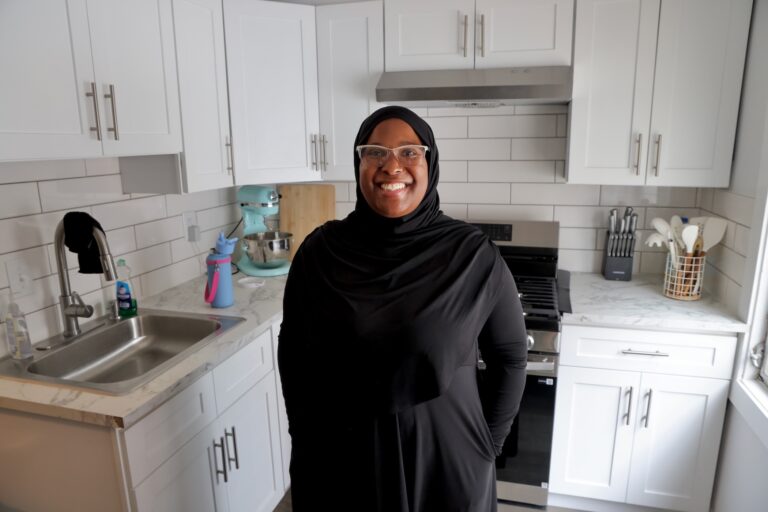
Tanesha Oglesby is pleased to have a new kitchen free of asthma triggers that were affecting her daughter's health. (Emma Lee/WHYY)
From Philly and the Pa. suburbs to South Jersey and Delaware, what would you like WHYY News to cover? Let us know!
Tanesha Oglesby lives in a red brick twin home on Master Street in the Carroll Park section of West Philadelphia, with a gray awning shading the front porch. Much of the housing stock in the neighborhood dates back to the early 1900s.
The three-story home has been in the family for several generations, a place where children were raised, birthdays were celebrated and loved ones were cared for.
But over time, wear and tear on the home led to serious issues: leaks in the roof, mold in the walls, warped floors, a gas leak on the property and poor humidity control and air ventilation.
Repairs were needed and overdue, Oglesby said, but finding trustworthy contractors to carry out the work at a price she could afford was intensely challenging. That was on top of trying to figure out which issues to prioritize first and what to budget for.
“I’ll wake up and think, ‘Hey, we’re gonna renovate this,’ and then something else breaks and I’m like, ‘OK, we have to fix that. The house is deciding for me,’” she said. “It’s often a big factor with a house this old trying to do things the right way.”
All of that came to a head about three years ago, Oglesby said, when her young daughter began experiencing breathing complications related to asthma.
The home repair issues are major environmental triggers for asthma attacks and complications, along with old carpeting, pests and pet dander.
“All of a sudden, she had a very bad episode,” Oglesby said. “They pretty much diagnosed her after three back-to-back hospital stays.”
That’s when her family was referred to the Children’s Hospital of Philadelphia’s Community Asthma Prevention Program, or CAPP, which offers prevention education and other resources to help children and their families manage the condition.
The program’s home repair initiative partners with Rebuilding Together Philadelphia. Health providers, community outreach workers and construction workers team up to identify and remove home asthma triggers at no cost to families.
The goal is to improve long-term health outcomes for kids by reducing the cost burden and other barriers to asthma prevention and care, said Dr. Tyra Bryant-Stephens, CHOP pediatrician and founder of CAPP.
“I was seeing these patients and giving them the right treatment course according to national guidelines,” she said. “But that’s just not enough. We really do have to address the environment and social factors that interfere with the management of asthma.”
Constant exposure to triggers at home, in addition to Philadelphia’s poor air quality, can lead to repeated hospital visits, chronic inflammation, lung damage and make the condition much harder to manage.
Related Content
One study found that 4 in 10 women who had postpartum hemorrhages after delivery were considered low risk when admitted.
3 months ago
Listen 1:36How older homes and costly repairs can prolong asthma triggers
Nearly 7% of children in the United States have asthma, according to the Centers for Disease Control and Prevention. The rate in Philadelphia is triple the national figure — about 21% of city kids have the chronic lung disease.
Philadelphia also has one of the nation’s oldest housing stocks as well as a high poverty rate. These factors help explain why so many families struggle to address conditions that could be exacerbating their children’s asthma at home, said Stefanie Seldin, president and CEO at Rebuilding Together Philadelphia.
“We run into homes without complete plumbing, without heat, without a safe electrical supply,” she said. “So, you have that combination and that leads to a lot of folks living in severely unhealthy conditions.”
The CAPP+ Home Repairs program launched in 2017 and has since completed about 250 asthma-related jobs across the city.
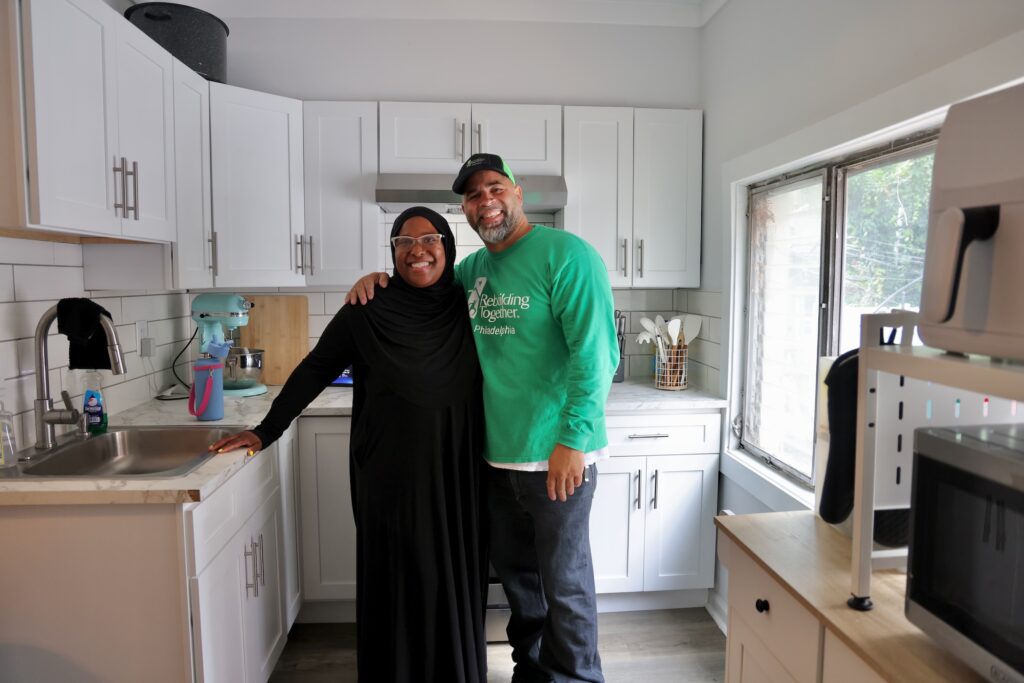
Hector Espinosa, program manager at Rebuilding Together Philadelphia, identified several obvious asthma triggers during an initial inspection at the Oglesby home, especially in the daughter’s bedroom.
“There was a roof leak, mold in a closet, mold in the ceiling,” Espinosa said. “We were able to pull all that down, remediate the mold and then rebuild it for her. Now, her room is safe and sound, there’s a new light fixture, all that good stuff.”
Since the family also spends a lot of time in the living room, dining area and kitchen, Espinosa and his team looked at triggers there next. Warped subflooring, dry rot in the walls, deteriorating cabinetry and a gas leak made the kitchen hazardous for anyone, but especially those with asthma.
“We ripped the whole thing out,” he said.
Meanwhile, CHOP paid for Oglesby and her family to stay elsewhere while the construction crew did repairs. They came back to a brand new kitchen within days. The transformation has enabled the family to make better use of the space, Oglesby said.
The home repairs have been especially beneficial for her daughter, she said, who is enjoying her upgraded bedroom.
“Since then, she hasn’t had any hospital stays,” Oglesby said. “That’s a success story for me.”
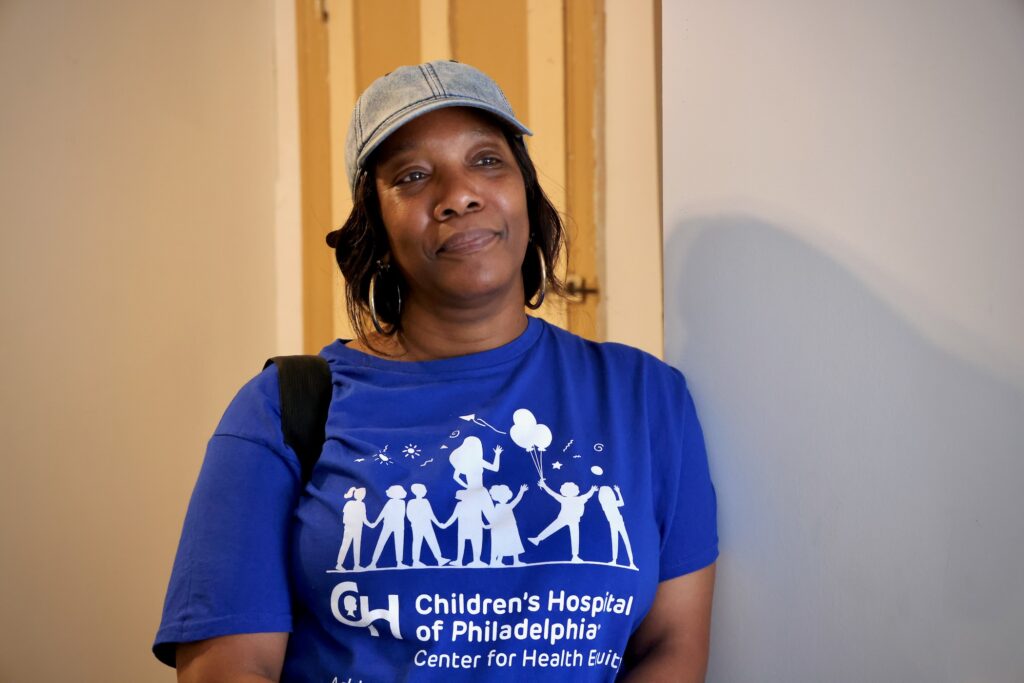
Sustaining asthma prevention and remediation in Philly
Despite the program’s success, Robin Williams, a home visitor and asthma educator at CHOP, said she meets families who still don’t know about it.
“So, it’s a lot of reaching out to the community just to tell them who we are,” she said. “And hopefully, we can reach everybody.”
But as awareness increases, demand for repair services has grown. A waitlist to get asthma remediation services has over 600 families and patients, said program leaders.
“Unfortunately, we are never going to run out of patients,” Seldin said. “So, of course, we want to continue this effort.”
The program, unique in its proliferation throughout the city, is mostly funded by CHOP and philanthropic donations. Ideally, Bryant-Stephens said there’d be more public investment in programs that tackle chronic diseases like asthma and have proven outcomes.
“Children are sleeping through the night. We hear all the time that they’re not using their rescue medicine as much,” she said of the program’s successes. “To be able to see these benefits … has been really gratifying and really supports our notion that this is important work that needs to be done.”

Get daily updates from WHYY News!
WHYY is your source for fact-based, in-depth journalism and information. As a nonprofit organization, we rely on financial support from readers like you. Please give today.
Children’s Hospital of Philadelphia has partnered with Soar Autism Center to open new early-intervention sites for kids 6 and younger.
9 months ago
Listen 0:59
3 Pennsylvania cities ranked among worst places to live for people with asthma
The 2025 U.S. Asthma Capitals report identifies cities with high rates of asthma-related emergency room visits and deaths.
1 year ago
Listen 1:12
A Philly father sets out to create a support network for other fathers raising children with autism
The 2nd annual Children’s Hospital of Philadelphia Autism Fathers Conference will be held April 5 at the Vanguard School in Malvern.
2 years ago
Listen 1:49