

Pennsylvania Republicans join bipartisan push for national anti-gerrymandering rules
U.S. Reps. Brian Fitzpatrick and Ryan Mackenzie, who face close reelection races, spoke out against the recent battle over midterm redistricting.
Listen 1:11
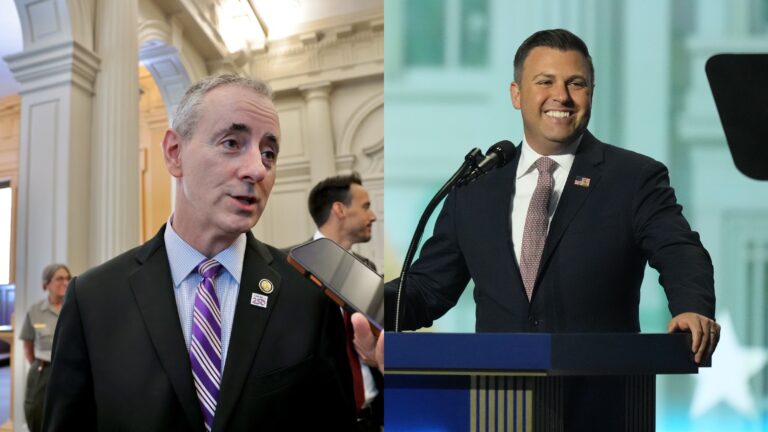
File: U.S. Rep. Brian Fitzpatrick, R-Pa., and U.S. Rep. Ryan Mackenzie, R-Pa. (Emma Lee/WHYY/AP Photo/Alex Brandon)
From Philly and the Pa. suburbs to South Jersey and Delaware, what would you like WHYY News to cover? Let us know!
Republican Pennsylvania Reps. Brian Fitzpatrick and Ryan Mackenzie joined members of the House Problem Solvers Caucus in Washington, D.C., on Wednesday to announce four bills intended to implement a redistricting framework the caucus released in July.
The bipartisan group is proposing national standards for drawing congressional districts, including a prohibition on most mid-decade redistricting, and a requirement that states reduce partisan influence over the mapmaking process.
Supporters contend partisan gerrymandering has created an overwhelming number of safe congressional seats, leaving representatives more vulnerable to primary challenges than to defeat in general elections. That structure, they said, rewards partisan appeals and gives lawmakers less incentive to work across party lines.
Fitzpatrick, who co-chairs the caucus with U.S. Rep. Tom Suozzi, D-N.Y., told reporters gerrymandering lowers voter turnout and breeds extremism.
“The kryptonite for extremism is high voter turnout,” he said, standing in front of the Capitol building. “How do we have high voter turnout? Make more elections competitive. Don’t give voters a Hobson’s choice in the greatest country in the world where they’re voting for the lesser of two evils in a general election. They should be voting for the better of two great options.”
The package of bills would generally prohibit states from redrawing congressional districts between the once-a-decade censuses, establish nationwide requirements that districts be contiguous, reasonably compact and respectful of communities and political boundaries, and bar maps designed to benefit a political party or protect incumbents. It would also encourage states to reduce partisan control through independent commissions or other neutral mapmaking methods and create an expedited federal court process for resolving congressional redistricting disputes under uniform national standards.
Related Content

Pa. election 2026: Voter guides, key races and more
Election Day is Tuesday, Nov. 3. Here’s what you should know beforehand, from voter deadlines to who’s on the ballot in Philadelphia and statewide.
2 months ago
A déjà vu battle over districts
A partisan battle over congressional districts developed last year. In August, Texas’ Republican Gov. Greg Abbott, following pressure from President Donald Trump, approved a new map designed to give his party an opportunity to gain five House seats. Other Republican-led states — including Alabama, Florida, Louisiana, North Carolina, Ohio, Tennessee and Utah — have followed suit.
That led to states led by Democrats to retaliate, including California, New York and Virginia, though New York and Virginia’s efforts were quashed by courts.
At the press conference, Mackenzie, who is still in his first term, said that “pragmatic solutions” such as the anti-gerrymandering proposal require bipartisanship.
“The American people deserve confidence that our elections are conducted on an even playing field and the congressional districts are drawn to represent communities, not to benefit individuals and their parties,” he said.
He also cited an instance when Pennsylvania congressional district maps drawn by a Republican-led legislature in 2011 were challenged and the state Supreme Court annulled them in 2018.
Mackenzie accused the state Supreme Court of “stepping in midterm,” saying they “unilaterally redrew maps and it threw our elections and the electoral process for voters, candidates and others into total chaos.”
Although the state was nearly evenly divided between Democrats and Republicans, under the map, Republicans won 13 out of 18 of districts in the commonwealth. Democrats and voting rights advocates challenged the old map, calling it the “worst” gerrymandered in the nation as they took their claims to state and federal courts.
The state Supreme Court agreed, ruling just days after hearing oral arguments in the case, that the Republican map “clearly, plainly and palpably” violated the state constitution. The U.S. Supreme Court declined a Republican appeal to overrule the state court.
Related Content
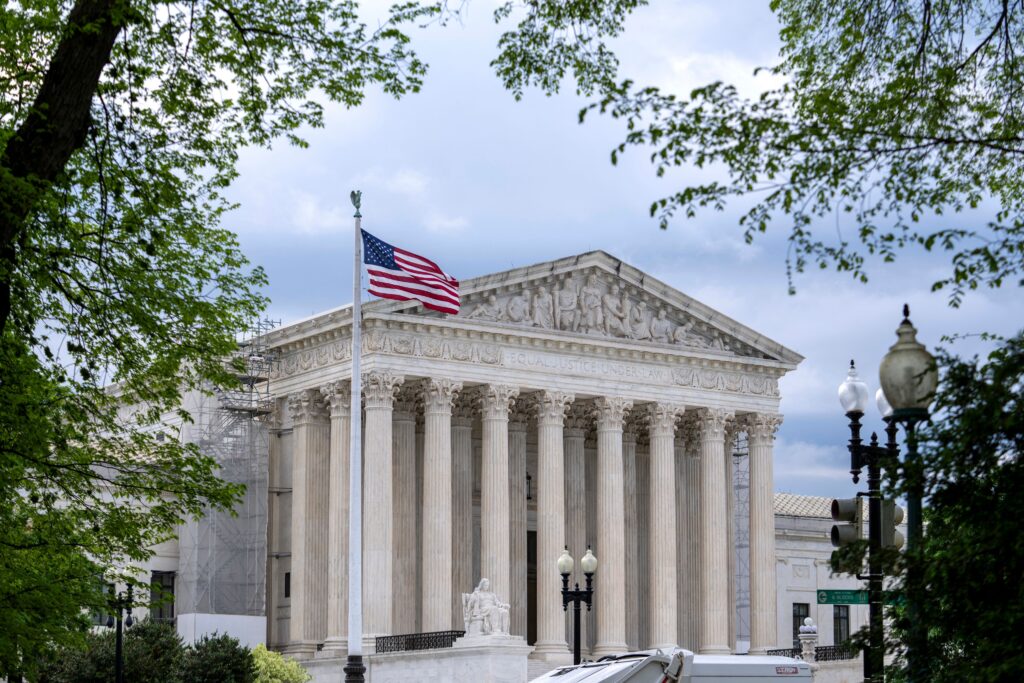
Supreme Court voids majority Black congressional district in Louisiana, boosting Republican chances
The decision weakens a landmark voting rights law’s protections against discrimination in redistricting.
6 months ago
At-risk problem solvers
Fitzpatrick and Mackenzie are facing tight races for reelection in swing districts, both of which are being targeted by Democrats as they attempt to take back control of the U.S. House of Representatives.
Fitzpatrick won his first election to Congress in 2016 and joined the newly formed Problem Solvers Caucus during his first term. He became co-chair in 2021 and has established himself as a “moderate” Republican.
Fitzpatrick’s challenger, Bucks County Commissioner Bob Harvie, disputes that account, claiming that Fitzpatrick has not addressed the rising cost of living that residents in Bucks and Montgomery counties are dealing with.
“I’d love for someone to name one major problem Brian Fitzpatrick has solved in ten years in Congress,” Harvie said. “He’s taken millions of dollars from corporate [political action committees] while people here in Bucks and Montco pay more for gas, groceries and health care. He’s the problem, not the solution.”
Democrats have also worked to paint Fitzpatrick as a Trump ally, saying he “falls in line every time” with the president, a characterization he has disputed.
“I’m ranked No. 1, most independent on every scorecard, every single metric,” he told WHYY News during a July interview. “The president has made his thoughts clear about how he feels about me.”

Never miss a moment with the WHYY Listen App!


WHYY is your source for fact-based, in-depth journalism and information. As a nonprofit organization, we rely on financial support from readers like you. Please give today.
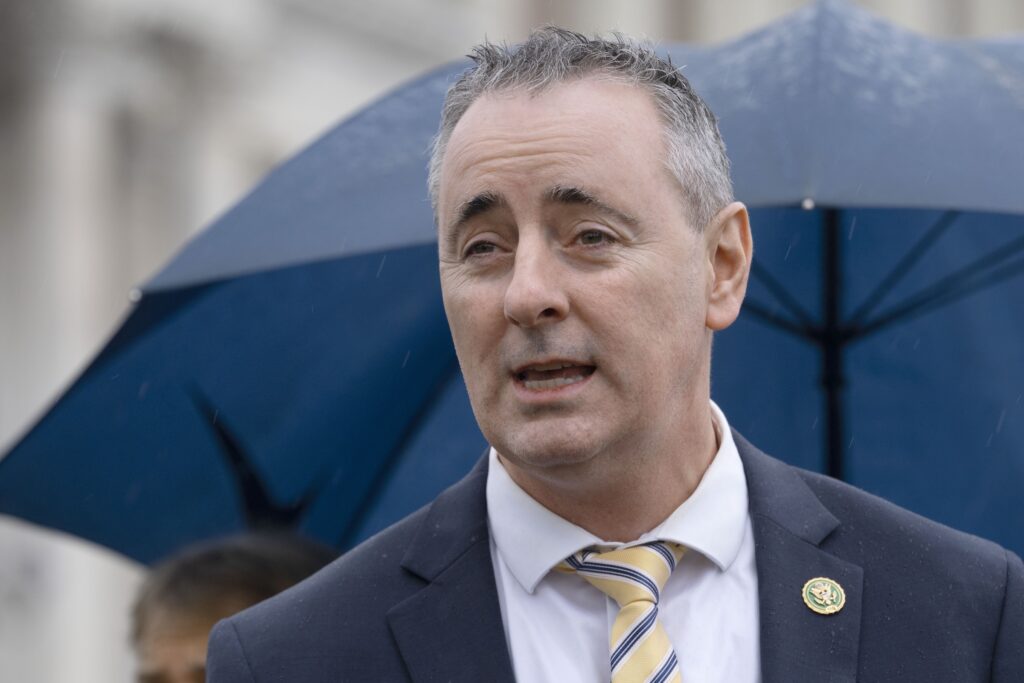
Upper Makefield jet fuel leak prompts U.S. Rep. Brian Fitzpatrick to propose pipeline safety reforms
Kristine Wojnovich's well water is contaminated from the Sunoco pipeline leak. She hopes the legislation will protect other communities at risk of contamination.
11 months ago
Listen 0:56
U.S. Rep. Brian Fitzpatrick is one of three GOP members in the 119th Congress who serves a district former Vice President Kamala Harris won in 2024.
1 year ago
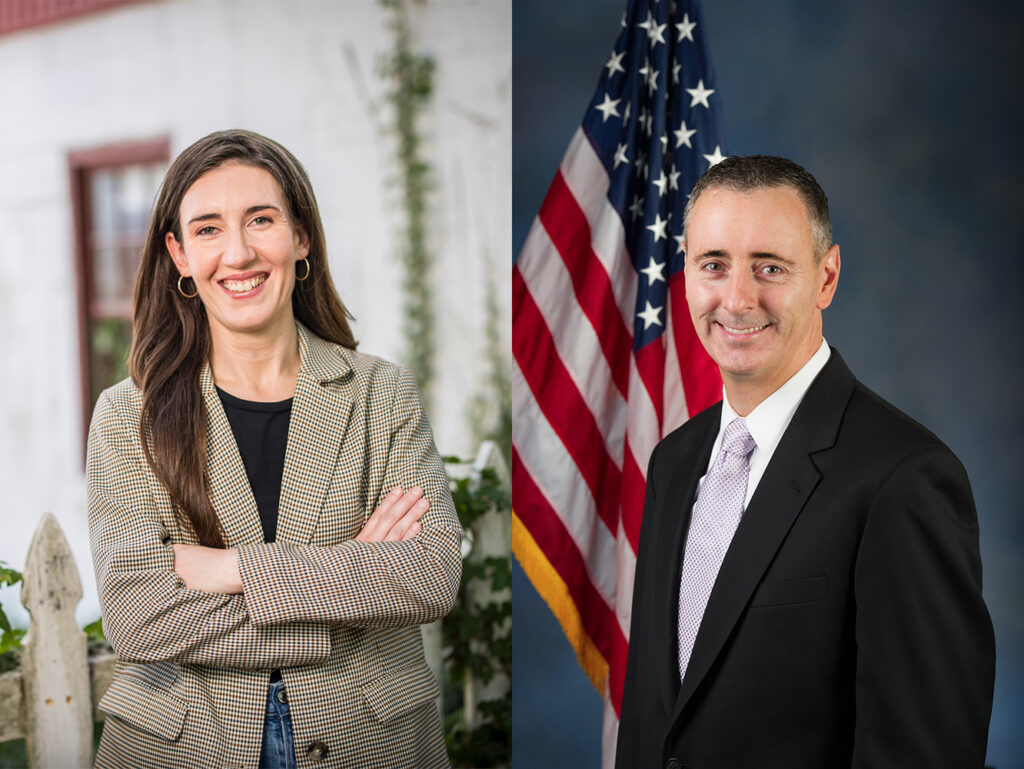
Ashley Ehasz is challenging Republican incumbent Brian Fitzpatrick in another bid to unseat the U.S. congressman.
2 years ago
Listen 1:08