

Port of Philadelphia to see $837 million investment for expansion that leaders say will create 6,000 new jobs
With two new shipping berths and a new auto and cargo facility in South Philadelphia, PhilaPort expects business to double.
Listen 1:10
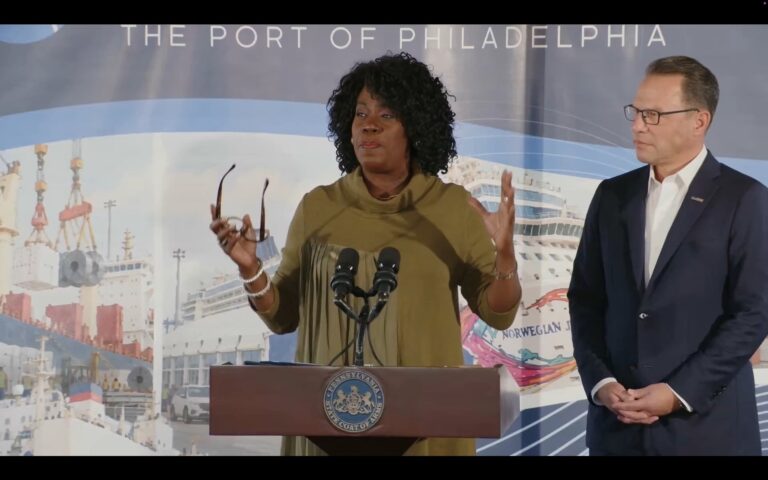
Philadelphia Mayor Cherelle Parker, left, and Gov. Josh Shapiro spoke at SouthPort Marine Terminal in Philadelphia, Oct. 13, 2026. (PAcast)
From Philly and the Pa. suburbs to South Jersey and Delaware, what would you like WHYY News to cover? Let us know!
The state, federal government and private companies will invest a combined $837 million in the Port of Philadelphia in a major expansion project that is expected to generate 6,000 jobs and an additional $45 million in annual tax revenue.
Gov. Josh Shapiro announced Tuesday that the state will invest $371 million in two new berths, or docking facilities, on the South Philadelphia waterfront — the first in more than 50 years — and install new ship-to-shore cranes at Tioga Marine Terminal in Port Richmond.
The 152-acre Mustin Yard, a former U.S. Navy property next to the SouthPort Marine Terminal, will become a facility for shipped cars and cargo containers, Shapiro said during an event at the terminal.
The federal government will contribute $266 million, including two U.S. Department of Transportation federal grants that U.S. Rep. Mary Gay Scanlon, D-Delaware County, helped secure. Private companies are expected to invest another $200 million, including $100 million from Holt Logistics, which operates Packer Avenue Marine Terminal, according to the company president, Leo Holt.
Shapiro said the projects are expected to boost container capacity by 122% and auto capacity by 18%, or over 100,000 cars.
“That is a massive amount of additional capacity for a port that is already functioning at an extremely high level,” he said. “That increased capacity will mean more Pennsylvania businesses have access to more raw materials and spare parts that they need, whether they’re in manufacturing, they’re in our growing life sciences sector or in our massive energy sector.”
Related Content
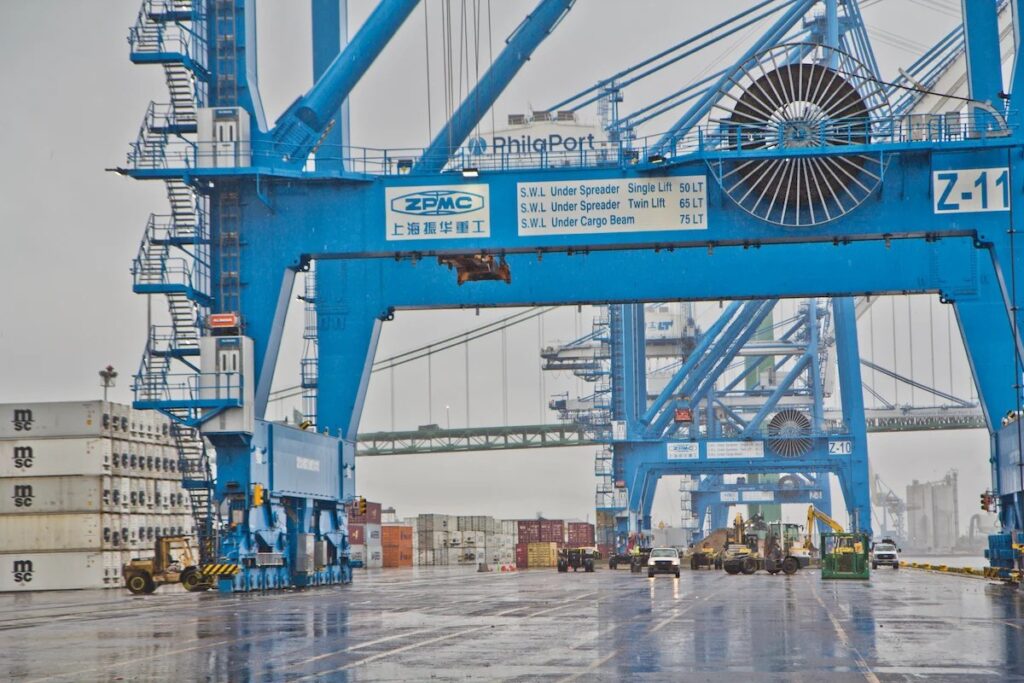
Speed up Philadelphia port expansion plan to keep pace with East Coast rivals, City Controller says
The report points to deeper shipping channels, expanded terminals and better road and rail connections as key to PhilaPort’s long-term growth.
1 month ago
Listen 1:06A changing city economy
Tuesday’s announcement is the latest in a series of projects along the Delaware River waterfront intended to generate more economic activity and jobs, and improve the port’s competitiveness against rival ports in New York, New Jersey, Virginia and other East Coast states.
In August, the Port of Philadelphia, also called PhilaPort, cut the ribbon on a new $60 million cruise terminal near the airport. That followed the resumption of cruises out of Philadelphia earlier this year after a 15-year hiatus.
In July, South Korean shipmaker Hanwha won $2 billion in contracts to build two missile-tracking vessels at its Philly Shipyard in South Philadelphia, next to SouthPort. JPMorgan Chase also announced $24 million in loans and grants for the city’s shipbuilding and defense industries, including $13 million for a submarine facility.
With the new state and federal investment in the port, Philadelphia residents now have to “change our language” for how they describe the city’s economy, Mayor Cherelle Parker said at the event Tuesday.
“This historic year, we should be remembering who we are and our place and space as the workshop of the world,” she said. “So when people ask you to define what Philadelphia is economically, you remind them that we are eds, meds, life sciences and biotech — but don’t forget that we are also maritime, shipbuilding and defense.”
By creating thousands of good-paying union jobs with health care and retirement benefits, and generating millions in additional tax revenue, the port expansion will improve economic opportunity and mobility, help address the local affordability crisis and make the city safer, Parker said.
The state capital funding includes $31 million for dredging at Southport Berth I and $145 million to fill in part of the river and create new land for Southport Berth II and the North Wharf, according to Shapiro’s office.
Another $109.4 million will go toward land acquisition and $58.1 million will help pay for cranes and equipment. PhilaPort previously acquired Mustin Yard from Norfolk Southern Corporation last year.
Related Content
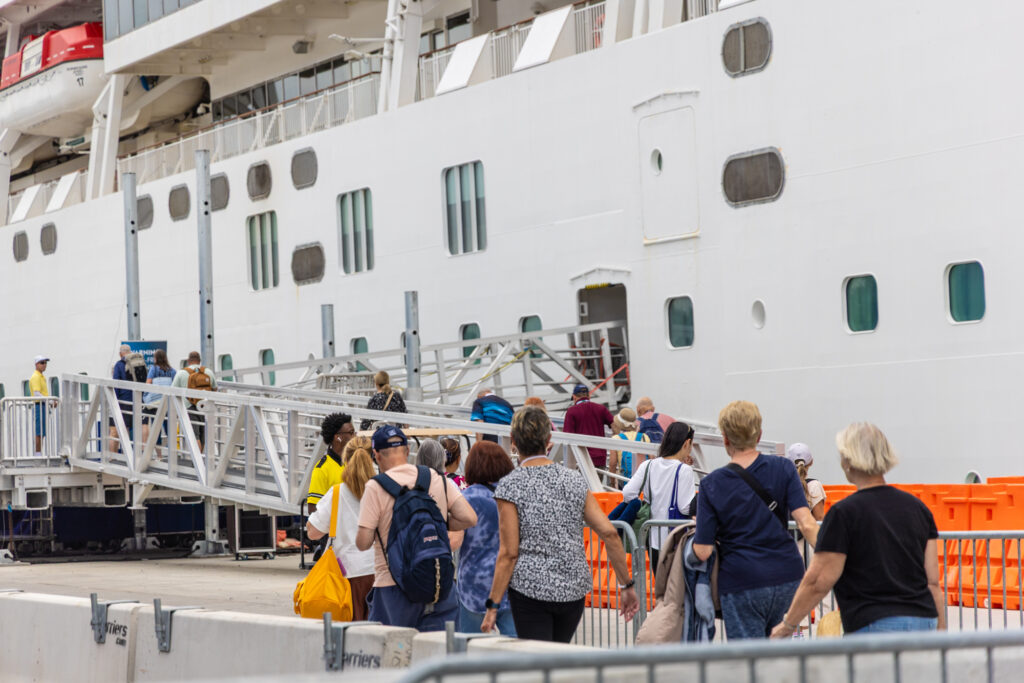
Cruises restarted departures from Philadelphia in April after a 15-year break, offering trips to Bermuda and Canada and creating 2,200 jobs.
2 months ago
‘No more drama at this port’
Shapiro said Tuesday’s announcement shows that years of disagreement among “important players” at the port have been resolved.
“They were talking about all the work here as kind of a zero-sum game — either you could grow cargo capacity, or you could focus on growing auto imports,” he said. “The drama hurt us all, and today I’m proud to say that there is no more nonsense and no more drama at this port. It is full steam ahead with everyone working together.”
Shapiro praised PhilaPort CEO Rich Lazer, who was selected for the position earlier this year, saying that he was “the right man at the right time who has settled things here and who has given us a pathway forward.”
Bill Hamilton, president of the International Brotherhood of Teamsters Local 107, credited Shapiro for securing the state funding that was needed to assure federal and private investments would follow.
“This is an important development, and it couldn’t have happened unless this man got it across the table,” Hamilton said.
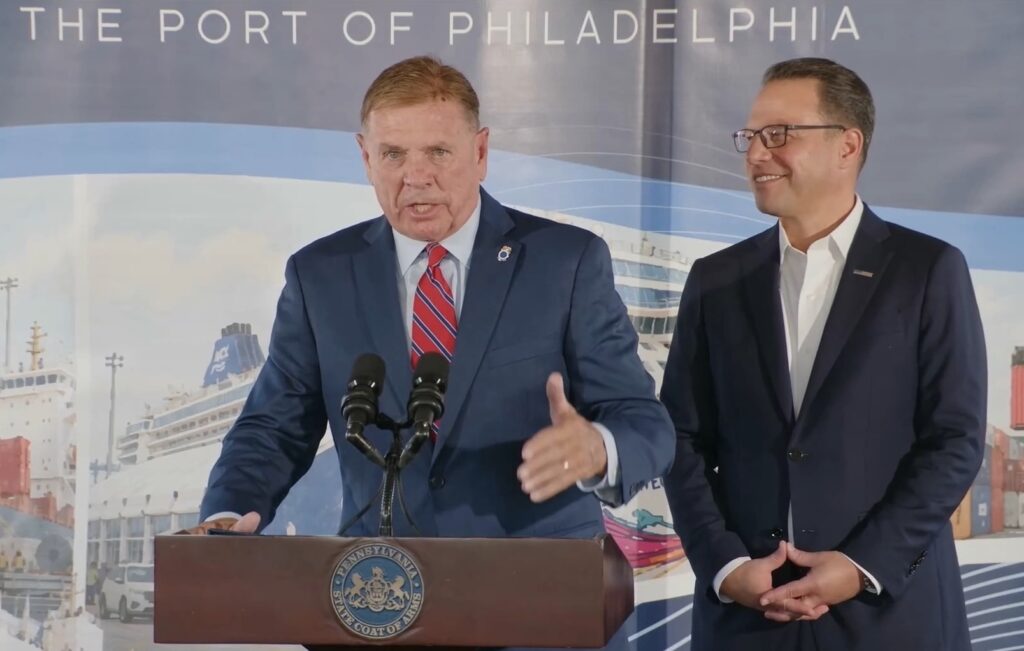
The projects are among billions of dollars in investments proposed in Destination 2040, a long-term strategic plan PhilaPort released two years ago.
Among the other proposals is a controversial project to dredge the river’s main shipping channel to a depth of 50 feet. Port officials say the dredging is necessary to compete for business from larger ships, while environmentalists say it could hurt water quality and aquatic plants and animals.
Shapiro noted that container volumes moving through PhilaPort have climbed 39% since 2020 and that it is ranked as the nation’s “most productive” container port. Twenty percent of the fruit imported into the U.S., worth more than $3 billion, comes through the port annually, as do half a million cars, he said.
The port contributes about $1.2 billion in economic activity to the state each year and supports 8,000 jobs, he said.

Never miss a moment with the WHYY Listen App!


WHYY is your source for fact-based, in-depth journalism and information. As a nonprofit organization, we rely on financial support from readers like you. Please give today.

Pa. election 2026: What to know about the governor’s race between Josh Shapiro and Stacy Garrity
Here’s a look at what’s at stake in the midterm race, where Shapiro and Garrity stand on key issues and more.
3 months ago
Listen 1:06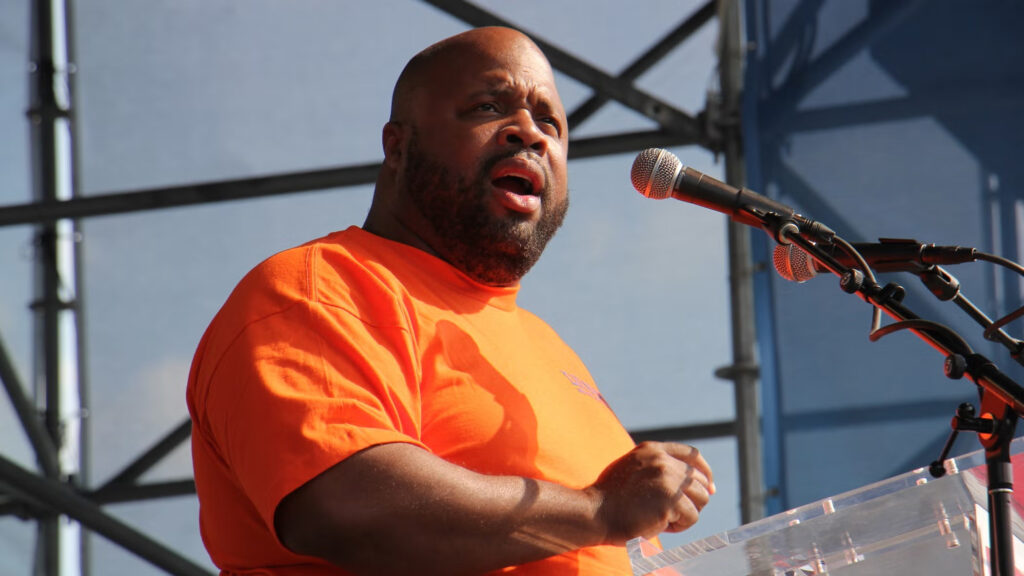
The Philadelphia Building Trades and Construction Council supported Stacy Garrity for state treasurer in 2024. Now, the union is campaigning against her bid for governor.
3 months ago
Listen 1:03
The primary could have nationwide implications if Democrats want to flip the U.S. House in November, and has gained national pressure from both parties.
6 months ago