



US attack on Venezuela
The United States’ military attack on Venezuela set shockwaves around the world and raises big questions about U.S. foreign policy under President Donald Trump.
Listen 51:02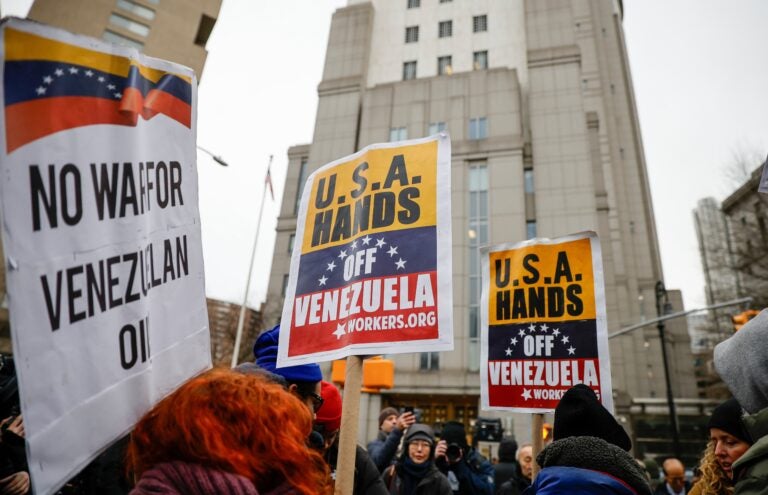
People protest outside Manhattan Federal Court before the arraignment of Venezuelan President Nicolas Maduro, Monday, Jan. 5, 2026, in New York. (AP Photo/Stefan Jeremiah)
The United States’ military attack on Venezuela set shockwaves around the world and raises big questions about U.S. foreign policy under President Donald Trump.
Venezuelan President Nicolás Maduro is now being detained in Manhattan after being captured Saturday in Caracas. Maduro and First Lady Cilia Flores face multiple criminal charges, including narco-terrorism and weapons possession.
In the immediate aftermath, Trump said that America will “run the country” until a “judicious transition” and will secure Venezuela’s vast oil reserves. On Sunday, Secretary of State Marco Rubio clarified that the White House wouldn’t be involved in the day-to-day operations but would be using “multiple levels of leverage” to influence Venezuelan political outcomes and American interests.
Inside Venezuela, reactions were mixed. Many citizens — frustrated after years of economic collapse and political repression — welcomed news of Maduro’s departure, but the long term picture remains uncertain. Vice President Delcy Rodriguez, a Maduro loyalist, was sworn in as interim president and Trump has thrown his support behind her leadership but threatened that she’ll “pay a big price” if she doesn’t pursue U.S. policy goals.
Meanwhile, opposition leaders say that Edmundo González, who was widely seen as the legitimate 2024 presidential winner, represents the future of the country.
So what happens next? As President Trump evokes the Monroe Doctrine and hints that Columbia, Cuba and Greenland could be next, is the United States entering a new era of interventionism? What risks does the White House take in deposing a foreign leader, with potential precedent set for rivals like China, Russia and Iran? And what does this mean for Venezuela’s future?
Guests:
- Eli Lake, columnist for The Free Press and host of the Breaking History podcast
- Alan McPherson, history professor at Temple University and author of A Short History of US Interventions in Latin America and the Caribbean
- Emilio Buitrago, Casa de Venezuela Philly
WHYY is your source for fact-based, in-depth journalism and information. As a nonprofit organization, we rely on financial support from readers like you. Please give today.
Brought to you by Studio 2
While Venezuela dominates the agenda on Capitol Hill this week, the midterms are fast approaching – key primaries are just months away. This and more in our roundtable.
Air Date: January 7, 2026 12:00 pm
Listen 51:14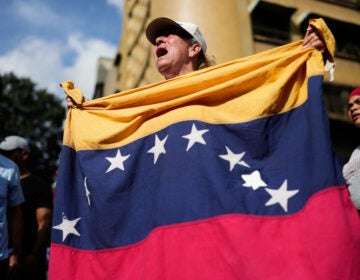
‘Mixed emotions’: U.S. strikes in Venezuela, capture of Maduro leave Philly region conflicted
Delaware Valley activists and lawmakers see potential for justice and danger following the U.S. military action.
6 days ago
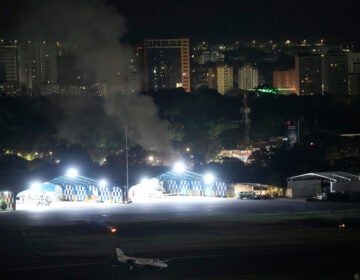
What we know about a U.S. strike that captured Venezuela’s Maduro and what comes next
The operation, conducted early Saturday, has left Venezuela in turmoil, with its leadership uncertain and the impact on its military still unclear.
6 days ago