



How Science and Ingenuity Built Early America
On this episode, we commemorate America's 250th anniversary, and we explore how science and innovation helped build a new nation.
Listen 1:03:04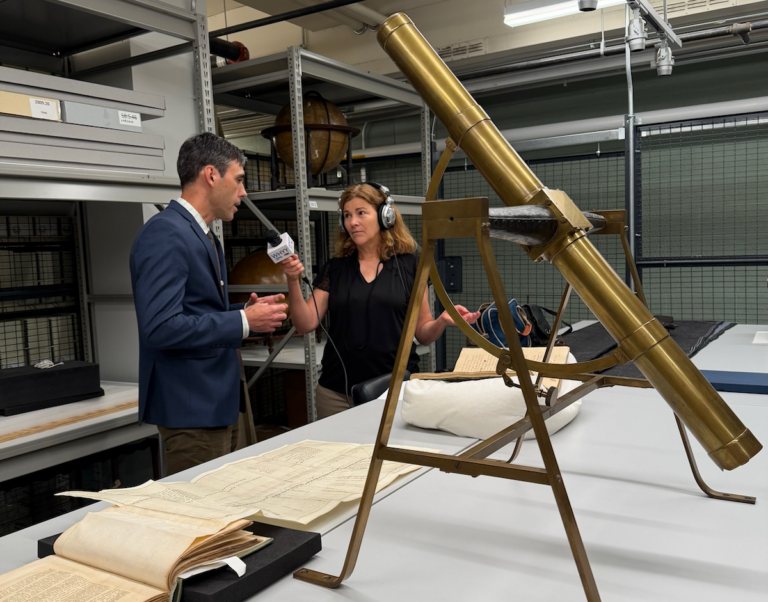
David Gary, the Associate Director of Collections at the American Philosophical Society, is showing Pulse Host Maiken Scott a telescope that was constructed by David Rittenhouse in the 18th Century. Rittenhouse used the telescope to track the Transit of Venus in 1769, just a few years before America declared independence from Great Britain. (Maiken Scott/WHYY)
Two hundred and fifty years ago, Philadelphia was more than the center of political revolution — it was a hub of scientific discovery and experimentation. From astronomy and medicine to invention and exploration in nature, science shaped the thinking of the people who were building a new nation. They saw it as a way of understanding the world: a search for the hidden rules, natural laws, and universal truths that govern our world. The same laws that explained the motion of planets, they believed, might also help explain human societies — how knowledge spreads, how governments function, and how a new nation could be born.
On this episode, as we mark the 250th anniversary of the Declaration of Independence, we explore how science and innovation helped give birth to the United States of America.
SHOW NOTES:
- We visit the American Philosophical Society in Philadelphia to explore how tracking The Transit of Venus in 1769 became a major success for astronomers in the colonies, one that put American science on the map. We’ll also hear about efforts to find the exact location of the observatory that once stood near Independence Hall — the place some people say was the location where the Declaration of Independence was read out loud for the first time.
- The first sentence of the Declaration of Independence cites, “Laws of Nature and of Nature’s God,” but what exactly does that mean? Caroline Winterer, Professor of History and American Studies at Stanford University joins us to discuss the ideas that allowed the Founders to bridge the gap between physical science and political governance, effectively inventing our modern concepts of society and inalienable rights.
- We dive into the story of the “Turtle,” the first submarine used in combat which was invented during the Revolutionary War. Reporter Alan Yu explains the many innovations contained in this small vessel, and its daring first mission. Then Host Maiken Scott travels to The International Spy Museum in Washington, D.C., to see a replica of the craft.
Segments from this episode
WHYY is your source for fact-based, in-depth journalism and information. As a nonprofit organization, we rely on financial support from readers like you. Please give today.
Brought to you by The Pulse

Part of the series
Philadelphia 250
The United States is marking its semiquincentennial — or its 250th anniversary — in and around the City of Brotherly Love.
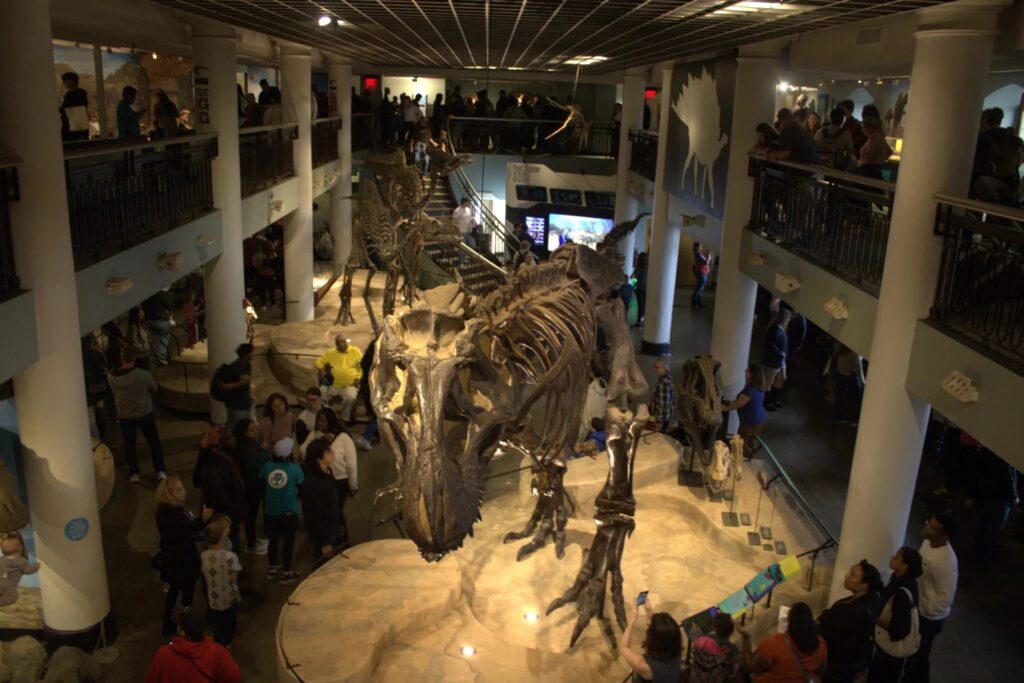
“There was a big push to not be known as the dinosaur museum,” said one laid-off worker. That shift came with a cost, ex-staffers say.
5 days ago
Listen 6:45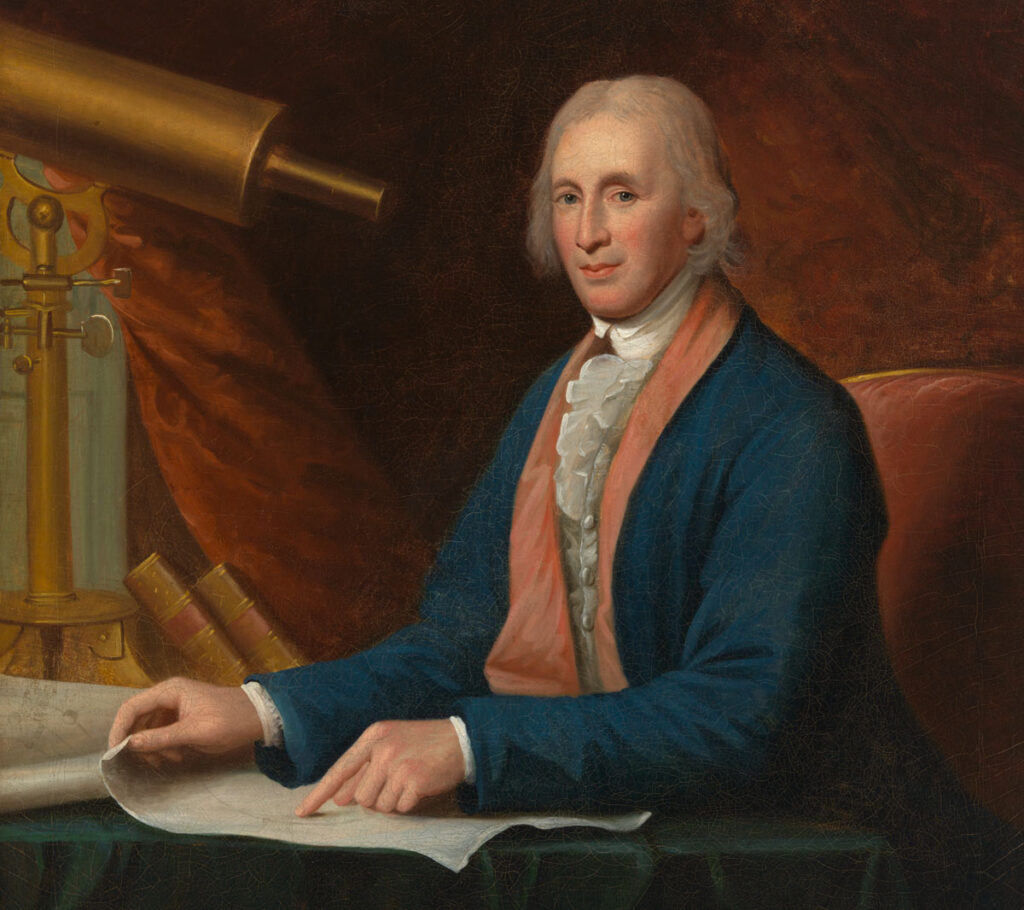
A planet, an observatory and the first public reading of the Declaration of Independence
A lost Philadelphia observatory once used to track the transit of Venus may be the place where the Declaration of Independence was read publicly for the first time.
3 months ago
Listen 10:50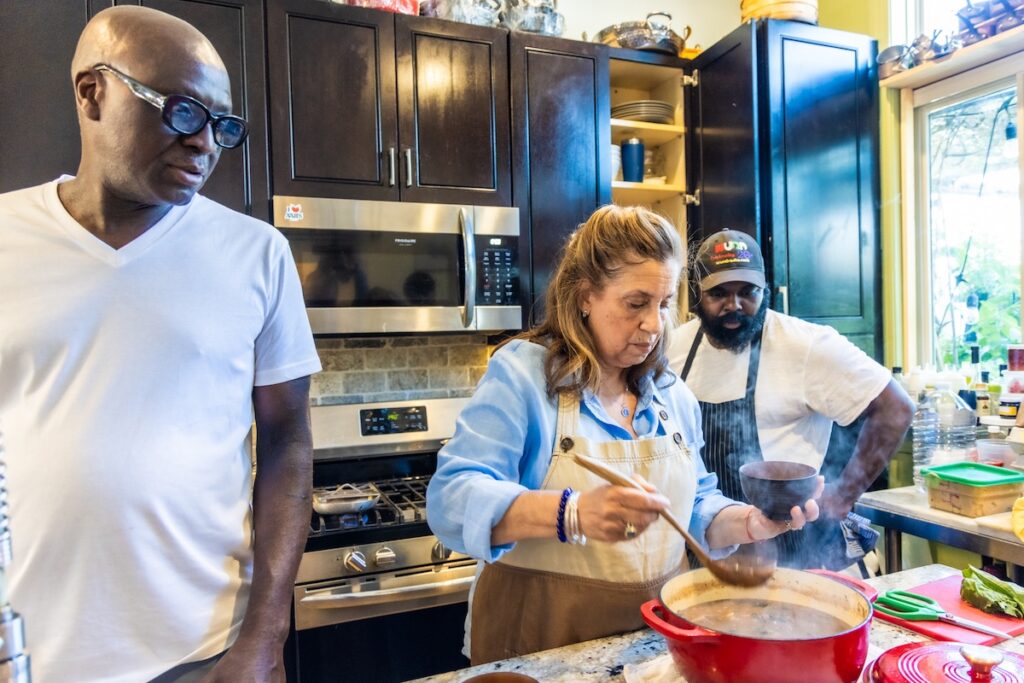
‘Pepper pot soup slam’: 3 chefs reimagine one of the first American street foods
Pepper pot soup was known as a survival meal during the American Revolutionary War, but the stew's African and Caribbean roots are often overlooked.
3 months ago
Listen 15:36