




Challenger at 40: How the Disaster Shaped the Future of NASA
We remember NASA's Challenger disaster: What led up to the mission, what went wrong, and its lasting impact.
Listen 37:45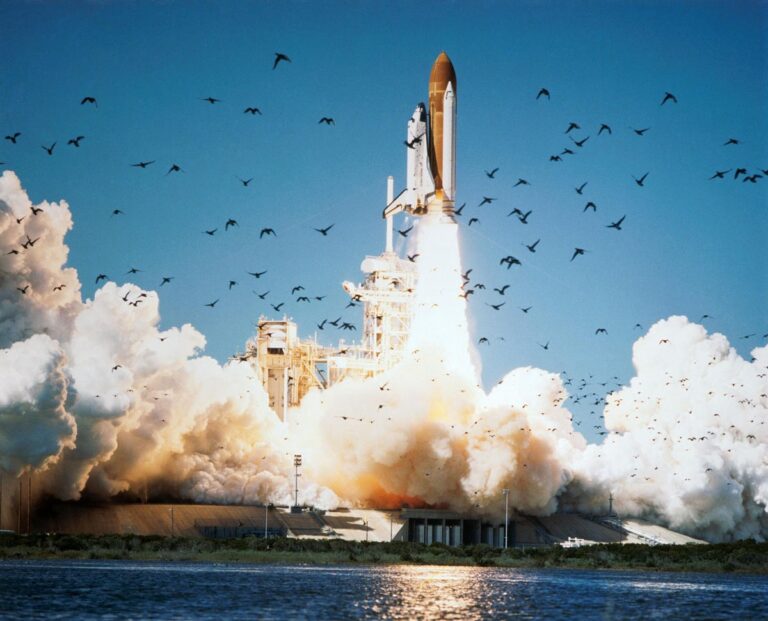
The Space Shuttle Challenger lifted off at NASA’s Kennedy Space Center in Florida, Jan. 28, 1986 at 11:38 a.m. An accident 73 seconds after launch killed all seven crew members including teacher Christa McAuliffe. (NASA)
On January 28, 1986, a frigid cold day with an icy blue sky, the Space Shuttle Challenger exploded just 73 seconds after launching from Cape Canaveral, Florida. The accident killed all seven crew members aboard and was the first fatal in-flight spacecraft disaster in NASA’s history. For many, the explosion came as an absolute shock. Millions of people were watching live, including school children who were especially eager to catch a glimpse of Christa McAuliffe, a teacher from New Hampshire and the first civilian in space.
On this episode, we remember the Challenger tragedy with author Adam Higginbotham who details what went wrong and the aftermath in his book, “Challenger: A True Story of Heroism and Disaster on the Edge of Space.”
WHYY is your source for fact-based, in-depth journalism and information. As a nonprofit organization, we rely on financial support from readers like you. Please give today.
Brought to you by The Pulse

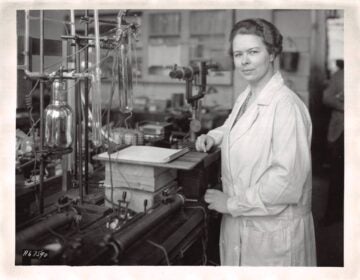
Unearthing the Hidden Stories of Women Scientists
A look at several great women in science — and why so many of them, and their contributions, have been forgotten.
Air Date: March 20, 2026
Listen 49:34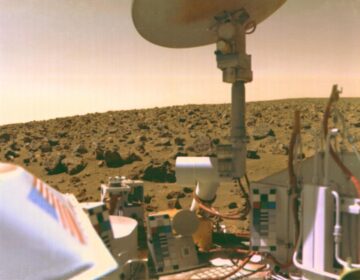
The redemption of Viking: Did the 50-year-old mission to Mars find life or not?
How NASA’s 1975 mission to Mars led to decades of scientific controversy and confusion over the existence of life on Mars — and why that’s starting to change.
2 months ago
Listen 21:39
NASA’s asteroid hunter Lucy soars into sky with diamonds
A NASA spacecraft named Lucy has rocketed into the sky with diamonds on a 12-year quest to explore a record-setting eight asteroids.
4 years ago