
West Philly tenants are pushing Mayor Parker to preserve 925 units of affordable housing
Starting in early July, the vast portfolio of properties can be marketed to the general public. Housing advocates fear that could displace thousands.
Listen 1:21
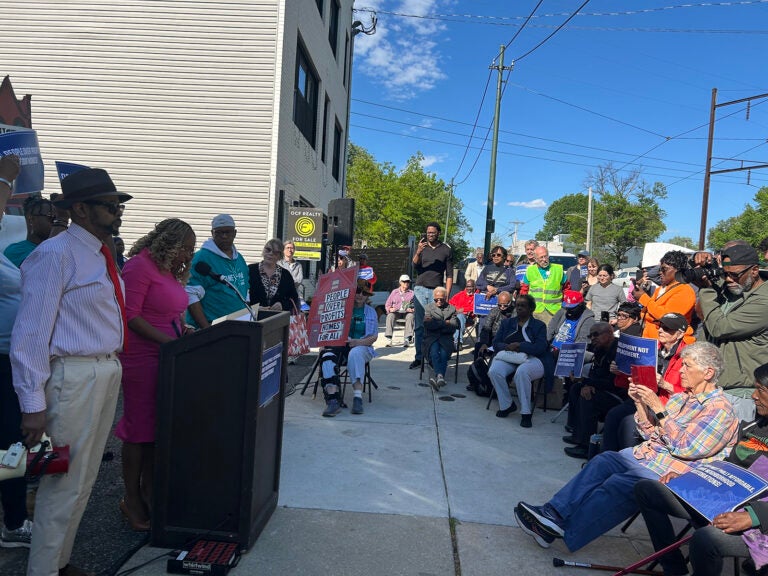
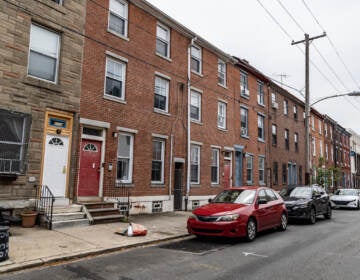
West Philadelphia renters are fighting to preserve nearly 1,000 affordable homes. (Aaron Moselle/WHYY)
Have a question about Philly’s neighborhoods or the systems that shape them? PlanPhilly reporters want to hear from you! Ask us a question or send us a story idea you think we should cover.
Housing advocates in West Philadelphia are urging the city to take on nearly 1,000 privately held rental units so they can remain affordable into the future.
The portfolio of properties is home to roughly 3,000 tenants, who fear they’ll be displaced if the city doesn’t strike a deal and the subsidized units become market-rate under new ownership.
“People are going to become homeless,” said longtime tenant Carlos Boothe during a Thursday afternoon rally in Kingsessing. “Let’s keep it affordable.”
For now, developer Neighborhood Restorations controls the portfolio, which comprises 925 units scattered across about a dozen neighborhoods, including areas where property values are rising. The list includes Powelton Village, Cedar Park, Walnut Hill and Overbrook, as well as neighborhoods in Southwest Philadelphia like Cobbs Creek.
The properties are all backed by tax credits with expiring affordability restrictions. Most of them are single-family homes, and many tenants have rented the same apartment for years.
Advocates are pushing the city to reach a deal while it has the ability to put forth a priority bid to buy the units. Under city law, that window ends in early July. After that, Neighborhood Restorations can start marketing these homes to the general public, which could translate to higher rents that current tenants can’t afford.
Kingsessing block captain April Turner has rented a four-bedroom home from Neighborhood Restorations for more than 20 years. She shares it with her six children and said the city owes it to her and her neighbors to keep their homes affordable — and to give tenants the opportunity to buy them where possible.
“[Mayor Cherelle] Parker said when she ran, ‘I’m going to support homeownership and affordable homes.’ Now we’re saying, ‘You said it. Let’s prove it,’” said Turner outside an apartment complex on Chester Avenue, where dozens gathered on the sidewalk.
Related Content
A fight over vacant Philly lots is exposing tensions in Mayor Parker’s housing plan
The Turn the Key program promised affordable homeownership. Critics say many residents are priced out, raising the question: Who is "affordable housing" for?
4 months ago
Listen 5:13Is the Parker administration interested?
The pressure campaign is powered by OnePA West/Southwest Rising. It is getting underway as millions of dollars are set to flow to dozens of programs as part of the Housing Opportunities Made Easy, or H.O.M.E., initiative, Parker’s plan to build and preserve 30,000 homes.
Tenants and elected officials say funding from the initiative should be used to purchase the Neighborhood Restorations portfolio. Funding for the first phase of H.O.M.E. includes $46.1 million for affordable housing preservation.
“We have the money, we have the legal tools, and all that’s missing is the will to act,” City Councilmember Jamie Gauthier said. Her district includes most of the units.
It’s unclear if the Parker administration wants to acquire properties in the portfolio. Talks to that end are ongoing, but so far there is no indication that a deal will emerge by July — or at all.
“We are collaboratively working with [Local Initiatives Support Corporation] and other housing leaders in the Philadelphia area to come up with various scenarios,” a city spokesperson said in a statement.
During a budget hearing in late March, Parker’s chief of staff, Tiffany Thurman, told Gauthier the administration is “committed” to working with her to find a solution.
“You can hold us accountable,” Thurman said.
Related Content
Philly renters just secured new protections from landlord retaliation. A lawsuit could undo them
Fair housing advocates say the City Council measures will make it safer for tenants to speak up about dangerous living conditions. But a federal lawsuit looms.
4 months ago
Listen 1:19The city has historically struggled to handle large portfolios like the one Neighborhood Restorations is offering. The fact that the properties are scattered only makes the prospect more challenging.
Generally speaking, the city doesn’t buy properties. But it will help finance property transactions with developers by effectively subsidizing those deals. In that way, the city doesn’t need to take ownership.
Jim Levin, who co-founded Neighborhood Restorations, has declined to share the specific dollar amount he’s seeking for the whole portfolio, but he said the per unit price is based on what he paid nearly 20 years ago.
Over the past year, the median sale price for a single-family rental property in West Philadelphia, excluding University City, was $160,000, according to data prepared by Drexel University economist Kevin Gillen.
Levin has said he is in “no hurry” to reach a deal, and that if a deal with the city doesn’t materialize, he would either sit on the properties for some years or sell them on the open market at some point.

Subscribe to PlanPhilly
WHYY is your source for fact-based, in-depth journalism and information. As a nonprofit organization, we rely on financial support from readers like you. Please give today.
Brought to you by PlanPhilly

PlanPhilly
In-depth, original reporting on housing, transportation, and development.
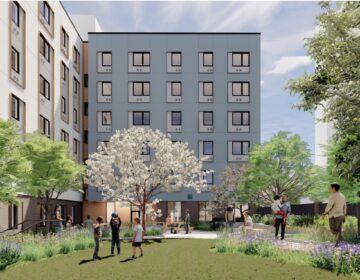
North Philly development will bring 129 affordable rentals to Temple University area
The six-story project represents the final phase of a yearslong effort to redevelop Norris Homes, a traditional public housing site that was demolished between 2011 and 2019.
5 days ago
Listen 1:04
Homebuying in the Philly area is more expensive than last year. Here’s why
The news is particularly challenging for first-time homebuyers daunted by overvalued sale prices and high mortgage rates.
2 weeks ago
Listen 1:08
Mayor Parker vows to help preserve hundreds of subsidized rentals in the West Philly area
The announcement comes more than a year after the owner of Neighborhood Restorations told the city he planned to sell his portfolio of affordable units.
2 weeks ago
Listen 1:34