

At Washington Avenue Elementary, students and educators lean on the arts to build critical life skills
At Washington Avenue Elementary and schools across the region, arts programs are transforming classrooms and young minds through dance, music and visual arts.
From Camden and Cherry Hill to Trenton and the Jersey Shore, what about life in New Jersey do you want WHYY News to cover? Let us know.
On a recent November morning, about 18 third graders spread across the gym’s polished floor at Washington Avenue Elementary School in Pleasantville, New Jersey, their sneakers squeaking to the rhythm of a bass-heavy track. In the center, Ben Barnes, a teaching artist and founder of Hip Hop Fundamentals, leads a dance session, moving fluidly through breakdancing, classic freeze, body rock and back step movements.
This class is part of Young Audiences Arts for Learning New Jersey & Eastern PA’s programming in schools. The organization offers residencies, workshops and partnerships to bring arts education into core learning. In the 2023-24 school year, Young Audiences reached 264,128 children across 407 schools, engaged 13,088 teachers, employed 185 artists and distributed more than $1.2 million in wages.
A 2022 report by the Arts Education Data Project found that more than 2 million students lack access to any arts education, with the majority being from low-income families who live in very rural or major urban areas.
Through fundraising and grants, Young Audiences is trying to serve that population. In 2023, the organization reached out to the School District of Philadelphia. Fifty-five schools in the district requested a five-day residency within 24 hours. The program kicked off in 2024.
View this post on Instagram
Tara Bach, an art teacher at Washington Avenue, described the transformation she has witnessed among the participating students in her school.
“You don’t know which of your students are bringing in a heavy load,” she said. “The arts are just one way to help relieve some of that, help work on some of that trauma. There aren’t always enough opportunities for healing, and if you’re only worried about test scores, you’re not going to get the results you want if you’re not teaching the whole child.”
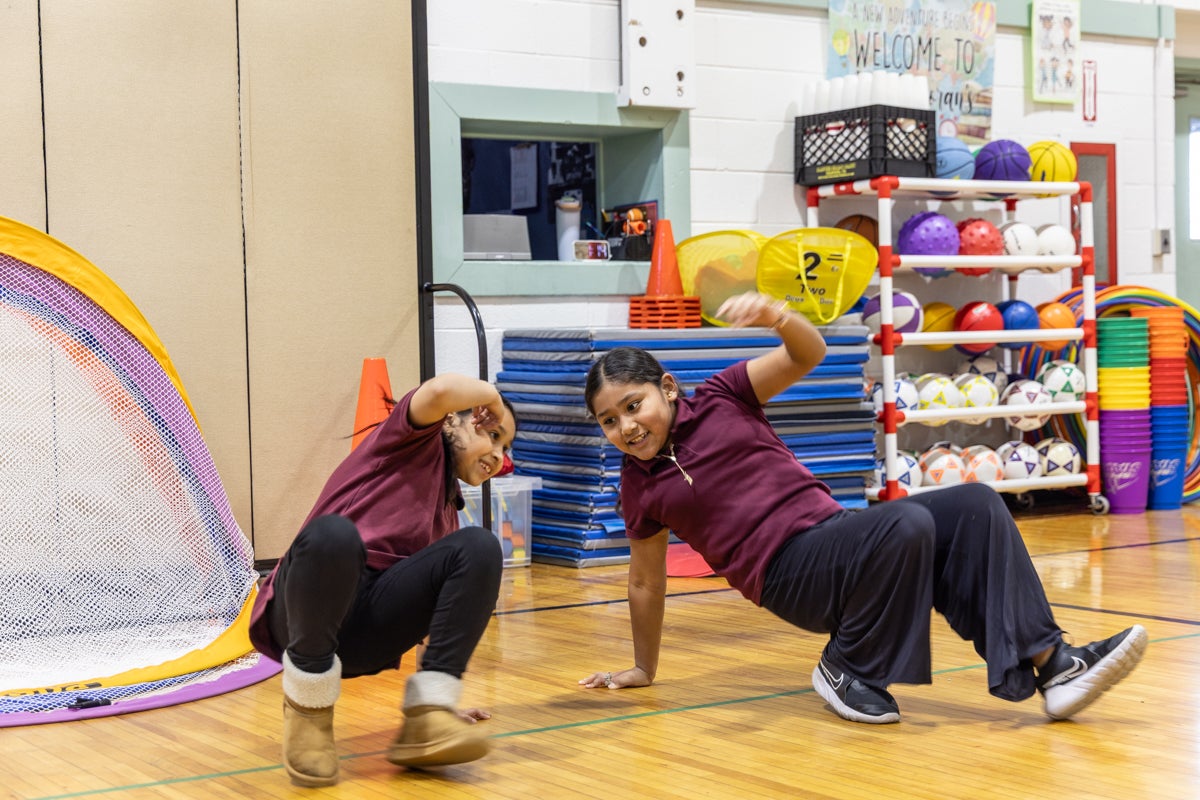
Barnes said even a nonverbal and reserved student in the program began to participate.
“I would find little ways to engage her, like tossing a ball back and forth during warm-ups,” she said. “Now she’s fully bought in, smiling, taking part in the class. That to me is proof of concept that these programs can help students develop confidence, leadership and a sense of belonging.”
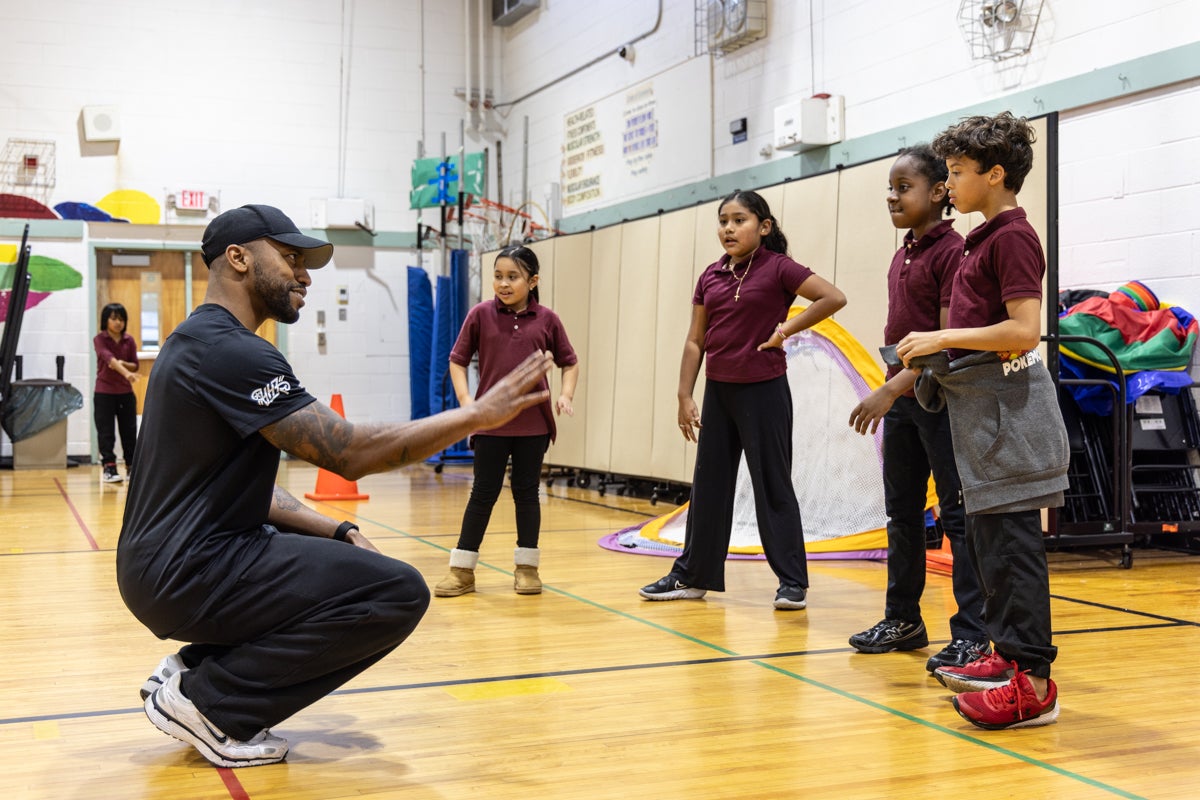
Michele Russo, president & CEO of Young Audiences, said the organization has been bridging the gap in arts education for more than 50 years.
“We see this growing demand for arts education experiences, not only for teaching and experiencing the arts, but for all of the benefits that these experiences provide to students,” he said.
Eight-year-old Darah Chacon-Sanchez said that participating in the program makes her feel empowered
“It makes me feel like I’m learning new moves, and it makes me feel like when I am in the middle dancing, it builds up my confidence,” she said. “I am nervous, but my confidence is going up.”
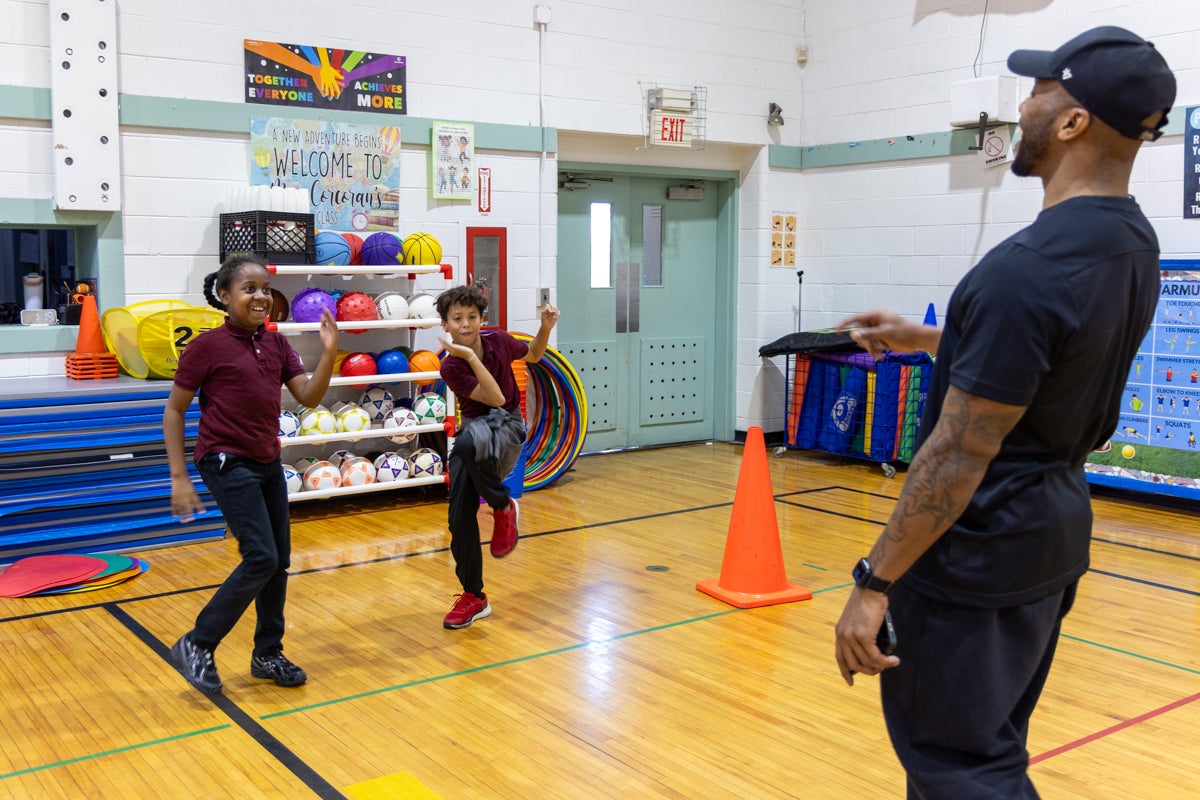
Her classmate, Abraham Segura-Pichardo, shared her feelings.
“It also makes me feel excited and nervous,” he said. “When I feel nervous, I try my best to do it.”
Related Content
During public testimony sessions, residents expressed a lack of progress and cited a decline in schools, students and resources in the Camden City School District.
7 months ago
Listen 0:56Measuring impact in an abstract space
A 15-year study by the National Endowment for the Arts found that active participation in the arts supports young children’s social and emotional development. Children who regularly engage in arts activities demonstrated stronger social skills, including cooperation, empathy and sharing, as well as improved emotional regulation, such as reduced anxiety, shyness and aggression.
The benefits extend across diverse populations, with toddlers from low-income backgrounds and children with autism spectrum disorder showing notable gains in emotional expression and engagement.
But with individualized programs, measuring success can be complex, said Russo.
“We don’t want this to be a one-size-fits-all scripted model in any way,” said Ann Betterton, vice president of Institutional Advancement at Young Audiences. “We measure this by doing our own assessment. Sometimes that involves more traditional survey practices of before and after measuring a student’s engagement. We do a lot of qualitative collection of information, especially from teachers.”
She said teachers provide insight into unexpected growth in students’ academic performance.
“You can get a lot of data from a second or third grader, but not much more,” Betterton said. “So we get from teachers a really deeper and richer sense of that student’s engagement — the kind of, ‘Oh, I thought this student was this type of student and turns out this student came forward in this experience and participated in ways I’ve never seen them participate before.”
Programs have also been evaluated for outcomes in chronic absenteeism, emotional growth and collaboration skills. One example is a step-dance program led by teaching artist Maxine Lyle in Medford, New Jersey. Students reported high levels of enjoyment and engagement, and teachers noted increases in leadership and teamwork among students who had not previously taken the lead, officials said.
A study of an arts-based program in public schools, led by professional artists, found strong evidence that these experiences boost creativity, encourage hands-on creative activity and improve academic performance.
Results showed that students who participated in at least two semester-length workshops saw measurable gains, including a 0.55 increase in overall GPA. Participation also increased students’ interest in pursuing postsecondary education. Beyond grades, the study found significant growth in creativity skills and engagement in creative behaviors.
Participation in arts programs supports students’ cognitive, social and emotional development, said Cynthia Ruiz-Cooper, principal at Washington Avenue Elementary.
“Engaging in the arts strengthens creativity, critical thinking and problem-solving skills. It also promotes collaboration, self-expression and confidence,” she said. “Experiences with music, visual arts and performance help build connections in the brain that enhance learning across all subject areas.”
Related Content
New Jersey schools and students are cautiously embracing AI in the classroom
A recent report found a growing number of teachers and students use the technology, which is becoming a more common part of everyday life.
5 months ago
Listen 0:57Arts experiences also foster identity and belonging, educators say. Students see cultural representation through teaching artists and art forms, helping them connect to their own heritage and new perspectives. The Young Audiences group said students have shared that when they participate in the program, they see themselves represented or that they feel good about their school.
A recent study supports these beliefs. The National Journal of High School Science reported that those immersed in the arts scored significantly higher in creativity and demonstrated stronger divergent thinking, greater cognitive flexibility and higher creative self-efficacy, meaning they were more confident in their ability to generate ideas and solve problems in new ways. The findings reinforce what educators say they are seeing in classrooms every day: sustained engagement in the arts helps students think more flexibly, adapt more easily and approach learning with greater creativity.
A universal language
From drumming to breakdance, from songwriting to mural painting, students’ brains are rewiring, and their social-emotional skills are strengthening.
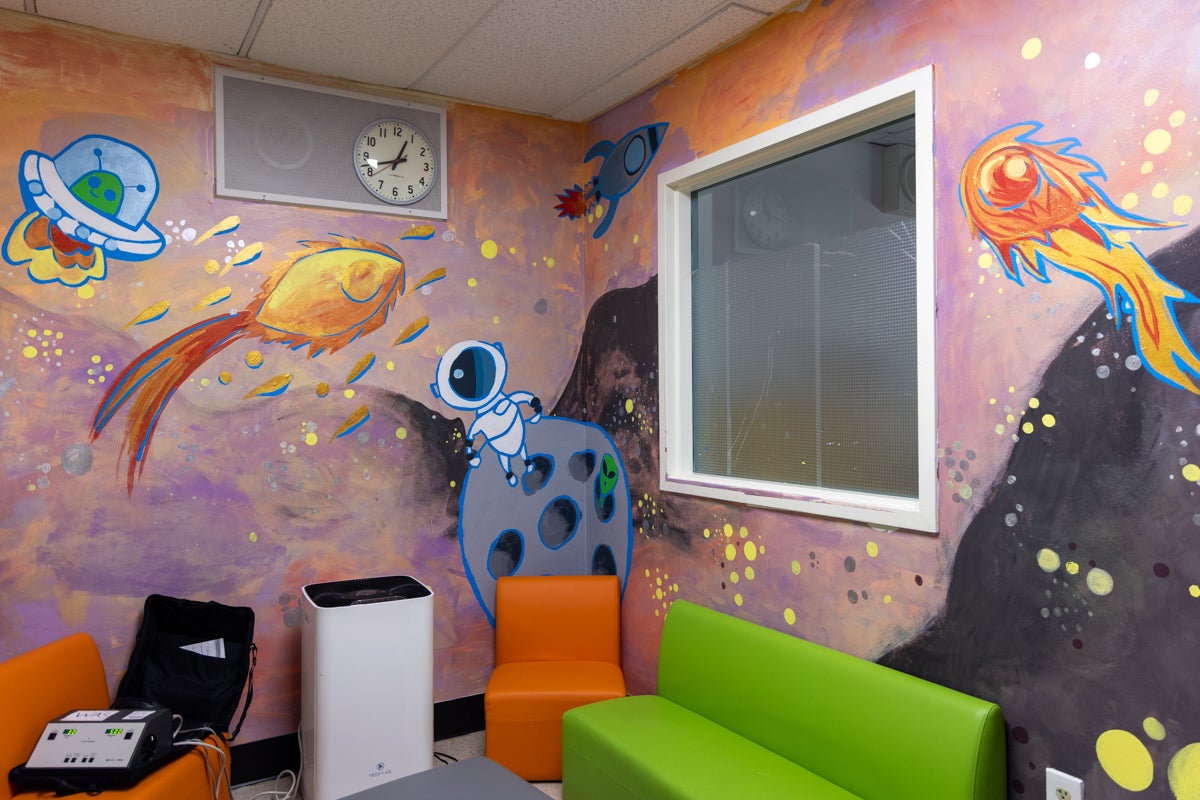
A study from researchers at Harvard and Boston Children’s Hospital found that just 15 months of music lessons can physically reshape a child’s brain. MRI scans revealed that children who practiced an instrument developed stronger connections in areas of the brain that control movement, hearing and coordination. Newer research suggests visual art may do the same. Studies of adults who regularly draw or paint found stronger links between brain regions that handle vision and creativity. A Dartmouth-led study found similar results, showing that art training strengthens connections between visual and motor regions. Together, these findings suggest that art in many forms changes the brain itself.
“Our teaching artists are really about the creative process, genuinely trying to connect with creativity in each child in a classroom and allowing that child to express that creativity in whatever way and format they are able,” Betterton said.
Bach agrees.
“Some of our students have been through a lot,” Bach said. “When they come into an art class, it’s a chance to breathe. It’s not about getting the right answer; it’s about expressing something they maybe can’t put into words. You see it in their faces when they finish a piece. It’s like they’ve unloaded something. That’s not just art, that’s growth, that’s healing.”
Barnes said that the program’s deeper focus is on social and emotional learning, and is built around identity, agency and belonging.
“Dance is all about self-expression,” he said. “It’s how students apply emotion to movement. A lot of kids are carrying trauma they can’t name. Movement gives them a language. When they dance, they process emotion without having to explain it. The rhythm becomes their release. And that kind of self-expression can be transformational for a child who’s used to feeling small or unseen.”
Editor’s Note: This story is part of a series that explores the impact of creativity on student learning and success. WHYY and this series are supported by the Marrazzo Family Foundation, a foundation focused on fostering creativity in Philadelphia youth, which is led by Ellie and Jeffrey Marrazzo. WHYY News produces independent, fact-based news content for audiences in Greater Philadelphia, Delaware and South Jersey.
WHYY News is partnering with independent journalists across New Jersey to spotlight the people, communities, cultures and distinctive places that shape the Garden State. This work is made possible with support from the Geraldine R. Dodge Foundation.

Get daily updates from WHYY News!
WHYY is your source for fact-based, in-depth journalism and information. As a nonprofit organization, we rely on financial support from readers like you. Please give today.
Part of the series
Creativity Sparks Success
WHYY News explores the impact that creativity and arts programming has on the development on school-aged children.
Part of the series
New Jersey diaries: From shore towns to small towns
WHYY News is partnering with independent journalists across New Jersey to spotlight the people, communities, cultures and distinctive places that shape the Garden State.
Nearly 1 million New Jersey students take arts classes by law. Advocates say sustaining those gains amid budget pressures is the next fight.
2 months ago
Listen 1:11
While state law mandates districts to make arts classes available, public education funding disparities have meant that some schools are still catching up.
3 months ago
Listen 1:12
How nature is fostering kids’ creativity in Philadelphia
Studies suggest nature can help lower stress and boost attention. Researchers and educators say it can also help kids express creativity.
3 months ago
Listen 4:42