
From bamboo sticks to modern chemistry: A history of fireworks on display at the Science History Institute in Old City
“Flash! Bang! Boom! A History of Fireworks” tells the story of fireworks from the earliest Chinese inventions to today’s choreographed pyrotechnic displays.
Listen 1:29
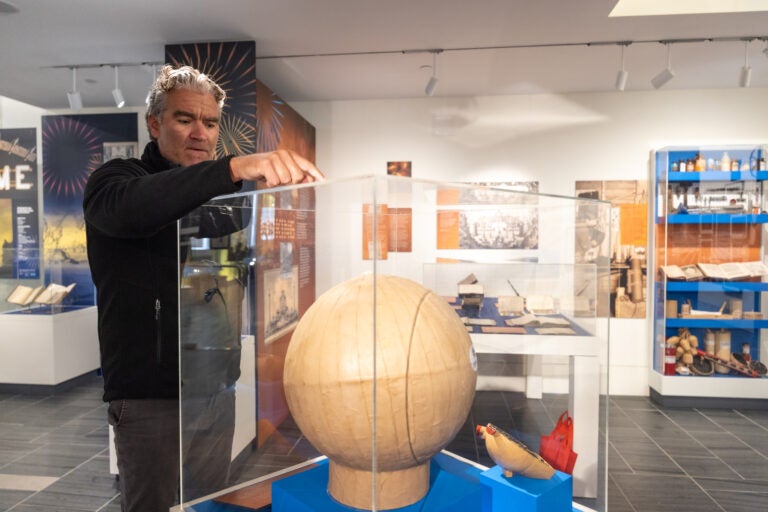
Jesse Smith, Science History Institute director, explains how fireworks are packed in the fireworks history exhibit. (Kimberly Paynter/WHYY)
From Philly and the Pa. suburbs to South Jersey and Delaware, what would you like WHYY News to cover? Let us know!
Modern day fireworks displays look very different from the original gun powder-packed hollow bamboo tubes first invented in China about 1,000 years ago. In the early 1800s, Italians took up the trade and developed their own popular style of pyrotechnics, which took advantage of advances in chemistry to create colors other than the traditional yellow and orange. Italian immigrants brought these skills to the U.S. Settling in western Pennsylvania and eastern Ohio, fifth and sixth generations of those same families dominate the large fireworks shows we all have come to expect today.
A showcase of this history is now on display through July 31, 2027, at the Science History Institute’s free museum in Philadelphia’s Old City neighborhood, as part of the city’s celebration of the 250th anniversary of the Declaration of Independence.
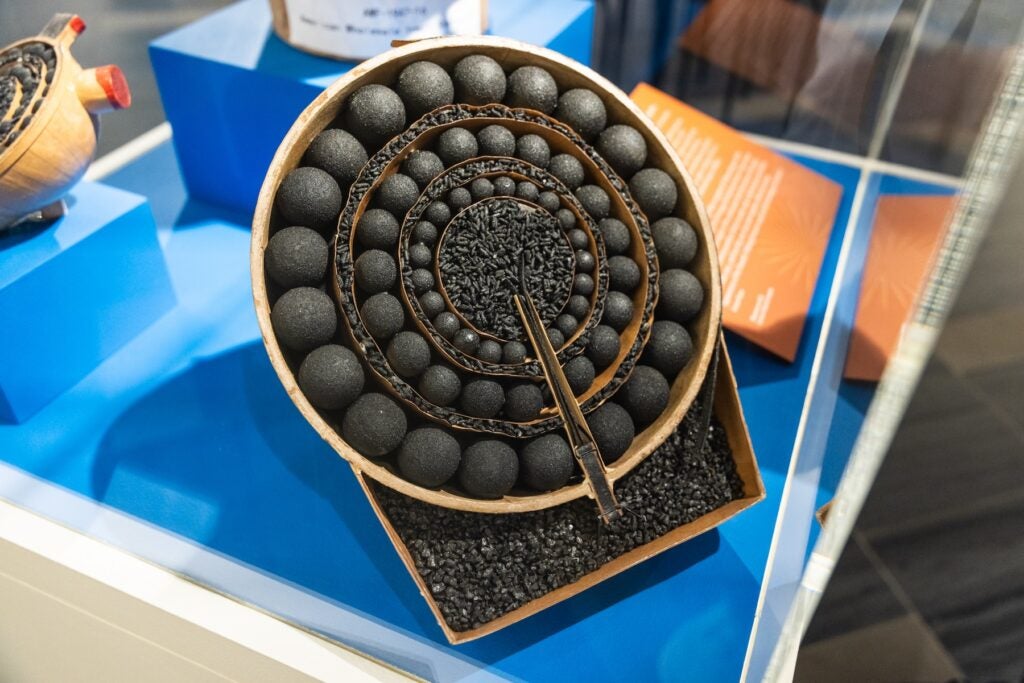
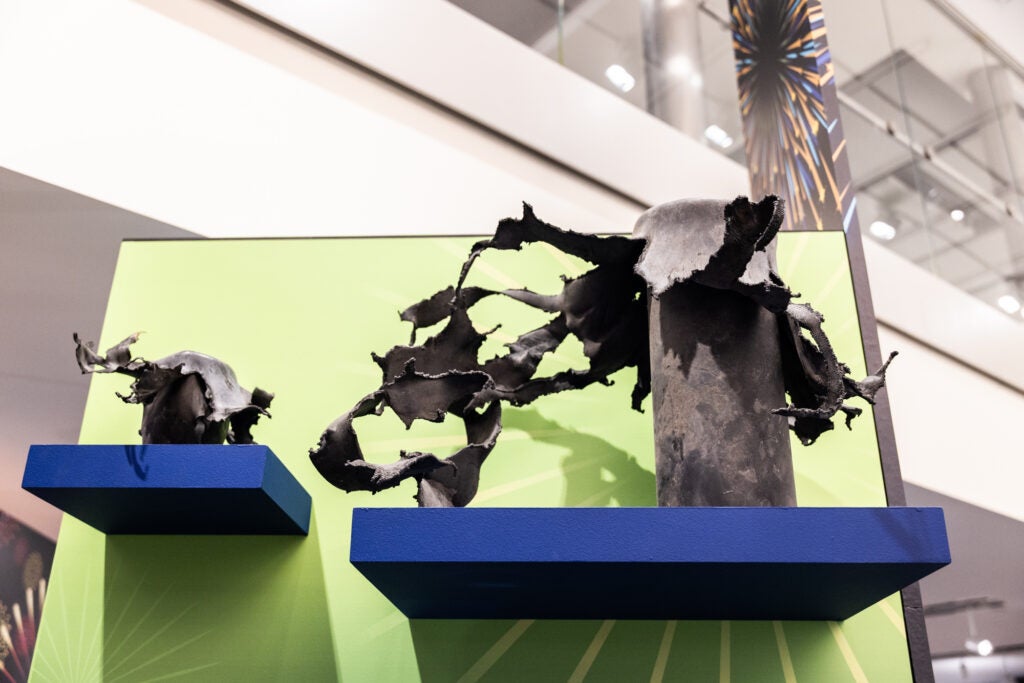
“Flash! Bang! Boom! A History of Fireworks” includes canisters, flasks, remote detonators, cleaning rods, helmets and handwritten 19th century fireworks recipe books.
“It wasn’t until what we sometimes think of as the chemical revolution of the 1800s before we start to see the reds and the greens and the purples and the different kinds of effects that are familiar to us today,” said Jesse Smith, director of the museum.
Red, white and blue are produced by metal salts like strontium, magnesium, copper, lead and barium. Lithium gets you pink, while sodium salts create yellows.
“A lot of this work did not happen in scientific laboratories, but was done by what we might think of as hobbyists who are tinkering with these different chemical compositions and discovering new formulas, new recipes,” he said.
Smith said the recipe books on display would have been “closely guarded family secrets.”
While fireworks create an exhilarating sensory experience with sound and color, the resulting smoke includes carbon dioxide, carbon monoxide and nitrogen along with toxic metals. Although the worst air quality impact may be short-lived, the American Lung Association advises those with breathing issues like asthma, children and older adults to keep their distance from the smoke and stay upwind.
America’s 250-year-old fireworks tradition
America’s Fourth of July fireworks tradition stretches back 250 years to the days immediately after the signing of the Declaration of Independence.
“John Adams actually wrote to his wife, Abigail, saying that he had hoped that the anniversary would be celebrated with pomp and circumstance and fireworks, and we’ve been doing it ever since,” said Jesse Smith, director of the museum.
But Smith said those colonial fireworks would have been very different than what we see today.
“The fireworks that we see on the Fourth of July here in the United States today are a relatively recent way of launching fireworks,” Smith said. “For centuries there would have been rockets and things set off into the air, but there would also be a lot of ground effects. So things like buildings that would be fabricated to burn or pyro-theatricals that would include other elements like fountains,” he said.
Related Content
Take that, Boston: Philly has more Declarations of Independence than any other city
Institutions blocks apart from each other have assembled 15 Declarations of Independence among them. They all tell a different story.
1 month ago
Listen 1:22Today, electric charges are used to launch fireworks and they include choreography with multiple pyrotechnics exploding in the sky at once, said Julie Heckman, executive director of the American Pyrotechnics Association. Ground displays are no longer common because only a small crowd could enjoy them.
Heckman said while there are more colors today than 250 years ago, fireworks manufacturers are still using similar recipes and are all made by hand. Another difference is that China is the global provider of fireworks. The shift away from American manufacturing took place in the 1970s with the opening of U.S. trade with China and the introduction of regulations from newly established agencies like the Environmental Protection Agency and the Occupation Safety and Health Administration.
“The regulatory climate got so stringent that it really became a burden on these … companies to manufacture,” Heckman said. “If [the fireworks] are not coming from China, [they’re] coming from Japan, Spain, Italy, France and Germany.”
Manufacturing fireworks is a dangerous job because it involves working with explosives and chemicals.
“The [U.S.] regulations limit the amount of explosive composition that can be in process at any one time, and it restricts the number of personnel in a building,” Heckman said. “People just don’t want to do that kind of work, and we wouldn’t be able to pay the wages.”
Heckman said the Trump administration tariffs of 145% threatened the industry last year, but since those have been ruled unconstitutional there are fewer impacts this year for the companies putting on July Fourth displays.
“They have a sixth-generation relationship with the Chinese factories,” she said. “They go over and meet with the manufacturers, tell them they like this product, but they want to add this color to it, or they’d like to have a tail, or they’d like to have a salute added to it. So it’s a great partnership.”
The pandemic boom in fireworks
Consumer fireworks, which experienced a boom during the pandemic with a 55% increase in use between 2019 and 2020, are also manufactured in China.
“Consumer fireworks sales were off the charts during the [COVID-19] pandemic,” Heckman said. “It started Memorial Day weekend of 2020. “There was nothing to do, and no one could have predicted that the masses would turn to consumer fireworks for their form of entertainment.”
On the flip side, fireworks displays suffered from shows canceled in summer 2020. Fireworks injuries shot up in 2020 in line with the increase in retail sales, jumping about 56% from 2019 to 2020.
“For first-time users, it’s really, really important to purchase fireworks from a reputable licensed dealer,” Heckman said. “You need to have a sober, responsible adult in charge of all firework activities, and you should never let children handle fireworks. Even sparklers can be dangerous if they’re misused.”
Heckman said the consumer and the display industry are expecting a similar boost in sales during the 250th anniversary celebrations.
-
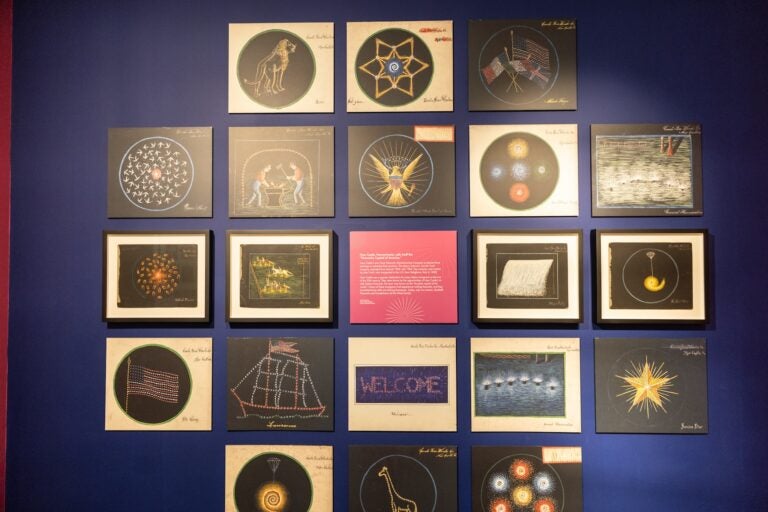
Paintings advertising products made by the Conti Fireworks Manufacturing Company which operated from 1902 to 1964. (Kimberly Paynter/WHYY) -
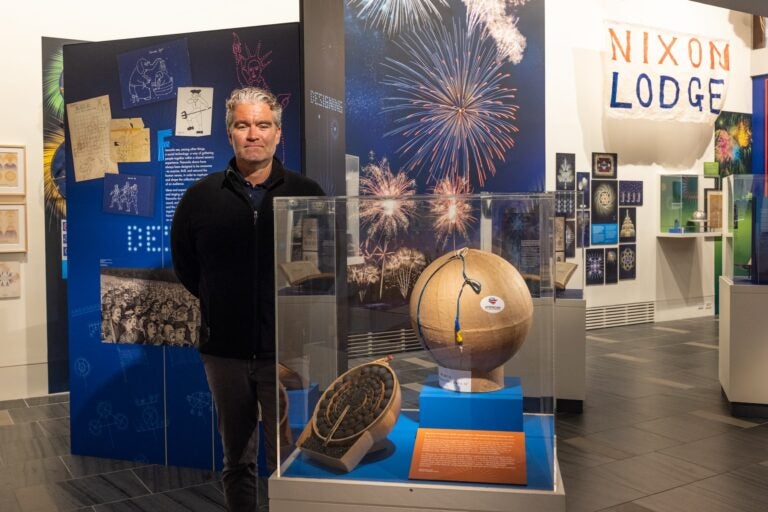
Jesse Smith, Science History Institute director, stands in the fireworks exhibit in the museum. (Kimberly Paynter/WHYY) -
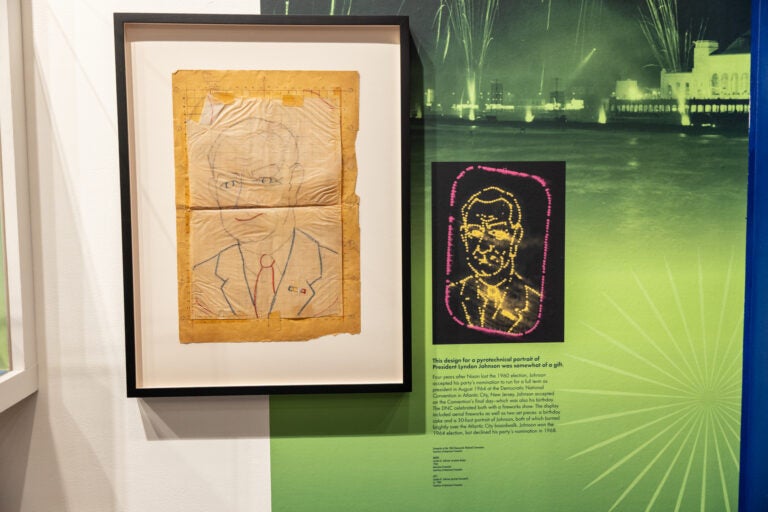
A Lyndon Johnson set piece, which was a ground-based firework display, for the DNC in August of 1964, part of the display at the fireworks history exhibit at the Science History Institute in Philadelphia. (Kimberly Paynter/WHYY) -
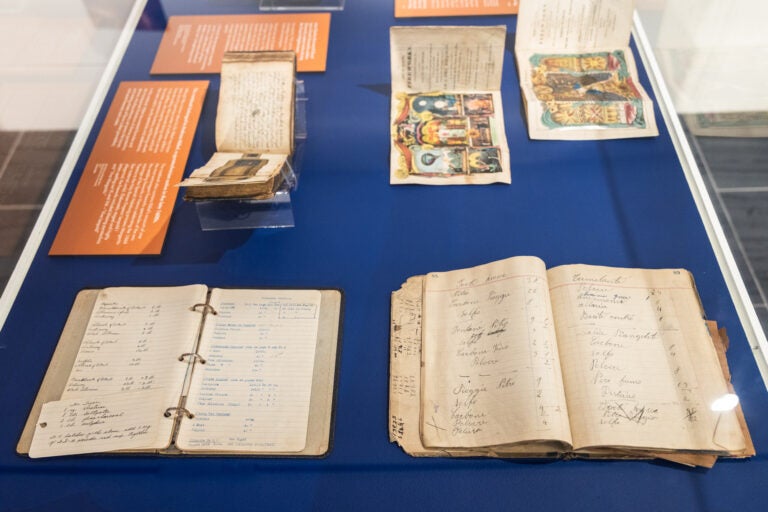
Handwritten recipes for fireworks on display at the fireworks history exhibit at the Science History Institute in Philadelphia. (Kimberly Paynter/WHYY)p

Get daily updates from WHYY News!
WHYY is your source for fact-based, in-depth journalism and information. As a nonprofit organization, we rely on financial support from readers like you. Please give today.
Part of the series
Philadelphia 250
The United States is marking its semiquincentennial — or its 250th anniversary — in and around the City of Brotherly Love.
After days of oppressive heat, thunderstorms cut Philly’s July 4th concert short
After storms forced attendees to evacuate, the concert resumed around midnight with a shortened performance by The Roots, followed by fireworks.
1 month ago
Listen 0:55
Patriotic Pet Parade at Betsy Ross House in Old City celebrates America’s 250th birthday
The competition boasted 22 pets donning a range of red, white and blue attire.
1 month ago
Valley Forge National Historical Park, born on the Fourth of July, celebrates America250
The pivotal Revolutionary War site in the Philly suburbs hosted hundreds of people for live readings of the Declaration of Independence, a cannon fire demonstration and more.
1 month ago
Listen 1:45