
As winter drags on, Philadelphia advocates are pushing to dispel myths about suicide risk
Research shows that rates of suicide are actually higher during the warmer months of the year, not during the winter holidays, a common misconception.
Listen 1:11
Amanda Blue lost her husband, Robert Metzger (left), to suicide in 2008. Several years later, her son, Alec Metzger, died by suicide when he was 14. (Courtesy of Amanda Blue)
Help is available
If you or someone you know is in crisis, call or text the National Suicide and Crisis Lifeline at 988. The hotline is staffed 24/7 by trained counselors who can offer free, confidential support.
If you are a veteran trying to reach the Veterans Crisis Line, call 988 and press 1. Spanish speakers can call 1-888-628-9454. People who are deaf or hard of hearing can call 1-800-799-4889.
Philadelphia mental health advocates say now is the time to be vigilant about suicide risks, more so than over the winter holidays. They are working to bring attention to a common misconception about suicide, which is that the risk increases during the winter holidays.
Newer research shows that’s not true. Deaths actually drop during that period and rise in the warmer months of spring and summer.
Advocates say now that the holidays are over, people should be mindful of how friends, colleagues and loved ones could be struggling with isolation, depression and other stressors that can sometimes be warning signs for suicide.
“The holidays are sort of one of those things where people limp through the winter, maybe struggling,” said Amanda Blue, a mental health advocate. “Then you have that layered with things like seasonal affective disorder and other aspects of winter that make it harder for people – less socialization, communication, etc.”
More than 48,000 people in the United States have died by suicide each year since 2021, according to the Centers for Disease Control and Prevention. Fatality rates are highest among people 75 and older, men, and Native American and Alaska Native communities.
Blue teaches people about how to recognize suicide risk factors like depression, anxiety and other mental health conditions as the education director at Jefferson Health’s David Farber ASPIRE Center, which focuses on suicide prevention, intervention, research and education.
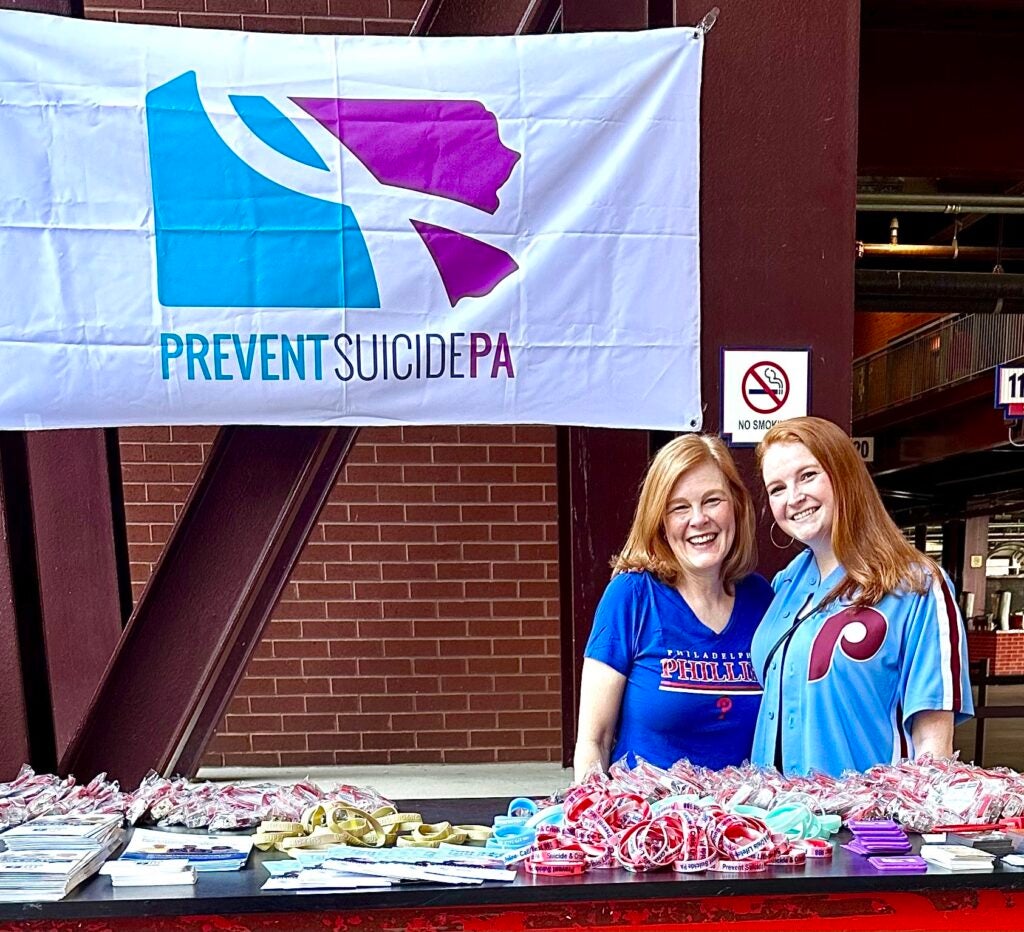
Mental health issues are often at play, but even people who don’t have a diagnosis can still be at risk for self-harm, she said. Major or stressful life changes, physical injuries or medical conditions, and grief can also be factors.
That was the case when Blue lost her husband, Robert Metzger, to suicide in March 2008, just a few months after he had open-heart surgery. Close to the four-year anniversary of his death, Blue lost her 14-year-old son, Alec Metzger, to suicide as well.
“Neither my son or my husband were diagnosed with a mental health condition,” she said. “We need to be focused and paying attention to the people around us and watching for changes in their behavior and withdrawal and some of the things that we know to be symptomatic of someone that’s struggling.”
Shortly after losing her husband and son, Blue jumped into suicide education and awareness work. She left behind a career in graphic design and went back to school to get a master’s degree in public health.
She joined the ASPIRE Center in 2023. Her daughter, Hannah Metzger, also works at the center as a researcher and mental health advocate.
“I felt compelled to help people understand this,” Blue said, “and recognize when someone is struggling and actually step into the void, not as a professional who can fix their issues or problems, but as a concerned, caring individual who can say, ‘Hey, you don’t seem like yourself. Is there something you want to talk about? Is there something going on?’”
Related Content

Trump administration eliminating LGBTQ+ youth suicide hotline worries Philadelphia community
According to a national survey by The Trevor Project in 2024, 39% of LGBTQ+ young people seriously considered attempting suicide over a year's time.
8 months ago
Listen 0:47In mental health first aid training, Blue has participants practice how to approach friends or loved ones with their concerns and ask if they’ve ever thought about killing themselves.
The activity helps dispel another lingering myth about suicide, she said, which is that talking about it could inspire someone to harm themselves. Research actually shows that asking someone about possible suicidal thoughts could deter them from acting on it.
Creating a support system for family members and survivors of suicide loss is also crucial, Blue said, and is part of the work she does at the ASPIRE Center. Suicide-related support groups and grief counseling can serve as safe spaces for people to process talk about their concerns or the loss of a loved one.
“Suicide is a very unique loss,” she said. “There are a lot of aspects of guilt. I think it’s one of the biggest ripple effects of suicide. People who knew someone lost to suicide tend to feel some strange guilt about, ‘What could I have done differently?’”
By raising awareness and educating people on how to help others, as well as expanding access to treatment and care for those at risk of suicide, Blue said she hopes there will be fewer attempts and deaths in the future.
“Not everybody that’s struggling is suicidal,” she said, “but the more people that we can kind of connect with and connect with resources when they’re struggling, the more people we can help and prevent from becoming anything more.”

Get daily updates from WHYY News!
WHYY is your source for fact-based, in-depth journalism and information. As a nonprofit organization, we rely on financial support from readers like you. Please give today.

Plastic surgery regret — what causes it, and how to avoid it
At 21, Carla Papas was excited to get a new nose — instead, she ended up with medical bills, trouble breathing, and crippling insecurity.
1 year ago
Listen 15:29
A growing medical field looks at how skin and mental health are connected
Patients with skin conditions have long known their skin can affect their mental health and vice versa. More clinicians are exploring that.
1 year ago
Listen 10:50
A bill is moving forward in N.J. to allow employees eligible for Family Leave to get bereavement leave from work under certain conditions.
1 year ago
Listen 1:16