Philadelphia City Council rejects most of Mayor Cherelle Parker’s tax proposals to advance $7.1B budget
Parker blamed “billionaire tech companies” after Council rejected a $1 per-ride tax on rideshare services meant to benefit the school district.
Listen 1:17
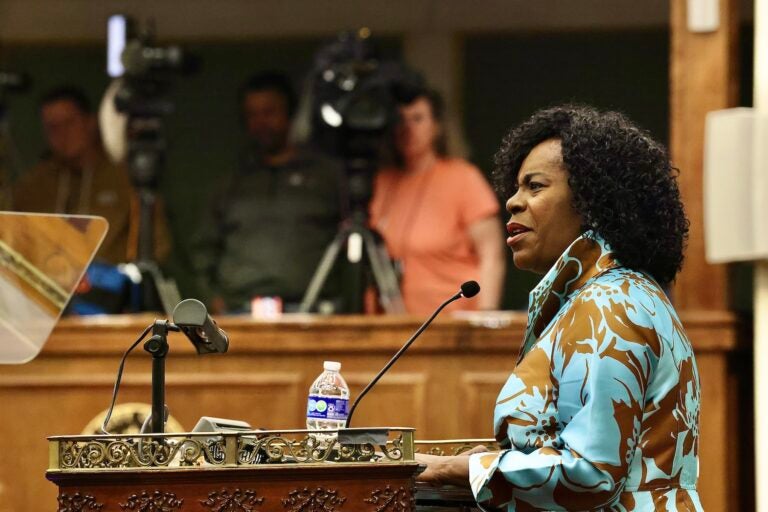
File: Philadelphia Mayor Cherelle Parker delivers her budget address at City Council, March 2026. (Emma Lee/WHYY)
From Philly and the Pa. suburbs to South Jersey and Delaware, what would you like WHYY News to cover? Let us know!
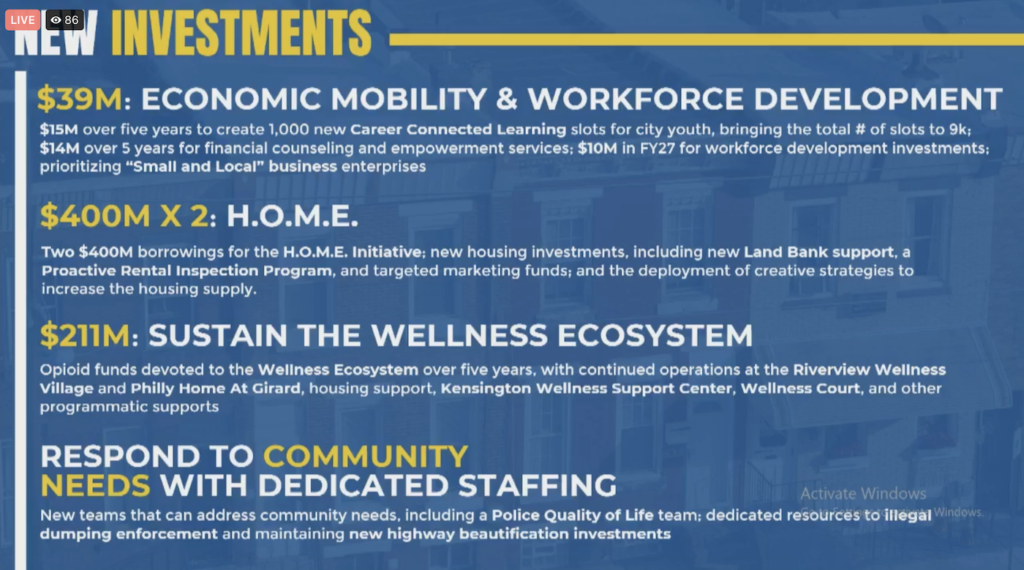
Philadelphia Mayor Cherelle Parker took shots at rideshare companies Thursday after her proposed $1 tax on Uber and Lyft rides was struck down by City Council in the preliminary budget.
City Council approved a $7.1 billion preliminary budget, rejecting many of Parker’s tax proposals, including increases to hotel taxes and delivery services. A final vote on the budget will take place June 11.
Mayor says ‘billionaire tech companies’ win ‘round 1’
Parker addressed what she called the “elephant in the room” after the rideshare tax increase was cut. The tax would have generated $48 million in recurring funding for the School District of Philadelphia, which is facing a $300 million structural deficit. The district will instead get a one-time payment of $48 million from the preliminary budget.
Parker called out the rideshare companies’ business practices and lobbying efforts, such as Uber’s six-figure advertising campaign, which said it would affect citizens facing a high cost of living, senior citizens and people with mobility issues.
“Asking and expecting them to contribute more to the city that they profit from is not unreasonable or illogical. It is fair,” Parker said. “It is the right thing to do, and I want you to know that I have no intention of stopping.”
Why Council struck down the tax proposals
In addition to the school budget deficit, Parker’s tax proposals also aimed to pay for pothole repairs and fund homelessness prevention. Councilmember Katherine Gilmore-Richardson said striking down the rideshare tax doesn’t mean her colleagues are against the school district.
“I reject anyone who will rise anywhere to say that this Council did not stand up to do what we needed to do for our children,” Gilmore-Richardson said.
Related Content
The multibillion-dollar blueprint calls for no new wage or real estate taxes, but does add surcharges to national chain deliveries and ride-hailing fares.
6 months ago
Listen 0:57Council President Kenyatta Johnson said his colleagues couldn’t get behind the mayor’s taxes because of the nationwide affordability crisis, such as rising gas and grocery prices.
“We’re not always going to agree,” Johnson said. “Sometimes, we have to agree to disagree. We’re an independent body. She had her proposal and members of City Council responded based upon what their constituents wanted them to do.”
In a statement, Councilmember Rue Landau said while the budget secures funding for essential school staff, “it is not a long-term solution.” Councilmember Isaiah Thomas, who heads the Council’s Education Committee, said the “balanced, no-new-tax budget” protects “working residents from additional tax burdens,” and work will continue to find a long-term solution for the school district.
Councilmembers Kendra Brooks and Nicolas O’Rourke jointly stated that the city “cannot afford to offer bigger and bigger tax breaks to corporations while closing our public schools and underfunding our transit system,” and that they “look forward to exploring revenue proposals.”
Parker’s “use and occupancy tax” proposal on cell phone towers was approved in the budget, and that will provide $2.4 million for the school district.
Last week, the School District of Philadelphia adopted a $4.6 billion operating budget for the 2026-27 school year. To cover the budget deficit, roughly $50 million in classroom cuts and an additional $169 million in central office cuts will be made.
This would freeze, cut or reassign about 265 positions throughout the district, but would prevent teacher layoffs and cuts at schools set for closure under the controversial facilities plan.
WHYY’s Aaron Moselle contributed to this article.

Get daily updates from WHYY News!
WHYY is your source for fact-based, in-depth journalism and information. As a nonprofit organization, we rely on financial support from readers like you. Please give today.
Part of the series
Thiel is heading back to the private sector, and there is a new city solicitor and deputy mayor in Parker’s cabinet.
1 month ago
Listen 1:00
U.S. Rep. Brendan Boyle and Mayor Cherelle Parker lauded the city’s explosion onto the world stage, but contended the Trump administration is reducing global goodwill.
1 month ago
Listen 1:11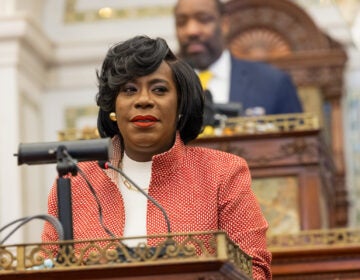
The multi-billion dollar spending plan includes $100 million for a 640-bed drug rehab center on the edge of the prison complex in Northeast Philadelphia.
2 years ago