Public art installations light up Philly’s Italian Market, honoring immigrant workers and paying homage to their histories
This two-night community event narrated the stories of the Italian Market’s immigrant workers through public art, colorful light boxes and guided tours.
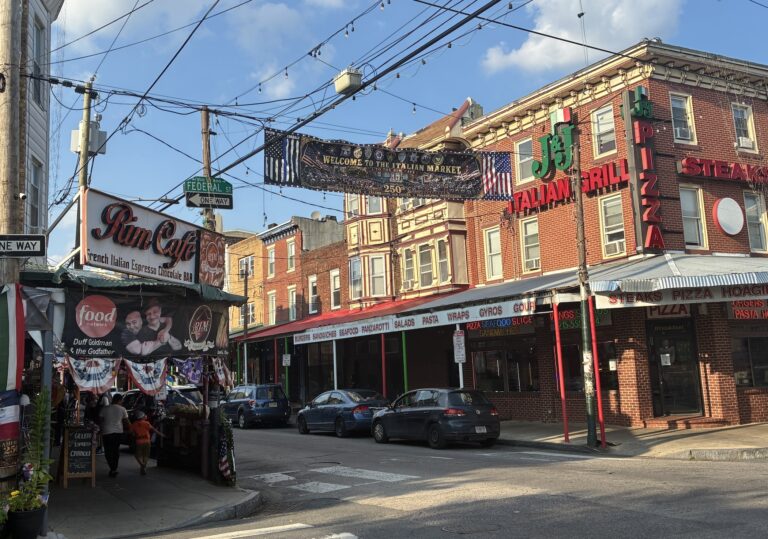
While the South 9th Street Curb Market is often referred to as the “Italian Market” because it was founded by an Italian immigrant, it’s home to a wide variety of immigrant communities and businesses. Cultures represented in the market include Italian, Mexican, Jewish, Black, Central American, Vietnamese and Irish, among others. (Hannah Pajtis for WHYY)
From Philly and the Pa. suburbs to South Jersey and Delaware, what would you like WHYY News to cover? Let us know!
When community members came to Philadelphia’s Italian Market on an August weekend, their appetites weren’t just for food ⸺ they came hungry for knowledge, listening to stories of the immigrant workers who make up the market’s pay-what-you-wish tours that spotlight immigrant-focused light installations and public art.
The speciality tours and temporary art pieces were part of a free two-night community celebration titled, “Light Up The Market: Honoring the Workers of 9th Street.” The event was organized by Our Market Project, a community building and public art project dedicated to preserving the stories of the market’s workers, residents and small business owners.
Michelle Angela Ortiz, founder and lead artist of Our Market Project, said she hopes the installations encourage visitors to think about and celebrate the people who keep the space thriving.
“The market has always been more than a place to shop, it’s a place where generations of families have built livelihoods, traditions and community,” Ortiz said. “Through light, storytelling and public art, we’re honoring the workers whose dedication gives this place its heartbeat.”
‘Part of something bigger’
While the South 9th Street Curb Market is often referred to as the “Italian Market,” it’s home to a wide variety of immigrant communities and businesses. Cultures represented in the market include Italian, Mexican, Jewish, Black, Central American, Vietnamese and Irish, among others.
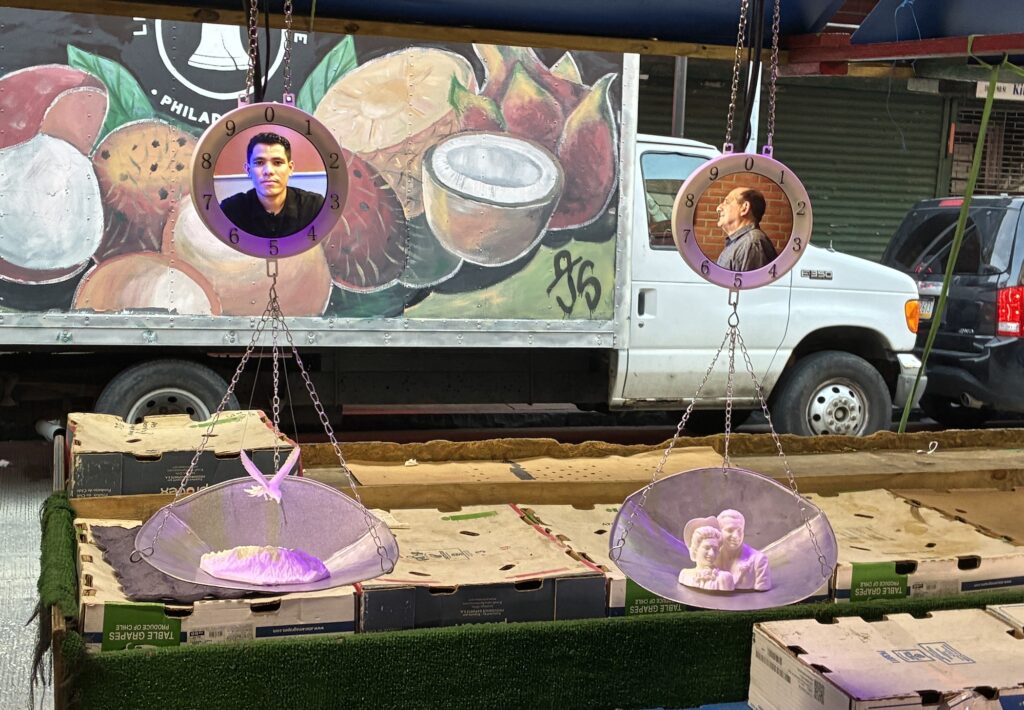
Our Market Project’s tours look to spotlight the diverse work and histories of these immigrant groups. The tours are about two hours long and include storytelling and food sampling.
“Bringing these common themes and common stories in one space helps people understand that they are a part of something bigger than just the small stand that they’re at,” Ortiz said.
Our Market Project’s tours are operated through Beyond the Bell Tours, a Philadelphia tour company specializing in inclusive tours highlighting marginalized groups and their histories.
Joey Leroux, co-founder of Beyond the Bell, said the market tours are designed to educate Philadelphians who want to learn more about immigrant history and tourists who may be unfamiliar with the city and space.
“It’s important in this moment to look back and also to recognize the contributions that have been made to Philadelphia to make it the city that we love today,” Leroux said.
Related Content
The friends are offering “pay-what-you-can” services to help build community and normalize asking for help.
2 months ago
‘Beautiful and functional’
Art pieces spotlighted during the two-night celebration came in various shapes, sizes and mediums.
Temporary works included a movable push cart, which illuminated photos of past and current market workers, as well as produce scales that showed interviews with community members. The market’s permanent fixtures are revitalized produce stands and the glowing light boxes, which can be found at nine locations on South Ninth Street between Washington Avenue and Federal Street.
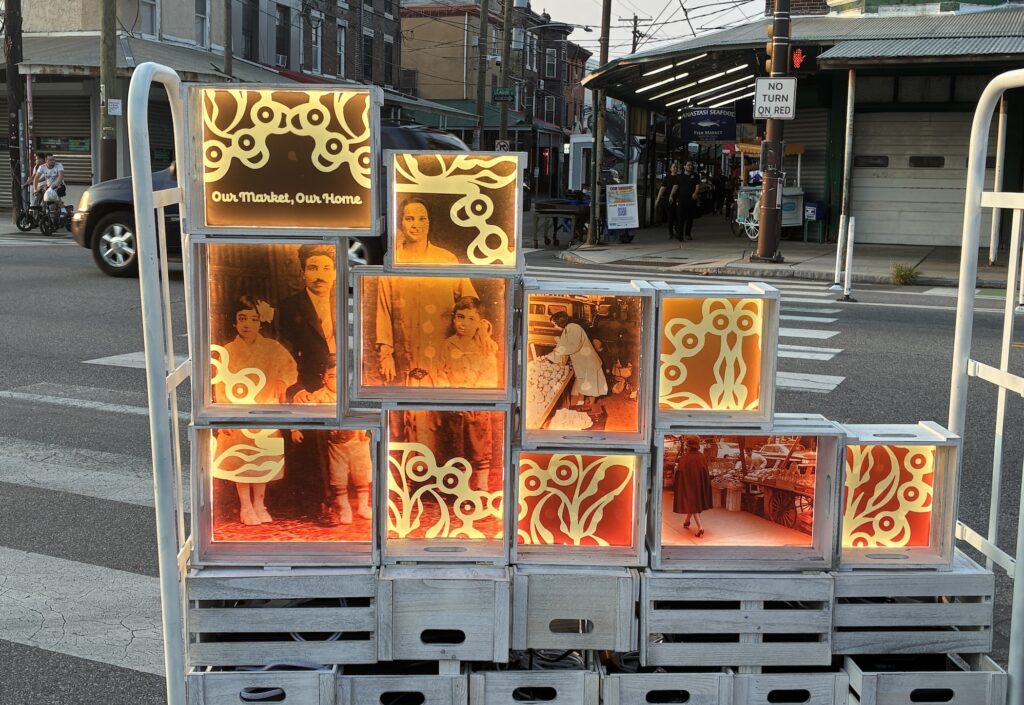
Colorful light boxes depicted stories from different local business owners and focused on family and community. Tour guides like Melissa Nong narrated these stories to visitors. One piece Nong spotlighted depicted Maria Carmen, owner of Mexibike, a local bike shop. The art piece featured Carmen and her children, accompanied by monarch butterflies, and stated “when you work hard for your dreams, they come true.”
“The bicycle is being [used as] an homage to the family business, and the symbol of the butterfly is to represent their long and arduous journey from Mexico to the United States. The monarch butterfly [has] the longest migratory patterns of any genetic butterfly,” Nong explained to the tour group.
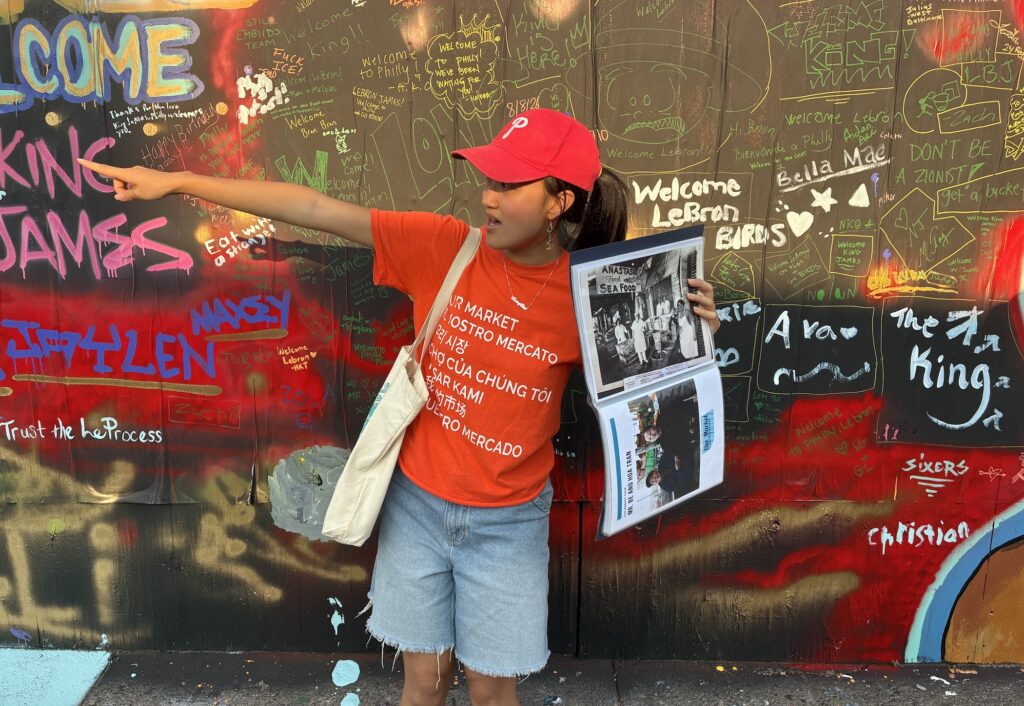
In planning and leading the execution of the art installations, Ortiz, of Our Market Project, spoke directly with her neighbors in the market to identify their wishes and needs. Conversations were held around Ortiz’s dinner table, with her mom serving home-cooked meals.
The result of the conversations are the art pieces that stand today. The light boxes illuminate the market’s streets, providing increased safety for community members, and the revitalized produce stands claim space in the market that would otherwise be taken for city parking.
“To have something that’s beautiful is great, but to have something that is beautiful and functional is really valued here in the market, and sustainable,” Ortiz said.
Related Content
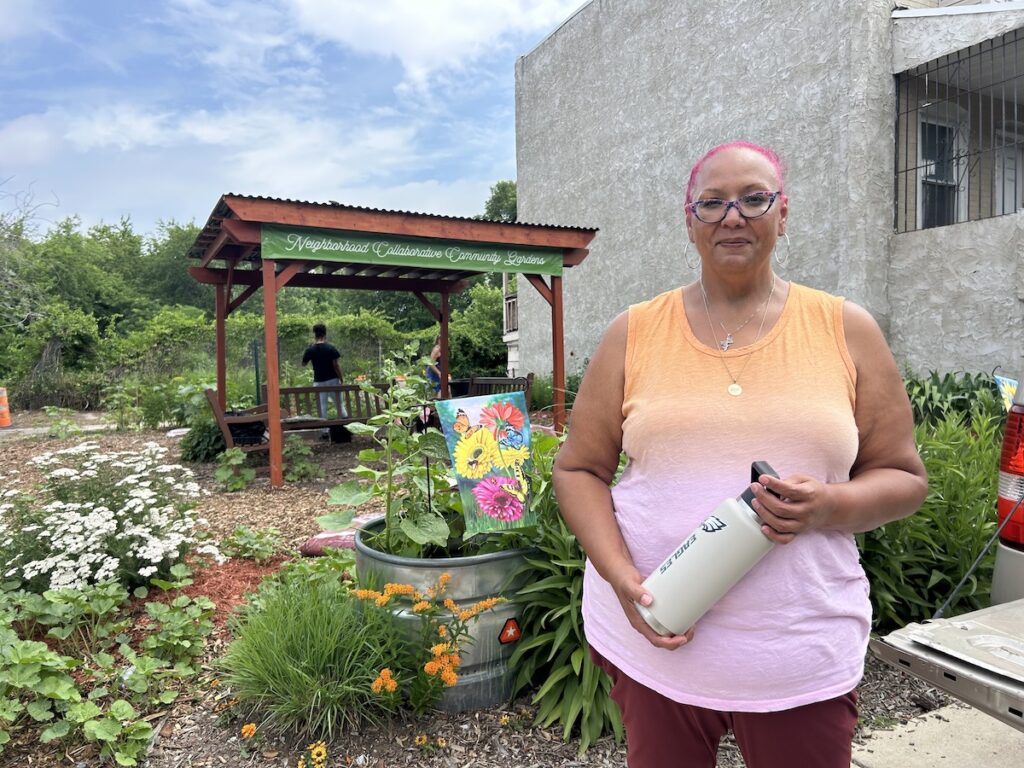
Camden nonprofit plans to keep bus riders cool with shade and pollinator gardens
Neighborhood Collaborative Community Gardens’ bus shelters will include shade trees, pollinator-friendly plants and air quality monitors.
2 months ago
Listen 1:11‘A space for people that might feel othered’
Bringing people together, whether it’s different vendors in the market or outside visitors to the space, is integral to Ortiz’s work. Ortiz said visiting the market in person through a tour allows an individual to experience the fullness of it, especially amid a culture of convenience.
“In a world of Uber Eats and Instacart, what really makes the market are the stories and the people that are here,” Ortiz said. “Aside from the fact that you get good and cheaper products, it’s an experience.”
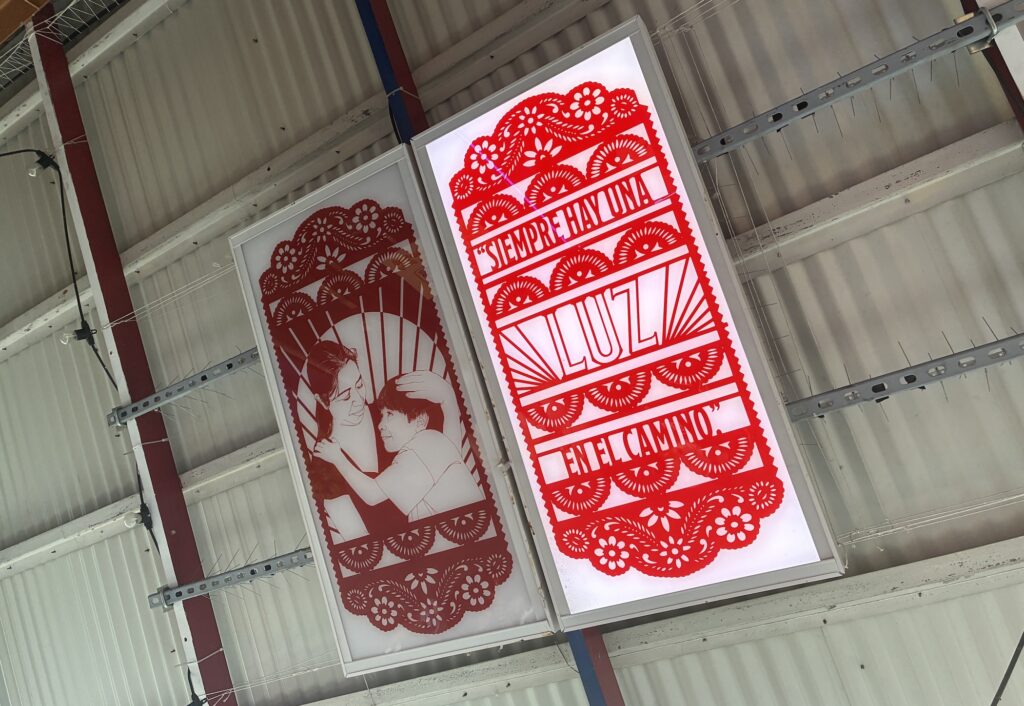
The art of noticing the space’s moving and unmoving parts is crucial to the market experience. Mandy Perez, who moved to Philly six years ago, said she’s been to the market a handful of times, but hadn’t noticed the light installations before she went on the specialty tour.
“I had never realized the light boxes, I don’t look up when I walk, and I was like, ‘Wait, these are so cute,’” Perez said. “I speak Spanish, so seeing our culture represented on the streets here, it’s really beautiful.”
Our Market Project has also been a way for Ortiz to bring her neighbors together. Ortiz said when her family first moved to the market, their neighbors weren’t welcoming and isolated her family because of their Latin heritage. Ortiz remembered the kindness one of her neighbor’s family had shown her, and tried to replicate this feeling for others.
“I wanted to build a space for people that might feel ‘othered,’” Ortiz said. “There are many stories like that of people feeling like, ‘Oh well, you don’t belong here,’ or ‘You look different,’ or ‘You have a different language.’ When we don’t understand the history of this place, it’s very easy to fall into that trap.”
Whether it’s bridging the gap between two vendors who don’t interact or introducing a friend to a new business owner, Ortiz said the tours — like the art — are all about community.
“By learning of each other’s stories, they learn that they’re not that different,” Ortiz said.
Editor’s note: This story has been updated to remove an error about the origins of the market and to correct the spelling of Melissa Nong’s name.

Get daily updates from WHYY News!
WHYY is your source for fact-based, in-depth journalism and information. As a nonprofit organization, we rely on financial support from readers like you. Please give today.
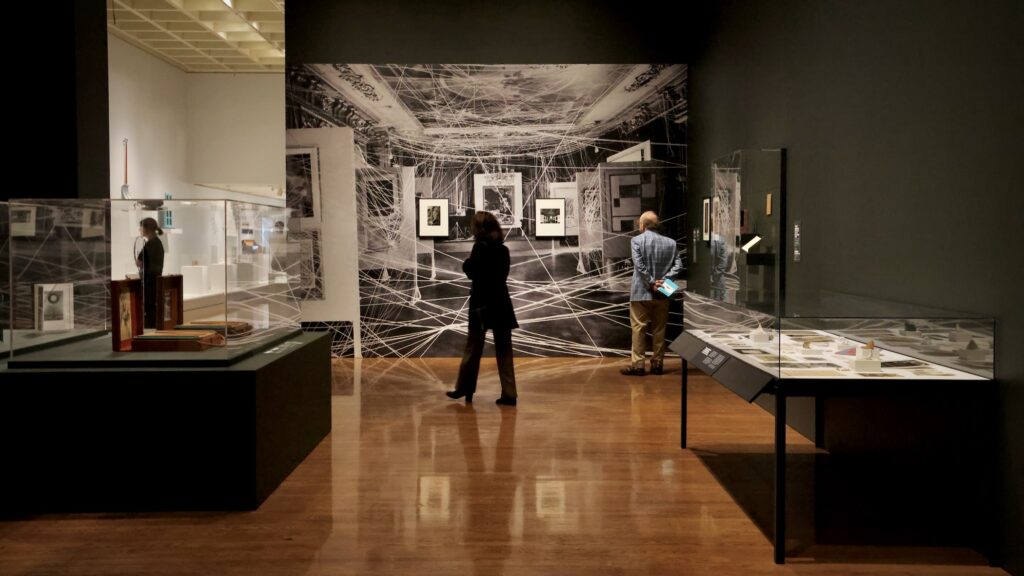
More than a joke about a urinal, Duchamp’s museum retrospective traces a shape-shifting artist who defied museums.
11 hours ago
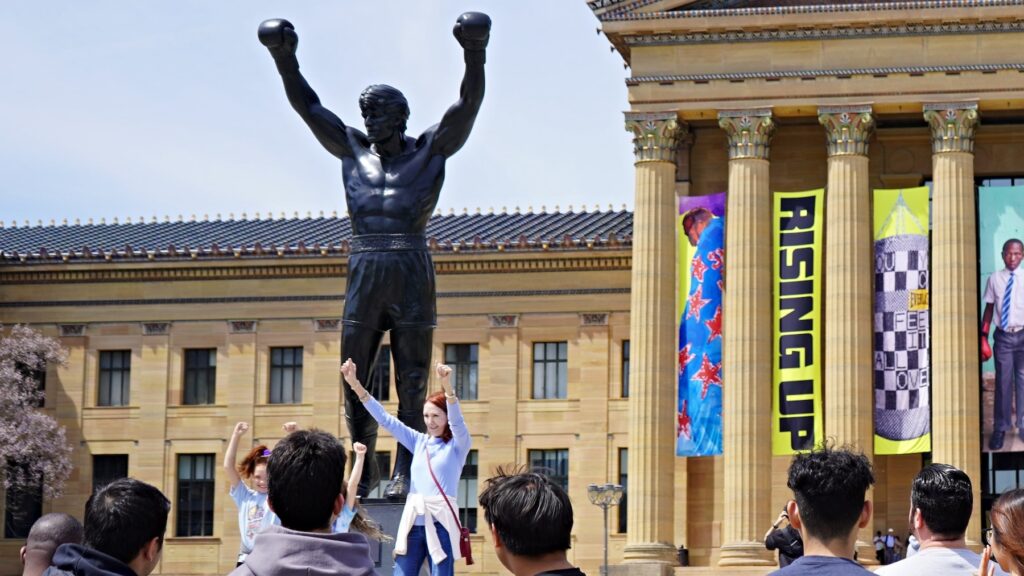
Oct. 8–11: Wilmington International Film Festival, Teddy Swims in Philly, and an ode to Bruce Springsteen in South Jersey are among the event highlights.
2 days ago
Listen 5:30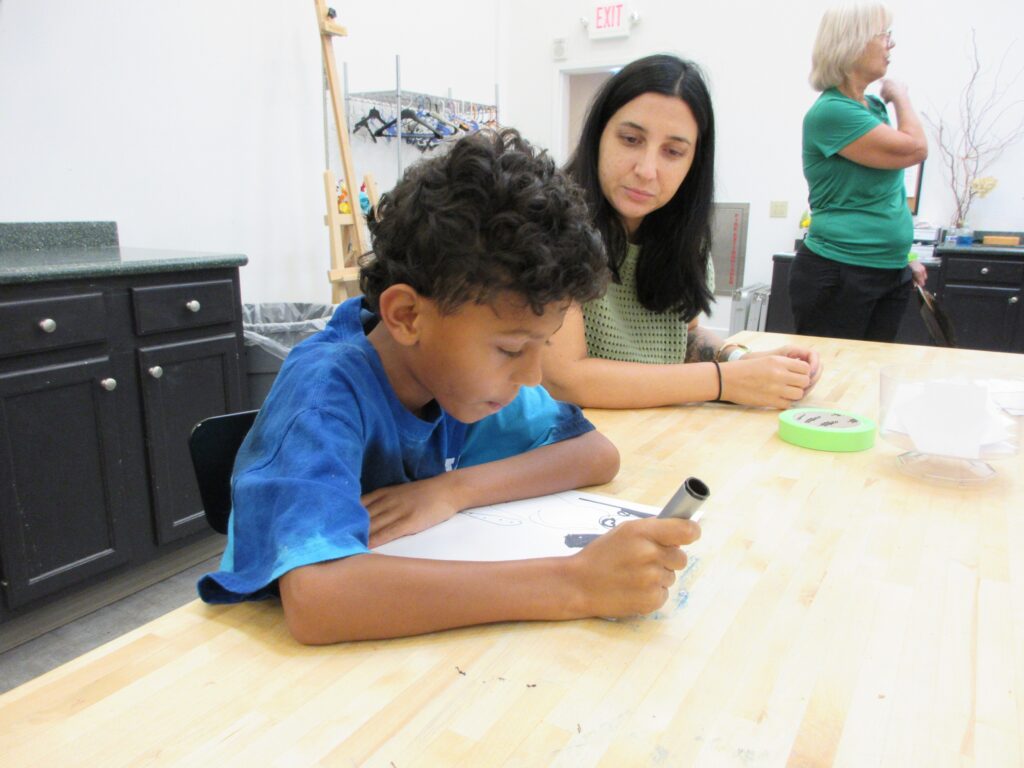
New Jersey community arts programs fill gaps in kids education and spark creativity
When arts programs are limited in programming and time in the traditional classroom, community arts programs step up to round out exposure.
3 days ago
Listen 2:41