

Pennsylvania Public Utility Commission advances measure that aims to protect ratepayers from data center demand
AI data centers have been blamed for higher electricity bills.
Listen 1:21
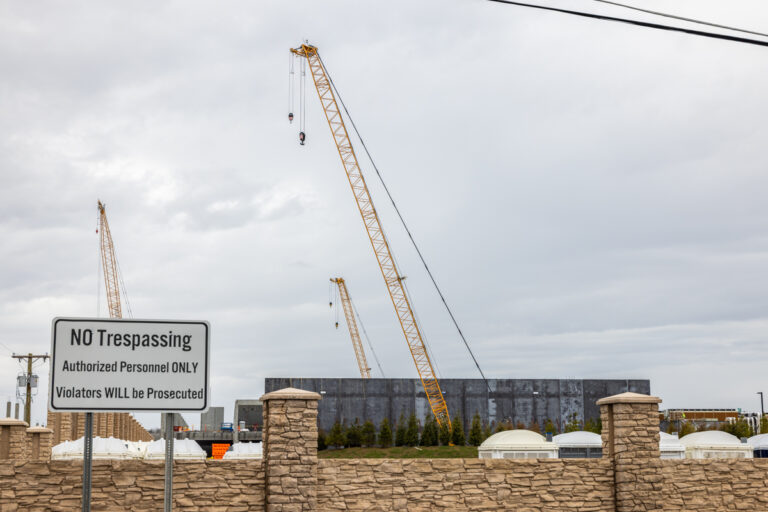
Vineland, N.J.’s data center is under construction in March of 2026. (Kimberly Paynter/WHYY)
From Philly and the Pa. suburbs to South Jersey and Delaware, what would you like WHYY News to cover? Let us know!
The Pennsylvania Public Utility Commission on Thursday advanced guidance for when energy companies connect high-demand electric users such as data centers.
The acceleration of artificial intelligence has boosted demand for energy-hungry data centers, requiring more power at a faster rate than typical internet activities.
PJM Interconnection, which manages the region’s electrical grid, has pointed to the increase in data centers as a reason for increased demand leading to higher electricity bills.
The commission’s proposed model tariff, which provides recommendations rather than regulations, aims to ensure data centers and other large energy users can connect to the grid quickly, while protecting rate payers from higher electricity bills.
“I have said on several occasions, we are at a critical juncture for our electrical grid,” said PUC chairman Stephen DeFrank during Thursday’s hearing. “Data centers and advanced manufacturing are causing explosive load growth that our system has not seen in generations. Without clear rules and protections, however, generations of Pennsylvanians can be burdened by the cost of abandoned or unused infrastructure.”
Rates for generation — the supply of energy to homes — increased residential bills by 10 to 20% during parts of last year, driven by capacity costs set by grid operator PJM Interconnection.
The effects are evident in Pennsylvania, where utility shutoffs increased by 21% last year, leaving ratepayers in the dark.
“We are already paying in the neighborhood of a billion dollars more this year in generation costs as a result of that increase in capacity, which is directly attributed to the load growth from data centers,” said Elizabeth Marx, executive director of the Pennsylvania Utility Law Project.
“Going forward, we’re anticipating that as the systems are built out to serve this large load, there is a real risk that the transmission lines to deliver the energy to data centers, the distribution system upgrades necessary to handle that level of load growth in a short period of time, could seep their way into residential rates or small business rates, making energy more unaffordable than it already is.”
‘The devil’s … in the details’
The PUC’s proposed model tariff defines large load customers as those that require more than 50 megawatts individually or 100 megawatts in the aggregate – equivalent to powering about 10,000 to 100,000 homes.
The recommendations include issuing fees for developers that terminate their contracts before electrical distribution companies recover the cost of investments. This would protect customers from paying for projects that never get built.
The guidance also calls for contributions from large-load customers to universal service programs that assist ratepayers struggling to pay their bills.
During the hearing, the PUC approved two new amendments introduced by DeFrank that aim to further protect ratepayers. One amendment affirms that large load customers should be permitted to construct their own infrastructure upgrades when feasible to prevent costs from being passed on to ratepayers.
Another amendment recommends electric distribution companies recover all transmission and distribution costs necessary to interconnect the large-load customers, except for any upgrades or additions that were already planned by the electric distribution company before the large-load customer requested service. Currently, infrastructure costs are paid for by all ratepayers — including households, small businesses and corporations — which has led to increased bills.
“The devil’s going to be in the details,” said PUC Vice Chair Kimberly Barrow during the hearing. “I want to encourage our [electric distribution companies] to be bold in crafting the rules that will offer more complete solutions to the challenges that we’re facing in the PJM region and in this commonwealth.”
Related Content
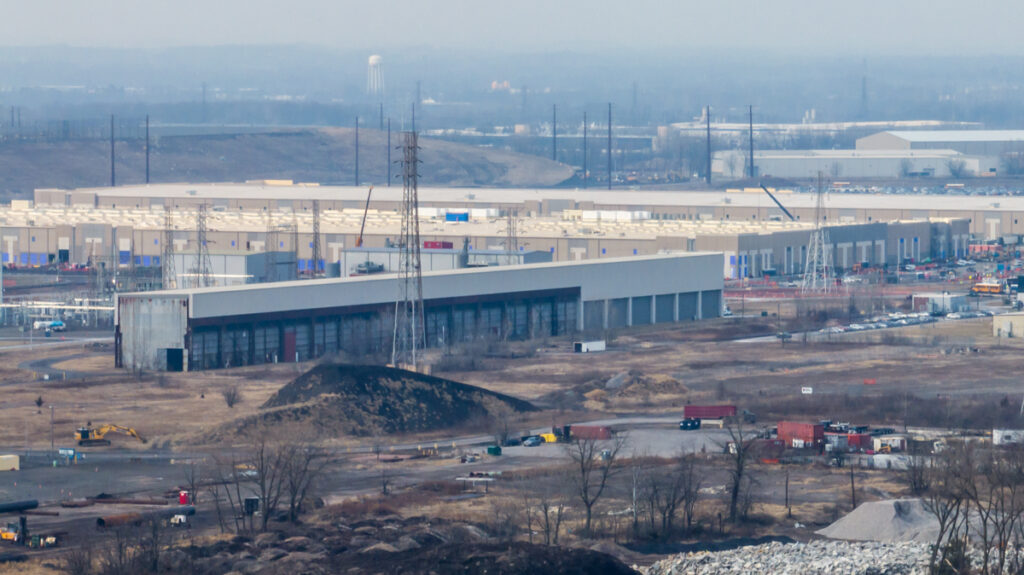
Pa. data centers: How lawmakers are responding, from electricity and water use to tax breaks
Dozens of data centers are planned for the Philly region. Some lawmakers want to put up guardrails, while others want to speed their development.
6 months ago
Listen 1:02A revised final order incorporating those changes will be issued in the coming days, a PUC spokesperson said.
The Data Center Coalition, a trade group for the industry, said in an email to WHYY News that it commends the PUC for creating a framework that lays out terms without “waiting for disputes to play out utility by utility.”
“The tariff framework is generally structured, transparent, and workable. As implementation moves forward, the key will be making sure the individual utility filings stay grounded in cost causation, remain end-use neutral, and apply these tools in a way that is proportional to actual risk,” said Dan Diorio, vice president of state policy, in a statement. “The data center industry will continue to be an engaged stakeholder to ensure ratepayers are protected and costs are allocated appropriately.”
Marx, from the Pennsylvania Utility Law Project, said that because the proposed model tariff is not binding regulation, additional steps must be taken to protect ratepayers, including legislative measures.
“We’ll also be looking to the electric distribution companies to make sure that in the tariffs that they propose, that they follow the commission’s model,” she said. “We have some signals of what the commission is going to put in their policy, but we don’t have yet the outcomes in terms of what commission policy is going to be set, or down the road, what the electric distribution companies are to do with that policy.”
A spokesperson for energy company PECO said it is reviewing the proposal, adding that its focus is maintaining a safe and reliable electric grid and ensuring large load projects don’t impact ratepayers.
“We also strongly support efforts to protect customers from higher costs that could result if data centers and other large users shift expenses onto residential and small business customers, or from investments in new infrastructure that ultimately goes unused,” PECO said in a statement.
Related Content
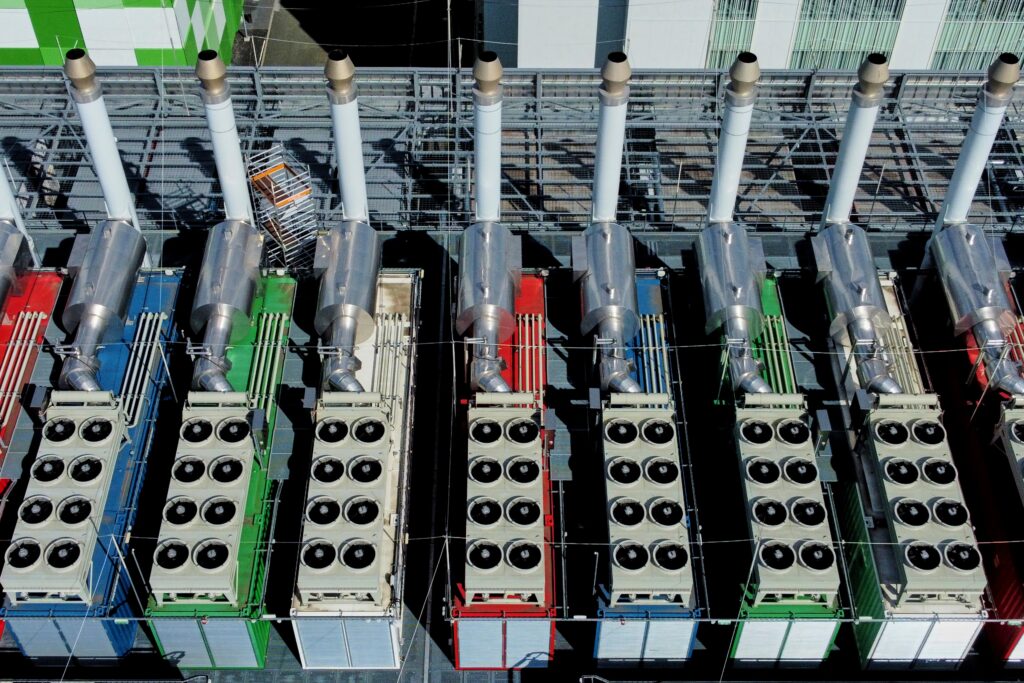
Politicians, energy providers, Big Tech and climate activists are talking about data centers. Here’s what to know.
8 months ago
PUC Commissioner Kathryn Zerfuss said the model tariff is just one step to balance reliability and affordability.
“I would encourage our regulated community to seriously consider what’s laid out in the model tariff, and yet caution using it as a shield against innovative ideas that can further protect rate payers and further preserve the stability and sustainability of our grid,” she said.
The Energy Association of Pennsylvania, a trade association that represents electric and natural gas distribution companies, said it looks forward to reviewing the model tariff.
“EAP supports the Pennsylvania Public Utility Commission’s leadership in addressing large load issues, as it is both commendable and necessary,” said EAP President and CEO Andy Tubbs in a statement.

Get daily updates from WHYY News!
WHYY is your source for fact-based, in-depth journalism and information. As a nonprofit organization, we rely on financial support from readers like you. Please give today.
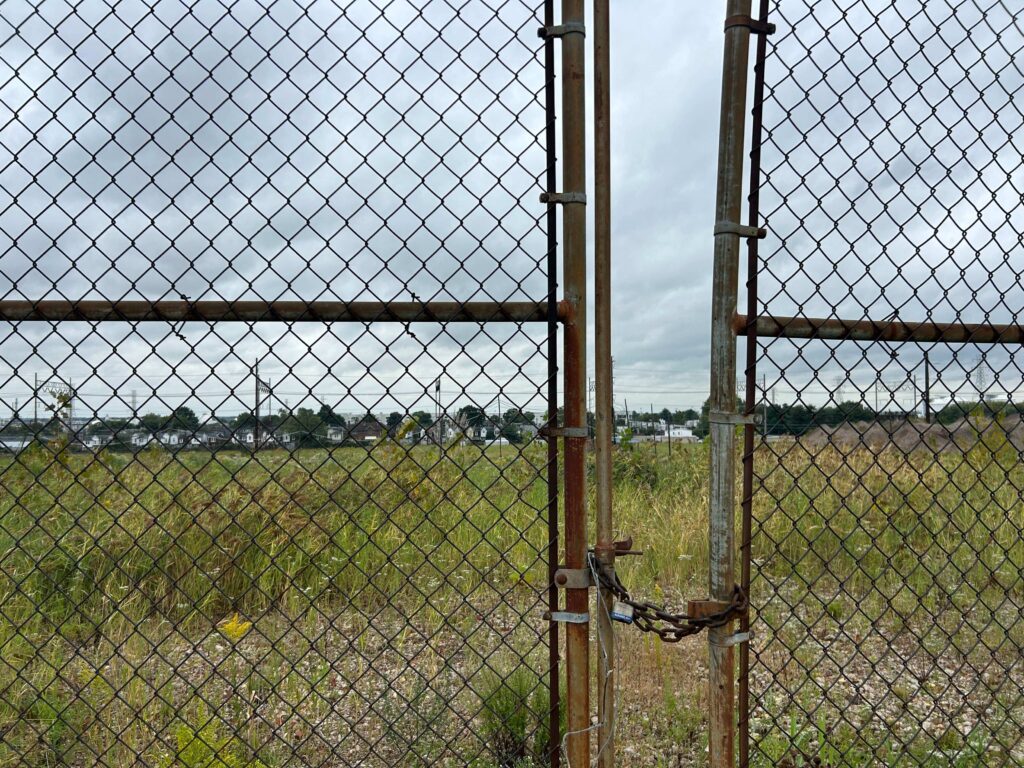
What we know about Delaware County’s potential data center plan, ‘Project Trainer’
Link Logistics is testing the waters for a data center that would sit around 100 feet from homes in Trainer, Pennsylvania.
2 weeks ago

The task force would be required to develop recommendations for data center regulations. Residents say a moratorium is needed in the meantime.
3 weeks ago
Listen 1:01
Data center growth could mean blackouts in coming years, Pa. utility regulators say
A report predicts electricity demand on the regional grid will nearly double by 2040, due almost entirely to data centers.
4 weeks ago
Listen 1:08