

N.J. lawmakers look to toss out higher coastal elevation rules
Lawmakers held a hearing Wednesday on a resolution that pits the state Legislature against Gov. Mikie Sherrill over climate-driven flood rules.
Listen 1:07
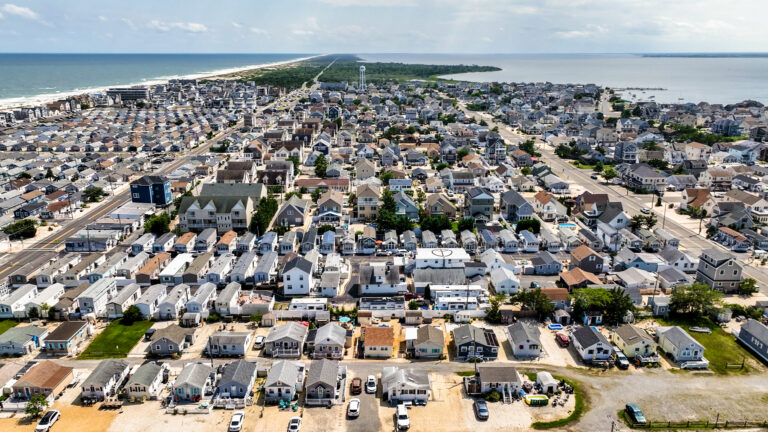
Aerial view of South Seaside Park, a community of about 400 people, north of Island Beach State Park on the Jersey Shore. (Kimberly Paynter/WHYY)
This story is part of the WHYY News Climate Desk, bringing you news and solutions for our changing region.
From the Poconos to the Jersey Shore to the mouth of the Delaware Bay, what do you want to know about climate change? What would you like us to cover? Get in touch.
Some New Jersey lawmakers want to strike down a new state rule that would require homes and businesses built along the Jersey Shore be elevated up to 4 feet higher. The rule is scheduled to go into effect in July.
Environmental committees within the state Senate and General Assembly heard a concurrent resolution Wednesday that would declare New Jersey’s Protecting Against Climate Threats rules inconsistent with legislative intent. The rules raise the state’s existing elevation standards to account for the amount scientists say sea levels could rise by 2100.
Sen. John Burzichelli, a Democrat who represents parts of Salem, Gloucester and Cumberland counties, said in an interview Tuesday that lawmakers are not questioning the need to adjust standards in the face of climate change, but that the pending rule is too sweeping.
“Our heads are not buried in the sand about making some changes,” said Burzichelli, who sponsored the measure alongside Democratic Senate President Nicholas Scutari and Sen. Michael Testa, Jr., a Republican who represents parts of Atlantic, Cape May and Cumberland counties. “It’s a question of, how do you do that in a way that’s rational and allows people to be able to afford to build a home or site a business in keeping with the spirit of common sense.”
The resolution sets up a possible showdown between the state Legislature and the new governor, Mikie Sherrill, over a rule finalized on the last day of Gov. Phil Murphy’s term.
If the concurrent resolution passes the Senate and General Assembly, it would kick off a 30-day window in which the state Department of Environmental Protection can modify or drop the pending rule. If the agency refuses to back down, the Legislature could then look to pass another concurrent resolution that would change or rescind the rule.
The Resilient Environments and Landscapes rule would expand the area in which coastal elevation standards apply, from 16% of the state’s land area to around 17%. The new elevation standards would apply to new construction and some buildings that are significantly renovated.
The Department of Environmental Protection and supporters of the rule say it is necessary to adjust outdated federal flood maps and protect New Jersey’s people and property from rising flood risk in the decades to come. The department has said that without the new rule, some buildings and roads built today will likely be “unserviceable,” by 2100.
A department spokesperson declined to comment on whether the agency would revise or rescind the rule if the Legislature were to pass the resolution.
The department has already scaled the rules back once. Last summer, the department revised the original proposal of a 5-foot increase in elevation standards down to 4, citing newer science.
Related Content
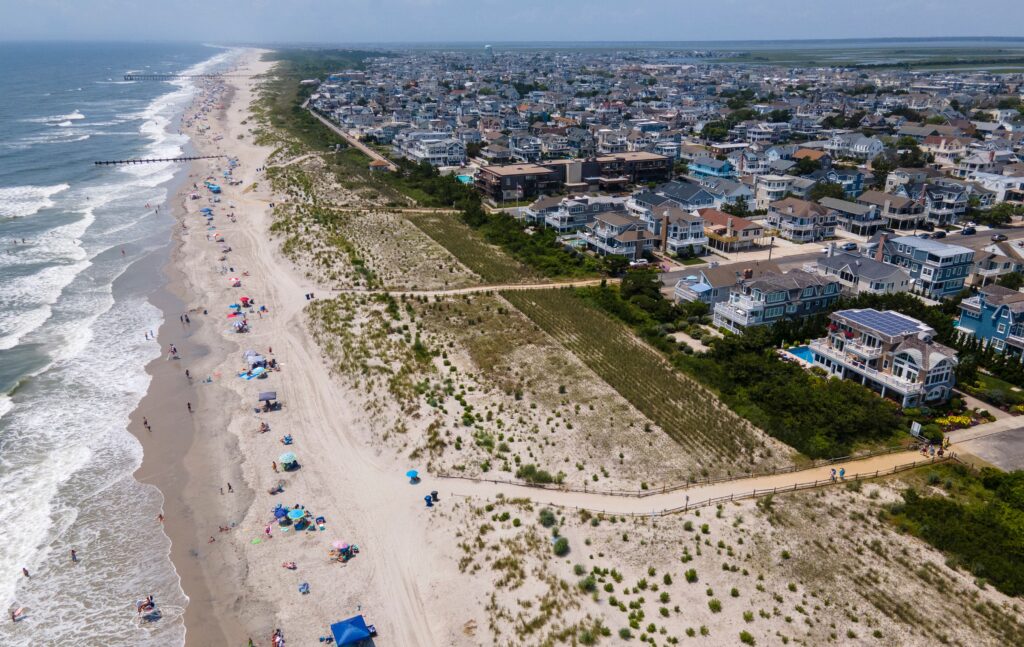
New Jersey finalizes higher elevation standards for the shore
The new rules require development in coastal flood zones to be elevated 4 feet higher to account for future sea level rise.
8 months ago
Listen 0:54Proponents say rule protects residents from outdated elevation standards
Mark Mauriello, former commissioner of the Department of Environmental Protection from 2008 to 2010 who now oversees environmental programs at a development company, defended the rule during Wednesday’s hearing. He said current elevation standards are based on historic flood levels and are not sufficient to protect homes.
“DEP is taking a position that we cannot focus narrowly on today’s conditions,” Mauriello said. “We’ve done that for many, many years, and we always wind up on the losing end when the next storm rolls in.”
Anthony Broccoli, a climate researcher at Rutgers University, told lawmakers Wednesday that sea level rise is accelerating. By 2100, Atlantic City could experience coastal flooding nearly every day if the climate warms on the upper end of scientists’ predictions, Broccoli said.
“I think it is urgent to try to account for the changes that we see coming,” Broccoli said. “Status quo is not a really good policy for a system that is dynamic and is changing this rapidly.”
Related Content

The move lifts a 40-year de-facto moratorium tied to the federal government finding a permanent facility to store radioactive nuclear waste.
6 months ago
Listen 0:55Concerns about higher building costs
Assemblyman Paul Kanitra, a Republican who represents Monmouth and Ocean counties, said he worries about older constituents in working-class neighborhoods making repairs to homes that cost more than half of the value of the home, which triggers the need to comply with modern elevation requirements. He said he was recently forced to elevate his own home after replacing his roof, HVAC system, and windows and doors.
“Does [the rule] protect people if they can no longer afford to live in their own homes?” Kanitra asked.
Earlier this spring, the New Jersey Business & Industry Association and New Jersey Builders Association filed a legal challenge to the pending rule, calling it “arbitrary, capricious, and unreasonable.”
Ray Cantor, deputy chief government affairs officer at the New Jersey Business & Industry Association, said in an interview Tuesday that the rules would “prevent a lot of people from doing business and living down the Shore.” Cantor said his organization has not studied how much the cost of building a home would rise under the new rule, but said he worries the rule could make it harder to fit long staircases onto small lots, or could cause problems for elderly or disabled residents.
“What we’re hearing from builders, what we’re hearing from a lot of Shore mayors, is that it’s just not practical,” Cantor said. “It is going to drive the cost up significantly.”
Jeff Kolakowski, CEO of the New Jersey Builders Association, said the new rule represents a “paradigm” shift in the way that land use is regulated by including forward-looking projections, rather than relying on historic data. He said the rule uses a sea-level projection that looks too far into the future.
“It’s over the top,” Kolakowski said.
Mauriello admitted that building higher will be more expensive, but said the cost of each additional foot of elevation is small compared to the cost of building a home, and the broader costs of flood damage and recovery.
“We need to weigh the cost of action … versus the costs of inaction, inaction which will jeopardize the health and safety of coastal residents and will result in more extreme damage and public recovery costs,” Mauriello said.
In its rulemaking, the Department of Environmental Protection concluded that the rule would result in “substantial” avoided costs of flood damage and relief, and that this benefit would “greatly outweigh” the higher costs, such as those associated with construction materials, labor, engineering, site evaluation and application fees.
The rule allows exemptions when elevation would be unreasonably expensive, or in cases of “extraordinary” physical or engineering constraints.
Related Content
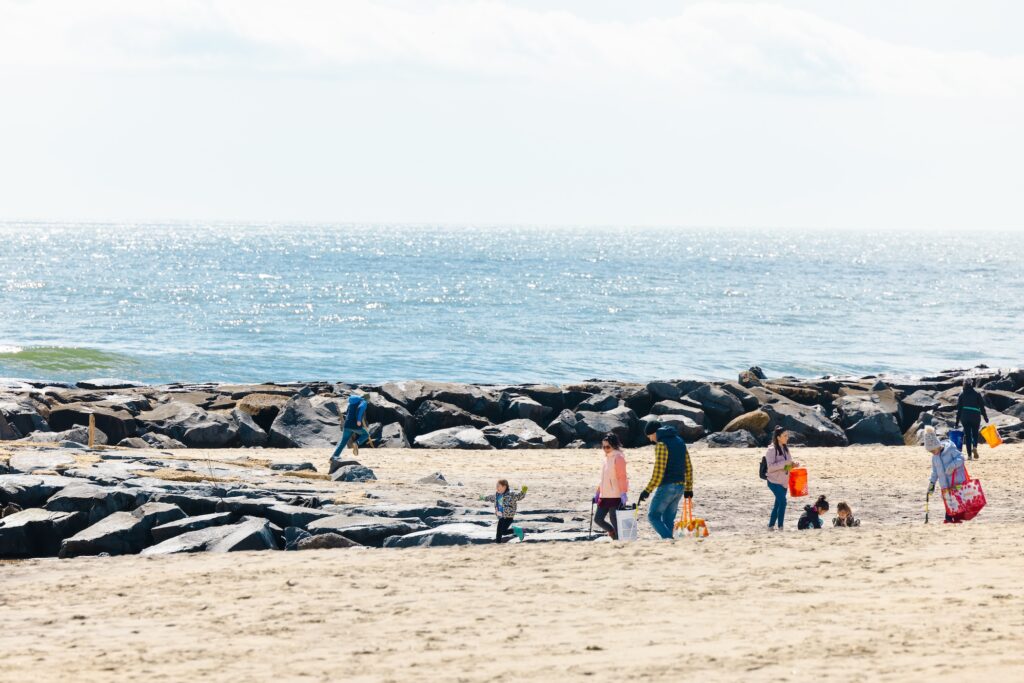
Volunteers collect over 125,000 of pieces of plastic waste from New Jersey beaches
In 2025, 83% of the trash collected from New Jersey’s beaches were made from plastic.
6 months ago
Listen 1:11What happens next?
Lawmakers did not vote on the resolution Wednesday. The committees will decide whether to release the measure to the full Senate and Assembly at a later date, Burzichelli said.
Asked what a flood control rule consistent with legislative intent would look like, Burzichelli declined to offer specifics, but said it should be “reasonable.”
“If you ask me as a single senator, the intent should be based on common sense [and] public safety,” he said.

Get daily updates from WHYY News!
WHYY is your source for fact-based, in-depth journalism and information. As a nonprofit organization, we rely on financial support from readers like you. Please give today.
Part of the series

Conservationists to restore wetlands, save habitat for diamondback terrapins in New Jersey
Tidal salt marshes across New Jersey are being drowned out by sea level rise.
3 weeks ago
Listen 1:17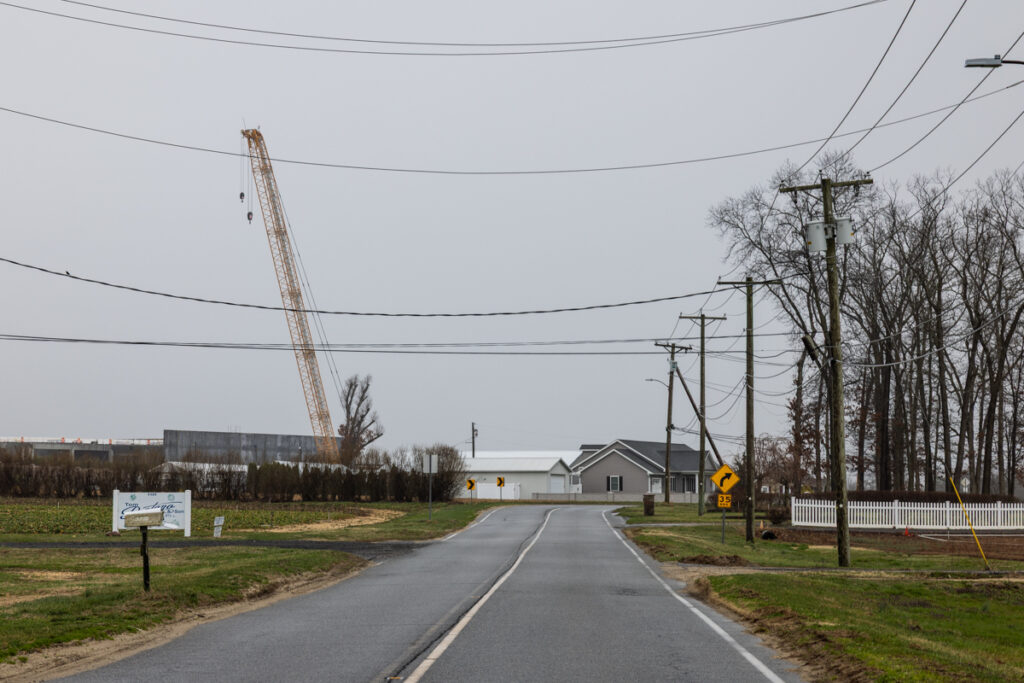
Vineland data center accused of operating natural gas generators without permit
The 300-megawatt AI data center is being developed by DataOne for the Nebius Group.
1 month ago
Listen 1:11
Vineland data center makes case for on-site power generation during 6-hour hearing
Developers for the New Jersey-based center plan to use on-site fuel cells, saying the new plan will not draw power from the grid or increase residential rates.
2 months ago