
New Jersey affordable housing plans deadline arrives. Here’s what happens next
Many plans that have been submitted call for redevelopment of vacant malls, office parks and blighted spaces.

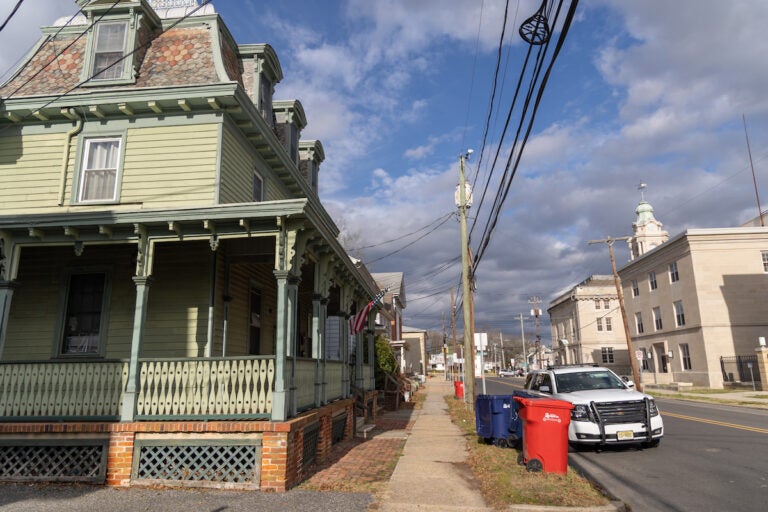
Homes in Bridgeton, N.J. (Kimberly Paynter/WHYY)
From Camden and Cherry Hill to Trenton and the Jersey Shore, what about life in New Jersey do you want WHYY News to cover? Let us know.
New Jersey has some of the most expensive homes in the nation. A 2024 law that takes effect today attempts to make the Garden State affordable for homebuyers. It requires all municipalities to complete and submit an affordable housing plan and to pass any necessary ordinances to implement it, no later than today.
No immediate relief
Jag Davies, the director of communications for the Fair Share Housing Center, said the process of adding more affordable housing will take time.
“Over the next decade, we expect that tens of thousands of new affordable homes, as well as a significant number of new market-rate homes will be created,” he said.
For now, buying a home remains almost impossible for many Garden State residents. The most recent sales data shows that the median sales price of a home in New Jersey in February was $505,000, a 5.4% year-over-year increase, according to New Jersey Realtors.Sharon Tencio, a single mother of two young boys, said she was surprised she qualified to buy a house from Habitat for Humanity.
“Seeing the interest rates, seeing those purchase prices and seeing what you’re getting for that money, you know I couldn’t have done it any other way,” she said.
Leila Amirhamzeh, director of Community Reinvestment for New Jersey Citizen Action, said the affordable housing plan requirement is a turning point.
“Estimates are that the state right now is facing a shortage of 300,000 affordable housing units, so this law really is a major step towards addressing this affordable housing crisis,” she said.
Last month, the U.S. Supreme Court denied an emergency request to delay implementations of Jersey’s affordable housing law. The lawsuit was filed by three dozen municipalities that are among the wealthiest in the state.
Affordable housing history
The 2024 law enforces the Mount Laurel Doctrine, New Jersey’s constitutional requirement that every town must provide its fair share of affordable housing. When it was passed in 2024, it revamped the process for determining affordable housing by abolishing the Council on Affordable Housing, the original entity created to enact affordable housing requirements. The new law required the Department of Community Affairs to study population density across the state and to set an affordable housing obligation for each municipality.
Davies believes the current requirement is beneficial on many levels.
“It makes it a lot easier for towns to comply; it gives them a lot of different options for how they want to create affordable housing,” he said.
He pointed out that towns can create mixed-use housing, which is market-rate housing with a set-aside for 20% or 30% for affordable housing, or they have the option to construct an affordable housing development or single-family homes.
New opportunities
Kate Kohri, the homeowner services director for Habitat for Humanity of South-Central New Jersey, said she hopes to see greater cooperation and partnerships between her organization and local officials.
“If they have a mandated number of homes they have to build in their community, maybe they will provide us with land to build the homes and, or financial support to build the homes,” she said. “By building the homes we can help them fulfill their affordable housing obligations.”
Kohri described the need for affordable housing as “extreme,” and said there are 15 to 20 applications for every house built by the organization.
“That’s hard when you get that much interest, but you are limited in what you can do,” she said.
“For many people it’s impossible to buy a house,” she added. “More programs like Habitat for Humanity are needed, and it’s important for people to find out about them, to spread the word.”
Related Content
The median price of a home in the Garden State last year was more than $500,000, recent data shows.
7 months ago
Listen 1:06Most towns are on board
Davies said the vast majority of towns in the Garden State, more than 400, have already submitted their affordable housing plans.
“I think a lot of local officials realize how important it is to create affordable housing for their residents,” he said. “It’s good for their local economies, it improves the quality of life in their towns, it brings in new property tax revenue.”
He said many of the affordable housing plans that have been submitted call for the redevelopment of existing properties, such as vacant malls, office parks and blighted spaces.
“It’s revitalizing areas that are being underutilized and creating new, vibrant communities near transit,” he said.
Davies said disagreements over the number of affordable housing units that towns were obligated to build have been quickly settled by a court-run Affordable Housing Dispute Resolution program.
“These kinds of disputes used to take years of litigation to get resolved, but now these disputes are resolved by the new state-run program in a matter of months, so it’s really speeding up the process,” he said.
Any town that doesn’t submit an affordable housing plan is subject to a builder’s remedy lawsuit.
“A builder can come in and preempt the local zoning and decide where to put housing,” he said. “Towns that want to retain control over the process, it’s expedient for them to create their own fair share housing plans.”
What does ‘affordable housing’ mean?
Davies said at least 50% of homes designated as “affordable” must be accessible to low-income residents.
“Which means that they make below 50% of the area median income,” he said. “And at least 13% of homes must be set aside for what is considered very low-income residents, which means below 30% of area median income.”
The remainder of affordable homes must be available to moderate-income residents, which is defined under state law as people or households that make between 50% and 80% of the area median income.
In 2024, New Jersey’s median household income was $104,294, according to the U.S. Census Bureau’s 2024 American Community Survey.
A multifaceted problem
Amirhamzeh said another part of the problem is that New Jersey has some of the highest rents in the nation.
“Many lower-income individuals are seeking rental assistance,” she said. “But unfortunately, because of a lot of budgetary constraints, there is very limited assistance for renters and there are long waiting lists.”
She said individuals sometimes wait for up to five years before they can gain access to affordable rental units, and many people are forced to live with multiple generations of family members in cramped housing.
She added that uncertainty about funding from the U.S. Department of Housing and Urban Development may result in New Jersey losing millions of federal housing assistance dollars.
“That is another challenge that we are now facing,” she said.“This is why we’re pushing the governor and the Legislature to implement a range of rental reforms to strengthen tenant protections, reform outdated zoning laws and improve housing funding.”

Get daily updates from WHYY News!
WHYY is your source for fact-based, in-depth journalism and information. As a nonprofit organization, we rely on financial support from readers like you. Please give today.
Congress passed the bipartisan package of bills in June. It became law last month without the president’s signature.
4 weeks ago
Listen 0:58
Sussex County pulls land use applications from review after Delaware adopts affordable housing law
Senate Bill 23 allows certain residential development applications to forego public hearings. Sussex County officials said they’re working to adjust approval processes.
2 months ago
Listen 1:03
N.J. has a new affordable housing law, but it will take years for it to make a difference
A new affordable housing law in N.J. abolishes COAH and directs the Dept. of Community Affairs to help make affordable housing a reality.
2 years ago
Listen 1:28