

Murphy draws New Jersey prosecutors’ ire with clemency actions on his way out the door
Though former Gov. Phil Murphy established an advisory board, the ultimate decision to grant clemency was up to him.

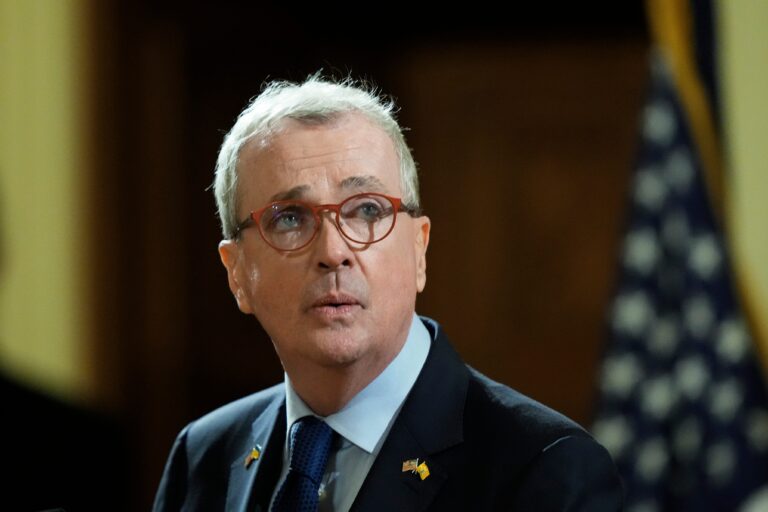
New Jersey Gov. Phil Murphy delivers his State of the State address to a joint session of the Legislature at the statehouse, in Trenton, N.J., Jan. 9, 2024. (AP Photo/Matt Rourke, File)
From Camden and Cherry Hill to Trenton and the Jersey Shore, what about life in New Jersey do you want WHYY News to cover? Let us know.
In one of his last acts as New Jersey’s governor, Phil Murphy announced Tuesday an eighth and final round of clemency actions. Several of his decisions are now drawing scrutiny from some prosecutors.
He granted 51 commutations and 97 pardons, bringing the total number of actions to 455, which all happened in his second term.
Though Murphy had sole discretion on who would receive clemency, he installed an advisory board that would recommend who would receive pardons or have their sentences commuted.
The difference between pardon and commutation
Brett M. Rosen, a criminal trial attorney and partner at the law firm Proetta, Oliver, Fay and Rosen, suggests thinking of clemency as a “giant umbrella.”
“Under clemency is the pardon and commutation,” he said. “They’re both separate, but they’re under that umbrella.”
A pardon “pretty much forgives the crime,” Rosen said.
“Not only does it forgive and wipes the record clean, it also restores your rights, like your right to vote, your right to own a gun,” he said. “It’s not an expungement where it’s off your record.”
A commutation does not forgive a crime, but it is used to shorten the sentence of someone found guilty.
The application process for both is similar, Rosen said, adding you can specifically ask for either type of clemency.
“You write a letter to the effect of what you’re doing in prison, how you’re going to be a better person in society. Or even if you’re on parole, it could be the same thing,” he said. Overall, he said, “It’s very difficult to get a pardon.”
“I always say, if you have a relationship with the governor, do you know someone that knows someone,” Rosen added. “You could always fill out the application, but at the end of the day, it’s [about] having connections.”
Prosecutors decry Murphy’s clemency moves
Harris Jacobs, 28, was convicted Tuesday for leaving the scene of a 2022 Atlantic City crash that killed 76-year-old Orlando Fraga. But Murphy granted the pardon before the verdict was issued.
Harris Jacobs is the son of Joe Jacobs, a longtime Murphy ally who raised more than $100,000 for Tammy Murphy’s failed bid for U.S. Senate, according to InsiderNJ.
“It must not be overlooked that the defendant’s conduct resulted in the death of an elderly gentleman who leaves behind a grieving family,” the Atlantic City Prosecutor’s Office said in a statement.
“Unfortunately, when politics pervades justice, the rule of law becomes subordinate to influence and power. Justice must be blind to status, relationships, power, and expediency; when it is not, the community loses faith in the very system meant to protect it.”
Monmouth County Prosecutor Raymond S. Santiago raised concerns about the sentence commutation of Maria Montalvo, who was sentenced in 1997 to 100 years in prison after being convicted of killing her two toddlers in a 1994 car fire.
She had requested a new trial before the end of 2025. Now, she will immediately be eligible for parole.
Santiago expressed his office’s “collective revulsion and disbelief” at Murphy’s commutation to the Asbury Park Press.
“How a mother who … heartlessly took her own children’s lives in unspeakably cruel fashion could ever be viewed as a suitable candidate for leniency is not a concept we are able to defend or comprehend,” Santiago said in a statement. “Providing this defendant the opportunity to apply for an early parole, with a full half of her sentence still to be served, is the polar opposite of justice.”
Related Content

GOP leaders criticized Murphy on taxes, spending, energy policy and his COVID-19 response, and expressed hope for Mikie Sherrill's success.
9 months ago
Listen 1:05Murphy established “first ever” Clemency Advisory Board
Murphy granted no clemencies during his first term. But well into his second term, he issued an executive order establishing the Clemency Advisory Board and charging it with deciding whose case would be worthy of a pardon or commutation.
The board consisted of the attorney general, or a designee, and at least five members appointed by the governor. These five included a retired judge, an experienced criminal defense attorney, an expert in federal clemencies and others operating from moral, social justice and victim advocacy perspectives.
All the board’s recommendations were nonbinding. Murphy, as governor, retained the power to unilaterally decide who received clemency, per the state constitution.
Micah Rasmussen, director of the Rebovich Institute for New Jersey Politics at Rider University, said because Murphy is now a private citizen again, there’s no chance to ask questions about his rationale for clemency.
“If he had done it before the 11th hour, we would be able to have a discussion about the merits of the decision,” he said. “We don’t get to do that after the fact, where he’s no longer in office, and we’re left to just accept the decision, and that’s all there is to it.
It is not clear whether the board recommended clemency for Jacobs or Montalvo. Murphy’s executive order dictated that applications are kept confidential within the governor’s office and are not subject to the state’s Open Public Records Act.
Who held the pardoning powers before the 1947 state constitution
Prior to New Jersey’s current constitution, adopted in 1947, the governor decided clemency actions under rules established in the state’s 1844 constitution, alongside “the chancellor, and the six Judges of the Court of Errors and Appeals, or a major part of them.”
“The Chancellor was akin to our chief justice today,” Rasmussen said. “And the six judges of the Court of Errors and Appeals, that was the highest court in New Jersey. Essentially, this meant that the governor shared the pardon power with the chief justice and the justices of what became the Supreme Court.”
The governor’s clemency powers were put to the test in 1936, when Gov. Harold G. Hoffman sought to give a reprieve to Bruno Hauptmann, convicted of killing the infant of famed pilot Charles Lindbergh. Hoffman was convinced that Hauptman did not commit the murder.
“He wanted to grant a commutation or a pardon, and he couldn’t do it,” Rasmussen said. “He didn’t have the power to do it by himself, and he didn’t have the votes among the judges to do it.”

Get daily updates from WHYY News!
WHYY is your source for fact-based, in-depth journalism and information. As a nonprofit organization, we rely on financial support from readers like you. Please give today.
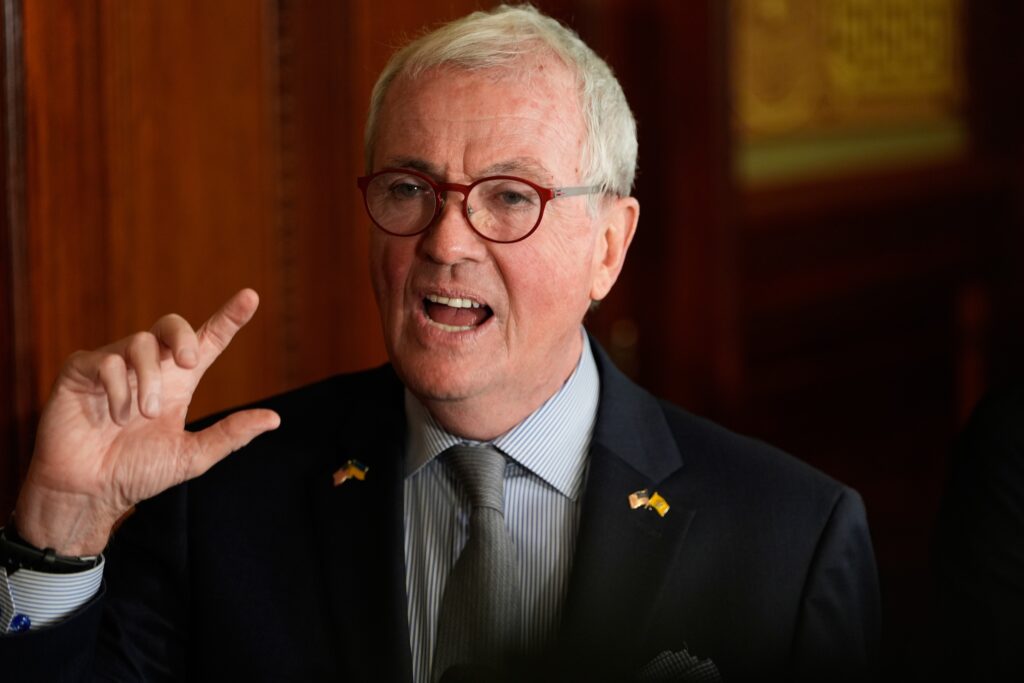
Outgoing New Jersey Gov. Phil Murphy declines to codify Immigrant Trust Directive
The directive, established in 2018, survived legal challenges. Murphy feared codifying it would not have the same chances in court.
9 months ago
Listen 1:06
GOP leaders criticized Murphy on taxes, spending, energy policy and his COVID-19 response, and expressed hope for Mikie Sherrill's success.
9 months ago
Listen 1:05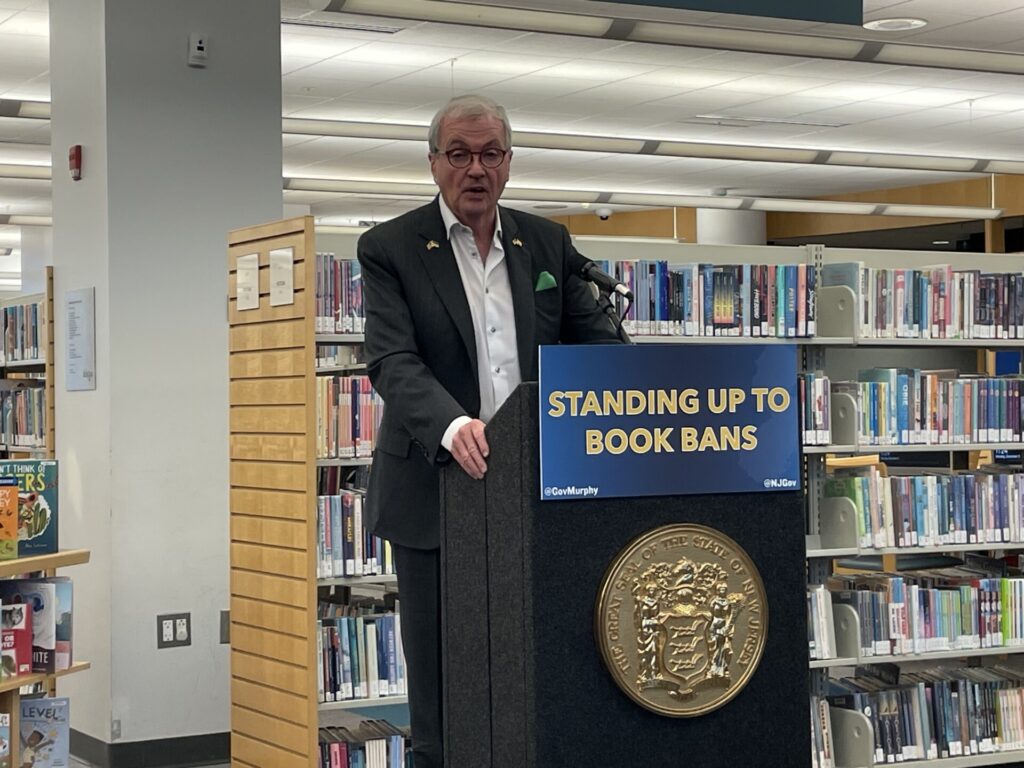
A new law in N.J. limits the banning of books in schools and public libraries
A new law enacted in New Jersey will limit how a book can be banned in schools and public libraries, and protect librarians from lawsuits.
2 years ago
Listen 1:10