
A Medicare prescription payment plan can help seniors afford their medications, but few know about it, say Philly researchers
The Medicare Prescription Payment Plan allows seniors to spread the cost of their prescriptions as monthly payments throughout the year.
Listen 1:05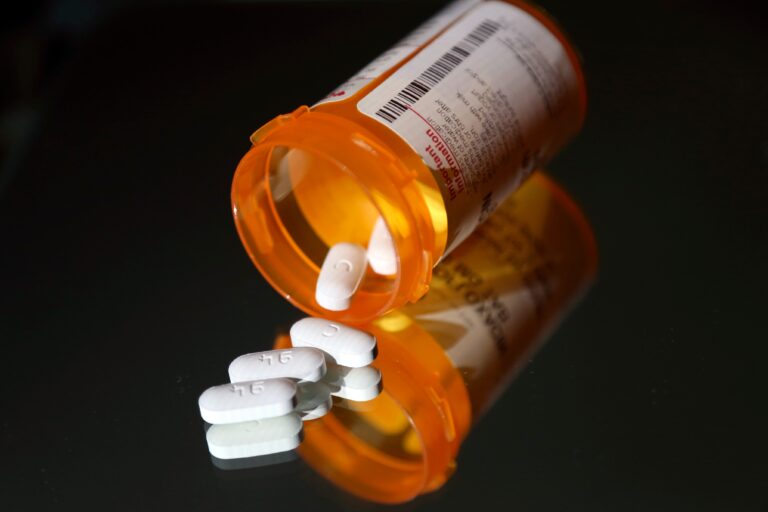
FILE - Pharmaceuticals are arranged for a photograph. (AP Photo/Elise Amendola, File)
From Philly and the Pa. suburbs to South Jersey and Delaware, what would you like WHYY News to cover? Let us know!
A newer Medicare program designed to help seniors pay for their medications has shown some early success, research shows, but health care advocates and clinicians say not enough people know about it.
The Medicare Prescription Payment Plan launched last year. It allows older residents to spread out the cost of their drugs over the course of a year by giving them an option to make smaller monthly payments.
This can be especially helpful for people who need expensive medications at the beginning of the year, when their annual deductibles have restarted and they must pay about $2,000 out of pocket before their insurance will cover the rest of their prescription costs.
“So, a patient who is using expensive medications for conditions like cancer, multiple sclerosis, rheumatoid arthritis could be facing thousands of dollars in annual out-of-pocket costs during the year, and a large chunk of those costs would occur earlier in the year when they start filling their first few prescriptions,” said Jalpa Doshi, the Leon Hess Professor in Internal Medicine at the University of Pennsylvania’s Perelman School of Medicine.
The opt-in payment plan is designed to help ease some of that financial burden among Medicare enrollees, many of whom are retired and on limited fixed incomes. But a lack of awareness has led to low enrollment, experts say.
“It boils our blood because every single year, that means hundreds of patients are walking away without picking up a prescription that could either extend their life or could improve the quality of their life,” Doshi said.
Doshi and other researchers at Penn have been studying Medicare reforms for over a decade, with a specific focus on Part D prescription plans. They were involved in crafting policy and proposals to federal lawmakers on how to make medications more affordable for older Americans.
In 2022, their research was used to inform a part of the Inflation Reduction Act that created annual out-of-pocket spending caps for Medicare participants. But that alone wouldn’t completely fix the problem, Doshi said.
“It may solve the ‘too much’ problem, but it’s not going to solve the ‘too soon’ problem,” she said. “Patients will still be left with a $2,000 sticker shock for their first prescription at the beginning of the year.”
That’s why lawmakers also created the prescription payment plan. If someone is prescribed a medication that costs $2,000 in January, for example, and they enroll in the program, they will owe about $167 a month for the rest of the year.
Related Content
More than 400,000 Pa. seniors are expected to save with lower Medicare drug prices in 2026
Pennsylvanians will see their out-of-pocket costs for 10 medications drop by 53% on average, according to a new AARP report.
9 months ago
It makes it more likely that someone will buy and pick up their medication as opposed to going without it because of cost, said Dr. John Lin, an oncologist at MD Anderson Cancer Center in Houston.
Lin was part of the team at Penn Medicine as a fellow and worked closely with Doshi and others on proposals and reform research.
But too many people who could benefit from the payment plan, like some of his cancer patients, are still left in the dark, Lin said.
“I think that making patients aware, the government is not really good at that,” he said. “I think it has to get better.”
Awareness about the prescription program has improved during the first year of its existence, according to findings from a national poll by the PAN Foundation, a health care charitable and advocacy organization.
But it is inconsistent, said Amy Niles, chief mission officer at PAN, and gaps in knowledge still remain.
“In an ideal world, I think any health care provider who knows that they’re prescribing a really high-cost medication to a Medicare beneficiary should have a conversation,” Niles said. “Sometimes, I think it’s happening. Sometimes, it’s just not.”
Researchers and advocates are pushing the government to create a point-of-sale enrollment option.
Currently, if someone gets to the pharmacy counter and is charged an amount they can’t afford, and they want to enroll in the prescription plan, they would have to leave the store and arrange enrollment with their Medicare insurance provider.
All of that makes it less likely for someone to complete the process. Opting in at the moment of purchase would be an improvement, Doshi said.
“If it’s easy enough for consumer goods, why can’t we do this for lifesaving medications?” she asked.
For now, advocates and supporters hope that increasing awareness about the program will help more people and be enough as they propose additional reforms for Medicare.
“If you know you have a diagnosis where it’s possible that you could have a big bill for your medication, even if you don’t have one today, I would say definitely look into it,” Lin said. “I’d encourage people to sign up for it.”

Get daily updates from WHYY News!
WHYY is your source for fact-based, in-depth journalism and information. As a nonprofit organization, we rely on financial support from readers like you. Please give today.
A report from the State Employee Benefits Committee said market realities prevent more strident moves to address rising drug costs.
1 month ago
Listen 1:03
1 in 4 American Adults Is a Caregiver. So Why Does It Feel So Lonely?
A look at the challenges of caregiving,, from changing relationships, to dealing with loneliness and burnout.
Air Date: March 13, 2026
Listen 49:51
Philadelphia seniors ‘strut’ into aging as they take charge of their health and find community
The Hunting Park We Walk PHL group joined more than 500 older city residents for Philadelphia Corporation for Aging’s 13th Senior Strut health event.
11 months ago
Listen 1:46