

Some new Medicaid rules have already changed: Why New Jersey officials and residents are worried about what happens next
Hundreds of thousands of Garden State residents covered by NJ FamilyCare will need to fill out paperwork on a new reporting schedule starting Jan. 1.
Listen 1:15
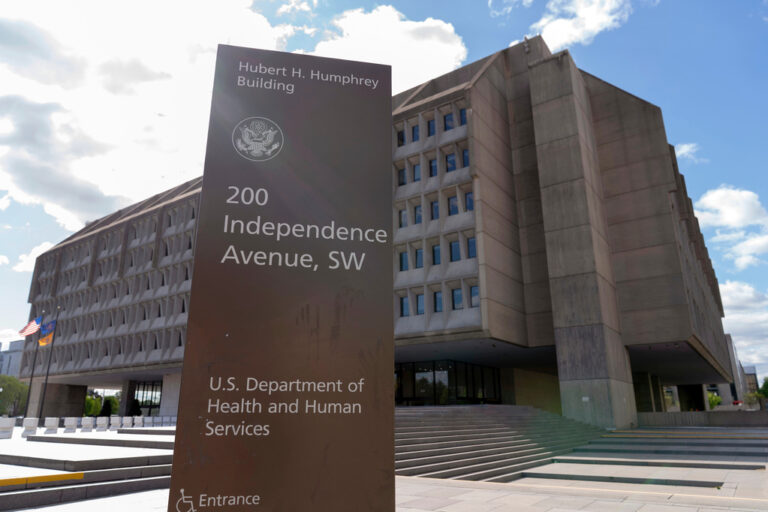
FILE - The U.S. Department of Health and Human Services is seen in Washington on April 16, 2025. (AP Photo/Jose Luis Magana, File)
From Camden and Cherry Hill to Trenton and the Jersey Shore, what about life in New Jersey do you want WHYY News to cover? Let us know.
Paul White, 38, of Ringoes, New Jersey, has Ehlers-Danlos syndrome, a connective tissue disorder that causes joint pain, instability and chronic fatigue. He juggles his physical therapy appointments with working part-time as a handyman and is constantly struggling to pay his bills.
When new federal Medicaid reporting requirements begin Jan. 1, White, who is on Medicaid, will have to fill out new forms on a new schedule. He’s afraid that he will wind up making a mistake and lose his health coverage and won’t be able to pay for his medication.
“I will be bed-ridden. I will lose my housing. I will probably lose my ability to keep gas in my car,” he said. “I will be homeless. I will be destitute. I will be unable to function and probably die.”
New Medicaid rules
Dr. Stephen Cha, commissioner of the New Jersey Department of Human Services, said the new rules will affect about 30% of adults on Medicaid between the age of 19 and 64, or as many as 300,000 people.
“They may need to prove that they are working or volunteering or attending school, or some other qualifying requirement for that community engagement,” he said.
The “One Big Beautiful Bill Act” passed by Congress last year created new requirements and conditions for patients seeking to enroll in Medicaid, including new work requirements.
Cha said over $1 trillion was cut from Medicaid, the Supplemental Nutrition Assistance Program, or SNAP, and other federal programs.
“The way these cuts work primarily is throwing a whole bunch of new paperwork at Medicaid beneficiaries, and establishing many new requirements,” he said. “Most people are not going to be able to fill out all the paperwork and unfortunately, [they] are going to lose coverage despite actually remaining eligible.”
Related Content

Health leaders say between 73,000 and 90,000 people could lose Medicaid next year due to new federal work requirements and eligibility paperwork.
5 months ago
Listen 1:11An uphill battle
Laura Waddell, New Jersey Citizen Action’s health care program director, said changes in the law will require those covered by Medicaid to get certified every six months instead of once a year.
“It’s adding more burden to this population of enrollees who don’t need all of this extra paperwork,” she said. “Folks who have certain disabilities will have to prove their medical frailty.”
Waddell described the new requirements as horrible.
“The policy is wicked; this is devastating to our state and our most vulnerable populations,” she said. “They don’t need all of this extra targeting. It’s just really concerning.”
Patrick Gillespie, president of Wellpoint New Jersey, a private health insurance company that manages Medicaid coverage for people enrolled in NJ FamilyCare, said the changes that are taking place are going to be difficult for many individuals.
“The enrollment system, the processes can be daunting for people. It’s the classic government red tape that you have to go through to continue to qualify for the program,” he said. “Because New Jersey has operated under such a highly integrated model with an annual renewal process, I think that’s going to be a substantial challenge.”
Cha stressed it’s important for everyone on Medicaid to understand they could be subject to the new requirements.
Related Content
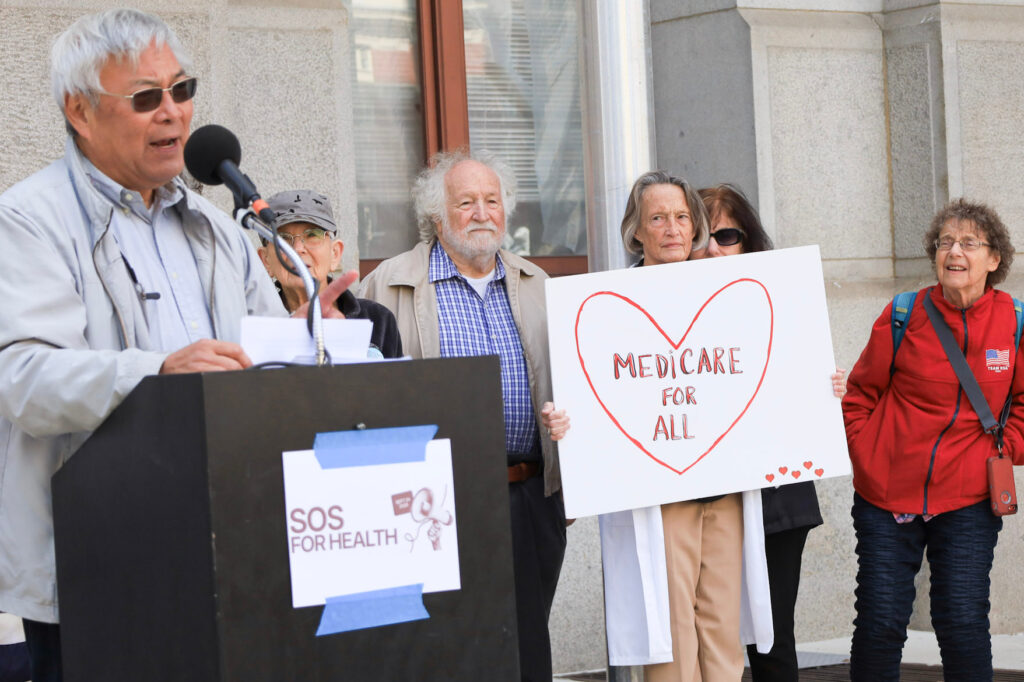
New federal Medicaid eligibility cuts for immigrants, including refugees and asylees, were passed by Congress and President Trump.
1 week ago
Listen 1:24Some have already lost coverage
He noted that effective Oct. 1, even before the new requirements kick in at the beginning of next year, some noncitizens living in New Jersey no longer qualify for NJ FamilyCare, the state’s umbrella program for Medicaid.
“These noncitizens, including survivors of domestic violence and people who have been human trafficked are here legally,” he said. “We are currently contacting people who may be affected, but many noncitizens do remain eligible.”
He said the changes that have taken effect could result in a loss of coverage for up to 25,000 people who have documentation and are in New Jersey legally.
Cha said if individuals lose their Medicaid coverage and get sick or have an accident, many will likely wind up in hospital emergency rooms.
“The federal Emergency Medical Treatment and Labor Act requires hospitals to give anyone who comes to the emergency department emergency medical treatment,” he said. “The hospital is going to bear that brunt of uncompensated care, and then that means ultimately that the state has to help to support those hospitals, and of course it’s the taxpayers of the state that support the state.”
“If I lose my health coverage, I will lose the medications that keep me able to function at all,” White said. “If my testosterone drops my joints will get worse, I’ll have to pop my own dislocated knee into place.”
He said he lives with a roommate and his cat, Percy, who is the light of his life.
“I don’t think I can add one more balancing act to my life without having everything collapse,” he said.
Gillespie said that a large portion of the Medicaid population will continue to qualify, but he stressed that it’s important to respond to notices that arrive in the mail, and to get assistance if needed in filling out paperwork.
“The challenge is going to be making sure that we get through the government process so that someone doesn’t get disenrolled because of a procedural defect,” he said.
Information about the rule changes and who will be impacted can be found on the state’s Department of Human Services website. Assistance is also available by calling the NJ FamilyCare customer service number, 1-833-409-2370.

Get daily updates from WHYY News!
WHYY is your source for fact-based, in-depth journalism and information. As a nonprofit organization, we rely on financial support from readers like you. Please give today.
New federal Medicaid eligibility cuts for immigrants, including refugees and asylees, were passed by Congress and President Trump.
1 week ago
Listen 1:24
In Philadelphia, city officials have plans to increase awareness and support services for residents who will be affected by the Medicaid changes.
1 month ago
Pa. Medicaid now covers abortion, but for how long? AG, pro-life groups wage an appeals fight
Medicaid coverage for abortion services begins as Pennsylvania’s attorney general seeks to reinstate the state's ban on using public funds for abortion.
3 months ago
Listen 1:03