
An empty storefront on Market East pops up with the story of Philly’s Centennial Expo
“Revisit 1876” shows the good and the bad of Philadelphia’s shining international moment 150 years ago.
Listen 1:15
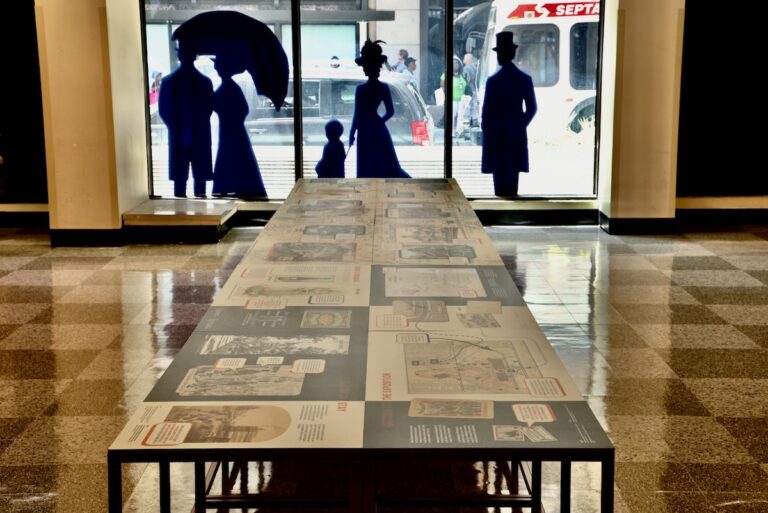
The Center City District Foundations has taken over the former Ross Dress for Less space in the Lits Building for an exhibit on the Centennial Exposition that took place in Fairmount Park in Philadelphia in 1876. ''Revisit 1876'' is free and open to the public through December. (Emma Lee/WHYY)
From Philly and the Pa. suburbs to South Jersey and Delaware, what would you like WHYY News to cover? Let us know!
A large storefront in the Lits Building on Philadelphia’s Market East has been vacant for two years, since Ross Dress for Less moved a couple blocks down the street.
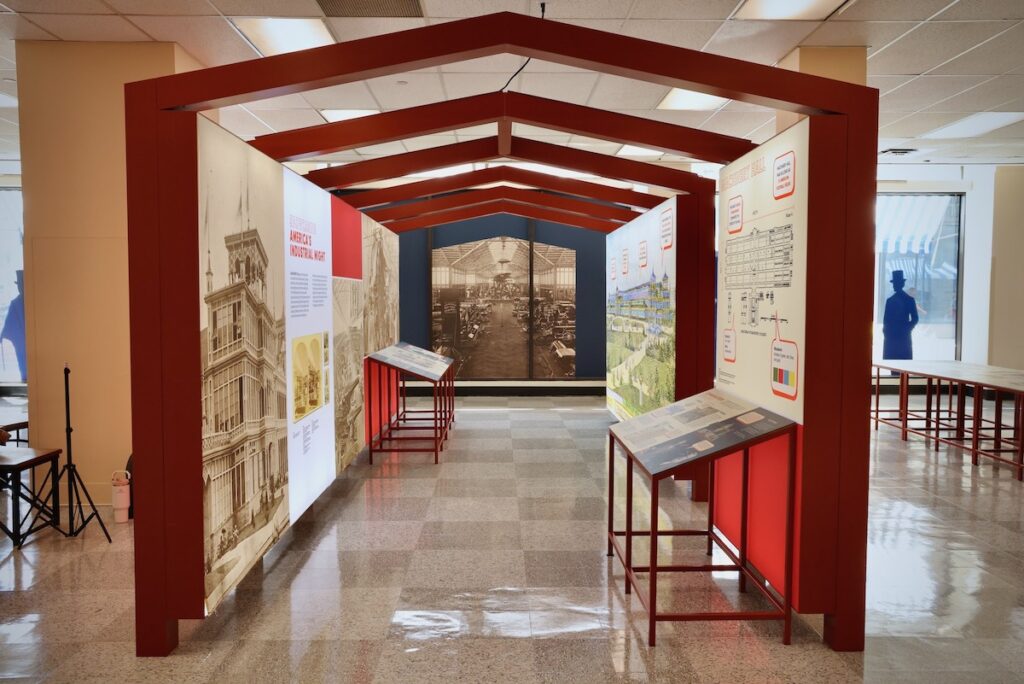
The 8,000-square-foot retail space is now being used during the nation’s semiquincentennial for “Revisit 1876,” a recreation of the 1876 Centennial Exposition in Fairmount Park.
“It was really America’s coming of age,” said Paul Levy, executive director of the Center City District Foundation. “It’s like a distant mirror for all the issues today. Philadelphia, today, was really built then, but all the issues we’re still wrestling with today, of inclusion and exclusion, were present in the whole situation in 1876.”
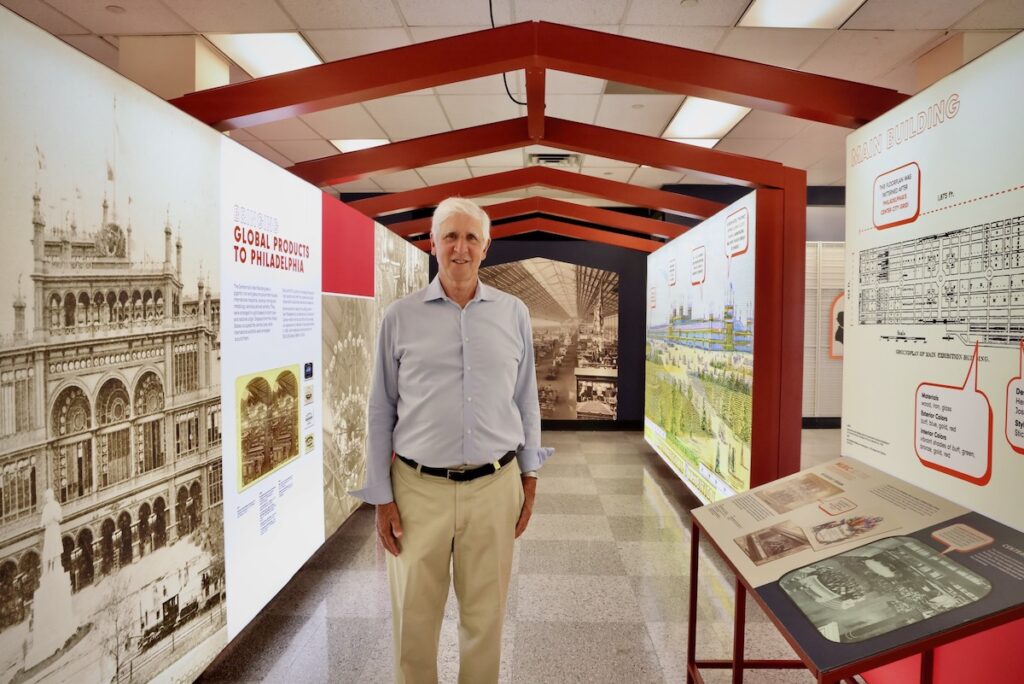
The former discount clothing store has been set up with partitions representing four of the main buildings constructed for the expo: the Main Hall, Machinery Hall, Agricultural Hall and Memorial Hall, the only hall still standing now as the home of the Please Touch Museum.
Showcasing the might of Philly industry
The Centennial Expo was America’s first World’s Fair, a global movement spurred by England’s Prince Albert to showcase international culture and industry. As the so-called Workshop to the World, Philadelphia put its manufacturing muscle front and center.
Machinery Hall housed almost 13 acres of machines, all centrally propelled by a single, massive steam engine. The Corliss engine stood 45 feet tall and was connected to the network of machines by a milelong system of drive shafts and leather belts.
“This was the centerpiece of the fair,” Levy said. “America really impressed the 37 different nations and people who came here with our industrial prowess, our entrepreneurial energy. That Corliss steam engine was what everybody drew sketches of, took pictures of.”
The flip side of making things is selling things, and the Centennial Expo promoted a culture of consumption. The exhibition features objects from the Drexel University’s Atwater Kent collection, the former Philadelphia History Museum archive, including souvenirs, puzzles and toys that were bought at the 1876 Expo.
“The fair was a huge shopping expedition. It was where you would go to get your swag,” said Rosalind Remer, a senior vice provost at Drexel University.
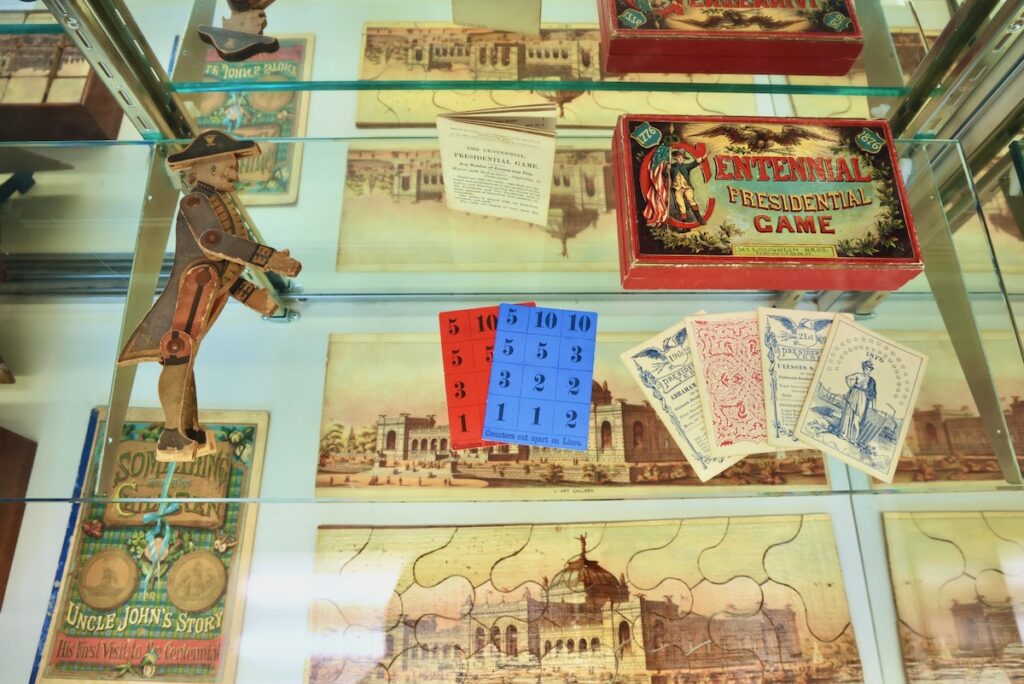
Remer loaned historic jigsaw puzzles, toy banks, wooden medallions and commemorative ribbons, all branded for the Expo.
“They’re all about being a visitor at the fair, being among millions who went and taking something home with you,” she said. “Something we’re all very familiar with today.”
Related Content
Philadelphia’s Avenue of the Arts introduces South Broad Street’s green future
A $150 million plan to beautify a mile of South Broad has begun with a “beta test.”
4 months ago
Listen 1:16The dark side of the Expo
“Revisit 1876” also shows the underbelly of the Centennial Expo. One of the ancillary halls on the exposition campus was the Women’s Pavilion, which almost did not happen. One of the members of the committee to organize the Expo was Benjamin Franklin’s great-granddaughter, Elizabeth Duane Gillespie. When she told her fellow committee members there needs to be a space to highlight women’s accomplishments, she was told there is no room.
Undeterred, Gillespie went about raising the money herself to build a 1-acre pavilion to showcase the inventiveness and intellect of women, including 74 patents.
“Actuated then by our love for our land and our ambition for our sex, we go forth doubly armed to make the Exposition of 1876 a grand success,” Gillespie wrote in her 1901 memoir, “Book of Remembrance.”
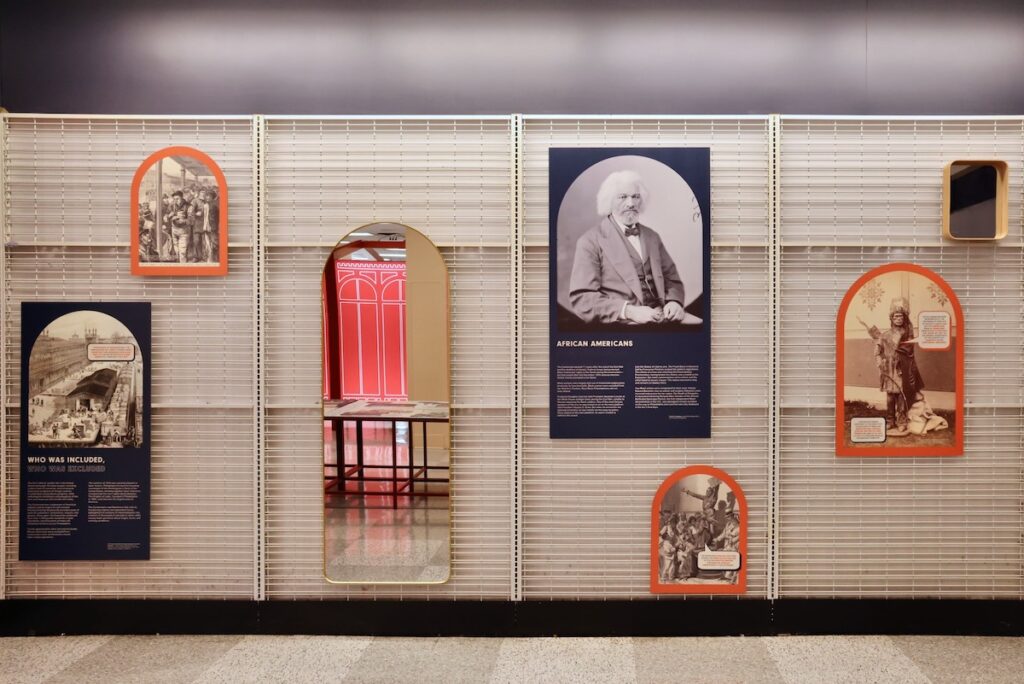
The abolitionist and orator Frederick Douglass was asked to attend the Expo and join President Ulysses S. Grant on stage, but was blocked by police who did not believe a Black man could share a stage with the president. He was ultimately allowed on stage but was not given the opportunity to speak.
“This is only 11 years after the Civil War and the sponsors of this wanted to picture the United States as totally unified. It clearly wasn’t,” Levy said. “1876 is the end of Reconstruction. Federal troops are brought out of the South at that time and Jim Crow begins, so you have 50 years of incredible discrimination.”
The Expo organizers invited about 300 Indigenous people from various tribes to camp out in the fair as a living exhibition. Simultaneously, the U.S. government attempted to push the Sioux out of the Black Hills of Montana as part of the ongoing Sioux Wars. Gen. George Custer underestimated the Indigenous people’s strength as a coalition of tribes famously killed Custer and decimated his army at the Battle of Little Bighorn on June 25-26, 1876.
Custer, who harbored presidential aspirations, had planned to visit the Philadelphia fair as a victory lap after what he believed was going to be a triumphant military accomplishment.
“We try to tell a much more complete story here,” Levy said. “We tell the positives, we tell who was excluded.”
“Revisit 1876” will be on view in the Lits Building at Eighth and Market through December.
-
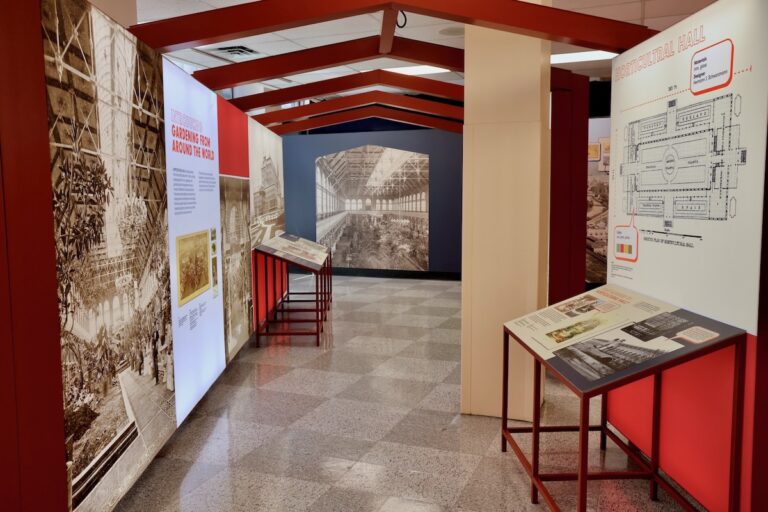
''Revisit 1876'' covers 8,000 square feet and features four large pavilions that simulate the Centennial Exposition’s major buildings, Machinery Hall, Main Building, Horticultural Hall (shown) and Memorial Hall. (Emma Lee/WHYY) -
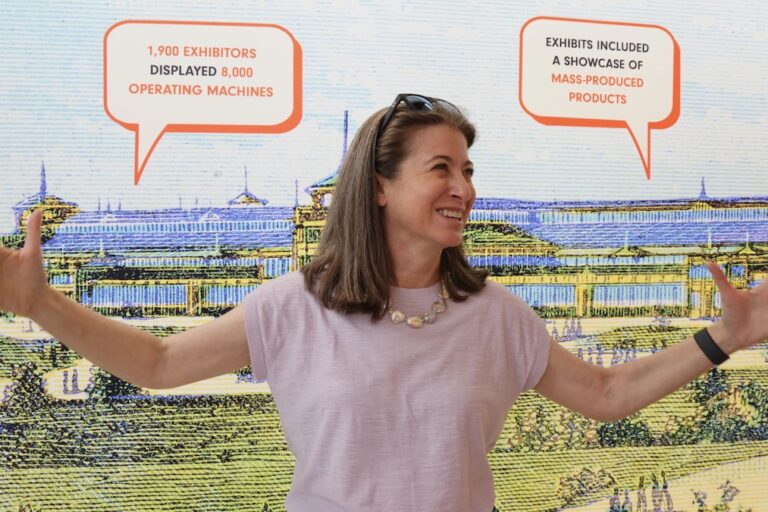
Rosalind Remer, senior vice provost for library, collections and archives at Drexel University, selected artifacts from Drexel's Atwater Kent Collection for ''Revisit 1876.'' (Emma Lee/WHYY) -
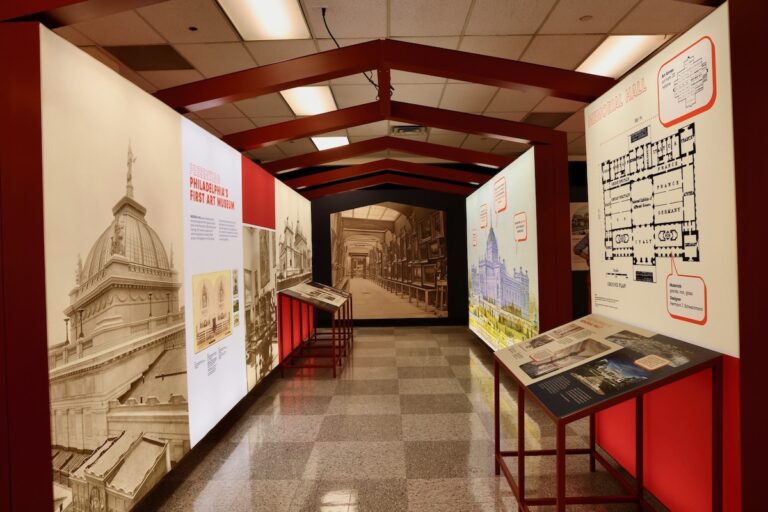
A pavillion at ''Revisit 1876'' recreates Memorial Hall, which became Philadelphia's first art museum. (Emma Lee/WHYY) -
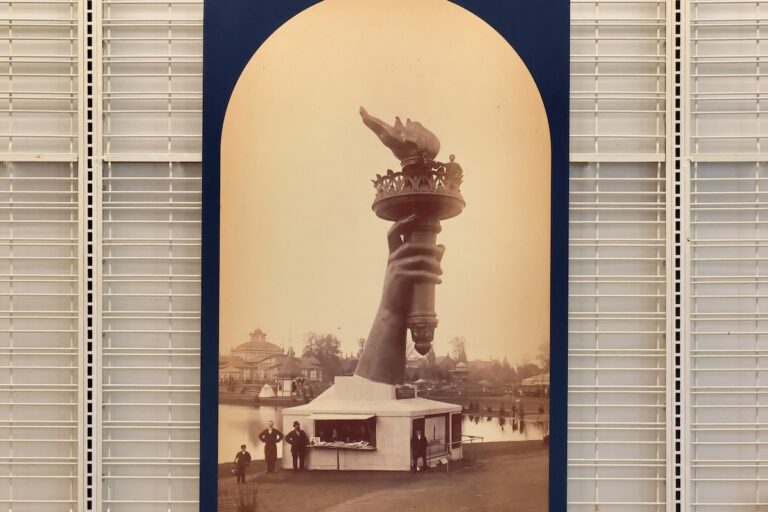
A photograph shows the arm and torch of the Statue of Liberty at the Centennial Exposition in Philadelphia. For a small fee, visitors to the fair could climb a ladder to to the balcony around the torch. (Emma Lee/WHYY) -
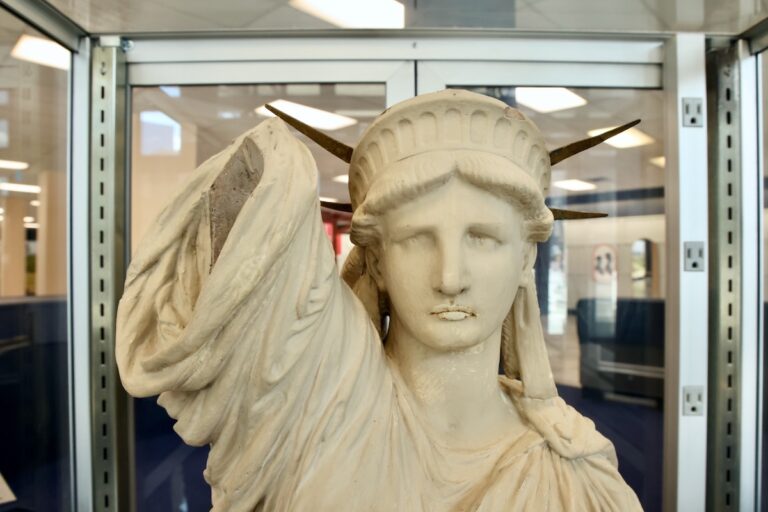
''Revisit 1876'' includes artifacts from the Atwater Kent Collection of Drexel University, including Centennial souvenirs, images, books and records. (Emma Lee/WHYY) -
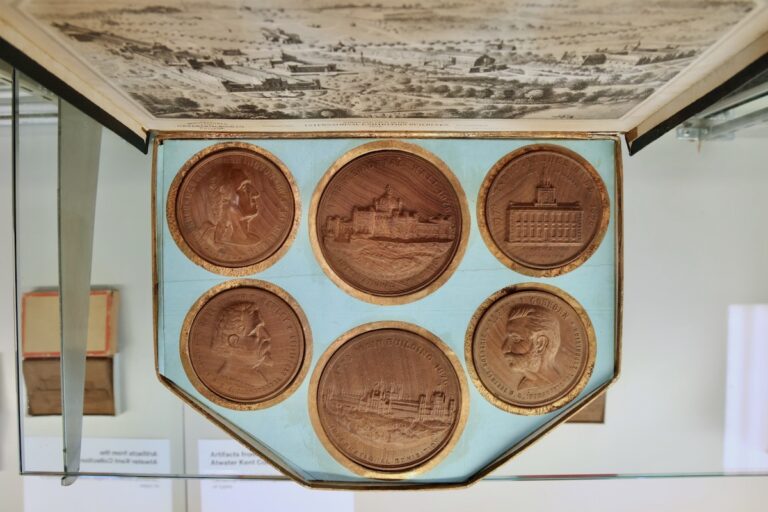
''Revisit 1876'' includes artifacts from the Atwater Kent Collection of Drexel University, including this original wood and cardboard Centennial Commemorative Medal Set by Philadelphia Ornamental Wood Co. (Emma Lee/WHYY) -
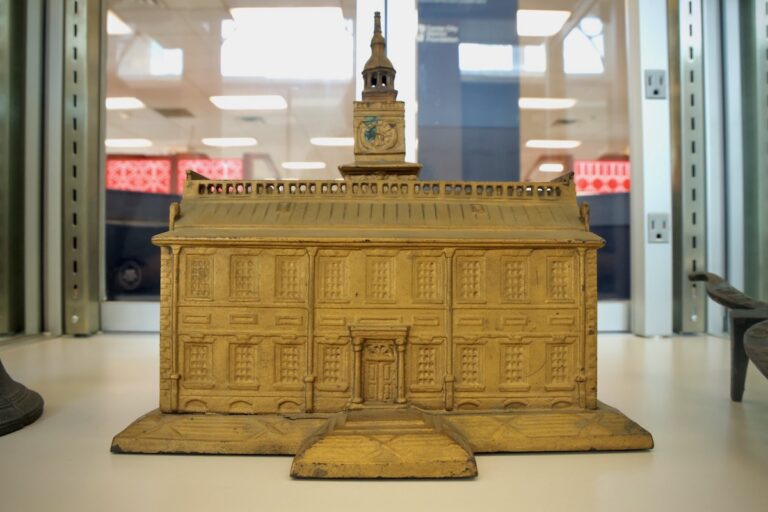
''Revisit 1876'' includes artifacts from the Atwater Kent Collection of Drexel University, including Centennial souvenirs like this coin bank in the shape of Independence Hall. (Emma Lee/WHYY) -
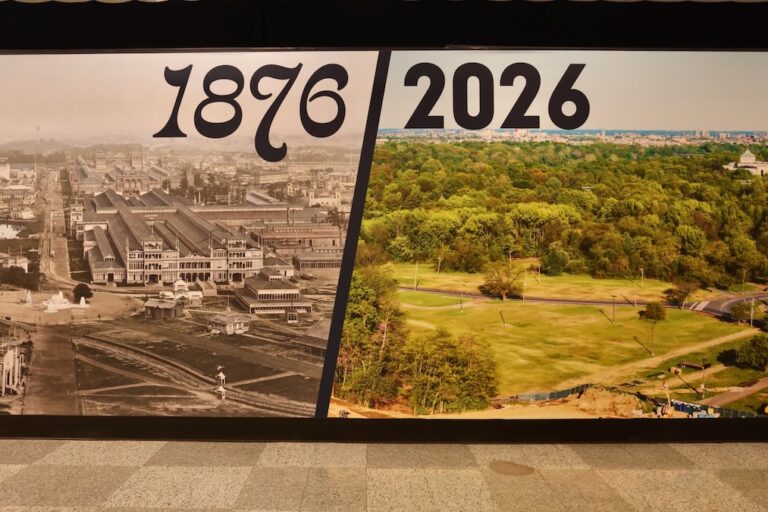
''Revist 1876'' uses drone video and archival photographs to compare the Centennial Exposition fairgrounds of 1876 to Fairmount Park today. (Emma Lee/WHYY)

Saturdays just got more interesting.
WHYY is your source for fact-based, in-depth journalism and information. As a nonprofit organization, we rely on financial support from readers like you. Please give today.
Part of the series
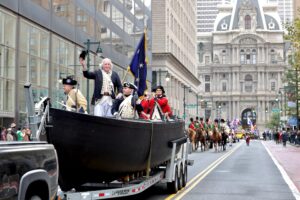
Philadelphia 250
The United States is marking its semiquincentennial — or its 250th anniversary — in and around the City of Brotherly Love.
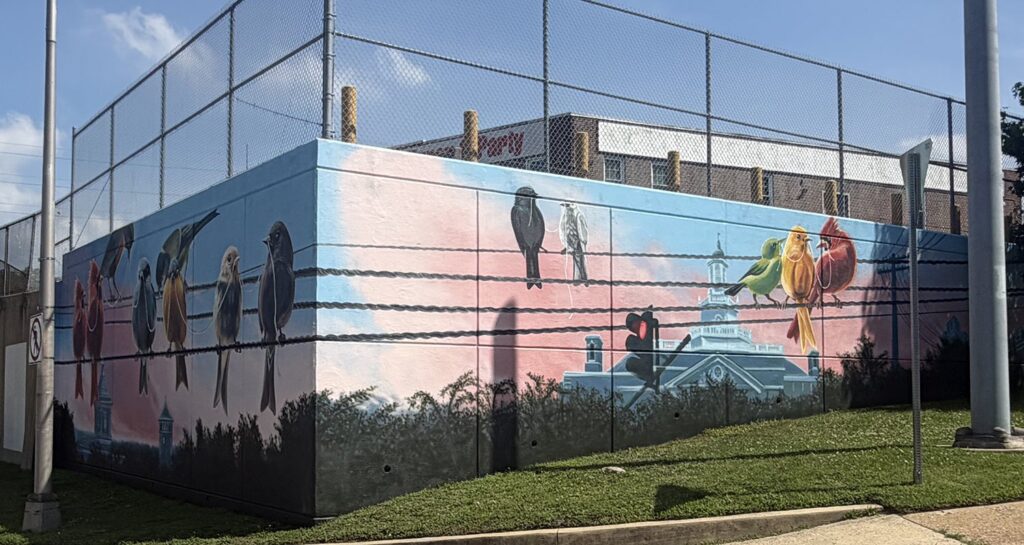
El muralista Christian Kanienberg afirma que le interesa “más crear obras de arte que, simplemente, resultan ser murales capaces de suscitar conversaciones”.
3 months ago
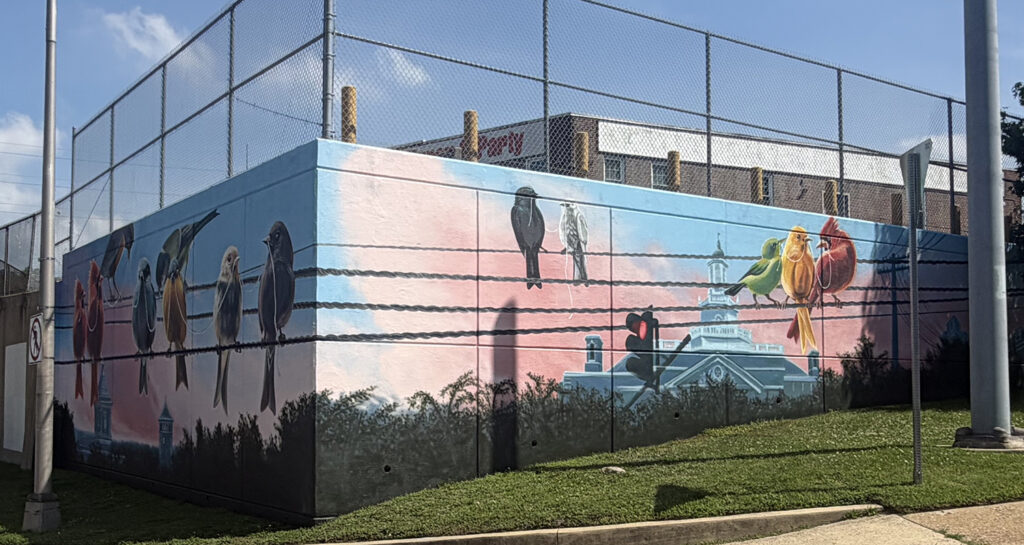
Muralist Christian Kanienberg says he’s “more interested in creating pieces of art that just happen to be murals that are conversation starters.”
3 months ago
Listen 2:11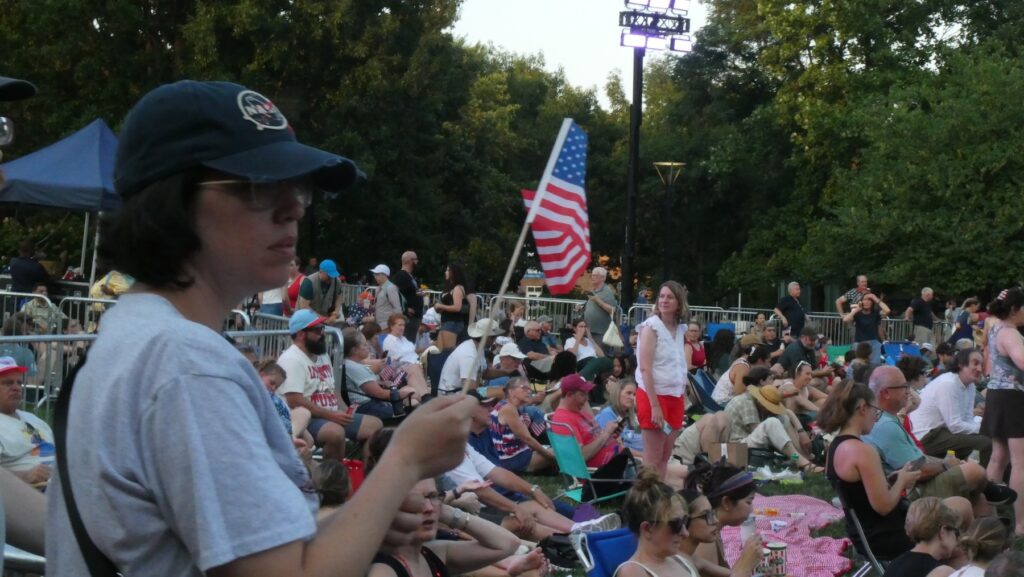
The city’s free July Fourth concert on the Parkway is still on. Organizers say Saturday's star-studded show will happen rain or shine.
3 months ago