

‘Ridiculous, absurd’: Philadelphia-area gas prices top $4 a gallon for the first time in 4 years
Stanford University researchers estimate rising gasoline prices will cost American families an extra $850 this year, zeroing out any expected tax refunds.
Listen 1:31
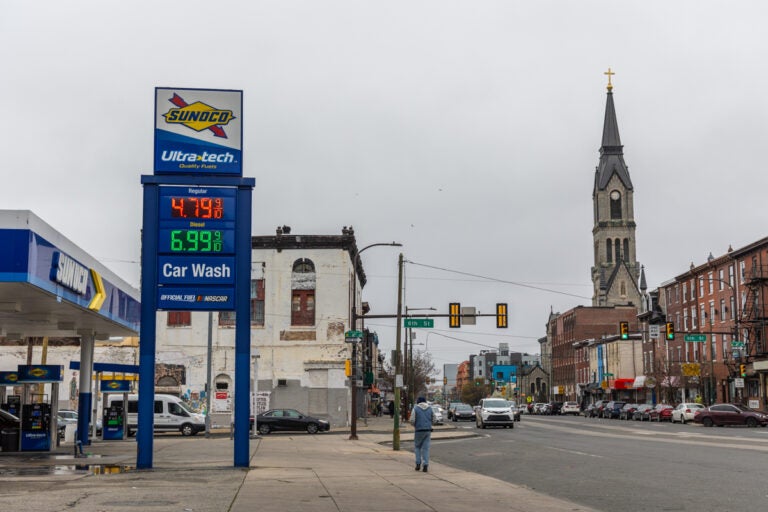
Gas prices in Philadelphia are uniformly over $4.00 on April 2, 2026. (Kimberly Paynter/WHYY)
From Philly and the Pa. suburbs to South Jersey and Delaware, what would you like WHYY News to cover? Let us know!
The average price of gasoline nationwide has topped $4 a gallon for the first time in four years, according to AAA, and prices in Philadelphia have risen above the national average.
Gas prices continue to be impacted by America’s and Israel’s war with Iran, as the Strait of Hormuz remains largely closed to oil shipments. The last time prices reached these levels was when Russia invaded Ukraine in 2022.
Buying gas at the Sunoco station at 6th and Girard streets, where a gallon of regular cost $4.79 on Thursday, Ricki Glass said that it used to cost about $80 to fill up her Range Rover, but now it costs $94, adding to other rising expenses for her family of five.
“It’s costing our family, you know, probably an extra $300 a month just to be able to live, and we have a two-parent household and it’s still really hard to survive with inflation costs,” Glass said.
Glass blamed President Donald Trump, and the war with Iran.
“It’s impacting families all around the world and it’s unfortunate,” she said.
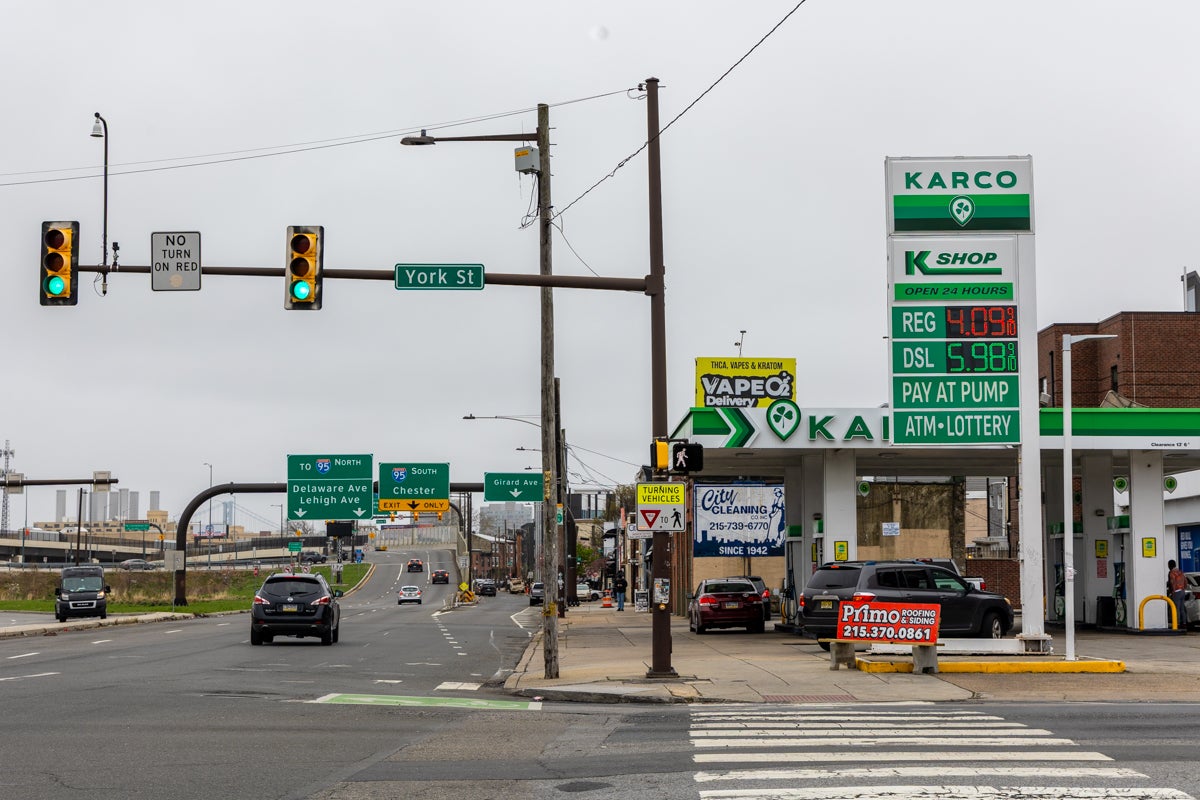
As of Thursday, the nationwide average price for a gallon of regular gasoline is $4.08, but Philadelphians may pay on average between $4.10 and $4.17, with some stations charging as high as $5. Just a month ago, prices hovered around $3 per gallon nationwide. Diesel is up to $5.94 on average in Pennsylvania.
“It’s definitely impacting everybody, especially those who make the bare minimum,” said customer Pete Rivera. “Almost $5 gas, it’s ridiculous, it’s absurd.”
Related Content
Iran war protesters in Philadelphia target McCormick, Fetterman, demanding end to conflict
Demonstrators said they are concerned about the human and financial costs of war overseas while Americans struggle at home.
6 months ago
Listen 1:08Although the U.S. is a fossil fuel exporter, oil is a global commodity, with 20% of the world’s crude oil moving through the Strait of Hormuz.
“And because the price of oil, and therefore the price of gas and diesel and jet fuel, are determined on a global market, when we lose 20% or it ends up being 10% of product, then that increases prices throughout the world, including at the gas station around the corner,” said Neale Mahoney, professor of economics at Stanford University.
Mahoney expects those prices to rise and peak in May at an average of $4.25 per gallon. But he doesn’t expect any sharp drops in price once the Strait of Hormuz opens.
“Because of this phenomenon that economists call ‘rockets and feathers,’ where gas prices spike quickly like a rocket and float down slowly like a feather, we project that gas prices will stay elevated for a while, even if the strait opens up,” Mahoney said.
Mahoney and his colleagues at Stanford’s Institute for Economic Policy Research calculated that the war and subsequent lack of crude oil on the world market will cost the average American family $850 more this year. For those who have electric vehicles or take public transit, those costs will be less. But those in rural areas who have to drive farther may pay much more.
He said this could zero out any expected gains outlined as tax breaks in the One Big Beautiful Bill Act.
“We calculated that the higher gas prices will more than offset the additional relief that families will be receiving in terms of rebate checks from the government,” he said.
The war with Iran is not just impacting the price at the pump. Jet fuel prices — which Mahoney said makes up about 30% of an airline ticket — have doubled.
“I think all reasonable projections are that those impacts are just going to get larger as the higher cost of jet fuel works its way through the system,” Mahoney said.
Related Content
Gas prices rise in the Philadelphia area as war with Iran escalates
As the U.S.-Israeli war with Iran rages on, oil prices are rising, and drivers in the Philadelphia region are feeling the effects at the pump.
7 months ago
About one-third of the world’s fertilizer goes through the Strait of Hormuz, which could impact fall crops and drive up food costs. Higher diesel costs will also contribute to upward pressure on food prices.
“From the field to the store, those diesel costs get passed through,” said Mahoney.
Because of the “rocket and feather” effect, none of those prices are coming down soon.
“Even if the Strait of Hormuz opens up over the next month, it may take until midsummer or after until we’re seeing gas prices closer to $3, which they were before the start of the war,” Mahoney said.

Get daily updates from WHYY News!
WHYY is your source for fact-based, in-depth journalism and information. As a nonprofit organization, we rely on financial support from readers like you. Please give today.
Part of the series
Part of the series


Data center growth could mean blackouts in coming years, Pa. utility regulators say
A report predicts electricity demand on the regional grid will nearly double by 2040, due almost entirely to data centers.
3 days ago
Listen 1:08
Delaware at-home solar initiative aims to reduce energy bills while reducing emissions
The plan aims to expand access to grants and rebates that help people install solar at home.
2 weeks ago

Conservationists to restore wetlands, save habitat for diamondback terrapins in New Jersey
Tidal salt marshes across New Jersey are being drowned out by sea level rise.
2 weeks ago
Listen 1:17