‘You are somebody’: West Philadelphia festival pays tribute to Martin Luther King Jr.’s local civil rights activism
The annual “Freedom Now” festival commemorates King’s 1965 speech to 10,000 Philadelphians.
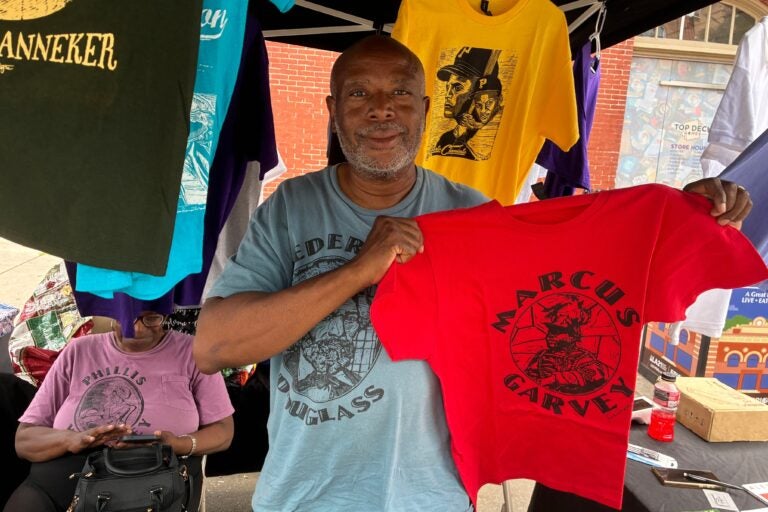
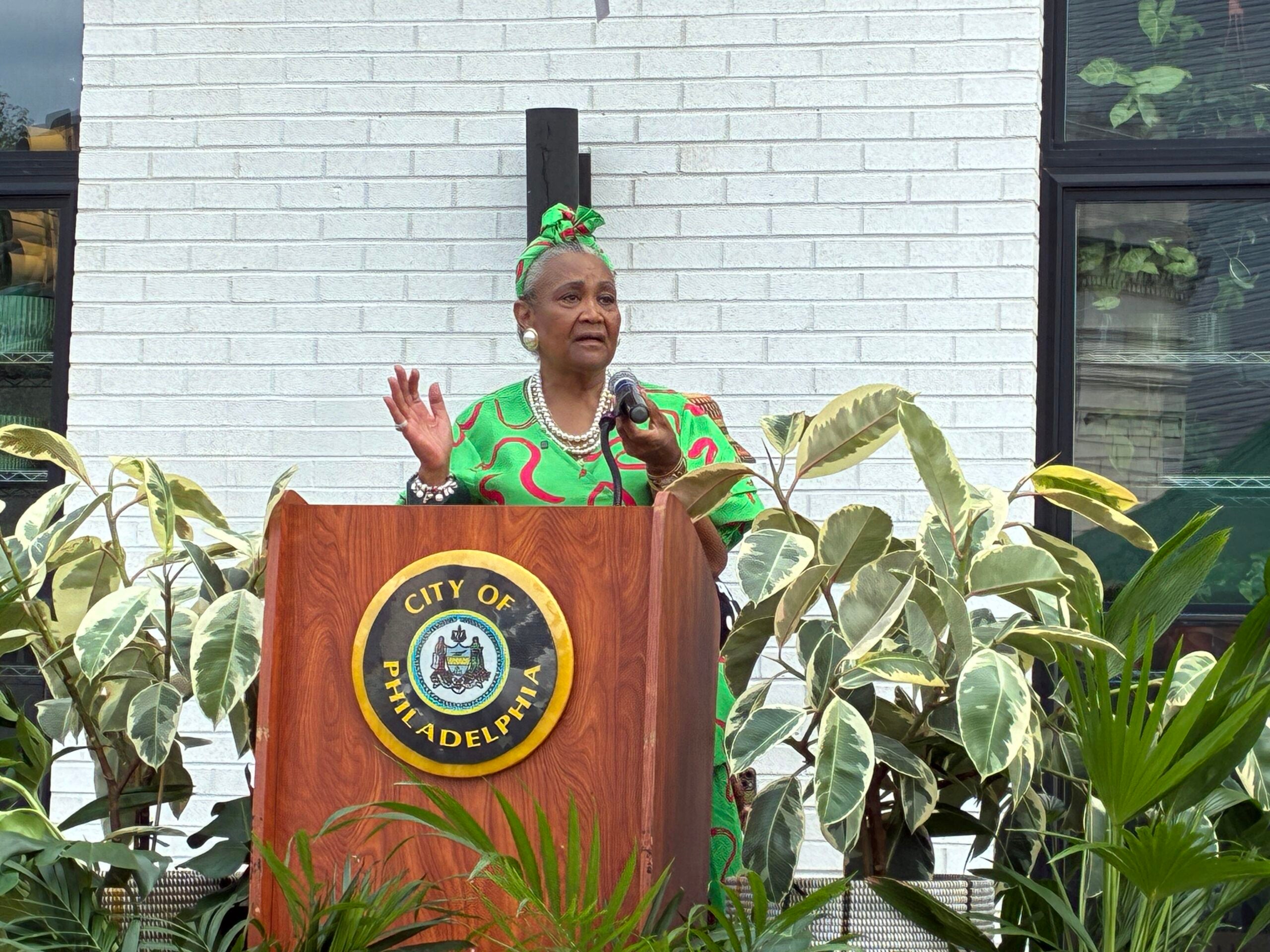
Sean Ramon Montague, founder and owner of Ethnicitees LLC, traveled from Baltimore to honor King at the festival on Aug. 2, 2026. Montague designs educational T-shirts featuring Black historical figures, preserving their stories through wearable art. (Hannah Pajtis for WHYY)
From Philly and the Pa. suburbs to South Jersey and Delaware, what would you like WHYY News to cover? Let us know!
Community members gathered in West Philadelphia Sunday for the second annual Freedom Now Fest, a festival commemorating the 61st anniversary of Rev. Martin Luther King Jr.’s 1965 Freedom Now rally speech. King delivered the speech Aug. 3 to 10,000 people at the corner of 40th Street and Lancaster Avenue, calling for civil rights, economic justice and community development.
“I came here from the front lines of the Civil Rights Movement in the South to tell you, ‘You are somebody. Let us have a sense of somebody-ness. Don’t let anybody make you think that you are a nobody,’” King told the crowd, per CBS News.
The festival, collaboratively planned by the MLK Lancaster Avenue Business Committee and other community organizations and businesses, celebrated Black history and paid tribute to King’s legacy. Between 38th and 40th streets, individuals enjoyed live music, shopped at local Black-owned pop-up shops, observed public art installations and ate free collard greens, King’s favorite food.
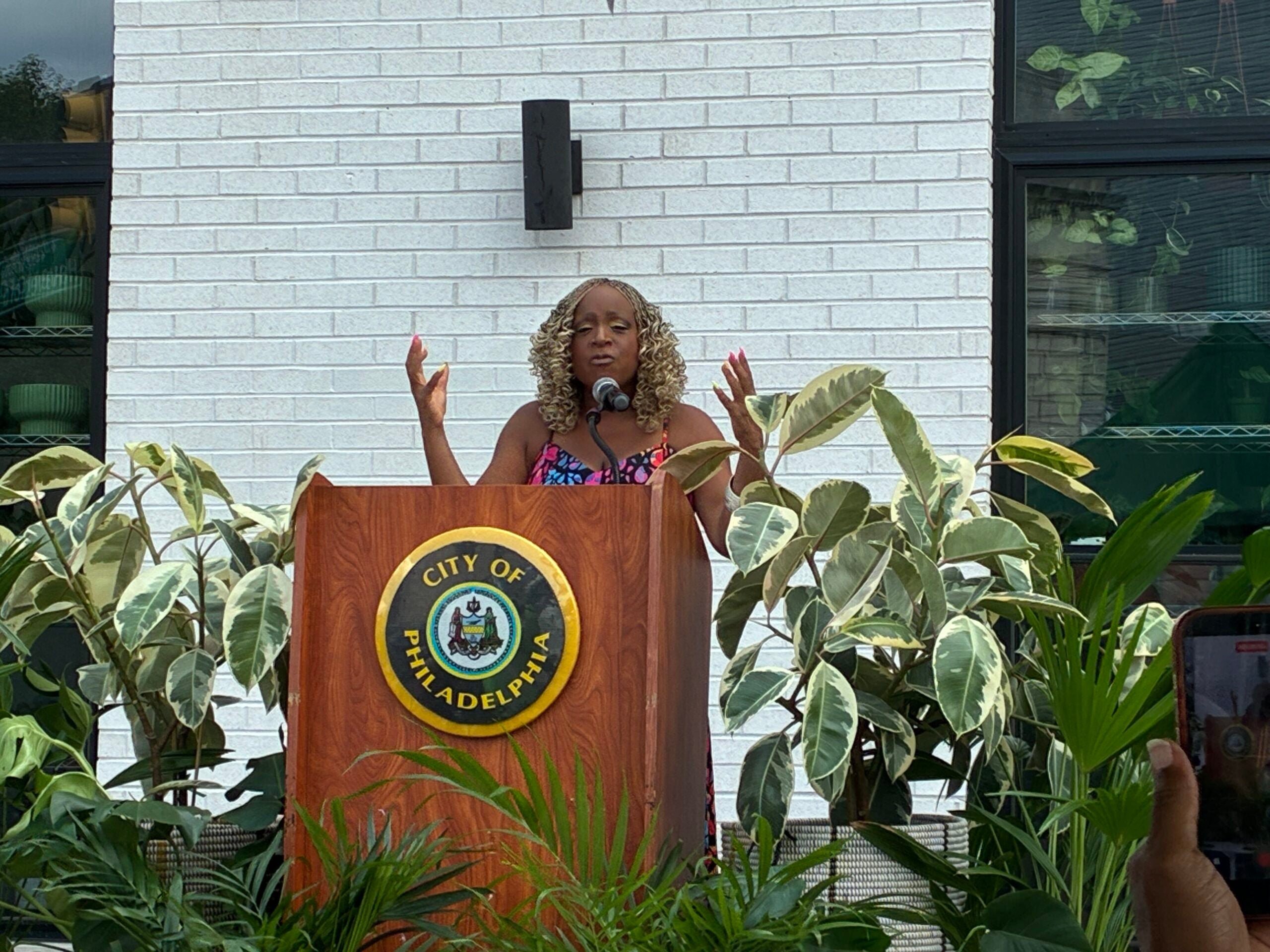
“Folks often remember Dr. King’s fight for civil rights, but by the end of his life, he was challenging America to think even bigger,” said Councilmember Jamie Gauthier, who gave introductory remarks. “He wasn’t only confronting segregation; he was confronting poverty, economic exploitation, and the idea that some lives were valued more than others.”
Related Content
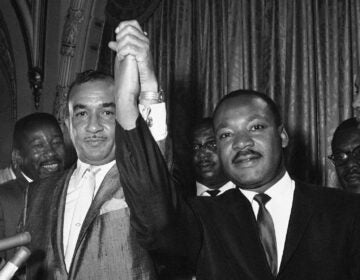
MLK’s deep ties to Philadelphia
King audited classes at Penn, preached in Philadelphia churches and built relationships with influential Black clergy and institutions. Can we claim the reverend one of ours?
Air Date: January 19, 2026 12:00 pm
Listen 51:12A history of civil rights activism in Philadelphia
Just months after King led the Selma to Montgomery marches in 1965, he embarked on his “Freedom Now” tour across major cities such as Chicago, New York and Philadelphia.
In his Freedom Now rally speech in Philadelphia, King advocated for Black liberation, telling the crowd that “now is the time to grant freedom to the Negro all over the United States” and “now is the time to make America a greater nation.”
Three days after King gave his Freedom Now speech in West Philly, then-President Lyndon B. Johnson signed the Voting Rights Act of 1965, which prohibited racial discrimination in voting and outlawed Jim Crow policies like literacy tests designed to suppress Black voters.
However, King’s Philadelphia activism wasn’t limited to his Freedom Now speech. The following day, King spoke to freedom fighters pushing for desegregation at Girard College, a whites-only school in North Philadelphia. Cecil B. Moore, civil rights activist and former president of Philadelphia’s NAACP chapter, led the charge.
“This school is symbolic of a tragic evil in our nation,” King said to the crowd at Girard College. “It is symbolic of a cancer in the body politic which must be removed before our democratic health can be realized.”
Bernyce Mills-DeVaughn, one of the freedom fighters marching with Moore, recounted seeing King and protesting at Girard College. Mills-DeVaughn said that at the time, there was rumored tension between Moore and King, but they came together to demand desegregation.
“All that stuff about the discord between Cecil and Dr. King, he smashed that,” Mills-DeVaughn told the crowd at Freedom Now Fest. “They got together, and they joined hands … they came together, and Dr. King came to Girard College.”
Related Content
ACANA Festival connects thousands of Philadelphians to African culture
Cherry Street Pier saw thousands of people take in cultural cornerstones, such as African art and music, during Sunday’s event.
1 day ago
Listen 1:28Keeping a legacy alive
While King was assassinated 58 years ago, West Philly community members remain dedicated to preserving his legacy. A state historical marker commemorating the 1965 Freedom Now address sits at the closest intersection, erected in 2010 by the Pennsylvania Historical & Museum Commission. In 2025, the block was named the “Rev. Dr. Martin Luther King Jr. Triangle.”
Local businesses also pay homage to King. Plant and People, a plant shop and cafe located where King gave his Freedom Now speech, features framed photos of King around the shop. Inside, Makeba Rainey, a Philadelphia-based artist, hosted an interactive pin-making workshop. At her station, festival participants could customize Black history-themed pins, featuring portraits of King and messages about liberation.
“I’m mostly a digital collage artist, and I’m here because Martin Luther King is one of my favorite people to make portraits of,” Rainey said. “I try to make a portrait of him every year, and I think this is a great event and opportunity to just recognize that we are in the same spot that he was in years ago.”
Other artists, like Sean Ramon Montague, founder and owner of Ethnicitees LLC, traveled from out of town to honor King at the festival. Montague, who is from Baltimore, designs educational T-shirts featuring Black historical figures, preserving their stories through wearable art.
“I was a teacher in Baltimore City Public Schools. I was tired of schools not teaching African American heritage to our kids … so we’re here today and spreading the legacy and continuing the legacy of Dr. Martin Luther King,” Montague said.
Joe Becton, a historian of Philadelphia Black history, said the city has a long and rich legacy of activism that expands beyond King. Reflecting on the meaning of freedom, Becton told the crowd to remember the perseverance of the Black community.
“Right now, it’s a backlash, and we’re getting kicked. But we’ve been kicked before, and when it’s all over, we are going to be the ones who define and identify what freedom is for Philadelphia, for the United States, and for the entire world,” Becton said.
Preserving the legacy of King, Gauthier said, includes applying his message of liberation to modern struggles. Gauthier said these struggles include attacks on immigrant communities and community programs and the censorship of Black history.
“Dr. King came to West Philly because he knew that this community had a long tradition of organizing for justice, and more than 60 years later, it’s our responsibility to carry that tradition forward,” Gauthier said. “Now more than ever, we have to speak truth to power, to roll up our sleeves and fight for a city in a country where everyone can thrive.”
Never miss a moment with the WHYY Listen App!


WHYY is your source for fact-based, in-depth journalism and information. As a nonprofit organization, we rely on financial support from readers like you. Please give today.
ACANA Festival connects thousands of Philadelphians to African culture
Cherry Street Pier saw thousands of people take in cultural cornerstones, such as African art and music, during Sunday’s event.
1 day ago
Listen 1:28
The house was badly damaged by a fire two years ago. The restoration work to turn it into a museum is expected to be completed by 2026.
1 year ago
Listen 1:03
With Donald Trump’s inauguration fast approaching on MLK holiday, dozens of Philadelphians gathered to reflect on Dr. King’s legacy and the current political moment.
2 years ago