
‘Causing havoc’ or high-tech convenience? Sports betting kiosks installed at 89 retail stores in Delaware
Merchants, lottery boss tout self-serve system, but gambling addiction counselors worry about underage users, more people going deep into debt.
Listen 2:14
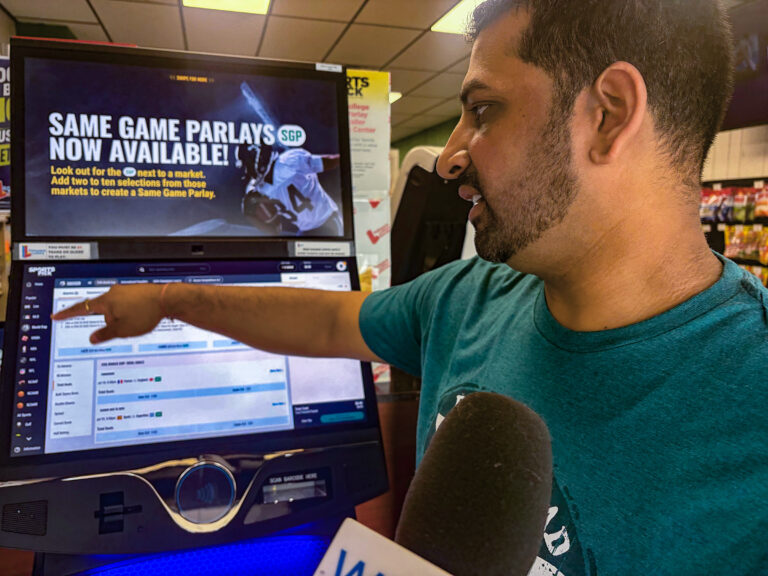
Shiv Patel shows how to use the sports betting kiosk at his Pike Creek convenience store. (Cris Barrish/WHYY)
What are journalists missing from the state of Delaware? What would you most like WHYY News to cover? Let us know.
Shiv Patel views the new self-serve kiosks in his Pike Creek delicatessen as a convenient tool for his customers who enjoy betting on football, baseball, golf, soccer and other sporting events.
Helene Keeley, the state’s lottery director, hopes the new kiosks help generate more money for the state budget from Delaware’s 89 sports retailers.
But Arlene Simon of the Delaware Council on Gambling Problems views the new machines as merely the state’s latest method to increase the number of addicts.
The devices, which in recent weeks have appeared in 89 convenience stores, tobacco shops, restaurants and bars statewide, are the latest technological innovation in Delaware’s 8-year-old legalized sports wagering landscape.
Previously, you could:
- Visit one of the state’s three racetrack casinos and place a sports bet with a dizzying array of options, from the winner of a football game to how many sacks a player gets in just the fourth quarter;
- Create an account at one of the casinos’ online gaming platforms, deposit money and bet away; and
- Drop by any of the 89 retail establishments with sports betting licenses and fill out a paper card for a parlay wager of at least three legs.
And now, there’s the self-service kiosk.
Just walk into the store, deposit some cash in the slot — no credit cards — and tap your way through thousands of options on a big screen.
Options range from tonight’s MLB games to upcoming competitions in golf, tennis, basketball and almost any sport that comes to mind — horse racing, table tennis, cricket, even darts. You can bet on individual players’ performances, such as how many home runs someone hits that game, or even on the outcome of games that are already under way as the odds change.
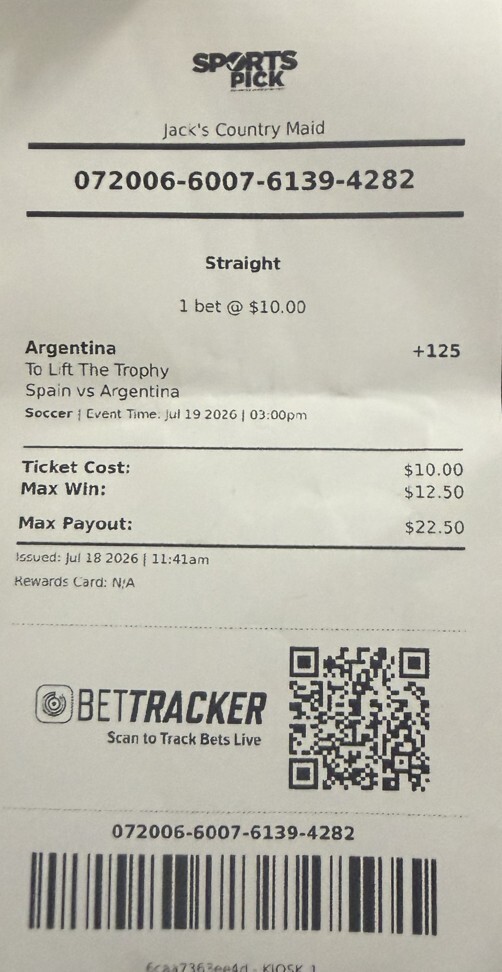
DISCLAIMER: For the purpose of the story, this reporter placed a $10 bet at the kiosk on Argentina to defeat Spain in Sunday’s FIFA World Cup soccer final. The Spaniards triumphed, 1-0.
Under the previous “counter system,” Keeley said, “you would have to complete [a bet slip] and you would hand it over to the person behind the counter or tell them what you want and they would plug it in for you. This is a self-service system.”
The 89 retailers who take sports bets already do steady business.
In fiscal year 2026, they processed 1.6 million wagers that totaled $25.5 million. Those bets generated $4.1 million in general fund revenues for the state and comprised 31% of the total state share from sports betting, including at the casinos and online wagers.
You must be at least 21 years old to place legal sports in Delaware.
Related Content
No more ‘wiggling out’ of disclosing free trips overseas for Delaware lawmakers
Legislators moved swiftly to change a law after a WHYY News investigation revealed that none had disclosed free trips to Taiwan dating back to 2010.
4 months ago
Listen 2:22‘It’s very user friendly as far as the kiosk goes’
Depending on who you speak with, the convenience and variety offered by the sports betting kiosks is either the beauty, tragedy or simply the logical direction of sports betting in Delaware.
Patel predicts a positive benefit for not only gamblers, but for his Samson’s Country Maid, where you can get lunchmeat, sandwiches, snacks and beverages, as well as household items found in convenience stores.
Patel said someone can order a turkey sandwich, and hit the kiosk while the food item is being prepared.
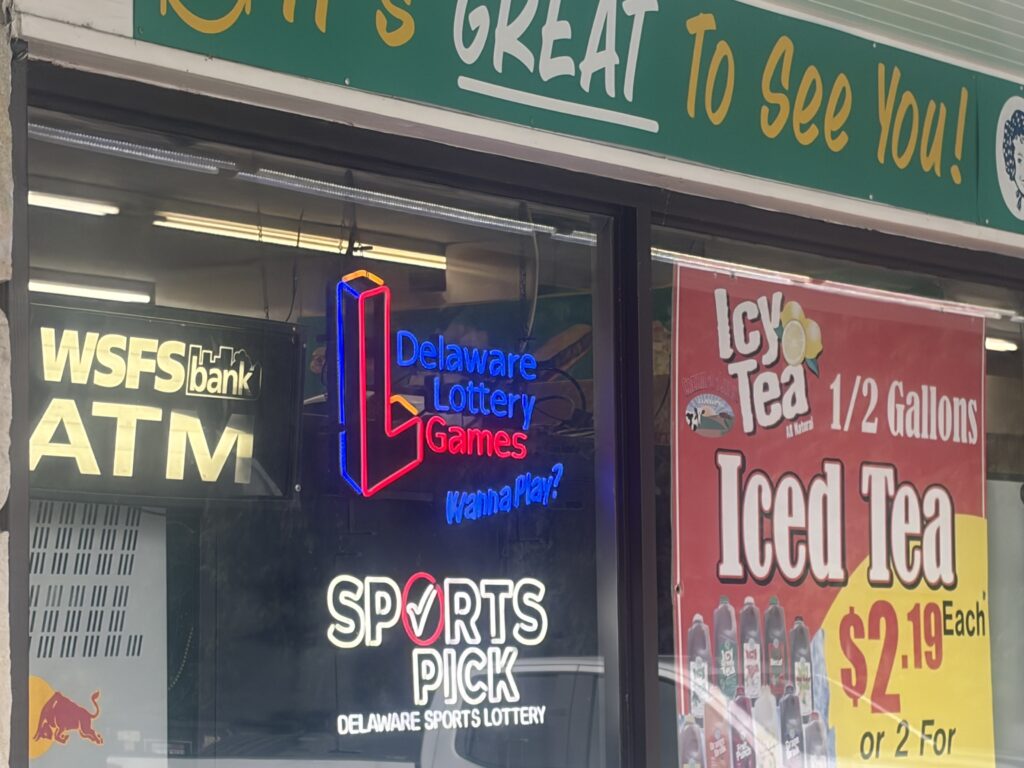
Previously, if they wanted to bet on the outcome of a single ballgame or contest, they would have had to go to the Delaware Park casino a few miles away or go online. At Country Maid, they could only fill out a parlay card, in which you have to prevail in a minimum of three-legged wagers to win the bet. Now they can simply bet on who will win the game.
“It’s very user friendly as far as the kiosk goes,’’ Patel said, while showing this reporter how to make a wager. “And there’s no restrictions as far as when you can bet or what you can bet on. It’s pretty full go from the minute we open until the minute we close, seven days a week. And it brings new clientele through the door.”
Patel said he isn’t worried about children or young adults using the kiosk, which is directly in front of the counter where food orders are placed and other purchases get rung up.
“We card everyone that uses this thing if they look under 21, just like our tobacco laws,” Patel said. “So if we can avoid the underage stuff, it’s not a big deal.”
‘We’re never OK with these additional things that they add’
Simon, who has headed the gambling council for 12 years, countered that the kiosks will serve to exacerbate the toll that sports betting takes on Delawareans.
She also worries that underage people can access the kiosks. Clerks at Wawa and other stores that have self-serve kiosks for regular lottery games like Play 3, Powerball or other games aren’t always vigilant, she said.
“I have sent my 10-year-old grandson up to one and nobody watches him. Nobody says anything,” Simon said.
Beyond her concern about unauthorized users, Simon said it pains her that so many people, especially men in their 20s, are addicted to sports betting. She said her agency’s hotline currently gets about 500 calls a week, and at least half are from people hooked on sports wagering.
“We’re never OK with all of these additional things that they add, because it’s only causing havoc amongst people, and especially the younger generation,” Simon said.
She said the situation has only worsened over the last 19 months, since Delaware launched online sports betting on Dec. 27, 2024.
“Truthfully, once they legalized online sports betting — you can use your phone — all hell broke loose,” Simon said. “People don’t have to get up off their chair or their couch and they can make bets. And with these kiosks, they’re supposed to be watched by people in the establishment, and you know that they are not.”
It’s gotten so bad, she said, that the council has begun offering online support services through Zoom, with two current groups for young adults that routinely have up to 20 attendees.
“They’re packed all the time. Every day we get more and more calls from both parents and the young folks [ages] 21, 22, in that range, that are having a problem,” Simon said.
“They owe BetRivers a ton of money,” Simon said of the state’s contracted online sportsbook. “They’re doing prediction bets. They think they’re invincible. They think, ‘I’ll lose this bet today, but tomorrow I’ll make it up.’ It doesn’t work that way.”
The reality is that the options touted by the state and retailers are destroying the finances of so many people, she said.
“You can bet, ‘Is John Smith going to make that touchdown? Is John Smith going to catch the ball on the first pass?’ You can bet all kinds of things. People make hundreds of bets during a game,” she said.
Simon said she’s not against people gambling responsibly, and realizes that legal gambling exists to boost state revenues, which even funds her agency to the tune of about $2.3 million a year.
“We’re gambling neutral,” she said. “But there’s so much going on today that some many people are getting involved and it’s really quite a problem. They’re looking to make the money [from gambling revenues] and they somehow put in the back of their mind the people that can become addicted.”
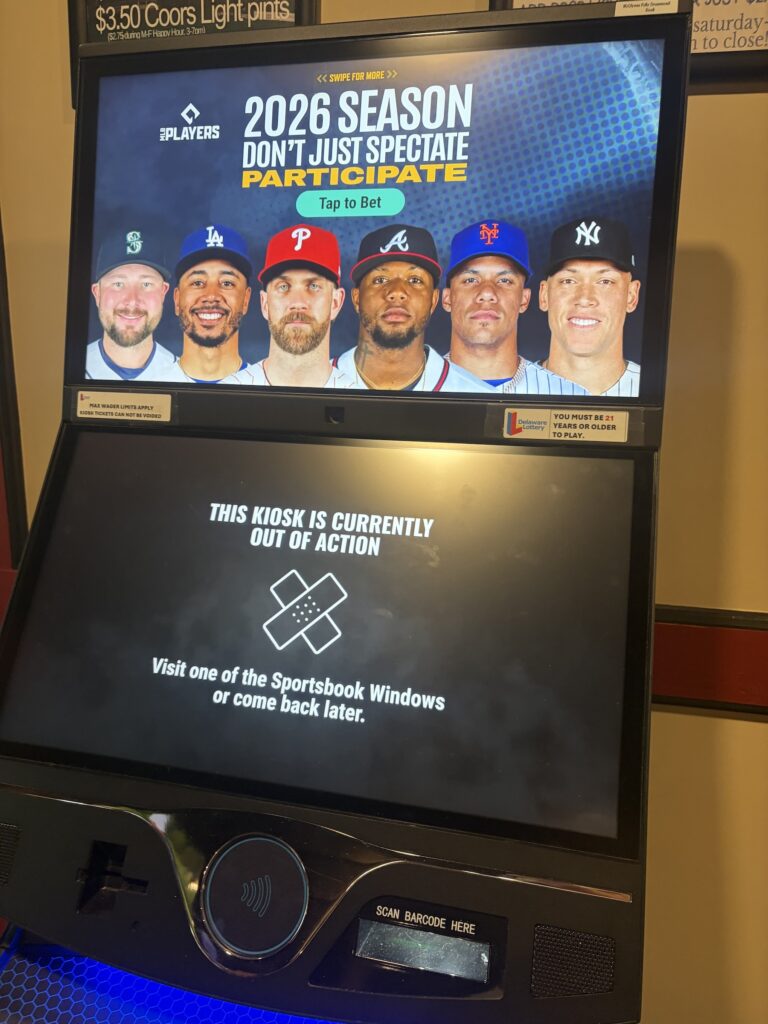
‘I know our retailers are responsible,’ lottery director says
Keeley said she understands Simon’s concerns about underage gamblers, but believes retailers will keep people under 21 away from the kiosks.
“Absolutely it’s a concern for us,” Keeley said. “But just like any kid walking into a store, trying to buy liquor, or a pack of cigarettes or whatever, you’ve got to card the person, you got to make sure everything’s valid.
“And I understand this is a kiosk off to the side, but I know that our retailers are responsible. I know that they are watching this. It’s not like somebody’s just going to come in and steal a candy bar and run out the door, right?”
Keeley stressed that even if someone under 21 was able to place some bets, they would need to show their ID to a clerk to collect any winnings.
“At the end of the day,” she said, “they can’t cash it.”
Keeley said her office is also sensitive to the issue of gambling addiction, and fully supports Simon’s agency and their efforts to counsel people. The agency doesn’t charge any fees.
“If somebody is out there that needs help, we want to make sure they have the ability to get it,” she said.
Those issues notwithstanding, Keeley said the state wanted to make it easier on retailers who traditionally have had to serve gamblers as they manually fill out parlay cards.
“It saves time for the retailers because if they’ve got customers and they’re making deli sandwiches, breakfast sandwiches, they don’t necessarily have time to work with a person,” Keeley said.

Get daily updates from WHYY News!
WHYY is your source for fact-based, in-depth journalism and information. As a nonprofit organization, we rely on financial support from readers like you. Please give today.
Record betting at BetMGM and Caesars for Sunday’s Super Bowl
BetMGM Sportsbook and Caesars Sportsbook each reported that Philadelphia’s 40-22 victory over Kansas City was the most-bet single sporting event in each of their histories.
2 years ago
The Delaware Black Chamber of Commerce formed in 2020 to help Black business owners grow while creating new opportunities for others.
3 years ago
Home prices across Pennsylvania, New Jersey, and Delaware continue to climb
Realtors across the tri-state region say homebuyer demand remains strong despite a steady hike in the cost to purchase a home, recent housing data shows.
3 years ago