
A trio of BlackStar documentaries connects communities from Southwest Philly to Northwest London
From a community garden to Pan-African rumba and public housing, the film festival's opening-day program explored the power of telling one's own story.
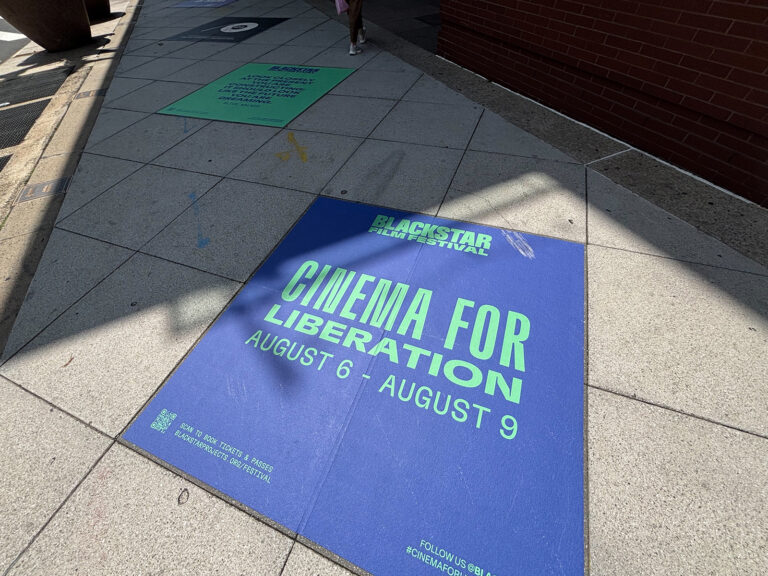
The sidewalk outside the Kimmel Center in Philadelphia for the BlackStar Film Festival. (Jassmyn Nesmith/WHYY)
From Philly and the Pa. suburbs to South Jersey and Delaware, what would you like WHYY News to cover? Let us know!
What do a Southwest Philadelphia community garden, Philadelphia’s Pan-African rumba tradition and a Northwest London public housing estate have in common? At the BlackStar Film Festival‘s Intradependence Shorts program Thursday, they were three answers to the same question: How do communities preserve culture and tell their own stories?
The annual Philadelphia festival, now in its 15th year and running through Sunday, is screening 91 films from more than 30 countries. Known for amplifying filmmakers of color, BlackStar showcases stories that span cultures, identities and styles.
Its Intradependence Shorts program presented the three documentaries before bringing their filmmakers together for a discussion about community and encouraging people to shape their own neighborhoods.
The program featured “The Seeds We Carry,” a film about a Southwest Philadelphia community garden that has become a gathering place for neighbors facing gentrification and displacement; “Philly Rumba,” which traces how Philadelphia musicians built a local tradition rooted in the African origins of Cuban rumba; and “Authors of the Estate,” which follows residents of two Northwest London public housing estates who reclaim their communities’ stories through writing.
The post-screening discussion revealed the threads connecting the three films. Though their stories explored different communities, culture and experiences, the filmmakers kept returning to the same ideas about the power of community and people being the voices in their own stories. The exchange reflected BlackStar’s broader approach of curating conversations that continue long after the credits roll.
Director Gabrielle Patterson said she hopes “The Seeds We Carry” encourages people to invest in their own neighborhoods, whether that’s joining a community garden or starting a project of their own.
“You don’t necessarily need to ask permission to start something,” Patterson said, adding that a meaningful community often grows from people simply taking the first step.
Similarly, Abdou Cissé said he wants “Authors Of The Estate” to encourage people to approach their neighborhoods with “more audaciousness and more authority and more autonomy.”
“We make community,” Cissé said, “and it does not have to be massive. Once you have one or two people, you have community.”
Related Content
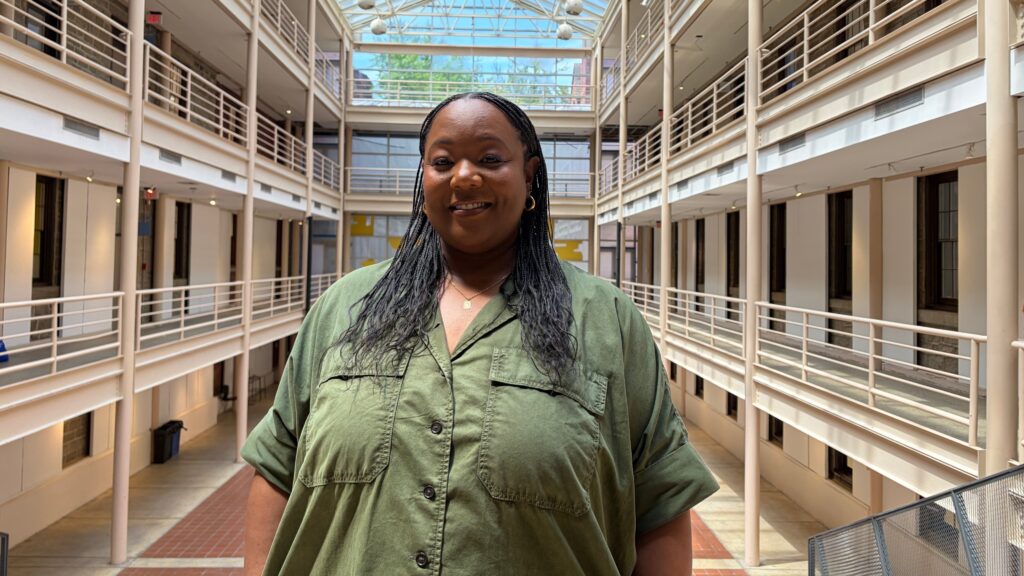
BlackStar Film Festival marks 15 years of championing filmmakers of color
A national study highlights the Philadelphia festival as a model for helping community-centered arts organizations thrive.
2 months ago
Listen 1:06For Andrés Cisneros, who directed “Philly Rumba” with Melissa Beatriz, sustaining community and culture requires deliberate action.
“Intentional support keeps them going, keeps them thriving, keeps them funded — and that’s where we all collectively come in,” Cisneros said.
Beatriz emphasized preserving history as a form of community care and building cross-generational connection.
“I encourage everyone to digitize from your parents, grandparents and families. Find those tapes and see what other stories come out of those archives, and pass that on to whoever is kin to you,” Beatriz said.
While the filmmakers described the ideas behind their work, the people at the center of their stories offered their own perspective on what those themes look like in everyday life.
Tony Crosby, a member of Little Afrika, a percussion group featured in “Philly Rumba,” said the group’s music is about more than performance. It is a way of sharing history and culture across communities.
“We get to inform people of what we do, our culture, in the English language, and it is easy to convey to everybody,” Crosby said.
The ideas shared by the filmmakers and the stories shared by the people at the center of the projects carried onto the audience members attending the festival and viewing the films.
For Milena Mikael-Debass, a first-time BlackStar attendee, the documentaries reinforced the importance of taking ownership of your own story.
“What resonated with me the most was this idea of not waiting for permission, of owning agency and getting creative,” she said.
Mikael-Debass said festivals like BlackStar serve an important role in bringing communities together because they provide “a springboard from which we can share ideas for ways to fight and achieve liberation.”
A schedule of all BlackStar screenings and events can be found online.

Get daily updates from WHYY News!
WHYY is your source for fact-based, in-depth journalism and information. As a nonprofit organization, we rely on financial support from readers like you. Please give today.
BlackStar Film Festival marks 15 years of championing filmmakers of color
A national study highlights the Philadelphia festival as a model for helping community-centered arts organizations thrive.
2 months ago
Listen 1:06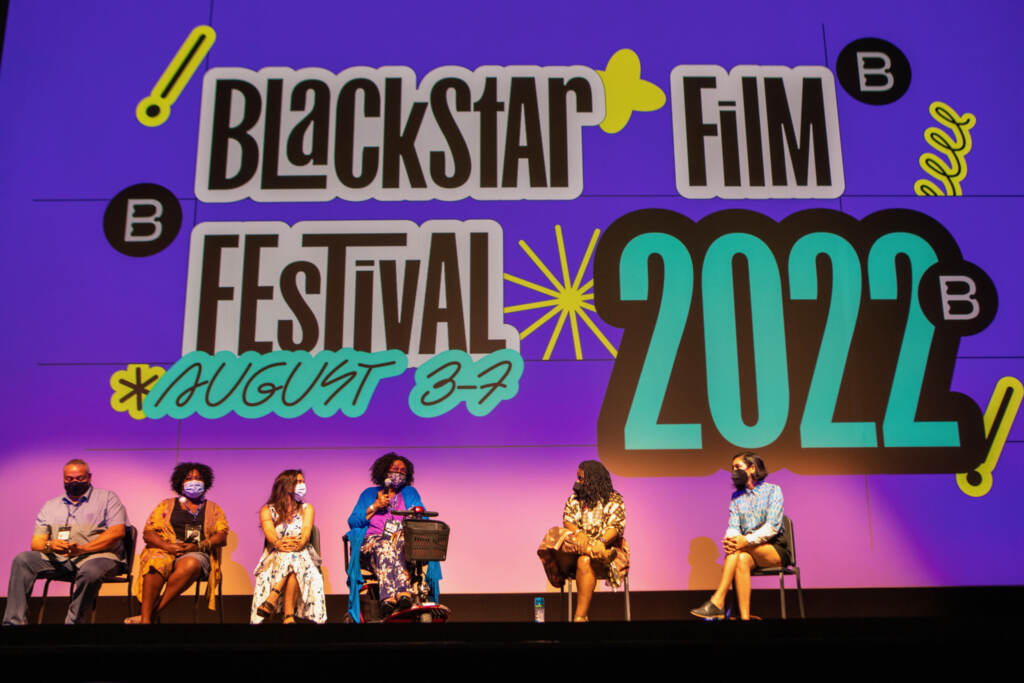
Story of poverty activism in Las Vegas premieres at Philly’s BlackStar festival
“Storming Caesars Palace” tells a “forgotten” story of mothers on welfare shutting down a Las Vegas casino in the name of poverty activism.
4 years ago
BlackStar Film festival returns for its 10th year
The mostly online festival of Black, brown, and Indigenous filmmakers will feature a one-day mini-festival of in-person screenings at the Mann Center.
5 years ago
Listen 5:40