
As America’s 250th anniversary approaches, Philadelphians revisit the ‘Sin Colonias’ bicentennial march
Organizers are marking the 50th anniversary of the 1976 demonstration as a reminder that the nation's founding has long inspired celebration and protest.
Listen 1:19
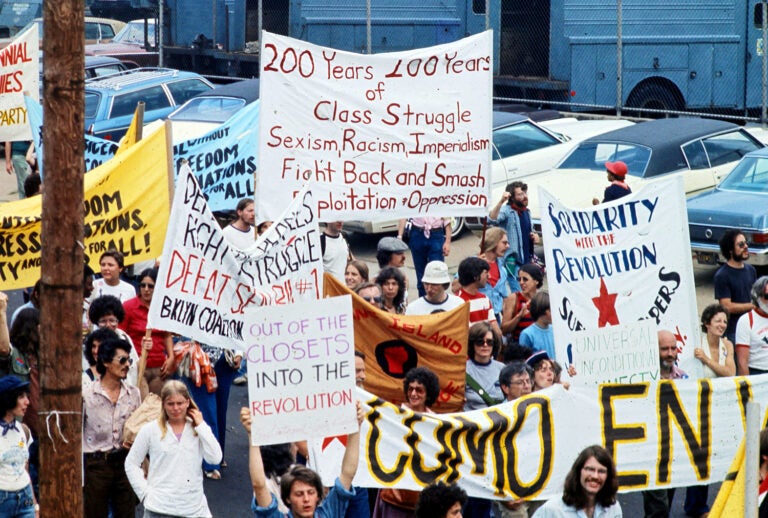
Tony Heriza, “200 Years of Class Struggle banner,” from the "Sin Colonias" march on July 4, 1976. (Photo credit: Tony Heriza, Courtesy of July 4 Sin Colonias Coalition)
From Philly and the Pa. suburbs to South Jersey and Delaware, what would you like WHYY News to cover? Let us know!
A group of Philadelphia organizers is using the nation’s 250th anniversary as an opportunity to revisit July Fourth, 1976: the day tens of thousands of people marched through the streets of North Philadelphia, demanding a bicentennial “sin colonias,” without colonies.
The march, which was organized by the July 4th Coalition, came to be known as the Sin Colonias protest. Members of the Puerto Rican Socialist Party, women’s rights advocates, Black liberation groups, Vietnam War veterans and student groups marched down Lehigh Avenue to Fairmount Park, calling for Puerto Rican self-determination, economic justice and equality.
“The protest really highlighted the colonial status of Puerto Rico, and, more broadly, the history of our country, going back to its founding,” said Paul Socolar, one of the volunteer coordinators of the July 4th Sin Colonias Coalition, which formed this year to commemorate the 1976 march. “Even though it was an anti-colonial revolution that created the United States, from the beginning, the U.S. was doing its own colonizing.”
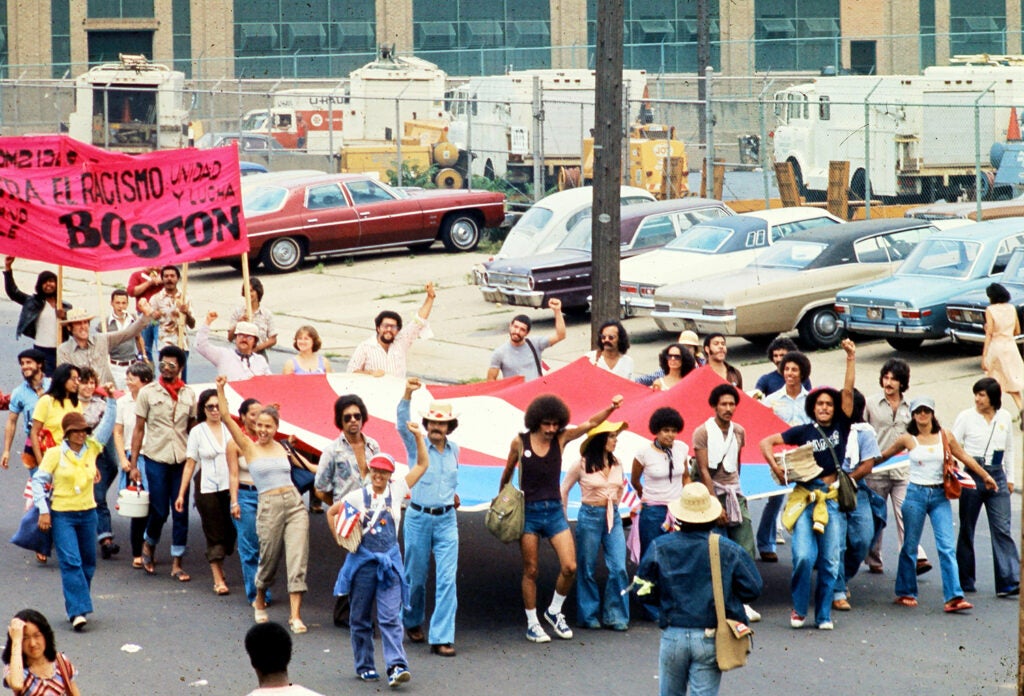
Socolar participated in the march 50 years ago as a college student, and said that in addition to it being a “huge and joyous protest,” the event was also personally meaningful because it marked his “first significant activism in Philadelphia.”
Preserving the legacy of ‘Sin Colonias’
The July 4th Sin Colonias Coalition has gathered photographs, historical documents and other materials related to the march on its website, and plans to tour college campuses in the fall to educate a younger generation about the historic event.
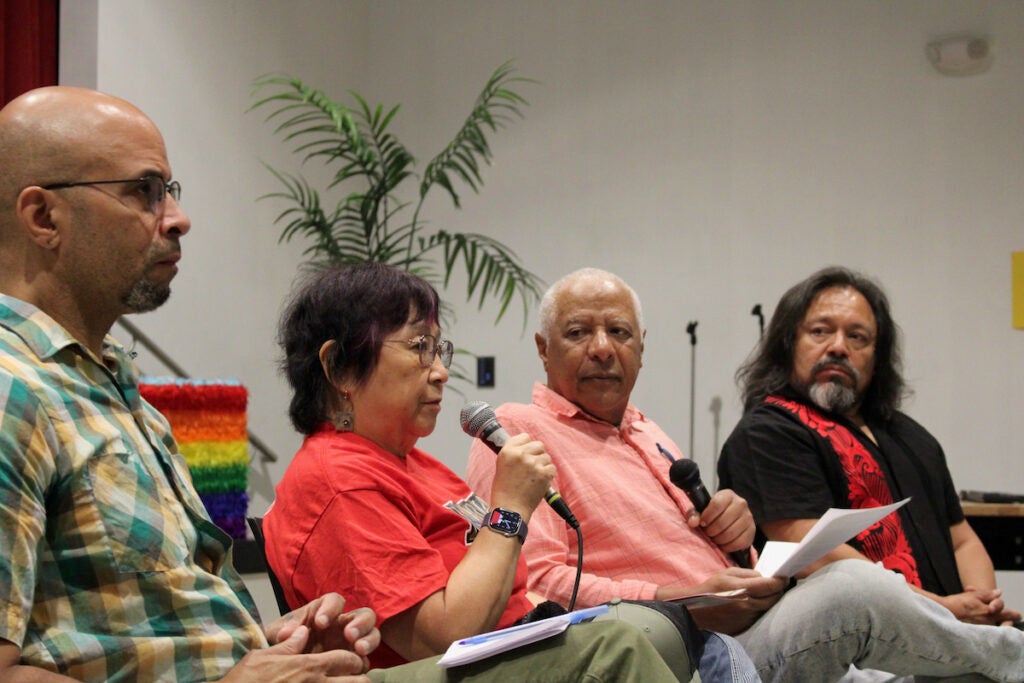
On Saturday, the July 4th Sin Colonias Coalition and Taller Puertorriqueño hosted the second of a two-part forum series commemorating the march. The event was part of Taller’s “We Will Not Hide” initiative to mark the nation’s 250th anniversary.
The initiative’s goal is to highlight history that often goes unrecognized, such as the Sin Colonias march, or, in the case of the exhibit on slavery at the President’s House Site, aspects of history that are being removed from public memory and excised from the national narrative, said Rafael Damast, curator and exhibitions program director at Taller.
“A lot of people’s histories are being [relegated] to the back of the bus,” he said. “Thinking about ‘We will not hide’ is a way just to talk about different perspectives, and how Taller is thinking about this moment … is of critical thinking, where each exhibition, each program, is a way just to highlight a people, a perspective, that is otherwise being ignored.”
Hosting events and exhibitions at Taller that commemorate the Sin Colonias march is especially significant, Damast said, since the march itself originated in the Fairhill neighborhood, where the organization is now located.
Related Content
There would be no U.S. Army without Philadelphia
This week the city celebrates how the world’s greatest military power began with a bunch of underdogs.
3 months ago
Building coalitions across communities
Saturday’s event featured a panel on the legacy of the Sin Colonias march and the current state of coalition-building among Philadelphia movements. Pedro Rodriguez, a community organizer and member of the July 4th Sin Colonias Coalition, moderated the discussion with Damast; Bill McKinney, executive director of New Kensington Community Development Corporation; Debbie Wei, co-founder of Asian Americans United; and artist Cesar Viveros.
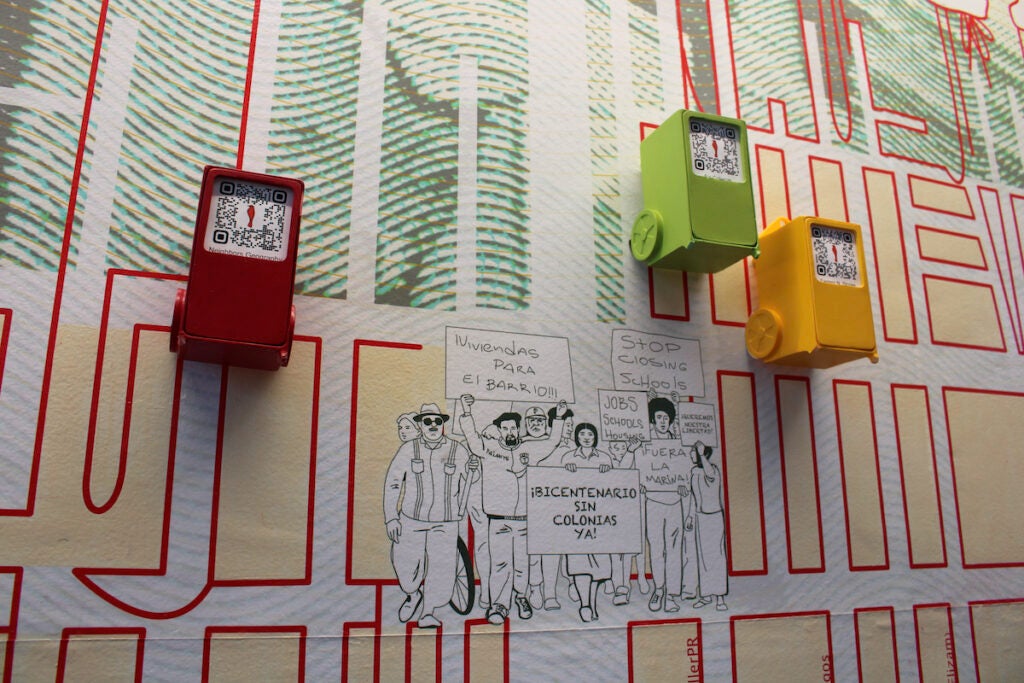
Wei and McKinney highlighted the “No Arena in Chinatown” movement as an example of leaders in different communities and neighborhoods working together to support each other.
Wei said that it also depends on relationships between generations.
“When there is a fight, you have relationships already,” she said. “Coalition-building is built on relationships, it has to be built on trust.”
Rethinking the nation’s story
Damast said the Sin Colonias march resonates today because many of the issues it raised, including opposition to wars and calls for economic and racial justice, remain at the center of conflicts with the current Trump administration.
“That march was created under similar circumstances … There was kind of a reactionary administration under the mayorship of Frank Rizzo. It was just coming out of [President Richard] Nixon … there was a lot of frustration,” Damast said.
For Socolar, the semiquincentennial isn’t just a celebration. It’s an opportunity to interrogate the stories Americans tell about themselves.
“I think what stands out for me is that these anniversaries, like the bicentennial and America 250, are times when the nation’s narrative, … how we view our history, is put out there and up for grabs and, for some people, … about self-congratulatory patriotism,” he said. “I think for me, and for this tradition that we’re trying to hold up here, it’s really about that this country also has a remarkable history of resistance to inequality, oppression, colonialism — and that’s what really needs to be celebrated in 2026 and beyond.”

Never miss a moment with the WHYY Listen App!


WHYY is your source for fact-based, in-depth journalism and information. As a nonprofit organization, we rely on financial support from readers like you. Please give today.
Part of the series
Philadelphia 250
The United States is marking its semiquincentennial — or its 250th anniversary — in and around the City of Brotherly Love.
Philly Puerto Rican community pressures federal officials to act amid ‘humanitarian crisis’
More than half a million Puerto Ricans are enduring days-long water shutoffs due to drought and infrastructure issues.
3 weeks ago
Listen 1:12
After days of oppressive heat, thunderstorms cut Philly’s July 4th concert short
After storms forced attendees to evacuate, the concert resumed around midnight with a shortened performance by The Roots, followed by fireworks.
2 months ago
Listen 0:55
Patriotic Pet Parade at Betsy Ross House in Old City celebrates America’s 250th birthday
The competition boasted 22 pets donning a range of red, white and blue attire.
2 months ago