

Ambler chapel at historic Pa. seminary wins international architecture award
Immaculate Conception Chapel at St. Charles Borromeo Seminary is one of several historic, architecturally significant places honored by a Philadelphia-based nonprofit.
Listen 1:05
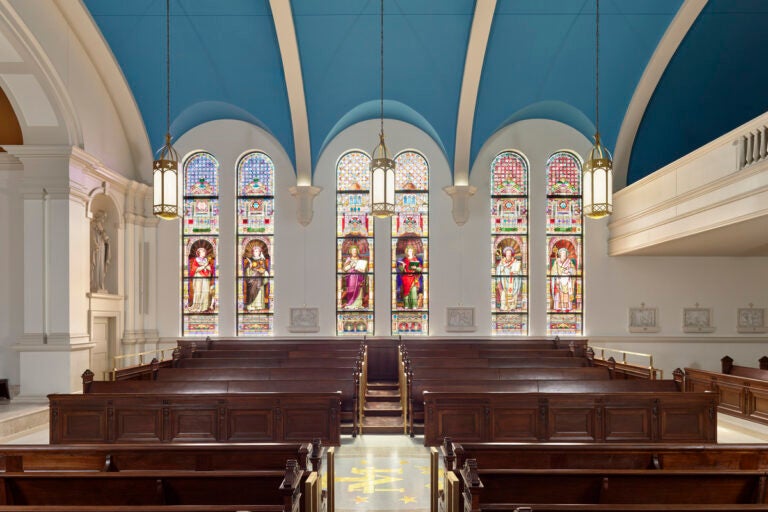
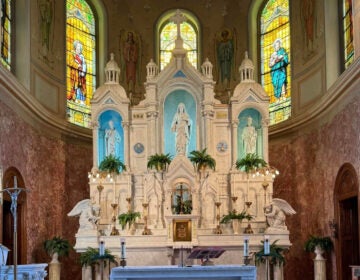
Philadelphia-based Partners for Sacred Places recognized Immaculate Conception Chapel at St. Charles Borromeo Seminary in Ambler, Pennsylvania, with one of its 2026 international awards for excellence and innovation in architecture, design and art for religious places. (Photo credit: Jeffrey Totaro; Courtesy of Partners for Sacred Places)
From Delco to Chesco and Montco to Bucks, what about life in Philly’s suburbs do you want WHYY News to cover? Let us know!
A chapel at St. Charles Borromeo Seminary’s new Ambler campus in Montgomery County has earned an international architecture award for blending centuries of Catholic tradition with contemporary design.
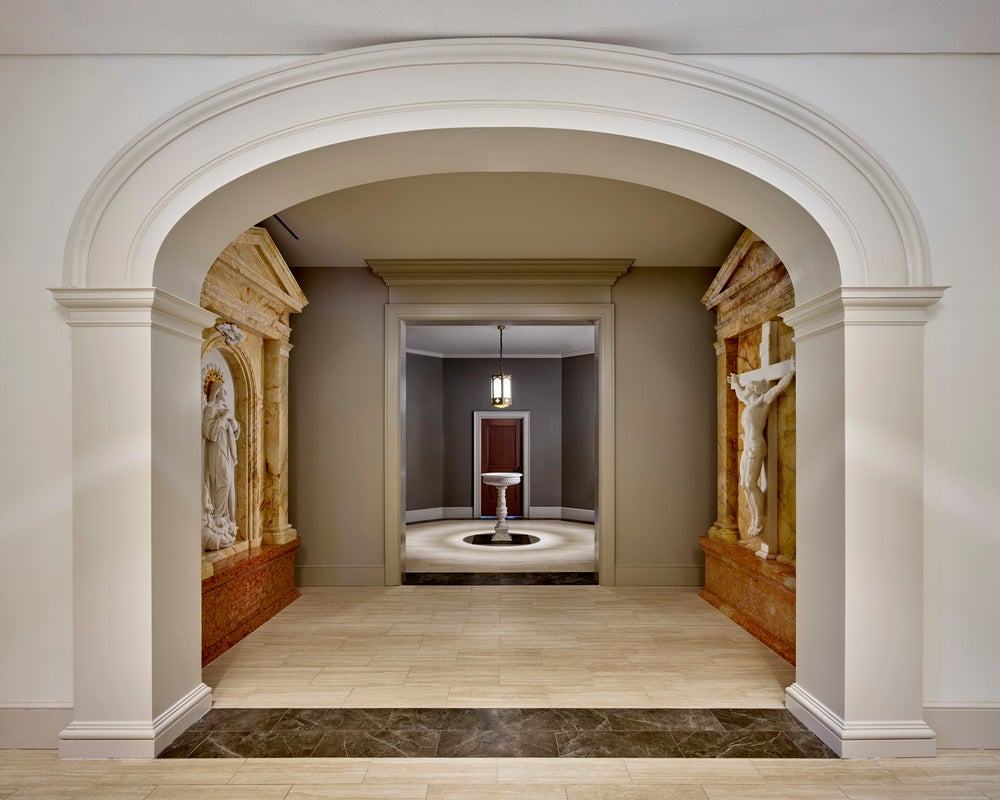
Immaculate Conception Chapel, designed by Voith & Mactavish Architects LLP, incorporates historic elements salvaged from the seminary’s former Lower Merion campus, including carved pews, statues and stained-glass windows. The adapted features preserve the legacy of the oldest Catholic institution of higher learning in Pennsylvania and the Archdiocese of Philadelphia.
The chapel was one of 12 winners selected from 75 submissions worldwide in the 2026 Faith & Form International Awards for Religious Architecture & Art, presented by Philadelphia-based Partners for Sacred Places.
“It’s one of these projects that totally balances the contemporary needs of the client with this commitment to … liturgical tradition, institutional memory and preservation,” said
Kevin Block, the nonprofit’s director of special initiatives.
“So that combination … balancing the old and the new, was, in the jury’s opinion, really award worthy.”
Chapel design holds ‘universal appeal’
John Cluver, senior partner and director of historic preservation at Voith & Mactavish, said he worked closely with the seminary to understand the physical and spiritual needs of the people who would be in the building every day.
Incorporating historic elements at the old seminary was key for the institution, Cluver said.
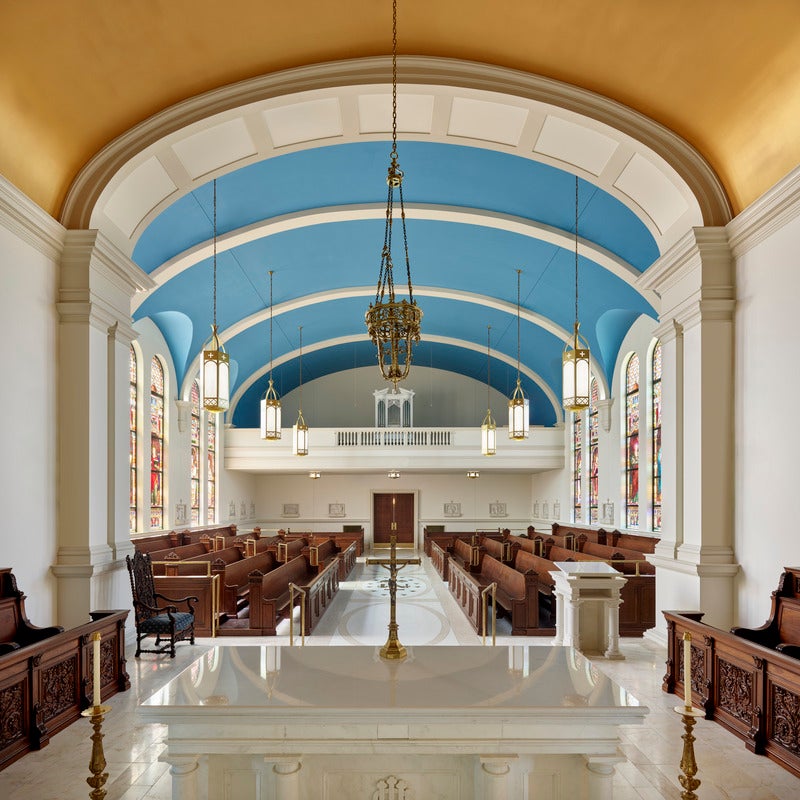
“They were very interested in having this new chapel relate back to these other chapels and to continue this sense of tradition and this historic continuity with their previous campus,” he said. “So the basic form, configuration, individual elements all were based on elements from these two chapels that we could integrate into a single one.”
Cluver said the award from Partners for Sacred Places is recognition of achieving a “universal appeal” beyond the religious context.
“There’s something that resonated with people who had no connection whatsoever with this community, but they still felt that it really spoke to them as well, so it was very rewarding in that regard,” he said.
Related Content

Washington crossing the Delaware has new meaning at the Michener Museum in Doylestown
“The Crossing” shows how artists have had their way with the American Revolution’s most iconic image over the last two centuries.
4 weeks ago
Listen 1:12Another goal of the design was also to create a space that was inviting to people in the surrounding community outside of the seminary, Cluver said.
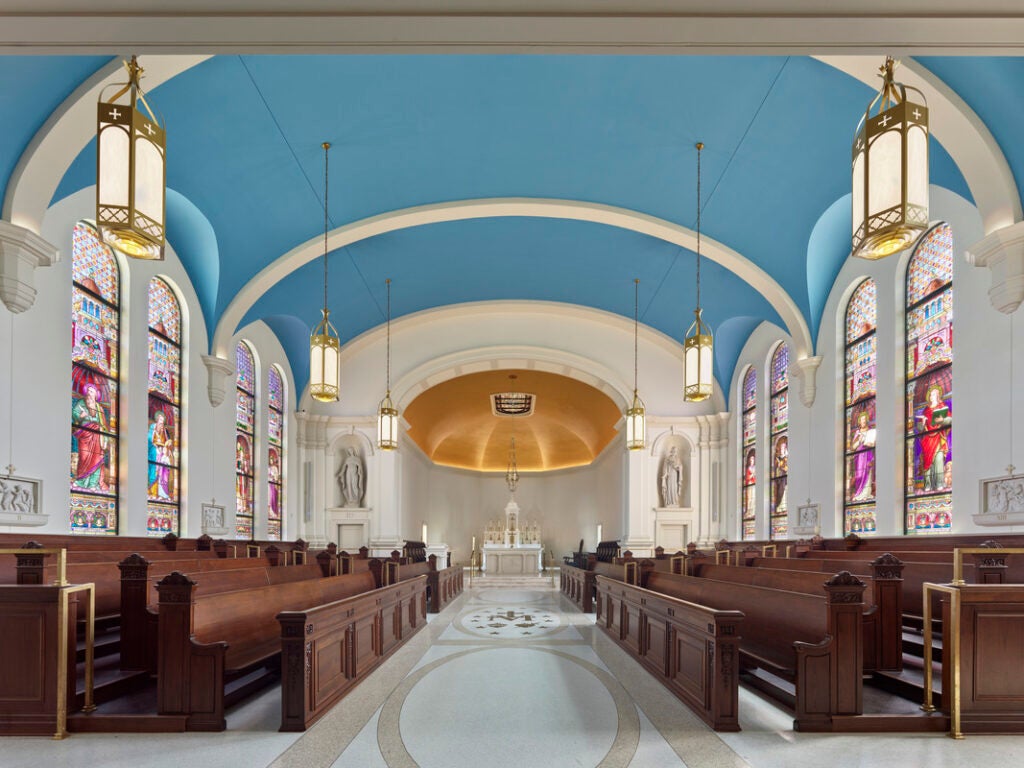
“The seminary can feel like a very private space. I think it can be a little intimidating to people who aren’t directly involved with it,” he said. “So the overall design of the campus had a very prominent front-door component to it, so it did have a certain amount of invitation to it. The chapel itself is set up to be very light-filled and open, so that anyone who’s in there feels like it is a space that they can be welcome in.”
The space is also outfitted with modern recording and video technology, Cluver said, which enables the seminary “to broadcast beyond their own community out to a larger public.”
Philadelphia is home to ‘mother churches,’ historic religious architecture
St. Charles Borromeo Seminary is just one of an “amazing local collection of sacred places,” Block said.
Partners for Sacred Places is based in Philadelphia in part because of the city’s extraordinary concentration of historic houses of worship.
“Philadelphia is home to what we call mother churches, the first church in so many denominations,” he said.
Block said he likes to emphasize the organization’s commitment to “active community use” of faith-based buildings.
“Given that we’re nonsectarian, we really believe that these are an entire community space,” he said. “We’re not representing any one particular denomination. We think that the congregations that occupy these spaces bring enormous value to their neighborhoods, their areas. So we try to support them, however we can.”
As part of that mission, the organization is partnering with several of Philadelphia’s historic, architecturally significant houses of worship through the end of 2026 for the “Founding Faiths: Historic Sacred Places Celebrate America’s 250th” initiative. Residents and visitors alike are encouraged to explore a map of historic houses of worship and attend a series of events throughout the year.

Get daily updates from WHYY News!
WHYY is your source for fact-based, in-depth journalism and information. As a nonprofit organization, we rely on financial support from readers like you. Please give today.
Philadelphia Archdiocese relegates St. Hedwig Church in Chester to nonreligious use
The church, founded in 1902, can now be used for nonreligious purposes that are still considered appropriate by the Catholic Church.
9 months ago
Listen 0:49
Villanova students take break from finals to celebrate the selection of Pope Leo XIV, class of ‘77
Students were surprised an American — especially a Villanova grad — was chosen as the next pope. Some hope he’ll be their next commencement speaker.
1 year ago
Listen 4:21
Catholic priest accused of stealing $40K from Chester County church
Lawrence Kozak has been charged with theft and related crimes.
2 years ago