

Amazon to install hundreds of gas-fired generators at Bucks County data center site
Nearby residents opposed the project during a tense public meeting Tuesday.
Listen 1:07
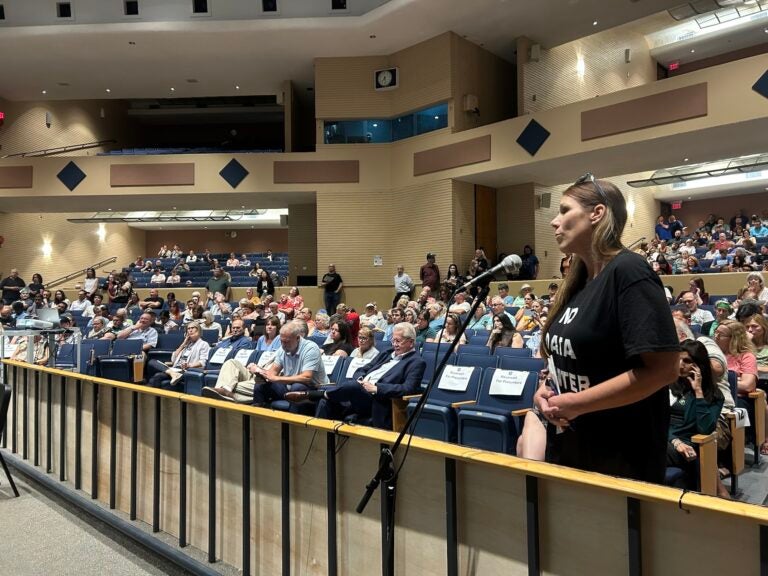
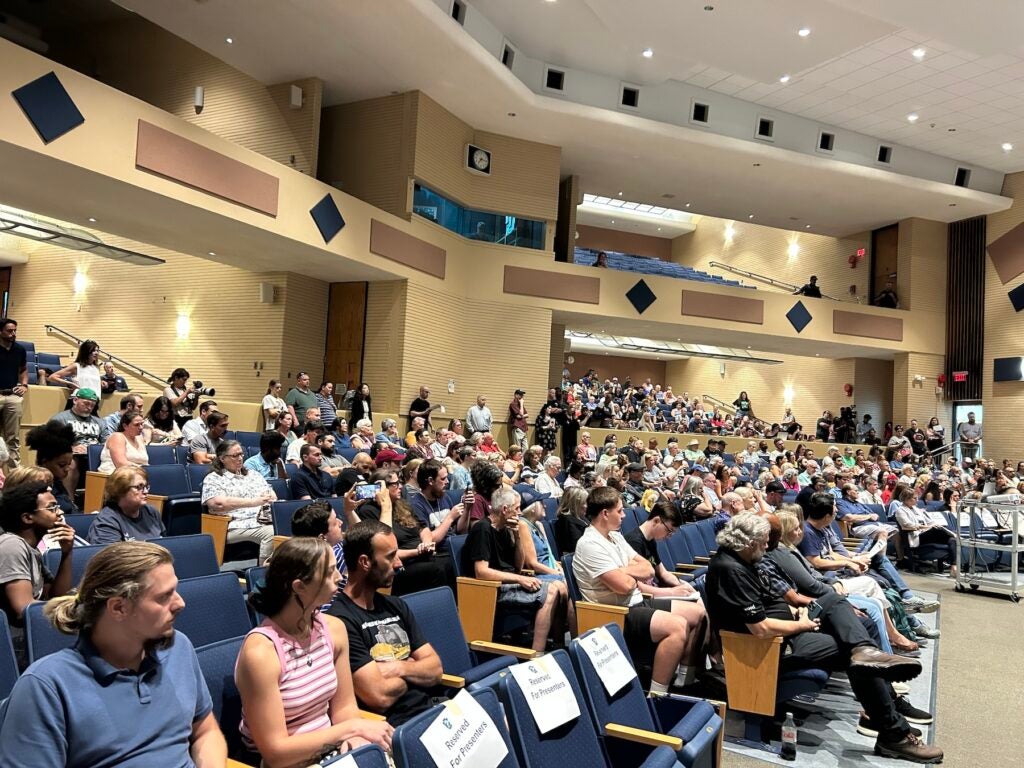
People packed a high school auditorium in Bucks County on Tuesday to learn about and oppose a data center being built by Amazon there. (Sophia Schmidt/WHYY)
This story is part of the WHYY News Climate Desk, bringing you news and solutions for our changing region.
From the Poconos to the Jersey Shore to the mouth of the Delaware Bay, what do you want to know about climate change? What would you like us to cover? Get in touch.
Pennsylvania environmental regulators plan to allow Amazon to add hundreds of fossil-fuel-fired backup generators at the site of its 250-acre data center complex under construction in Bucks County.
During a tense community meeting Tuesday, Pa. Department of Environmental Protection officials said they plan to approve 280 natural gas-fired generators and three diesel-fired generators to produce backup power for the data center when its electricity supply from PECO is interrupted. Amazon has already installed 76 diesel-powered generators at the site, DEP officials said.
Falls Township resident Seema Kazmi worries about emissions from these backup generators, as well as from the grid electricity that will power the site.
“This is already a pollution-stressed area, and this is going to add to it,” Kazmi said outside the meeting at Pennsbury East High School Tuesday night.
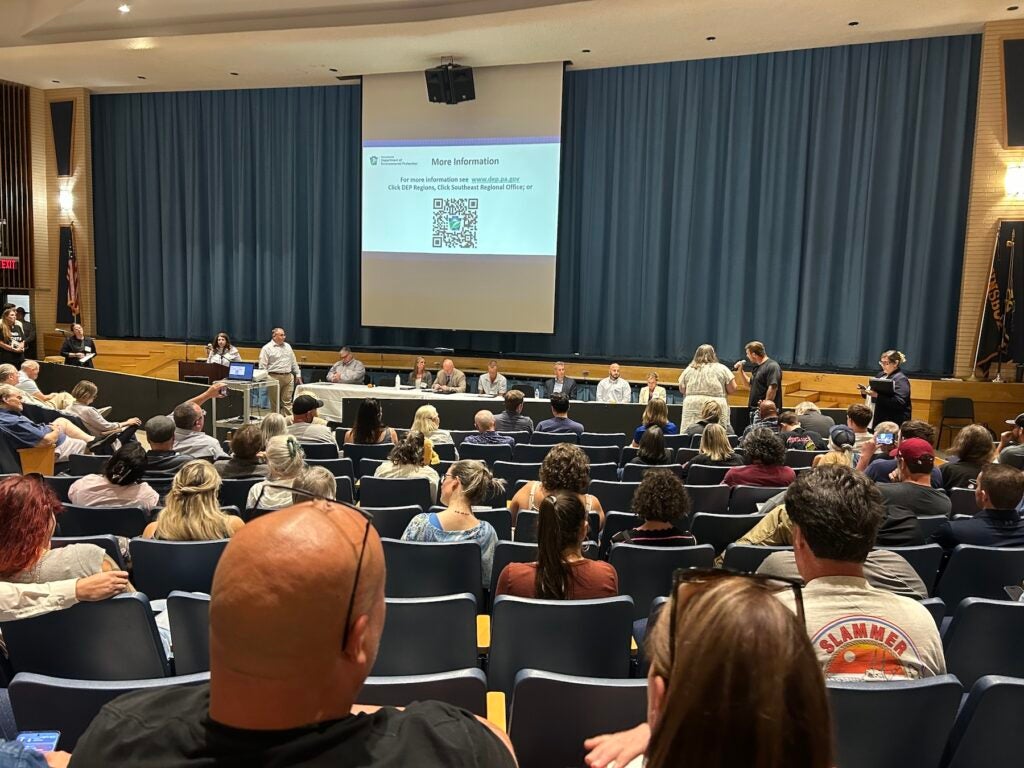
The air quality plan approval will be open for public comment for 30 days after it is published in the Pennsylvania Bulletin, which DEP officials estimate will be published July 18.
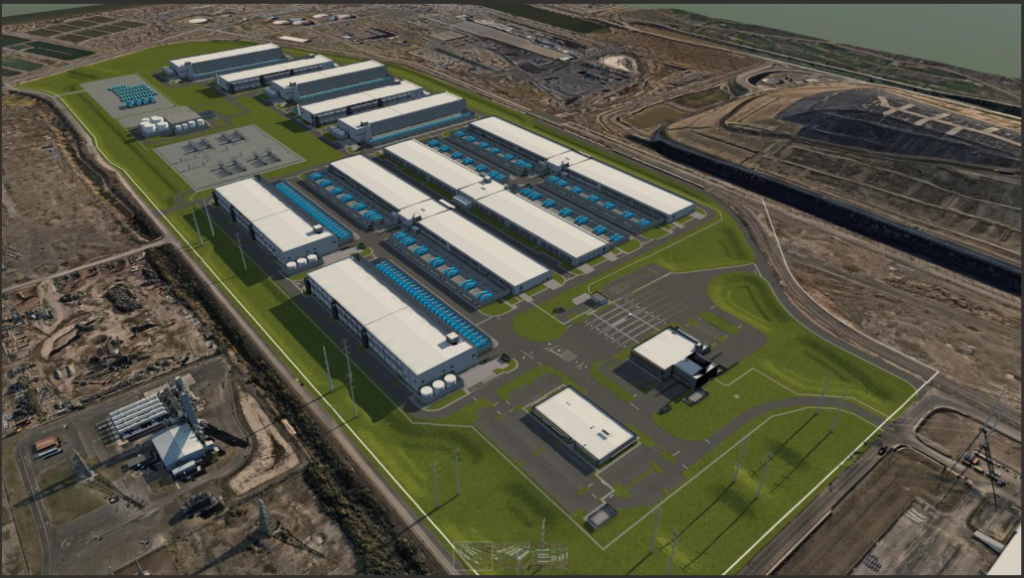
The data center complex, consisting of up to 10 new one- to two-story buildings and 1 million square feet of retrofitted warehouse space, is more than half built at the Keystone Trade Center, the site of a former U.S. Steel mill. The complex will host cloud computing infrastructure and “advance AI innovation,” according to Amazon.
The project is part of a $20 billion investment that Amazon promised to make in Pennsylvania, which also includes a facility in Salem Township located by the Susquehanna Steam Electric Station nuclear power plant. The two projects are expected to create roughly 1,250 permanent jobs, plus temporary construction jobs.
Jillian Gallagher, air quality environmental program manager at DEP, said under its pending application, Amazon has agreed to keep its annual emissions of volatile organic compounds and nitrogen oxides, which can form ozone and exacerbate asthma, under 25 tons per year by installing emissions control systems on its larger generators and limiting fuel usage. Keeping emissions under 25 tons per year qualifies the site as a “synthetic minor” source of emissions.
“The annual emissions from Amazon are projected to be similar to the various hospitals, universities and snack food manufacturing facilities that we already have in Pennsylvania,” Gallagher said.
Related Content

PECO signs agreements with data centers requiring them to pay for their own grid upgrades
The utility says its transmission security agreements ensure data centers pay their “fair share” of the infrastructure costs required to serve them.
4 months ago
Listen 1:19Nearby residents worry about data center’s electricity and water usage
Data centers, which house the computer servers that power the internet, can consume massive amounts of water and electricity. Critics of Amazon’s Falls Township project, including over 4,000 people who signed an online petition, have expressed concerns over noise, water use, electricity use and air pollution from backup generators.
New Jersey Assemblyman Balvir Singh worries the project will drive up electricity costs on the regional grid.
“I’m in New Jersey, but I know we’re on the same grid,” he said. “When you add the demand on that grid, the bidding is gonna go up. So what you’re really doing is increasing all of our prices.”
Glen Murphy, senior manager for economic development at PECO, said the utility studied the project’s impact on its system and found it will not negatively affect the distribution rates PECO customers pay. He said the second phase of the project will require infrastructure upgrades, but residents will be protected from bearing these costs because of a “take-or-pay” agreement, called a transmission security agreement, the utility signed with Amazon.
“When it comes to this particular project, we think it’s going to be a net benefit to customers, when you look at transmission and distribution together,” Murphy said. “We think that … it’s going to bring down rates a bit.”
However, these transmission security agreements do not protect residential customers from increases in electricity supply costs driven by rising demand on the regional grid.
Becky Ford, a principal for economic development at Amazon, said the company’s data centers in Pennsylvania use water for cooling on average around 6% of the year, relying mostly on outside air for cooling. Bob Campbell, an engineer with Pennoni Associates working for the Morrisville Municipal Authority, said Amazon’s project will use water directly from the Delaware River rather than potable water. He said the project has requested an amount of water equivalent to that used by about 70 homes.
Amazon also says it works to ensure its data centers run as “quietly as possible.” Ford said the closest homes are around 5,000 feet away and will not experience any noise impacts from the data center complex.
“In fact, the data center itself is actually quieter than the surrounding environment of the existing industrial park,” she said.
John Baldassano, a resident of Bordentown, New Jersey, across the river from the data center complex, said he worried that if Amazon needed to turn on its backup generators during an emergency, the sound could make it hard for people working at industrial facilities closer to the site to communicate.
The Falls Township data center project is part of Gov. Josh Shapiro’s PA Permit Fast Track Program. The state government sped up reviews of key environmental permits, including an earlier air quality permit and a construction erosion and sediment control permit, the Shapiro administration wrote in a press release last August.
The project will be eligible for state and local tax abatements due to its location in the Keystone Trade Center, a state-designated Keystone Opportunity Zone.
The state budget Gov. Shapiro signed into law Sunday includes a new rule that large data centers report their energy and water use annually to the Department of Environmental Protection.
The budget did not include a restriction on state tax incentives and expedited permitting championed by Shapiro, which would have limited these benefits to data centers that commit to building or buying new electricity generation at their own expense, hitting clean energy targets by a certain date and using technology to reduce their water consumption. It also did not include proposed moratoria on data center development or a repeal of the sales tax exemption for data centers.

Get daily updates from WHYY News!
WHYY is your source for fact-based, in-depth journalism and information. As a nonprofit organization, we rely on financial support from readers like you. Please give today.
Part of the series

Philadelphia protesters demand city leaders prevent data center development
City officials say two sites in Philadelphia have potential for AI data centers, but there are no proposals for development.
4 days ago
Listen 1:24
The state’s utility commission unanimously approved two motions aiming to tackle affordability.
7 days ago
Listen 1:19
New Jersey American Water rates to increase by $4 per month on average
The new water rate will help the investor-owned utility pay for water and wastewater projects.
1 week ago
Listen 1:17