
Temple researchers are building AI-powered health care ‘digital twins’ for people with ALS
A digital twin is a virtual representation of patients. Doctors plan to use the program to simulate treatments and therapies.
Listen 2:02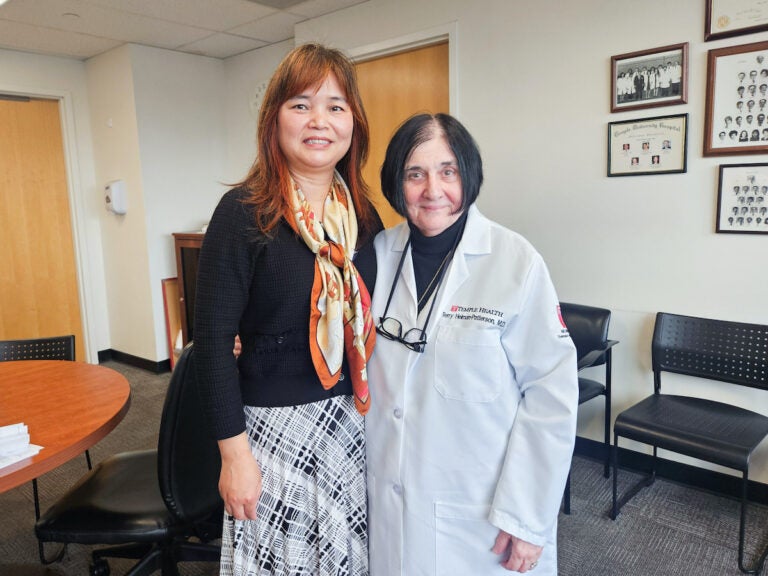
(Left) Huanmei Wu, chair of the Department of Health Services, Administration and Policy at Temple University’s Barnett College of Public Health, and (Right) Dr. Terry Heiman-Patterson, director of the MDA/ALS Center for Hope at Temple Health, are leading the new Digital Twin For Personalized Medicine Project for people with ALS, Mon., May 11, 2026. (Nicole Leonard/WHYY)
From Philly and the Pa. suburbs to South Jersey and Delaware, what would you like WHYY News to cover? Let us know!
Kevin O’Donnell had just turned 30 when he was diagnosed with amyotrophic lateral sclerosis, or ALS.
The fatigue and weakness he had been experiencing, which he chalked up to the aches and pains of getting older and running around after a toddler, were actually signs of the fatal neurodegenerative disease.
ALS, also known as Lou Gehrig’s disease, progressively destroys the body’s motor neurons. People lose their ability to walk, talk, swallow and breathe on their own. Most people die between two and five years after diagnosis.
It was a devastating reality for the O’Donnell family, especially his wife, Jodi O’Donnell-Ames.
“Imagine I’m trying to raise a child simultaneously while my husband is now becoming dependent on all the things that my child is becoming independent with,” she said.
The family was told how Kevin’s condition would generally progress, but ALS can be hard to predict because it can manifest very differently from person to person. That made it difficult for the O’Donnells to plan ahead.
“Hope for the best, plan for the worst,” O’Donnell-Ames said. “If this is the best thing that could be, this is what we’re going to do. If this is the worst thing that’s going to happen, this is what we’re going to do. In my mind, I was always thinking 10 steps ahead.”
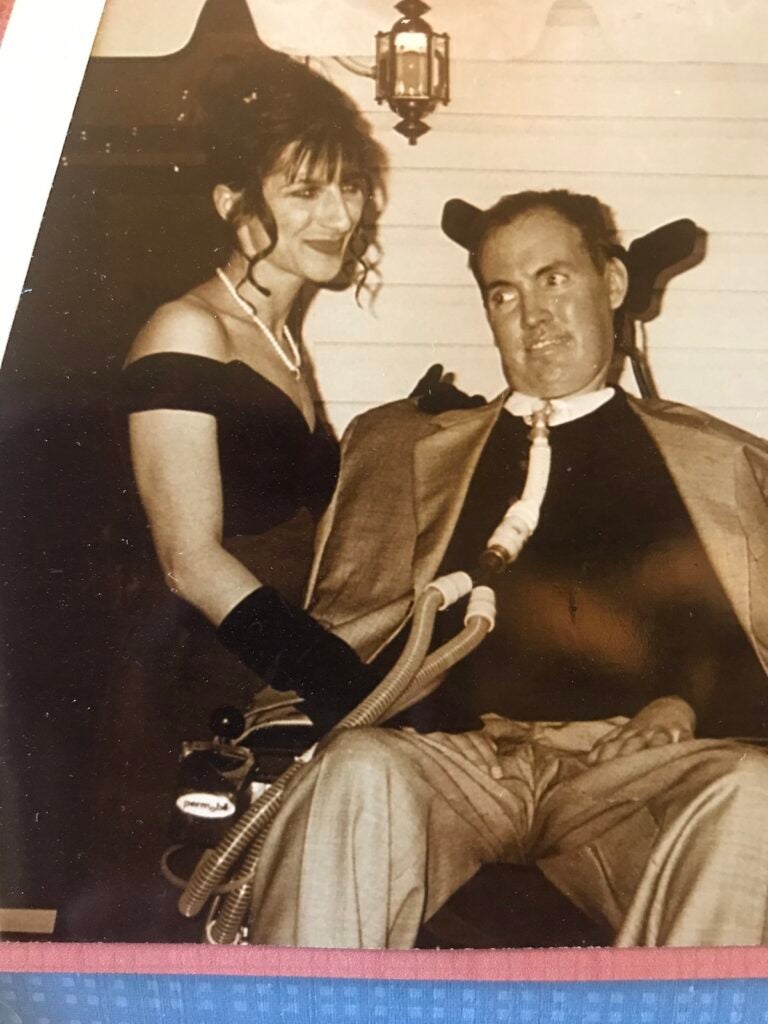
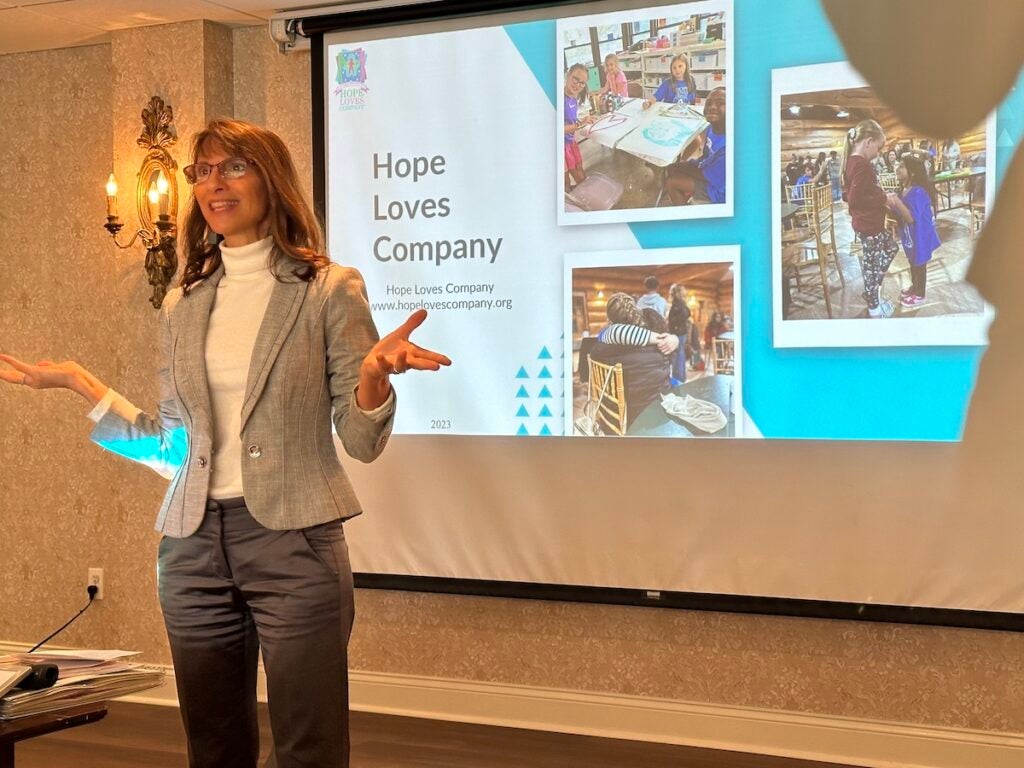
Kevin died from ALS at 36 in 2001 at his home in New Jersey. O’Donnell-Ames now runs a nonprofit called Hope Loves Company, which helps support families and children as they navigate life with a parent, spouse or loved one with ALS.
“I’m talking to people every day who are scared, who are trying to figure out more information, trying to figure out, ‘Should I plan this trip, even though I have two little kids, this summer? Do you think my husband’s going to be here next summer?’” O’Donnell-Ames said. “These are big questions.”
Neurologists and researchers at Temple Health and Temple University in Philadelphia hope to one day answer those kinds of questions with greater specificity and accuracy by using artificial intelligence to create a predictive program for ALS patients.
The project involves digital twins, or virtual representations of individual patients, that allow doctors to simulate therapies and disease progression.
ALS specialists hope they can use predicted outcomes to make more informed decisions about treatment options and give people more precise estimates on when they might need a wheelchair, a feeding tube or more intensive care.
“Being able to really anticipate, so I can intervene early,” said Dr. Terry Heiman-Patterson, neurologist and director of the MDA/ALS Center of Hope at Temple University Lewis Katz School of Medicine. “And for folks who have the questions, answer those questions in an intelligent way.”
What are digital twins and how can they be used for ALS?
A digital twin, broadly, is a dynamic virtual copy of a real-world system. The twin is fed data from the real system to mirror its current state, predict future performance, and test possible changes before they are made in the real world.
Digital twinning isn’t a new concept. It’s already being used in the automotive industry to predict production flow and issues before they happen. Water companies in major cities are using digital twin models to identify when and where leaks could occur. Major players in the energy industry are simulating the effects of weather and aging infrastructure on virtual representations of real electrical grids.
Related Content
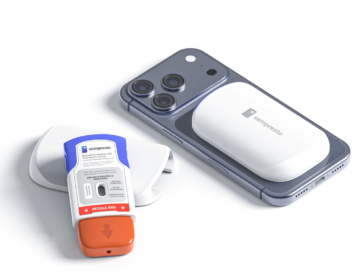
Jefferson Health doctor dreams up EpiPen alternative autoinjector that attaches to your phone
The SemPresto autoinjector epinephrine device attaches to smartphones with magnetic technology and could be used for allergic reactions.
4 months ago
Listen 1:52The approach is newer in medical research but is quickly gaining traction, especially as more health systems adopt AI systems and tools.
The Digital Twin For Personalized Medicine Project at Temple would create virtual representations for ALS patients. They would account for a person’s health history, genetics, social determinants of health and other factors.
The twin also relies on a person’s current medical status, including vital signs and blood work as well as levels of mobility, muscle strength, respiratory function, swallowing capabilities, speech and more.
“So, this virtual representation is unique to their symptoms, including some of their working history, environmental [exposures] and also their medications,” said Huanmei Wu, chair of the Department of Health Services Administration and Policy at Temple University’s Barnett College of Public Health.
Doctors can then simulate different therapies and treatment options through the digital twin’s AI program, which will generate outcome predictions and suggestions. The AI program will be trained on data from a global network of ALS health outcomes databases comprising thousands of people living with or who have lived with the disease.
Consistently updating the digital twin with a patient’s most up-to-date medical information is key to getting real-time, accurate predictions, Wu said. Data can be gathered at regular doctor’s appointments or through wearable technology like smartwatches and biosensors.
“Then the doctor can say, ‘We need to change our plan,’ or ‘We can simulate if this medication still works,’ or ‘How much longer do we need to prepare for the wheelchair or how much longer we need to prepare for the [feeding] tube?’” Wu said. “We can simulate, if we give this medication, then maybe six months later. And if we give something else, potentially we can slow that down.”
Working toward ALS precision medicine and enhanced research
The desire to provide doctors and patients with more accurate tools in predicting and managing ALS has always been there, said Heiman-Patterson. But researchers had to wait until technology caught up in order to launch something like the digital twin project.
In addition to giving people more reliable information about living with ALS, Heiman-Patterson said she hopes that digital twins could also help in clinical trials.
“If I’m somebody with ALS, I know I’m only getting one chance at a clinical trial, because I’m going to be too far progressed, likely, when I’m done with this trial to be enrolled in another,” she said.
But some people – usually 50% – are put in a placebo group that doesn’t get the therapy or experimental medication.
“That’s frustrating to say the least,” Heiman-Patterson said. “So, if we could provide [digital twin] prediction data that is suitable to supplement placebo groups, we would be able to have fewer people in a placebo group.”
The future applications for using this kind of technology and precision-medicine approach could go beyond ALS, said Temple researchers, and apply to other types of neurodegenerative and chronic diseases.
Researchers say it could take another two to six years before the digital twin program is ready for clinical testing, depending on funding. A significant amount of money will be needed to support software development, AI engineers, data analysis, data storage and testing. Project leaders said they are pursuing state and federal funding opportunities, as well as partnerships with philanthropic organizations.
Heiman-Patterson, who has dedicated most of her 40-year career in medicine to studying and caring for people with ALS, remains determined to see this latest project through.
“We have a team here and we have assembled people who are interested and can do the work,” she said. “That’s the first step. And we’re moving forward.”


Get daily updates from WHYY News!
WHYY is your source for fact-based, in-depth journalism and information. As a nonprofit organization, we rely on financial support from readers like you. Please give today.
Jefferson Health doctor dreams up EpiPen alternative autoinjector that attaches to your phone
The SemPresto autoinjector epinephrine device attaches to smartphones with magnetic technology and could be used for allergic reactions.
4 months ago
Listen 1:52
The carts are designed for older children and even adults with special needs. A national advocacy group recently started an effort to promote them.
4 months ago
Listen 4:20
Why many Philadelphia doctors now use AI to record patient visits
Health systems say AI note-taking tools could save doctors precious hours each day. But some research shows doctors have mixed feelings about the technology.
10 months ago
Listen 3:51