

Jefferson Health doctor dreams up EpiPen alternative autoinjector that attaches to your phone
The SemPresto autoinjector epinephrine device attaches to smartphones with magnetic technology and could be used for allergic reactions.
Listen 1:52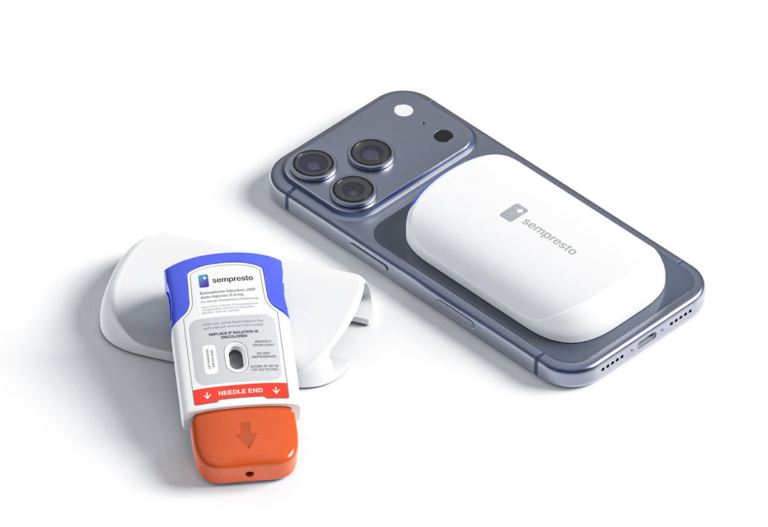
The SemPresto epinephrine autoinjector can be attached to the back of phones with magnetic technology and be used in emergencies to stop anaphylaxis. (Copyright Sempresto, Inc.)
From Philly and the Pa. suburbs to South Jersey and Delaware, what would you like WHYY News to cover? Let us know!
Dr. Edmund Pribitkin watched his teenage daughter rush around as she got ready for a school dance. All she was taking along was a very small clutch purse.
“And I said to her as she was making her way out, ‘Well I hope you have your EpiPen in there,’” Pribitkin said, adding that his daughter replied “Dad,” with exasperation.
Pribitkin was concerned. At the time, his daughter had a bad nut allergy. She had a prescription for EpiPens, which is a brand of an autoinjector device that delivers epinephrine, a medication that can stop and reverse anaphylaxis in emergency situations.
Pribitkin, who is an otolaryngologist at Jefferson Health, knew just how serious these situations can get, so he insisted that she should take her injector.
“I said, ‘You can’t go there. I mean, you’ve had episodes in the past where you’ve had to go to the emergency room, so you have to take your EpiPen with you,’” he recalled. “And she said, ‘Absolutely not. There’s only one thing that’s going in my clutch purse, and that’s my phone.’”
The EpiPen and its cylindrical case is a bit longer than a smart phone, and about an inch thick. There just wasn’t room for both.
Pribitkin lost that battle, but thankfully, nothing bad happened that night. However, the experience got him thinking. One thing his daughter was always taking along, everywhere, was her phone.
“And so, I looked at how an autoinjector works and how it could be put on the back of a phone,” he said.
That was about 10 years ago. Now, Pribitkin is closer to making his idea a reality. Designs and prototypes for SemPresto, an epinephrine autoinjector device that can be attached to the back of most smartphones using magnetic technology, are in their final stages. The company is focusing on the next steps, which involve small-batch manufacturing and testing in people.
Partnering biotechnology experts and investors say they’re hopeful that a device like this could make epinephrine more easily accessible to people who need it, especially when it can help prevent a deadly situation.
“What matters is that it’s a lifesaving, or life-preserving, medication that you need to have with you when you need it,” Pribitkin said. “And that’s the premise of what we’re doing. It’s always there. That’s the whole reason behind this.”
Related Content
Can bioengineered chewing gum help prevent oral, head and neck cancers? Penn researchers are hopeful
The gum is made from a bean plant and contains antiviral, antibacterial and antifungal properties. It’s being tested against HPV, influenza and other diseases.
4 months ago
Listen 1:42Making epinephrine more convenient to carry and use
The SemPresto autoinjector is about the same size as a rectangular portable power bank for phones. The magnetic feature that keeps the device attached has been designed with heat shielding properties, which prevents an overheating phone from affecting the medication.
The device contains the same epinephrine dosage that is used in EpiPens, and also uses the same delivery method of an injection. SemPresto co-founder and CEO Elizabeth Reczek said she hopes that is reassuring to families and health providers.
“It works just the same, but it’s in a slim, sleek design that comes right off the phone. You pull it out like a regular EpiPen, take off the safety [cap] and inject yourself,” she said. “We made it as intuitive to use for people that are familiar with EpiPens as we possibly could.”
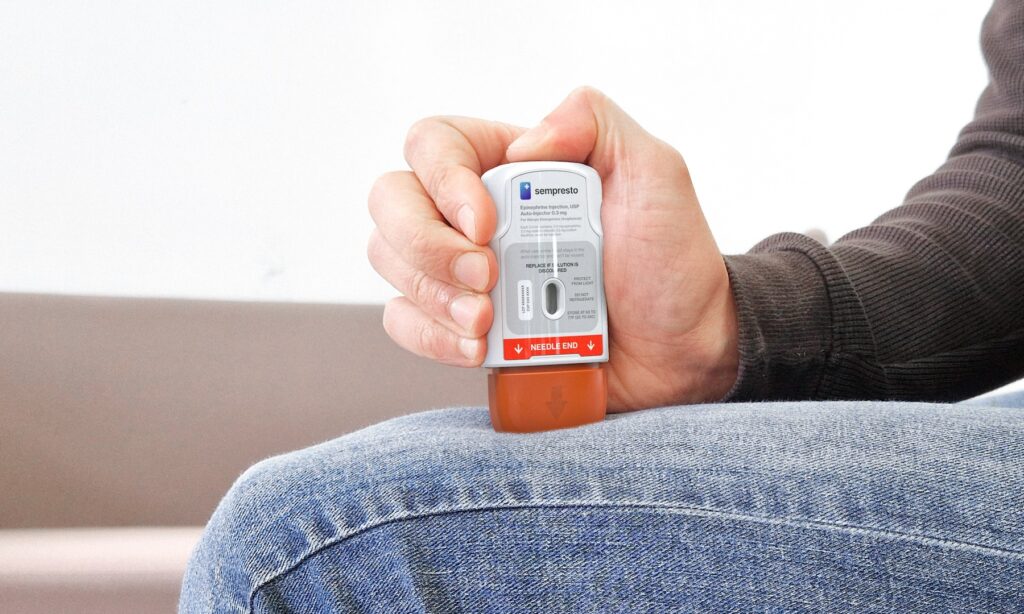
The primary goal is to create something that increases a person’s chance of having epinephrine on them if and when they experience an allergic reaction.
An estimated 33 million Americans are allergic to certain foods, according to nonprofit Food Allergy Research & Education. People can experience hives, trouble breathing, stomach pain, swelling on the face or body, and other symptoms when they touch, ingest or even breath in trace amounts of nuts, shellfish and other foods.
People can also have these symptoms if they’re allergic to insect venom, materials like latex and medications, including penicillin. Doctors and nurses typically recommend that patients carry epinephrine on their person wherever they go to use in emergencies.
Most people survive an allergic reaction, and are less likely to need hospitalization after receiving epinephrine shortly after symptoms begin. Still, up to 225 people in the United States die from anaphylaxis every year, research shows.
Delayed administration of epinephrine, or absence of the emergency medication, is a main risk factor for fatal outcomes.
Too often, Reczek said people keep EpiPens and other rescue medications in places like their car’s glove compartment, bathroom cabinets or in forgotten drawers, which means they’re inaccessible during emergency situations.
Related Content

How does AI affect child development? CHOP researchers say safeguards are needed
Researchers found AI could help with creativity and education, but that it can confuse young children and generate harmful misinformation.
7 months ago
Listen 1:21Reczek is all too aware of this as she and her daughter are prescribed epinephrine for allergies, “and we often don’t have our EpiPens with us.”
That’s why Pribitkin’s idea of making an autoinjector attached to a phone was appealing, she said, especially for families with kids and teens.
“Certainly young people who have their phones with them all the time and who also are not that great about remembering things,” Reczek said. “And their parents, because parents want to make sure that there’s a lot of peace of mind that goes on with having a solution like this.”
SemPresto initially raised $2.5 million from an angel investor to start building the first prototypes. The company is now raising another $7.5 million to move forward with small-batch manufacturing and testing in people.
The company’s founders hope to win approval from the U.S. Food and Drug Administration and bring the device to market by 2028.
The startup will first need to show evidence that the autoinjector is guaranteed to work every time it’s used and that it has a certain shelf life, meaning it will continue to work safely and effectively over a certain amount of time before expiration.
Pribitkin, Reczek and their team are also exploring ways to incorporate a digital phone app that would include information about allergies, symptoms of anaphylaxis and instructions on how to use the SemPresto autoinjector correctly.
“And we think that’s super important because when you’re having a reaction, you’re very nervous. You might make a mistake,” Reczek said. “So it walks you step by step through how to do that.”
There may also be other opportunities in the future to make autoinjector devices filled with other types of rescue medications, the creators said.
Bringing his vision to life has been gratifying, Pribitkin said, both on a professional and personal level.
“It’ll be even more gratifying when we finally get the FDA approval and go to market and everything,” he said. “We’ll be helping to save lives.”

Get daily updates from WHYY News!
WHYY is your source for fact-based, in-depth journalism and information. As a nonprofit organization, we rely on financial support from readers like you. Please give today.
Philadelphia-area schools are tapping the sun’s energy and saving money on utilities
Unionville High School in Kennett Square and Universal Audenried Charter School in Philadelphia are building solar arrays that will slash their energy bills.
2 days ago
Listen 1:04
What we know about Delaware County’s potential data center plan, ‘Project Trainer’
Link Logistics is testing the waters for a data center that would sit around 100 feet from homes in Trainer, Pennsylvania.
5 days ago
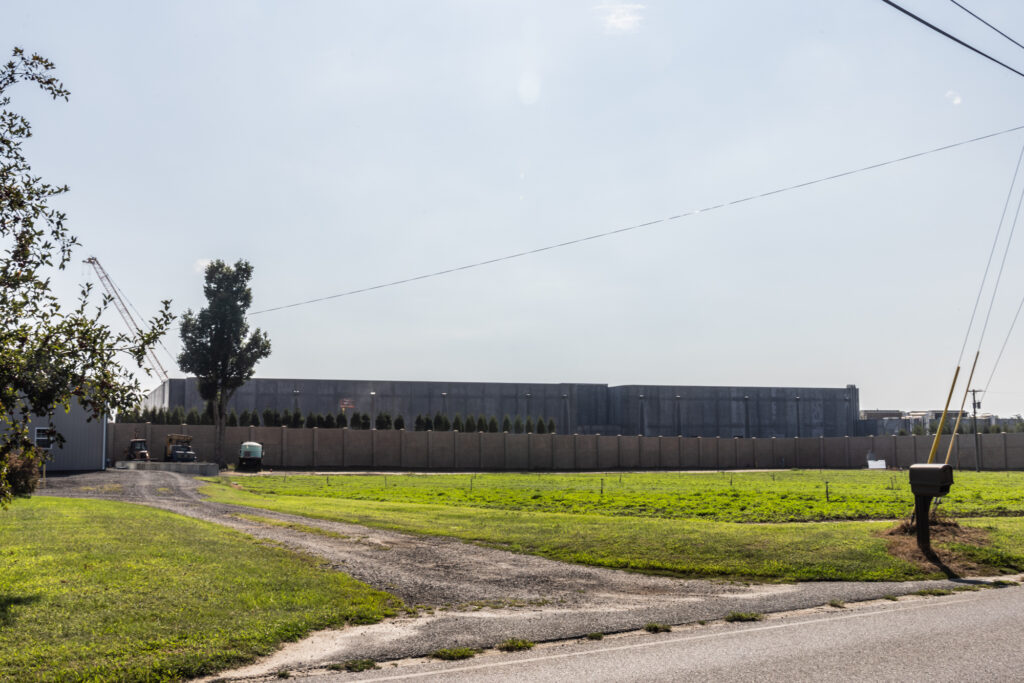
Vineland residents have pushed back against the data center, citing noise and air pollution.
6 days ago
Listen 1:00