

Philly dermatologists explain what approval of new U.S. sunscreen ingredient could mean for skin protection
The FDA is considering adding bemotrizinol as an ingredient for U.S. sunscreens. Experts say it could lead to stronger skin cancer prevention options.
Listen 1:12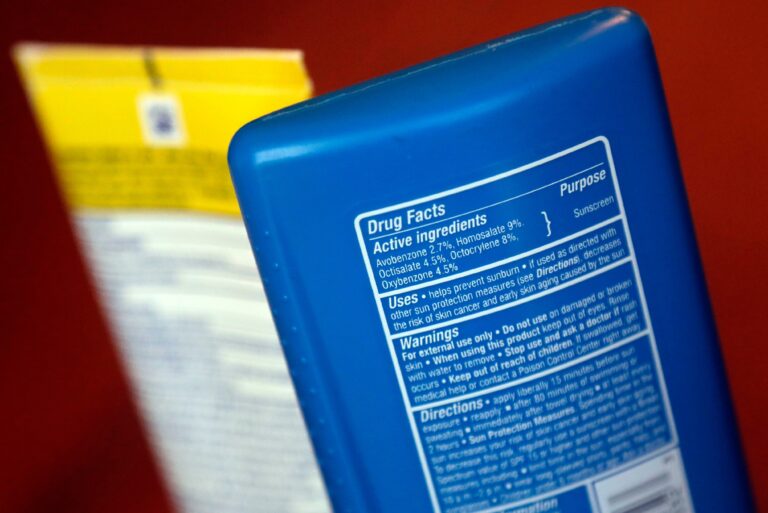
File: In this May 2, 2018, file photo, sunscreen ingredients, including oxybenzone, are shown. (AP Photo/Marcio Jose Sanchez, File)
From Philly and the Pa. suburbs to South Jersey and Delaware, what would you like WHYY News to cover? Let us know!
Slathering your face and body in a goopy or filmy white sunscreen every time you’re exposed to the sun, and having to reapply it every couple of hours, can sometimes feel like hard work, but Philadelphia dermatologists say it’s well worth it to maintain healthy skin and prevent skin cancer.
Federal regulators are considering approving bemotrizinol, a new ingredient for sunscreen products in the United States, which health experts say produces a more stable and long-lasting topical agent.
Sunscreens containing this ingredient are already used in Asia, Europe and Australia.
Dermatologists say adopting it here could make it easier for people to follow sunscreen guidelines and achieve adequate protection against sun damage in the near future.
“This is a really big win, because we’ve only had kind of limited ingredients to work with,” said Dr. Joanna Walker, director of the Rare and Advanced Skin Cancer Clinic at Penn Medicine. “It’s been since 1999 that a new ingredient was approved for use, so [we’re] super excited that we’re making progress in this.”
The Food and Drug Administration is currently reviewing safety and efficacy data for bemotrizinol. It could issue final approval for the ingredient as early as this summer.
Related Content

Early heat wave in Philadelphia region sparks concerns about heat-related illness
Heat is the top weather-related cause of death in the U.S.
5 months ago
Listen 1:03How to protect yourself against sun damage year-round
Sunscreen is effective in protecting skin against the sun’s harmful ultraviolet radiation, including types A, or UVA, and B, or UVB, long-term data show. Using it can prevent sunburns, premature wrinkles and hyperpigmentation.
It can also significantly reduce someone’s risk of developing cancers like melanoma, basal cell carcinoma and squamous cell carcinoma.
The American Academy of Dermatology recommends people use broad-spectrum sunscreens, or ones that protect against both UVA and UVB rays. Products that are water-resistant and have a Sun Protection Factor, or SPF, of 30 and higher are most effective.
“And when you apply it, it needs to be in a thick film in order to get that full SPF number of protection,” Walker said. “And then reapply every one to two hours. You can look at the label of whether it’s water-resistant for 40 versus 80 minutes. That helps give you a sense of how often you need to reapply.”
In addition to using sunscreen, Walker said people should avoid full sun exposure during peak hours when UV radiation is at its highest. Wearing sun-protective clothing, hats and sunglasses when outdoors can also help.
Sun damage can still occur during overcast weather or in the cooler months of the year, so people should consider using sunscreen year-round, she said.
“There’s also data to say that people who use it regularly every morning have a lower risk and lower number of skin cancers compared to the occasional, ‘Oh, I feel like I might need it today’ users,” Walker said. “So, it’s a good daily habit. Put sunscreen next to your toothpaste — when you brush your teeth in the morning, put on some sunscreen.”
Related Content
Head spas are gaining a strong following among beauty influencers and wellness buffs — and their numbers are growing.
10 months ago
Listen 2:07How new sunscreen ingredients could improve skin protection options
Sunscreen formulations in the U.S. have used the same ingredients for more than two decades. Products mainly fall into two categories: mineral or chemical.
Mineral, or physical, sunscreen uses ingredients like titanium dioxide or zinc oxide, which help block and deflect UV rays from the top of the skin.
Chemical sunscreen is made of compounds that can include avobenzone, oxybenzone or octinoxate. It absorbs the sun’s harmful rays and converts them into tiny amounts of heat, which is then released, which prevents UV rays from causing skin damage.
One problem with both types of products is that they degrade fairly quickly after UV exposure, Walker said, which is why sunscreen needs to be reapplied every couple of hours.
Another is that depending on the ingredients used, a sunscreen can be sticky, irritating or uncomfortable to wear, which makes it less likely for someone to use it regularly, she said.
That’s why there’s interest in adding bemotrizinol to the list of approved U.S. sunscreen ingredients, dermatologists said. Global data shows that it is a more stable filtering agent, and can therefore prevent sunscreen from breaking down as quickly.
It also has low levels of skin absorption, meaning the ingredient is less likely to be absorbed deeper into the body and affect hormones or any other bodily systems, the FDA noted in a December announcement. It rarely causes skin irritation, federal officials said, which is another benefit.
“What we have is good,” Walker said of current U.S. sunscreen products. “But with science, there’s always room for improvement. And how it feels on the skin and how it can be formulated and all of those things matter in people actually using it. So, to have more options available is important.”

Subscribe to The Pulse
WHYY is your source for fact-based, in-depth journalism and information. As a nonprofit organization, we rely on financial support from readers like you. Please give today.
What science says about autism and Tylenol
While President Trump and Health and Human Services Secretary Robert F. Kennedy Jr. linked Tylenol to autism, the FDA and other scientists took a more cautious approach.
Air Date: September 23, 2025 12:00 pm
Listen 51:13
The Covid-19 vaccine & personal choice
What's behind the decision of a quarter of Americans who haven't been vaccinated? And, with a shortage of ICU beds and ventilators in several states, who gets treated?
Air Date: September 10, 2021 10:00 am
Listen 49:00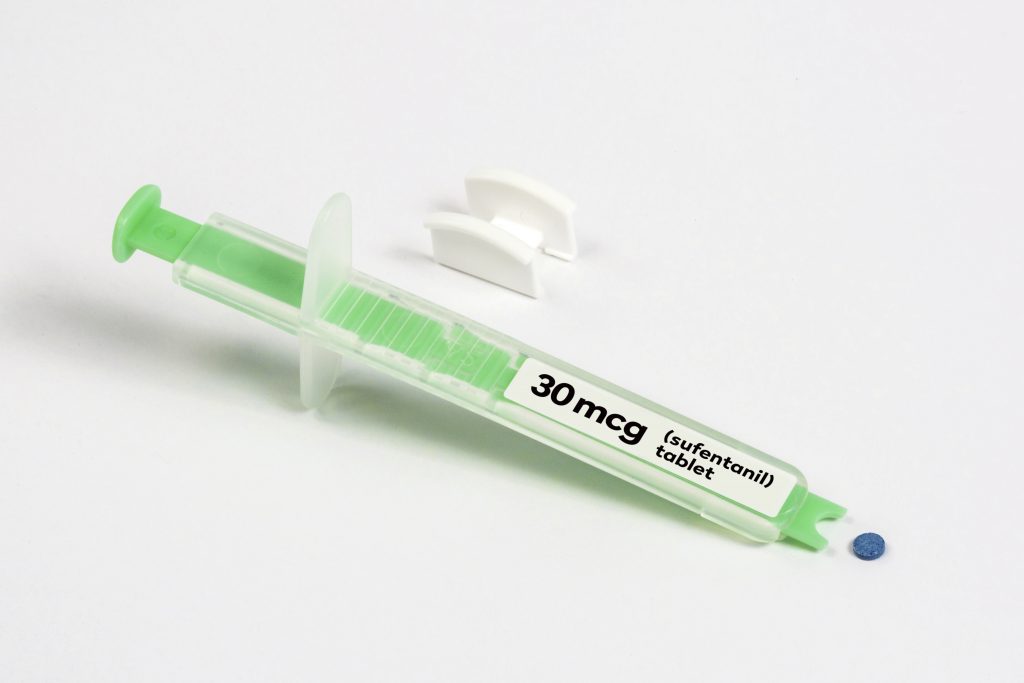
FDA OKs powerful opioid pill as alternative to IV painkiller
In one study, the pill provided about the same pain relief to patients as IV morphine.
8 years ago