‘Abundant’ documentary screening in Philadelphia explores why people donate organs to strangers
Living donor Ashley Clark reflected on donating a kidney to a stranger, learning of his death and how the experience changed her view of organ donation.
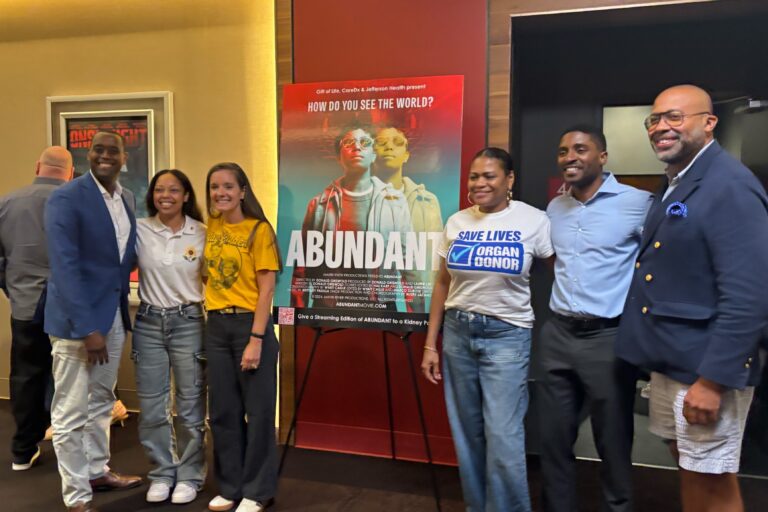
Rev. Marshall Mitchell, Alexandria Warner, Ashley Clark, Naja Killebrew, Dr. Anthony Watkins, and Dr. Kirk Campbell pose outside of the ''Abundant'' film screening at AMC Fashion District on Aug. 28, 2026. (Jassmyn Nesmith/WHYY)
From Philly and the Pa. suburbs to South Jersey and Delaware, what would you like WHYY News to cover? Let us know!
Ashley Clark donated a kidney to a stranger named Jim in July of 2019. She named the kidney “Blanche” after a character on her favorite show, “The Golden Girls.”
After the transplant, Clark and Jim connected through letters. She learned Jim was an educator who worked in the field of ophthalmology.
But after Clark sent another letter and did not receive a response, she learned in February of 2020 that Jim had died.
Clark received a posthumous letter response from Jim thanking her for an extraordinary act of kindness.
It was an outcome that made Clark hesitant to share her experience publicly.
“I never wanted to scare anyone away from transplant. That was my biggest fear,” Clark said.
“To find out later that my recipient was no longer living was never the outcome that any of us expected,” she said.
Clark said she does not regret donating. Instead, the experience changed the way she thinks about the outcome.
Related Content
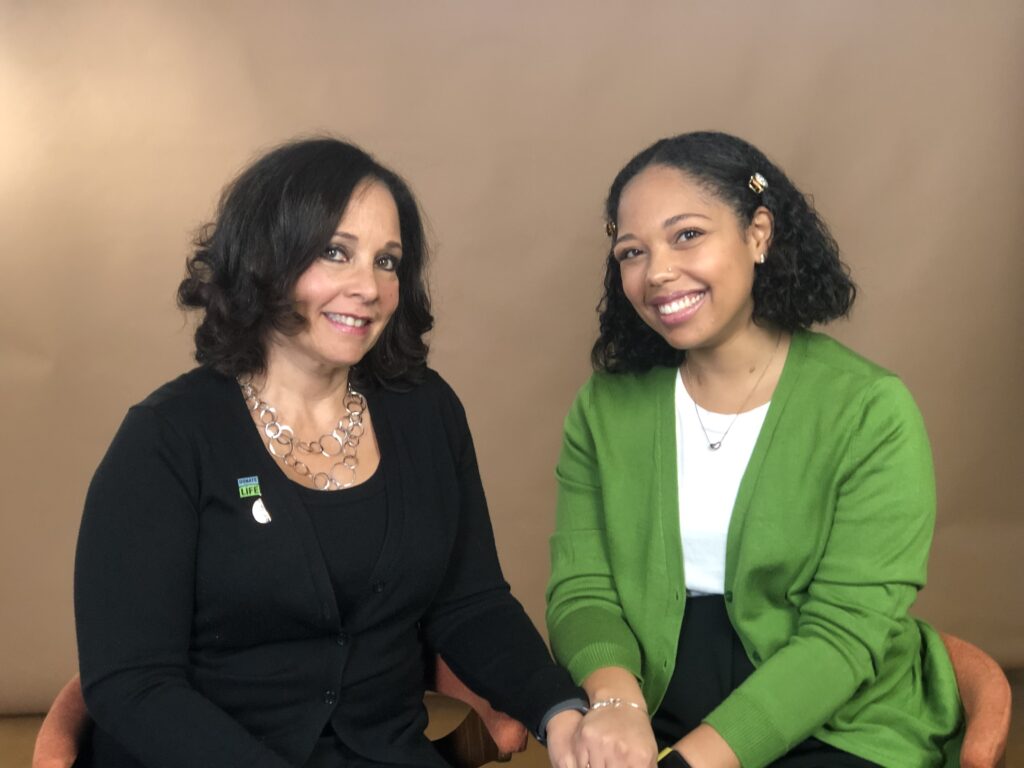
After a devastating crash left a woman in need of a kidney transplant, her family’s journey highlights the need for more organ donation awareness in communities of color.
2 months ago
Rethinking what makes an organ donation successful
Clark’s experience is featured in “Abundant,” a new documentary about an uncommon form of organ donation: giving a kidney to a complete stranger, known as nondirected kidney donation. Of donors who give kidneys, less than 5% give a nondirected donation, according to the National Kidney Registry.
The film takes audiences through the experiences of people who choose nondirected living kidney donation, exploring what lead them to donate and the physical and emotional realities that come before, during and after the procedure.
The film was screened in Philadelphia at the AMC Fashion District on Friday, followed by a panel discussion on living organ donation, kidney disease and the barriers that can prevent people from considering becoming donors. Clark was among the panelists.
In an interview after the screening, Clark said donors understand the risks but also have to believe things will turn out well.
“You have to hold on to that … that the outcome will be good,” Clark said.
After Jim’s death, she began to see the outcome differently.
“I wanted my recipient to do well. I wanted [him] to live a long time,” Clark said. “But maybe that isn’t the only thing that matters.”
Clark said she became less focused on the outcome itself and more on the process, what she learned and what the experience meant to her.
Her story is one of several featured in “Abundant,” which explores what the film describes as “extreme altruism” through people willing to give an organ to someone they do not know.
Through donors like Clark, “Abundant” examines why people choose to donate, the outcomes they can experience and how much the public understands about living organ donation.
Public understanding of organ donation also became a focus of the discussion following the screening.
The panel, moderated by Dr. Anthony Watkins of Jefferson Health, also included Dr. Kirk Campbell, president of the National Kidney Foundation; Rev. Marshall Mitchell of Salem Baptist Church; and Naja Killebrew, who works in multicultural affairs for Gift of Life Donor Program, a nonprofit organ procurement organization serving the Philadelphia region.
Killebrew said misconceptions remain a challenge in her work in communities of color. Among the concerns she hears are that someone can be too old to donate, that doctors will not try to save a registered organ donor or that organ donation conflicts with religious beliefs.
She said addressing those concerns requires conversations that give people an opportunity to express their fears and learn how the process works.
“Most of the time when you give a person the time to talk and express what their fears are, you can turn it around,” Killebrew said.
Mitchell said community institutions such as churches can help connect people with information about donations that may not otherwise reach them.
“What we need to do is close this canyon, this great divide between what medical professionals know and what the church can know and then communicate that,” Mitchell said.
Campbell said that education should also include greater awareness of kidney disease. He said 90% of people with kidney disease do not know they have it and stressed the importance of detecting and managing the disease before patients reach the point of needing dialysis or a transplant.
“As much as we want to transplant as many people as we can, I think it’s even more important that we take the steps for patients to recognize the disease timely so it can be managed accordingly and hopefully never need a transplant,” Campbell said.
Related Content
Blood Bank of Delmarva urges donations amid winter challenges during National Blood Donor Month
As winter challenges reduce blood donations, the Blood Bank of Delmarva highlights lifesaving stories and urges Delawareans to give.
9 months ago
Listen 1:07Sharing the hard parts of organ donation
For Clark, increasing awareness starts with talking openly about her own experience.
Clark, a school therapist, said young people can be particularly receptive to those conversations, particularly as teenagers decide whether to register as organ donors when they get their driver’s licenses.
Clark said young people often have a natural curiosity about transplantation along with a desire “to do good in the world” and “make change.”
She has continued having those conversations herself. When students come into her office and notice her living donor sticker, Clark said they sometimes ask what it means. She tells them about her experience, including Jim.
“I share my story, and that includes some hard things,” Clark said.
Those hard things have not stopped her from donating.
Last summer, Clark donated a portion of her liver at the University of Pennsylvania, also through nondirected donation.
“I have no regrets,” she said.
For Clark, Jim remains part of the reason she continues to tell her story.
“I was going to talk about him every chance that I got,” Clark said. “And so tonight is another one of those chances.”

Get daily updates from WHYY News!
WHYY is your source for fact-based, in-depth journalism and information. As a nonprofit organization, we rely on financial support from readers like you. Please give today.
WHYY hosts screening event and panel discussion honoring the legacy of Justice Thurgood Marshall
Produced by Emmy Award-winner and Oscar nominee Stanley Nelson and Travis Mitchell, the film explores Marshall’s landmark court victories and his historic appointment.
1 year ago
Listen 1:04
Filmmaker Marco Williams discusses Philly-based ‘Murders That Matter’ documentary on Instagram Live
The cinematic journey documents one woman’s personal crusade to turn tragedy into positive action.
3 years ago
Free Library will screen, discuss episodes of ‘Philly D.A.’
Neighborhood branches of the public library in Philly will screen episodes of the doc series about Larry Krasner, with discussions about criminal justice.
4 years ago